Cold Exposure Aortic Dissection Risk: eCIRP TLR4 Pathway

SNIPPET: Cold exposure may increase aortic dissection risk through a newly identified eCIRP/TLR4 inflammatory pathway, according to a March 2026 study in Scientific Reports. Extracellular cold-inducible RNA-binding protein triggers vascular inflammation and matrix metalloproteinase-2 overexpression. A competitive antagonist called C23 blocked this cold-induced damage in animal models, suggesting a potential therapeutic target.
THE PROTOHUMAN PERSPECTIVE#
This one landed in my inbox like a cold slap — and I mean that literally. The cold exposure community has spent years building protocols around hormesis, brown fat activation, and norepinephrine spikes. I've been one of those people. But this research from Taiwan forces a harder conversation: what happens when cold stress crosses from adaptive stimulus into vascular emergency?
The study identifies a specific molecular pathway — extracellular CIRP activating TLR4 — that links cold temperatures to aortic dissection, one of the most lethal cardiovascular events you can experience. The mortality rate for untreated type A aortic dissection exceeds 50% within 48 hours. This isn't about discomfort or willpower. This is about a protein your body releases under cold stress that can, in susceptible individuals, tear the largest artery in your body from the inside.
For those of us who use cold deliberately, the question shifts from "should I do cold exposure?" to "how do I distinguish beneficial cold hormesis from vascular risk?" That distinction now has a molecular name: eCIRP.
THE SCIENCE#
What Is eCIRP and Why Should You Care?#
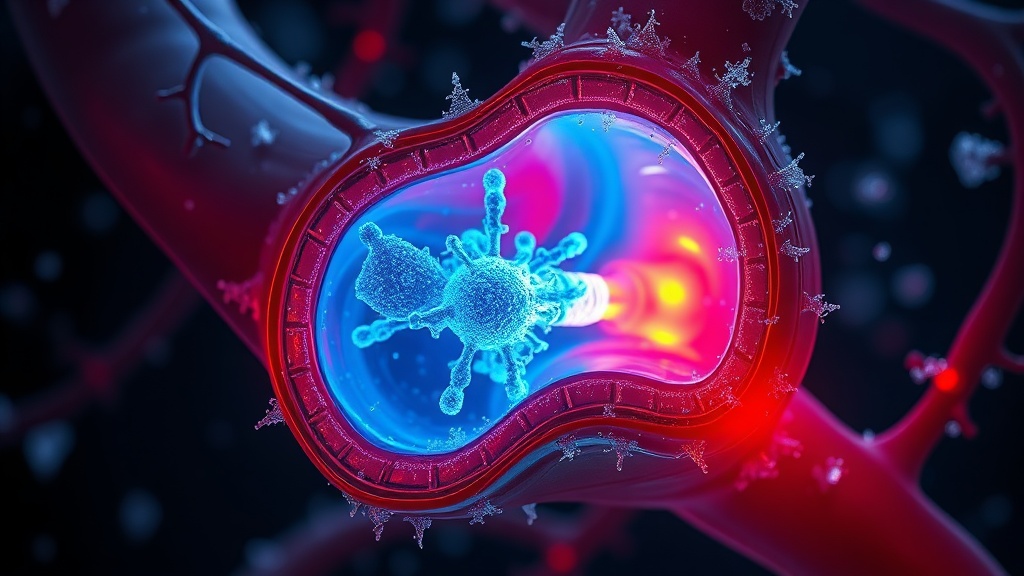
Cold-inducible RNA-binding protein (CIRP) is a highly conserved stress-response protein. Inside the cell, it does useful work — stabilizing mRNA, protecting cellular machinery during cold and hypoxic conditions. The problem starts when CIRP escapes the cell. Extracellular CIRP (eCIRP) acts as a damage-associated molecular pattern (DAMP), essentially a molecular alarm that triggers widespread inflammatory cascading[1].
This isn't a new protein to science. Aziz and Chaudry's 2025 review in the International Journal of Molecular Sciences traced eCIRP's involvement across hemorrhagic shock, sepsis, ischemia-reperfusion injury, and stroke[2]. But the March 2026 study is the first to directly connect eCIRP to aortic dissection pathogenesis under cold stress conditions.
The Mechanism: eCIRP → TLR4 → Vascular Destruction#
Here's the chain of events the researchers mapped. When endothelial cells experience cold stress, CIRP is released extracellularly. This eCIRP binds to Toll-like receptor 4 (TLR4) on vascular endothelial cells, triggering an inflammatory response that includes overexpression of matrix metalloproteinase-2 (MMP-2)[1]. MMP-2 degrades the extracellular matrix — the structural scaffolding that holds your aortic wall together.
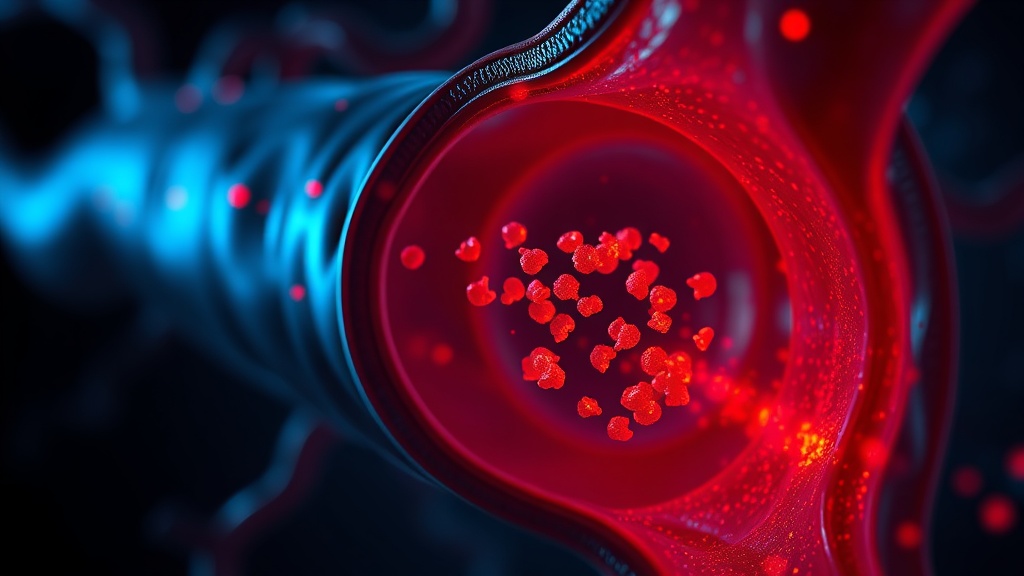
Think of it this way: your aorta is a layered tube under constant pressure. MMP-2 chews through the connective tissue holding those layers together. Under enough inflammatory pressure, the layers separate. That's dissection.
The researchers validated this in multiple ways. In vitro, cold stress and exogenous CIRP both induced vascular inflammation via TLR4 in endothelial cells. In vivo, they used a murine aortic dissection model (BAPN-fed mice, which develop weakened aortic walls) and subjected them to acute cold exposure at 4 ± 1°C. The cold-exposed mice showed increased aortic arch diameter and elevated circulating CIRP and interleukin-6 levels[1].
But here's where it gets genuinely interesting.
C23: The Competitive Antagonist That Blocked the Damage#
C23 is a CIRP-derived peptide that competitively blocks eCIRP from binding its receptors. When the researchers administered C23 to BAPN-treated mice before cold exposure, it ameliorated the cold-exacerbated aortic dissection[1]. The aortic damage was significantly reduced.
This finding is echoed by separate work from Mochizuka, Hozumi, Watanabe et al. (2026), who showed that C23 also suppressed CIRP-driven fibroblast activation in a pulmonary fibrosis model — again through TLR2 and TLR4 pathways, with IL-6 as a downstream mediator[3]. The convergence across two different pathologies strengthens the case that eCIRP/TLR4 is a real, druggable axis.
The Epidemiological Signal#
The study didn't rely solely on mouse models. The researchers cross-referenced daily meteorological data from Taiwan's Central Weather Administration with national health insurance claims. Cold temperatures were statistically associated with increased aortic dissection incidence in this subtropical/tropical monsoon climate[1]. That's notable because Taiwan isn't Scandinavia — the cold extremes are moderate by global standards, which suggests the threshold for eCIRP-mediated vascular risk may be lower than we'd assume.
This aligns with Li, Wu, Xu et al.'s review in Frontiers in Physiology (2026), which frames cold exposure as a "therapeutic paradox" — simultaneously an environmental trigger for acute cardiovascular death and a stimulus for adaptive processes like brown adipose tissue recruitment[4]. The paradox is real. The question is where your biology sits on the spectrum.
The Age Factor#
I'd be negligent not to mention the Feng et al. (2025) findings from Harbin, China. In patients over 65, prolonged cold exposure (>12 hours/day) was independently associated with a hazard ratio of 3.42 for major adverse cardiovascular events[5]. Cold-induced sympathetic activation compounds age-related endothelial fragility. If you're over 60 and doing aggressive cold protocols, this data should change your risk calculus.
Cold Exposure MACE Risk by Age Group
COMPARISON TABLE#
| Method | Mechanism | Evidence Level | Cost | Accessibility |
|---|---|---|---|---|
| Cold Plunge (2–10°C, deliberate) | Sympathetic activation, norepinephrine, BAT recruitment; risk of eCIRP release | Multiple human & animal studies; AD link shown in mouse model + epidemiological data | $50–$5,000+ (DIY to commercial) | High |
| C23 Peptide (eCIRP antagonist) | Competitive blockade of eCIRP/TLR4 binding; reduces MMP-2 and IL-6 | Preclinical (mouse models only) | Not commercially available | None (research only) |
| TLR4 Inhibitors (e.g., TAK-242) | Direct TLR4 pathway suppression | Preclinical + limited human trials in sepsis | Prescription/research compound | Very low |
| Gradual Cold Acclimation | Slow sympathetic adaptation, reduced acute hemodynamic shock | Observational + physiological studies | Free | High |
| Warm-Up Post-Cold Protocol | Limits prolonged vasoconstriction and eCIRP exposure window | Theoretical, based on mechanistic logic | Free | High |
THE PROTOCOL#
Let me be clear: this isn't a protocol to avoid cold exposure entirely. That would be an overreaction to preclinical data. This is a protocol for risk-aware cold practice, informed by the eCIRP mechanism.
Step 1. Screen your baseline cardiovascular risk before starting or continuing cold exposure protocols. If you have a family history of aortic aneurysm, Marfan syndrome, Ehlers-Danlos syndrome, or uncontrolled hypertension, consult a vascular specialist. These are the populations most analogous to the BAPN-treated mice in the study — individuals with pre-existing aortic wall vulnerability.
Step 2. Limit acute cold exposure duration at extreme temperatures. The animal model used 4°C. If you're doing ice baths at 2–5°C, keep sessions under 5 minutes until you've established adaptation over at least 3 weeks. The eCIRP release appears to be dose-dependent — longer and colder means more extracellular protein release.
Step 3. Monitor inflammatory biomarkers periodically. Request IL-6 and high-sensitivity CRP panels every 3–6 months if you're doing regular cold exposure. Persistently elevated IL-6 may indicate excessive eCIRP-mediated inflammation rather than beneficial hormetic stress.
Step 4. Implement active rewarming after cold exposure. Don't sit around shivering for 30 minutes — that extends the cold stress window. Move. Light exercise, warm clothing, or a heated environment within 5–10 minutes post-exposure reduces the duration of sympathetic overdrive and likely limits eCIRP release.

Step 5. Age-adjust your protocol. Over 55, shift toward cooler showers (15–18°C) rather than ice immersion. Over 65, based on Feng et al.'s data showing a 3.42x MACE hazard ratio with prolonged cold exposure, I'd recommend limiting cold exposure to brief facial immersion or cold water hand/forearm exposure only — enough for vagal tone stimulation without systemic vascular stress[5].
Step 6. Track HRV trends longitudinally. A declining HRV trend alongside cold exposure may signal excessive sympathetic load rather than parasympathetic adaptation. If your HRV drops consistently post-cold over a 2-week window, reduce frequency or intensity.
Step 7. Watch for C23 or eCIRP-targeted therapeutics entering clinical trials. This is preclinical data, but the pathway is compelling enough that human trials are likely within 3–5 years. If you're in a high-risk category, this could eventually become a pharmacological adjunct to cold-based protocols.
Related Video
VERDICT#
Score: 7.5/10
The mechanistic clarity here is strong — eCIRP → TLR4 → MMP-2 → vascular matrix degradation is a clean, well-validated chain. The C23 antagonist data is genuinely promising. The epidemiological backing from Taiwanese population data adds credibility that this isn't just a mouse curiosity. But I'm holding back on a higher score for two reasons. First, the aortic dissection model uses BAPN-treated mice — animals with chemically weakened aortas — and we don't know how directly this translates to healthy human vasculature under deliberate cold exposure. Second, the cold exposure was acute (4°C), which is more severe than what most biohackers practice. The study doesn't tell us whether graduated, shorter cold exposures trigger clinically meaningful eCIRP release in humans. I want to see human eCIRP levels measured pre- and post-cold plunge before I'd call this definitive. Until then, it's a credible warning signal, not a stop sign — especially for anyone over 55 or with pre-existing vascular risk factors.
Frequently Asked Questions5
References
- 1.Author(s) not listed. Cold exposure increases aortic dissection risk through extracellular cold inducible RNA binding protein and toll like receptor 4 signaling. Scientific Reports (2026). ↩
- 2.Aziz M, Chaudry IH. Extracellular Cold-Inducible RNA-Binding Protein: Progress from Discovery to Present. International Journal of Molecular Sciences (2025). ↩
- 3.Mochizuka Y, Hozumi H, Watanabe H. Cold inducible RNA binding protein promotes fibroblast activation and its inhibition represents a potential therapeutic target in pulmonary fibrosis. Scientific Reports (2026). ↩
- 4.Li Y, Wu J, Xu Y, Dong J, Xing B, Wang Y, Sun B, Li J, Wang H, Yu L, Zhou Z. Cold exposure and the cardiovascular system: from physiological adaptation to pathological risk. Frontiers in Physiology (2026). ↩
- 5.Feng L, Liu H, Li Z, Xing L. Cold-driven biphasic vascular healing in elderly patients: 4D optical coherence tomography stratification of major adverse cardiovascular event risk based on age-environment interactions. Frontiers in Cardiovascular Medicine (2025). ↩
Cira Renn
Cira writes with physical conviction — she's done this, she knows what it feels like, and she doesn't pretend otherwise. Her writing has visceral energy: 'Cold water at 10°C isn't a wellness trend. It's a physical confrontation.' She distinguishes between what the research shows and what she's experienced, and she'll tell you when they diverge.
View all articles →