Cold Water Immersion Protocol Optimization by Exercise Type

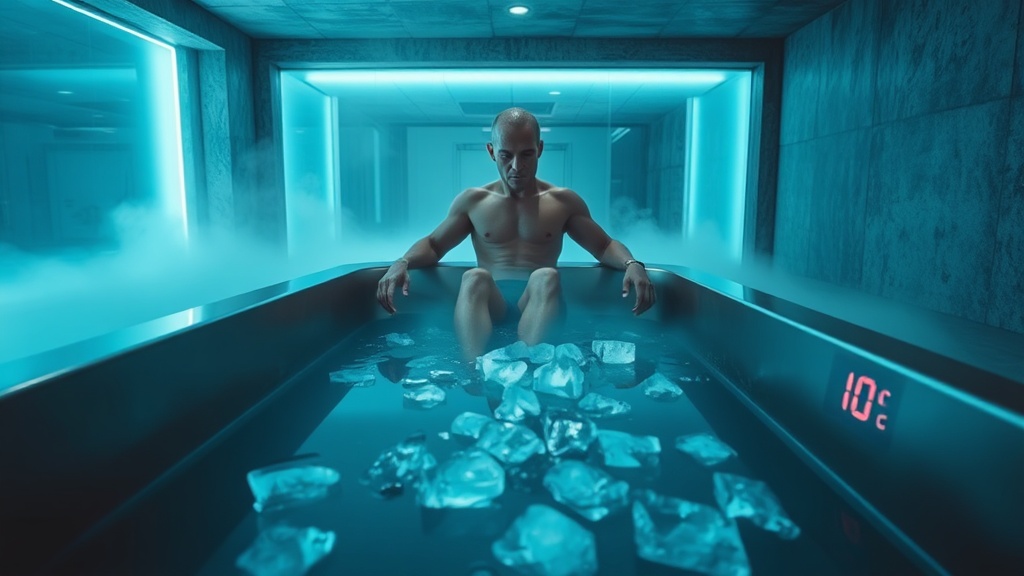
SNIPPET: Cold water immersion protocols must be matched to exercise type — not applied universally. A 2026 network meta-analysis of 87 studies (2,313 athletes) found passive recovery outperforms CWI for resistance training adaptations, while moderate-temperature immersion (9–12°C, 10–15 min) may aid endurance recovery. For muscle soreness reduction, 11–15°C for 10–15 minutes ranked highest across 55 RCTs.
THE PROTOHUMAN PERSPECTIVE#
The cold plunge has become a cultural symbol. Every biohacker with an Instagram account has one. But symbols don't optimize recovery — protocols do.
What makes the latest research genuinely useful is that it finally breaks the "one temperature fits all" dogma. The data now shows that cold water immersion should be periodized by training modality, not applied as a blanket recovery ritual. If you're chasing hypertrophy, the cold may be actively working against you. If you're an endurance athlete in a heavy training block, there's a specific thermal window that appears to help — but the certainty is low.
This matters for human performance optimization because most practitioners are still defaulting to the coldest water they can tolerate, for as long as they can stand it. That approach is not just suboptimal — for strength athletes, it may be counterproductive. The shift here is from cold exposure as identity to cold exposure as precision tool. That's the evolution worth tracking.
THE SCIENCE#
What the 2026 Meta-Analysis Actually Found#
Yu, Liu, Ding et al. published the largest modality-specific network meta-analysis on CWI to date in BMC Sports Science, Medicine and Rehabilitation (March 2026). Eighty-seven randomized controlled trials, 2,313 participants, four databases searched from January 2014 to June 2025[1].
The study classified CWI protocols along two axes: temperature (cold: 5–8°C, moderate: 9–12°C, mild: 13–20°C) and duration (short: <10 min, medium: 10–15 min, long: >15 min). They used SUCRA rankings — Surface Under the Cumulative Ranking Curve — to identify which protocols performed best for each exercise modality.
Here's where it gets uncomfortable for cold plunge enthusiasts: passive recovery ranked highest for resistance training outcomes related to strength. Not cold water. Not contrast therapy. Doing nothing.
The certainty of evidence was rated MODERATE to LOW across the board, which is an important caveat. But the direction is consistent with what I've seen in my own training logs — regular cold immersion after heavy lifting sessions doesn't accelerate strength gains. If anything, it appears to blunt the adaptive signaling cascade that resistance training is designed to trigger.
The Temperature-Duration Matrix#
Wang, Pan, and Wang (2025) ran a parallel network meta-analysis across 55 RCTs, published in Frontiers in Physiology, focused specifically on exercise-induced muscle damage (EIMD)[2]. Their classification scheme was similar but not identical, and their results add critical nuance.
For DOMS reduction: Medium-duration, medium-temperature CWI (10–15 min at 11–15°C) produced the largest effect (SMD = −1.45, 95% CI: −2.13 to −0.77, P < 0.01). That's a large standardized effect — clinically meaningful, not just statistically significant.
For jump performance recovery: Medium-duration, low-temperature CWI (10–15 min at 5–10°C) ranked highest (SMD = 0.48, 95% CI: 0.20–0.77, P = 0.01).
For creatine kinase reduction (a biomarker of muscle damage): Both protocols performed comparably, with the low-temperature protocol showing a slightly larger effect (SMD = −0.90 vs. −0.85)[2][3].
The pattern is clear. The optimal protocol depends on what you're trying to recover from — and what outcome you're prioritizing. Soreness? Go warmer. Neuromuscular function? Go colder. Muscle damage markers? Either works.
The Adaptation Problem#
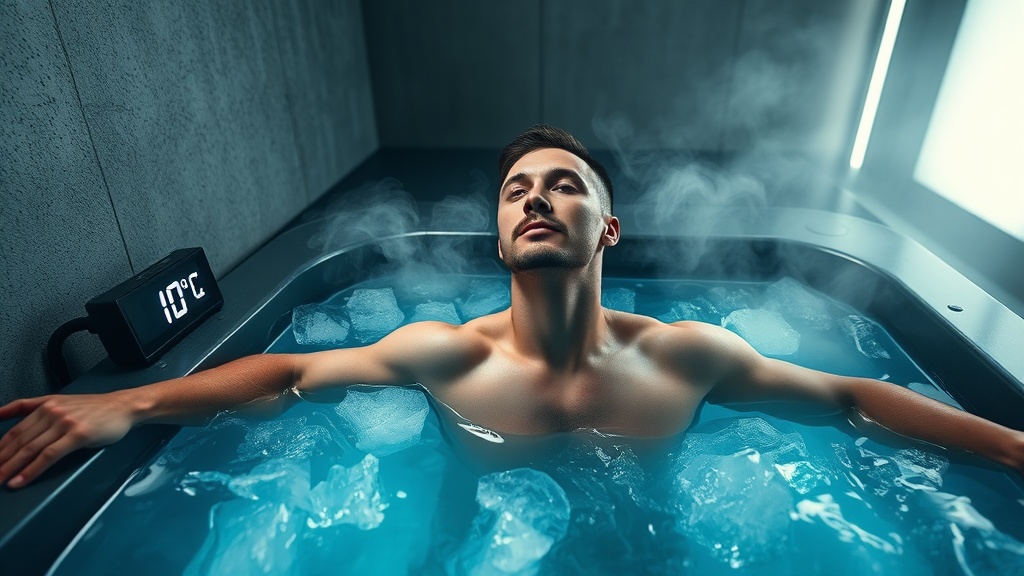
But here's where I push back on the "just optimize the dose" narrative. Poręba et al. (2025) conducted a systematic review examining the tension between CWI's acute recovery benefits and its long-term adaptation costs[4]. The finding that should concern anyone using cold immersion habitually: routine CWI after resistance training may reduce muscle hypertrophy and type II fiber adaptations.
The mechanism is plausible. Cold exposure attenuates the post-exercise inflammatory response — the same inflammatory signaling (via IL-6, TNF-α, and downstream mTOR pathway modulation) that drives muscle protein synthesis and satellite cell activation. You're essentially cooling down the signal your muscles need to grow.
In endurance training, however, CWI appears to be largely adaptation-neutral[4]. This makes physiological sense. Endurance adaptations rely more heavily on mitochondrial biogenesis pathways (PGC-1α signaling, AMPK activation) that are less directly suppressed by cold-induced vasoconstriction and reduced inflammatory signaling.
Patel et al. (2025) confirmed this split in a systematic review of 12 high-quality RCTs: moderate-to-strong evidence supports CWI for short-term soreness reduction and perceptual recovery, but effects on neuromuscular performance were mixed and context-dependent[5]. Inflammatory marker evidence (IL-6, CRP) was limited and inconclusive.
The Honest Limitations#
I'd want to see more data before rewriting anyone's protocol entirely. The Yu et al. meta-analysis itself rates the evidence as MODERATE to LOW certainty. Team sport findings were particularly inconsistent, with the authors explicitly calling for "personalized strategies" — which is researcher-speak for "we don't know yet."
The Wang et al. study excluded protocols outside their predefined duration-temperature categories, meaning some real-world approaches (like very short, very cold exposures under 5 minutes at sub-5°C) weren't adequately captured.
CWI Protocol Effectiveness by Outcome (SMD vs. Control)
COMPARISON TABLE#
| Method | Mechanism | Evidence Level | Cost | Accessibility |
|---|---|---|---|---|
| CWI 11–15°C, 10–15 min | Vasoconstriction, reduced inflammatory signaling, peripheral nerve cooling | Moderate (55+ RCTs, network meta-analysis) | Low–Medium ($50–$5,000 depending on setup) | High (bathtub + ice works) |
| CWI 5–10°C, 10–15 min | Deeper tissue cooling, greater CK reduction, enhanced neuromuscular recovery | Moderate (55+ RCTs) | Low–Medium | High |
| Passive Recovery | Natural inflammatory resolution, unimpeded anabolic signaling | Moderate (87-study meta-analysis favors for RT) | Free | Universal |
| Contrast Water Therapy | Alternating vasodilation/vasoconstriction, lymphatic pumping | Low–Moderate | Medium | Moderate (requires two water sources) |
| Compression Garments | Mechanical pressure reduces edema and metabolite accumulation | Moderate | Medium ($50–$300) | High |
| Active Recovery (light exercise) | Increased blood flow, metabolite clearance | Low–Moderate | Free | Universal |
THE PROTOCOL#
This protocol is based on the combined findings of Yu et al. (2026) and Wang et al. (2025). Adjust based on your primary training modality.
1. Identify your training modality and session goal. If you just completed a hypertrophy-focused resistance training session (high volume, moderate-to-heavy load), skip the cold plunge entirely. Passive recovery is the evidence-backed choice. Let the inflammation do its job.
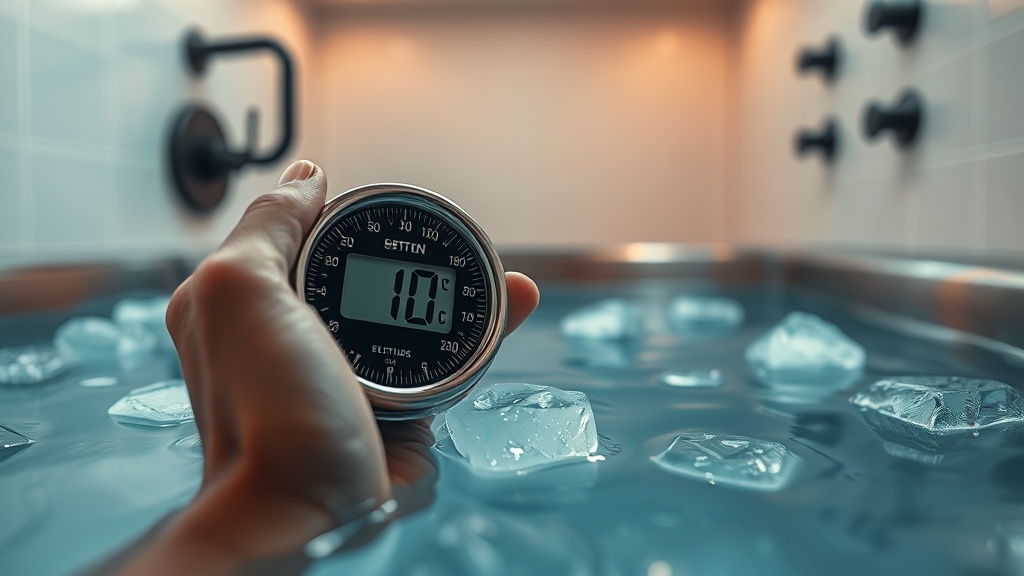
2. For endurance sessions or high-intensity interval work: Prepare water at 9–12°C. This is the moderate range that Yu et al. identified as most beneficial for endurance recovery outcomes. Use a thermometer — your subjective sense of "cold enough" is unreliable.
3. For team sport or mixed-modality sessions where soreness is the priority: Target 11–15°C for 10–15 minutes. This is the protocol with the largest effect on DOMS reduction (SMD = −1.45)[2]. Start at 12 minutes, not 5. The adaptation window doesn't open at 5.
4. For neuromuscular recovery (e.g., before a next-day competition): Drop to 5–10°C for 10–15 minutes. This protocol ranked highest for jump performance recovery and CK reduction. This is the protocol I use during tournament weekends — the data aligns with my experience here.
5. Time your immersion within 20 minutes post-exercise. Most protocols in the included RCTs initiated CWI immediately to 20 minutes after exercise cessation. Delayed immersion (>30 minutes) was not consistently studied and cannot be recommended based on current data.
6. Submerge to mid-torso or hip level minimum. Full-body immersion up to the neck was most common in the reviewed trials. Partial immersion (legs only) may reduce effectiveness for systemic recovery markers.
7. Do not use CWI after every session. Poręba et al. (2025) found that routine use — particularly after resistance training — may blunt long-term hypertrophic adaptations[4]. Periodize cold exposure like you periodize training load: strategically, not habitually.
Related Video
What temperature is best for cold water immersion recovery?#
It depends on your goal. For reducing delayed-onset muscle soreness, 11–15°C for 10–15 minutes shows the strongest effect according to Wang et al. (2025). For neuromuscular recovery and reducing creatine kinase levels, colder water at 5–10°C for the same duration appears superior. There is no single "best" temperature — the optimal protocol is outcome-specific.
Why should you avoid cold water immersion after resistance training?#
Multiple reviews, including the 2026 network meta-analysis by Yu et al. and the Poręba et al. (2025) systematic review, indicate that CWI may attenuate the inflammatory and anabolic signaling pathways necessary for muscle hypertrophy. Passive recovery consistently outperformed CWI for strength-related outcomes. If your primary goal is building muscle, cold exposure after lifting may work against you.
How long should cold water immersion last for optimal recovery?#
The evidence converges on 10–15 minutes as the effective duration window. Protocols shorter than 10 minutes showed reduced or inconsistent effects across the meta-analyses reviewed. Protocols longer than 15 minutes did not demonstrate additional benefit and may increase discomfort without measurable gains in recovery outcomes.
When is cold water immersion most useful for athletes?#
CWI appears most valuable during congested competition schedules (tournaments, multi-day events), between same-day sessions, and under heat stress conditions. Patel et al. (2025) and Poręba et al. (2025) both emphasize that CWI should be treated as a tactical recovery tool — deployed when rapid readiness matters more than long-term adaptation[4][5].
Who should not use cold water immersion regularly?#
Athletes in dedicated hypertrophy or strength-building phases should minimize or eliminate routine CWI. The data suggests that regular post-resistance-training cold immersion may reduce type II muscle fiber adaptations over time. Endurance athletes appear less affected — CWI is largely adaptation-neutral in that context — but even here, habitual use without clear purpose adds unnecessary physiological stress.
VERDICT#
7/10. The evidence has matured enough to kill the "one protocol fits all" approach — and that alone makes this research valuable. The modality-specific findings from Yu et al. are the most actionable CWI data I've seen published. But the certainty ratings (MODERATE to LOW) keep this from being a definitive protocol guide. The resistance training finding — that passive recovery outperforms cold immersion — is the strongest and most practically important takeaway. I'm less convinced by the endurance-specific recommendations, where the evidence remains thin and the effect sizes modest. The honest answer: we now know enough to stop guessing, but not enough to stop experimenting.
References
- 1.Yu T, Liu Y, Ding C. Cold water immersion protocol optimization across exercise modalities: a systematic review and network meta-analysis of resistance training, endurance exercise, and team sport applications. BMC Sports Science, Medicine and Rehabilitation (2026). ↩
- 2.Wang H, Wang L, Pan Y. Impact of different doses of cold water immersion (duration and temperature variations) on recovery from acute exercise-induced muscle damage: a network meta-analysis. Frontiers in Physiology (2025). ↩
- 3.Wang H, Wang L, Pan Y. Impact of different doses of cold water immersion (duration and temperature variations) on recovery from acute exercise-induced muscle damage: a network meta-analysis. Frontiers in Physiology (PubMed) (2025). ↩
- 4.Poręba K. Cold Water Immersion After Training: Regeneration vs Adaptation — A Systematic Review. Quality in Sport (2025). ↩
- 5.Patel S. Cold-Water Immersion and Athletic Recovery: A Systematic Review of Randomized Controlled Trials (2000–2024). Physical Education Theory and Methodology (2025). ↩
Cira Renn
Cira writes with physical conviction — she's done this, she knows what it feels like, and she doesn't pretend otherwise. Her writing has visceral energy: 'Cold water at 10°C isn't a wellness trend. It's a physical confrontation.' She distinguishes between what the research shows and what she's experienced, and she'll tell you when they diverge.
View all articles →