Cold Water Swimming Boosts Mitochondrial Metabolism in Muscle

The ProtoHuman Perspective#
Cold exposure isn't new. What's new is that we're finally mapping why it works at the mitochondrial level — and the answer isn't what most biohackers assume. The conversation has been stuck on brown fat activation and norepinephrine for years. This latest research from Bosiacki et al. shifts the lens to something more fundamental: how cold water changes the way your muscle cells shuttle NADH into mitochondria for energy production.
That matters because mitochondrial efficiency is the single largest bottleneck in age-related muscle decline. Your muscles don't just get weaker because you lose fibers — they get weaker because the remaining fibers can't produce energy efficiently. If cold exposure can restore or enhance the malate–aspartate shuttle in aging muscle, we're talking about a direct intervention against one of the core engines of physical decline. This isn't about feeling invigorated after a cold plunge. This is about whether your mitochondria can still do their job at 50, 60, 70.
The Science#
What Is the Malate–Aspartate Shuttle and Why Should You Care?#
The malate–aspartate shuttle (MAS) is the primary mechanism by which NADH — produced during glycolysis in the cytoplasm — gets transferred into the mitochondrial matrix for oxidative phosphorylation. Without efficient MAS activity, NADH accumulates in the cytoplasm, glycolysis slows, and ATP production drops. In aging tissue, MAS expression declines. This is one of the reasons older muscles fatigue faster and recover slower — it's not just a structural problem, it's a metabolic bottleneck[1].
Bosiacki et al. (2026), publishing in Metabolites, designed a study specifically to test whether repeated cold-water swimming could upregulate MAS expression in the skeletal muscles of aging rats[1]. The hypothesis was precise: cold stress triggers adaptive signaling that increases MAS enzyme expression, leading to more efficient NADH utilization and better mitochondrial function.
The Study Design#
Sixty-four rats — 32 male, 32 female — aged 15 months (roughly equivalent to middle-aged humans) were split into three groups: sedentary controls, cold-water swimmers (5 ± 2°C), and thermal-comfort swimmers (36 ± 2°C). The swimming protocol ran for nine weeks, five days per week, with session duration gradually increasing from 2 to 4 minutes per day[1].
I want to flag something here: 4 minutes of swimming in 5°C water is not mild for a rat. Scale that to human cold tolerance thresholds and you're looking at a genuine physiological stressor, not a light rinse. The thermal-comfort group serves as a critical control — it isolates the cold variable from the exercise variable. That's good experimental design.
Results: MAS Upregulation and Beyond#
The cold-water group showed increased expression of all MAS component enzymes involved in NADH delivery to mitochondria. This is the key finding. Not partial upregulation. Not one or two enzymes. The entire shuttle system was enhanced[1].
Additionally, the researchers found elevated expression of the active form of phosphofructokinase-1 (PFK-1) — the rate-limiting enzyme of glycolysis. Under oxidative conditions, glycolysis serves as the primary NADH source for MAS. So the data tells a coherent story: cold stress ramps up glycolytic flux and the shuttle that feeds glycolytic NADH into mitochondria for ATP synthesis[1].
Reactive oxygen species (ROS) production also increased, which sounds alarming until you see the corresponding upregulation of antioxidant enzymes. This is classic hormesis — the controlled stress triggers a defensive response that leaves the system stronger than baseline.
The Bigger Picture: Cold Exposure Across Tissues#
This study doesn't exist in isolation. The same research group published earlier work in 2024 showing that cold-water swimming improved ATP and ADP concentrations, total adenine nucleotide (TAN) content, and adenylate energy charge (AEC) values in aging rat muscles[2]. That study also demonstrated enhanced mitochondrial biogenesis through upregulation of PGC-1α, Mfn1, and Mfn2 — proteins governing mitochondrial fusion and fission dynamics[2].
But here's where it gets complicated.
Korewo-Labelle et al. (2025) examined chronic cold water immersion effects on the hippocampus and found a different story: cold stress disrupted mitochondrial function in brain tissue, causing oxidative damage and altered stress signaling[3]. Vitamin D3 supplementation provided only partial protection. So cold exposure doesn't uniformly improve mitochondrial function across all tissues. Skeletal muscle appears to benefit; hippocampal tissue may not.
I'm less convinced by the blanket "cold is good for mitochondria" narrative after reading the Korewo-Labelle data. The tissue-specific response matters enormously, and most biohacking content ignores this entirely.
Meanwhile, Elsukova et al. (2025) showed that intermittent cold exposure in mice — 6°C for 6 hours daily, five days a week, over 16 weeks — upregulated 140 proteins in white adipose tissue, including mitochondrial proteins tied to the TCA cycle, oxidative phosphorylation, and lipid catabolism[4]. Proteins associated with inflammation and insulin resistance were downregulated. That's a promising signal for metabolic health, but again — adipose tissue, not muscle, not brain.
Cold Exposure Effects Across Tissue Types
Comparison Table#
| Method | Mechanism | Evidence Level | Cost | Accessibility |
|---|---|---|---|---|
| Cold-Water Swimming (5°C) | MAS upregulation, PFK-1 activation, enhanced NADH→mitochondria transfer | Preclinical (rat model), replicated across 2 studies by same group | Free–$50/month (natural water or gym cold plunge) | High — requires water access and cold tolerance |
| Thermal-Comfort Swimming (36°C) | Exercise-induced mitochondrial biogenesis without cold hormesis | Preclinical (rat model), improved ATP/ADP but less MAS activation | Free–$50/month | High — any heated pool |
| Intermittent Cold Air Exposure | Adipose tissue proteomic remodeling, TCA cycle activation | Preclinical (mouse model), single proteomic study | Free (outdoor exposure) or cryotherapy ($40–75/session) | Moderate — cryotherapy access varies |
| CoQ10 Supplementation | Electron transport chain support, mitochondrial membrane stabilization | Multiple human RCTs | $30–45/month | Very high |
| NAD+ Precursors (NMN/NR) | NAD+ synthesis support for mitochondrial metabolism | Mixed human evidence, several RCTs with variable outcomes | $40–100/month | High — widely available |
The Protocol#
Based on the cold-water swimming parameters that produced MAS upregulation in the Bosiacki et al. research, here's a progressive protocol adapted for humans. I want to be direct: this is extrapolated from preclinical rat data. Optimal dosing in humans is not yet established. If you choose to trial this, treat it as an n=1 experiment.
Step 1. Begin with water temperature at 10–12°C. The rat protocol used 5°C, but human cold tolerance thresholds, body composition, and thermoregulatory capacity differ substantially. Start where the cold is genuinely uncomfortable but manageable — not where it's dangerous.
Step 2. Initial immersion duration: 2 minutes. Not "ease in with 30 seconds." The adaptation window doesn't open at 30 seconds. You need sufficient cold stress to trigger the hormetic response. Time it. Get in, stay in.
Step 3. Train 5 days per week. The research protocol was daily with weekends off. Consistency drives the adaptive signaling — sporadic cold plunges once a week won't replicate what this study measured.
Step 4. Over 8–9 weeks, progressively increase duration from 2 minutes to 4–5 minutes. The rat protocol scaled from 2 to 4 minutes across nine weeks. For humans with greater thermal mass, 5 minutes at 10°C is a reasonable ceiling for this adaptation window.
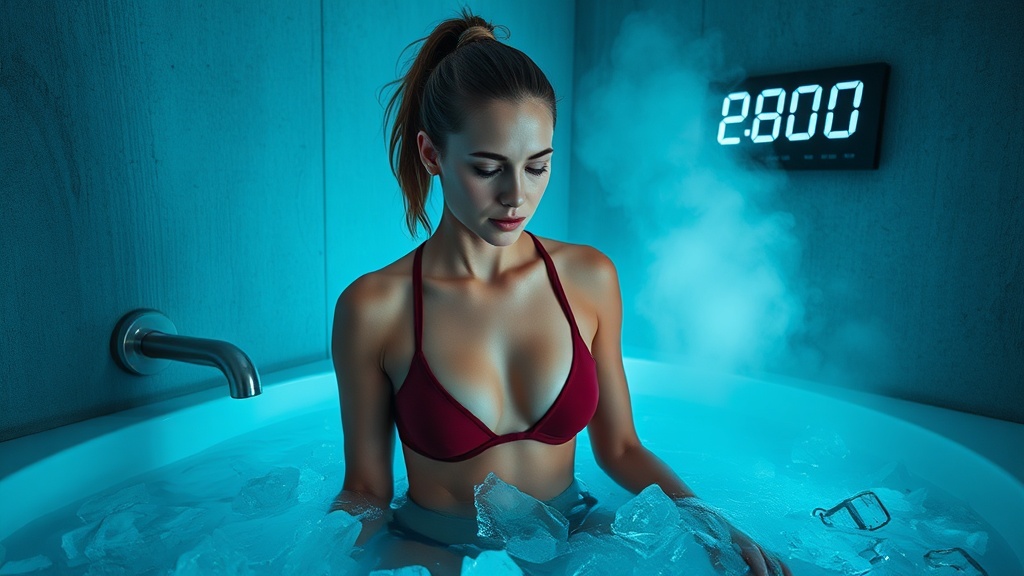
Step 5. Combine with movement. The rats weren't sitting still — they were swimming. Passive cold immersion and active cold-water exercise likely produce different signaling cascades. If your setup allows it, incorporate movement: treading water, bodyweight exercises in the plunge, or cold-water swimming outdoors.
Step 6. Support antioxidant defenses. The research showed ROS production increased alongside antioxidant enzyme upregulation. In rats. Humans may benefit from ensuring baseline antioxidant capacity is adequate — not mega-dosing, but covering basics: vitamin C (500mg), vitamin E, and selenium through diet or a quality multivitamin.
Step 7. Track your adaptation. Subjective markers: reduced shivering latency, faster heart rate recovery post-immersion, improved grip strength or exercise performance over the 9-week block. If you have access to HRV monitoring, watch for parasympathetic rebound improvements post-cold exposure as a proxy for autonomic adaptation.
Related Video
Verdict#
Score: 7/10
The mechanistic story is clean and the experimental design is solid — particularly the inclusion of thermal-comfort controls that isolate cold as the variable. The MAS upregulation finding is genuinely novel and moves the cold exposure conversation beyond the usual norepinephrine-and-brown-fat territory. But this is preclinical data in rats, from a single research group. I'd want to see this replicated by an independent lab and, more critically, confirmed in human skeletal muscle biopsies before adjusting any serious training protocol around it. The Korewo-Labelle hippocampal data is a necessary counterweight — cold doesn't fix everything, and tissue-specific responses need more investigation. For anyone already doing regular cold exposure, this adds mechanistic confidence. For someone considering starting, the evidence is encouraging but not yet prescriptive.
Frequently Asked Questions5
References
- 1.Bosiacki M, Tarnowski M, Misiakiewicz-Has K, Lubkowska A. Repeated Cold Water Stress Leads to Improvements in Mitochondrial Metabolism of Skeletal Muscles in Rats. Metabolites (2026). ↩
- 2.Bosiacki M, Tarnowski M, Misiakiewicz-Has K, Lubkowska A. The Effect of Cold-Water Swimming on Energy Metabolism, Dynamics, and Mitochondrial Biogenesis in the Muscles of Aging Rats. International Journal of Molecular Sciences (2024). ↩
- 3.Korewo-Labelle D et al.. Impact of Chronic Cold Water Immersion and Vitamin D3 Supplementation on the Hippocampal Metabolism and Oxidative Stress in Rats. Cells (2025). ↩
- 4.Elsukova E, Zamay T, Kichkailo A, Yakunenkov A, Veprintsev DV, Minic Z, Berezovski MV, Glazyrin Y. Intermittent Cold Exposure Induces Distinct Proteomic Signatures in White Adipose Tissue of Mice. International Journal of Molecular Sciences (2025). ↩
Cira Renn
Cira writes with physical conviction — she's done this, she knows what it feels like, and she doesn't pretend otherwise. Her writing has visceral energy: 'Cold water at 10°C isn't a wellness trend. It's a physical confrontation.' She distinguishes between what the research shows and what she's experienced, and she'll tell you when they diverge.
View all articles →