Gaspari Proven NMN TMG Review: NAD+ Science and Protocol

SNIPPET: NMN (nicotinamide mononucleotide) paired with TMG raises circulatory NAD+ levels comparably to NR over 14 days, primarily through gut microbial conversion to nicotinic acid via the Preiss–Handler pathway — not direct cellular uptake. Gaspari Nutrition's Proven NMN/TMG stack targets this mechanism, but the clinical edge over standalone NMN remains unproven in human trials.
THE PROTOHUMAN PERSPECTIVE#
The NAD+ supplementation space just got a serious reality check. For years, the biohacking community has debated NMN versus NR like it's some kind of holy war — and now a head-to-head human trial published in Nature Metabolism tells us they're functionally equivalent for raising blood NAD+ levels. But here's the part nobody's talking about: neither molecule does what we thought it did. The sustained NAD+ boost from NMN and NR appears to depend on your gut bacteria converting them to nicotinic acid first. That's a paradigm shift. It means your microbiome health may matter more than which precursor you swallow. Gaspari Nutrition's Proven NMN/TMG formula enters this landscape claiming a "full-spectrum" approach by pairing NMN with trimethylglycine, a methyl donor meant to buffer the methylation cost of NAD+ synthesis. The logic is sound on paper. Whether it translates to measurable superiority is another question entirely — one that current data can't answer.
THE SCIENCE#
NMN and NR Are Functionally Equivalent — and That's Not What the Industry Wants You to Hear#
The landmark study here is Christen et al. (2026), published in Nature Metabolism, a randomized, open-label, placebo-controlled trial with 65 healthy participants[1]. After 14 days of supplementation, both NMN and NR comparably increased circulatory NAD+ concentrations. Nicotinamide (Nam) — the cheapest B3 form — did not produce the same sustained elevation.
Look, the NMN crowd is going to love this. And they should — just not for the reasons they think.
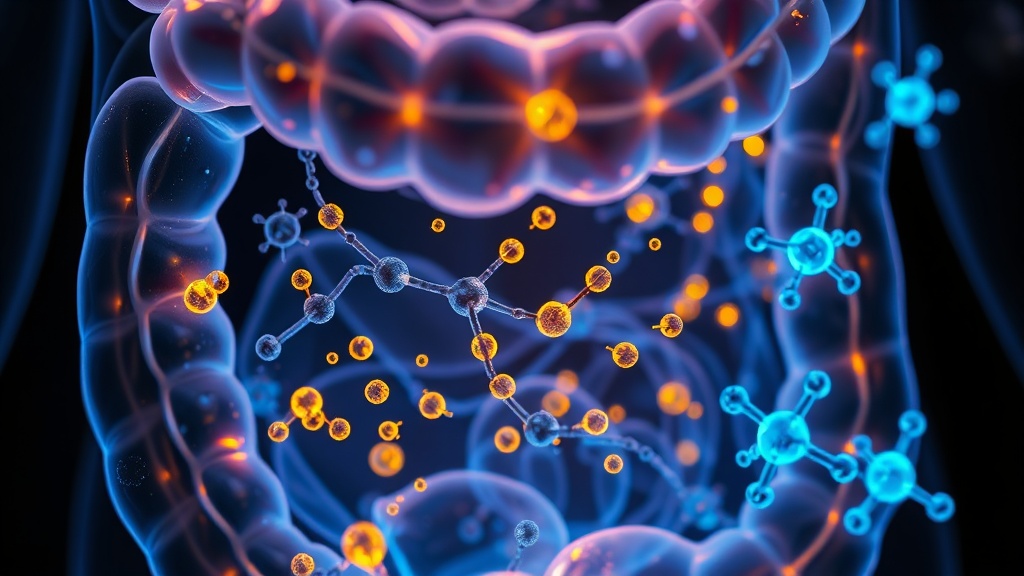
The critical finding wasn't that NMN works. It's how it works. Using ex vivo fermentation with human microbiota, the researchers demonstrated that NMN and NR are converted by gut bacteria into nicotinic acid (NA). They then showed that NA — not NMN, not NR, not Nam — is the potent NAD+ booster in whole blood[1]. The molecule you're paying a premium for gets broken down in your gut, reassembled into something your grandmother could have gotten from fortified bread, and that's what actually drives NAD+ synthesis through the Preiss–Handler pathway.
Wait, let me be more precise here. The acute effects tell a different story. Only Nam transiently affected the whole-blood NAD+ metabolome immediately after ingestion, via the salvage pathway. So there are two distinct mechanisms at play: NMN/NR for sustained elevation (gut-microbiome-dependent), and Nam for rapid, short-lived spikes.
The Microbiome Connection Changes Everything#
This is where the data gets genuinely exciting. NMN and NR didn't just get converted to NA — they specifically enhanced microbial growth and metabolism in the ex vivo fermentation model[1]. This suggests a dual benefit: systemic NAD+ elevation plus a prebiotic-like effect on gut health.
The implications for mitochondrial efficiency are indirect but real. NAD+ is the central electron carrier in oxidative phosphorylation. Higher circulatory NAD+ feeds into NADH pools that drive the electron transport chain. But — and this is the part that keeps me skeptical about supplement marketing — the Christen et al. study measured circulatory NAD+, not intracellular NAD+ in muscle, brain, or liver tissue. A comprehensive review by Zapata-Pérez et al. (2025) in Nature Metabolism explicitly warns that tissue-specific NAD+ dynamics in humans remain poorly understood, and that extrapolation from rodent models is unreliable[2].
NMN Dosing and Blood Parameters#
A separate post hoc analysis from a randomized, double-blind trial (n=80, middle-aged healthy adults) examined NMN at 300, 600, and 900 mg daily over 60 days[3]. Every 1 nM increase in blood NAD was associated with a 0.025% increase in red blood cells and a 0.027% increase in hemoglobin — potentially indicating enhanced oxygen-carrying capacity. That's a small but physiologically meaningful signal.
The catch, though. Higher baseline NAD levels also correlated with increased triglycerides (0.023% per nM), higher alanine transaminase (0.02% per nM), and lower HDL (-0.009% per nM)[3]. These aren't alarm-bell numbers, but they challenge the narrative that more NAD+ is universally beneficial. I'd want to see this replicated in a larger cohort before changing my protocol.
PQQ + NMN: Interoception Data, Not Performance Data#
A double-blind RCT (n=60) tested PQQ (20 mg), NMN (300 mg), and their combination against placebo on interoceptive awareness following exhaustive exercise[4]. The NMN group didn't show unique effects. The PQQ group improved in "body listening" (p<0.001). The combination didn't outperform PQQ alone.
I'm less convinced by this study's relevance to the Gaspari stack. It doesn't test TMG, doesn't measure NAD+ directly, and the outcome measure — interoception — is subjective. It's useful background, not a selling point.
NAD+ Precursor Efficacy: Sustained vs. Acute Blood NAD+ Effects
COMPARISON TABLE#
| Method | Mechanism | Evidence Level | Cost (Monthly) | Accessibility |
|---|---|---|---|---|
| Gaspari Proven NMN/TMG | NMN → gut microbial NA → Preiss–Handler NAD+ synthesis; TMG supports methylation | No direct clinical trials on this specific stack | ~$50–70 | Widely available online |
| Standalone NMN (300–900 mg) | Same gut-dependent pathway; no methylation support | RCT data (n=65, 14 days)[1]; post hoc analysis (n=80, 60 days)[3] | ~$40–80 | Widely available |
| Nicotinamide Riboside (NR) | Equivalent to NMN via gut microbial conversion to NA[1] | RCT data, comparable to NMN[1] | ~$40–60 | Widely available (Tru Niagen, etc.) |
| Nicotinic Acid (Niacin) | Direct Preiss–Handler pathway activation | Decades of clinical use; potent ex vivo NAD+ booster[1] | ~$5–10 | OTC; flushing side effects |
| Nicotinamide (Nam/B3) | Salvage pathway; acute, transient NAD+ effect only | Least effective for sustained NAD+ elevation[1] | ~$5 | Ubiquitous |
THE PROTOCOL#
Based on current evidence, here's how to approach an NMN/TMG stack — whether using Gaspari's Proven formula or building your own.
Step 1: Establish your baseline. Before starting any NAD+ precursor protocol, get a blood NAD+ test if available, plus a standard metabolic panel (lipids, liver enzymes, CBC). This gives you a reference point. Without it, you're flying blind.
Step 2: Start at 300 mg NMN daily. The clinical evidence supports 300 mg as the minimum effective dose for NAD+ elevation over 60 days[3]. Take it in the morning on an empty stomach — or with a light meal if GI sensitivity occurs. The Christen et al. trial used a 14-day protocol and still observed significant NAD+ increases at comparable dosing[1].
Step 3: Add TMG at 500–1,000 mg daily. Trimethylglycine acts as a methyl donor, theoretically offsetting the methylation burden created by NAD+ synthesis (which consumes methyl groups via nicotinamide metabolism). No RCT has tested this specific combination's superiority, but the biochemical rationale is sound. Take it with NMN.
Step 4: Prioritize gut health — seriously. This is the protocol step most people will skip, and it's arguably the most important. The Christen et al. data shows NMN's sustained NAD+ boost depends on microbial conversion to nicotinic acid[1]. A dysbiotic gut may blunt the entire mechanism. Include fermented foods, prebiotic fiber, and consider a spore-based probiotic.
Step 5: Retest at 60 days. Repeat your metabolic panel and NAD+ test. Monitor specifically for changes in RBC parameters (potential positive signal), as well as triglycerides and liver enzymes (potential caution flags)[3].
Step 6: Consider cycling or dose escalation. If 300 mg shows no measurable change, the clinical data supports escalation up to 900 mg[3]. Some practitioners recommend cycling 8 weeks on, 4 weeks off, though no trial has validated this schedule. Honest answer: optimal long-term dosing in humans is not yet established.
Related Video
VERDICT#
6.5/10. The science behind NMN for NAD+ elevation is now solid — Christen et al. gave us the first real head-to-head human comparison, and NMN holds up. The gut microbiome mechanism is a genuine breakthrough finding. But Gaspari's Proven NMN/TMG specifically? There's no clinical trial testing this exact formulation. The TMG addition is biochemically reasonable but empirically unproven. And frankly, the Christen data raises an uncomfortable question for the entire NMN industry: if gut bacteria just convert NMN to nicotinic acid anyway, why not take niacin at a fraction of the cost? The flushing is the obvious answer, but extended-release niacin exists. I give this a moderate score because the product isn't doing anything wrong — it's just not doing anything provably better than cheaper alternatives. The NAD+ precursor space needs larger, longer human trials before any product deserves a higher rating.
Frequently Asked Questions5
References
- 1.Christen S et al.. The differential impact of three different NAD+ boosters on circulatory NAD and microbial metabolism in humans. Nature Metabolism (2026). ↩
- 2.Zapata-Pérez R et al.. NAD+ precursor supplementation in human ageing: clinical evidence and challenges. Nature Metabolism (2025). ↩
- 3.Association between blood NAD levels and blood laboratory parameters at baseline and after NMN supplementation in middle-aged healthy individuals. GeroScience (2025). ↩
- 4.The effects of pyrroloquinoline quinone and nicotinamide mononucleotide supplementation on interoception following acute exhaustive exercise. Scientific Reports (2026). ↩
Nael Voss
Nael is data-obsessed and slightly impatient with over-hyped claims. He's tested most of what he covers personally, which means he occasionally contradicts the research when his n=1 doesn't match. His writing moves fast, sometimes too fast — he'll drop a complex mechanism in one sentence and move on. He has a specific verbal tic: 'Look,' when he's about to say something the reader might not want to hear. He's sardonic about supplement marketing but genuinely excited about good mechanistic data.
View all articles →