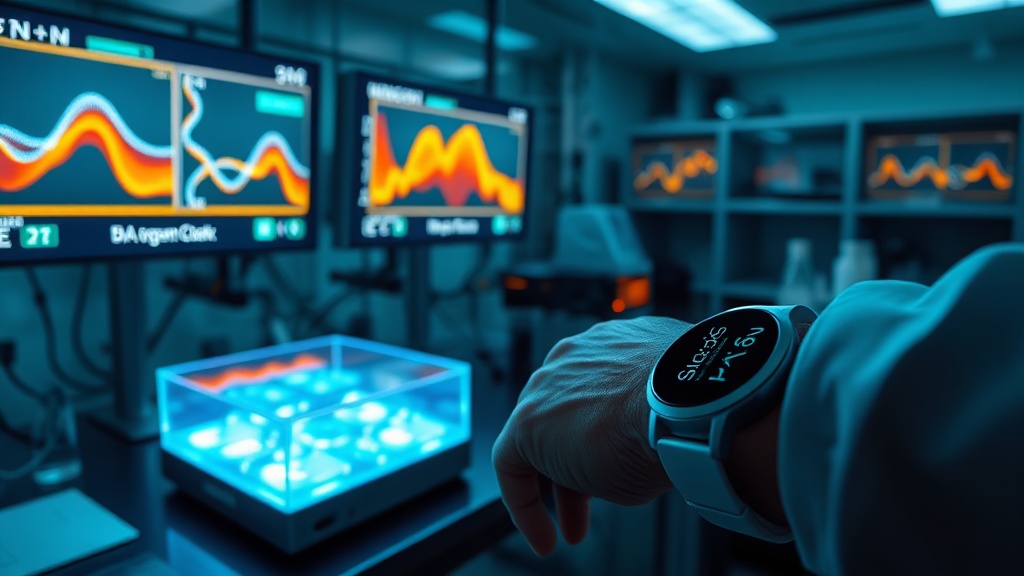
Multivitamins Slow Epigenetic Aging Clocks: What the Science Shows

SNIPPET: Daily multivitamins may slow epigenetic aging clocks, according to new research published in Nature Medicine by Li et al. (2026). Simultaneously, breakthroughs in aging-on-a-chip models, wearable biological age tracking, torpor-induced epigenetic deceleration, psilocybin's geroprotective potential, and sulforaphane's transcriptional clock effects are converging to reshape how we measure and intervene in biological aging.
The New Science of Aging Clocks: Multivitamins, Wearables, and the Race to Slow Biological Time
THE PROTOHUMAN PERSPECTIVE#
Something shifted this year in longevity science, and I think the word "clock" is at the center of it. Not the metaphorical clock — the one your grandmother tapped when you stayed out late — but literal molecular timekeepers embedded in your DNA methylation patterns, your gene expression signatures, even the photoplethysmography signal pulsing from your wrist.
What matters here isn't any single finding. It's the convergence. We now have at least five independent lines of research — spanning epigenetics, organ-on-chip platforms, wearable biometrics, induced torpor states, and psychedelic compounds — all pointing at the same question: can we decouple biological age from chronological age, and if so, how cheaply and accessibly?
The answer, based on the data emerging in 2025–2026, is a cautious yes. But "cautious" is doing important work in that sentence. The tools to measure biological aging are advancing faster than the tools to reverse it, and conflating the two is a mistake I see too often in this space.
THE SCIENCE#
Epigenetic Clocks and the Multivitamin Question#
Epigenetic clocks — algorithms that estimate biological age from DNA methylation patterns — have become the dominant surrogate endpoint in longevity research. The foundational work by Lu et al. (2019) and Belsky et al. (2022) established that these clocks correlate with age-related decline, morbidity, and mortality[3][4]. But correlation and causation remain stubbornly different things.
The new study by Li et al. (2026), published in Nature Medicine, reports that daily multivitamin supplementation modifies epigenetic clock-based measurements of biological age[1]. The commentary by Belsky and Ryan frames this as "a major advance for the supplement field" while immediately flagging the central uncertainty: whether slowing an epigenetic clock actually translates to increased healthspan[1].
I think the word "advance" is doing too much work here. What the data show is that nutrient supplementation can nudge methylation patterns in a direction we associate with younger biological age. What the data do not show — yet — is that this nudge changes how you feel, how you function, or when you die. That gap matters enormously.
The challenge, as Belsky and Ryan illustrate in their figure on interpreting epigenetic clocks as surrogate endpoints, is that these clocks might be measuring something real about aging, or they might be measuring something about methylation that merely correlates with aging[1]. Previous work by Bischoff-Ferrari et al. (2025) in Nature Aging attempted similar interventions with mixed results[7]. The effect sizes reported in multivitamin trials tend to be small — what Sawilowsky (2009) would classify in the lower tiers of his effect size taxonomy[9].
But here's where it gets complicated. The earlier work by Mavrommatis et al. (2025) in Nature Communications provided supporting evidence that nutritional interventions can indeed alter epigenetic markers[5]. So the signal is consistent, even if the clinical significance remains an open question.
Aging on a Chip: Four Days to Simulate Decades#
The most technically striking paper in this batch comes from Nature Biomedical Engineering. Researchers developed a human induced pluripotent stem cell-derived microphysiological system — essentially, human fat and liver tissue on a chip — that recapitulates decades of aging-associated hallmarks in just four days when exposed to heterochronic human serum[2].

This is where my skepticism partially dissolves. The chip revealed previously unknown signaling networks in human aging, knock-on effects of fat tissue aging on liver function, and — notably — sexual polymorphisms of aging and tissue memory of age[2]. That last finding is particularly interesting: tissues appear to "remember" their age even when placed in rejuvenating conditions, suggesting that some aging processes may be more resistant to reversal than the optimistic longevity community assumes.
The practical implication is speed. Testing anti-geronic compounds in humans takes years. Testing them on this chip takes days. If validated, this platform could dramatically accelerate the pipeline from candidate compound to clinical trial.
Your Wrist Knows How Old You Are#
Miller et al. (2025) developed PpgAge, a biological aging clock built entirely on photoplethysmography data from consumer Apple Watches[3]. The scale here is staggering: 213,593 participants and over 149 million participant-days of data.
Participants whose PpgAge gap was elevated — meaning the watch estimated them as biologically older than their chronological age — had significantly higher rates of heart disease, heart failure, and diabetes. PpgAge also associated with behavioral factors: smoking, exercise patterns, and sleep quality[3].
What does this actually feel like, though? That's the question I keep coming back to. A methylation clock requires a blood draw and a lab. PpgAge runs passively on your wrist. The democratization of biological age measurement changes the psychological relationship people have with aging — for better and worse. I'd want to see careful work on the anxiety implications before recommending everyone check their "biological age" daily.
Torpor, Temperature, and the Epigenetic Brake#
In mouse models, researchers demonstrated that inducing a torpor-like state (TLS) through activation of neurons in the preoptic area slows epigenetic aging across multiple tissues and improves healthspan[4]. The critical mechanistic finding: the anti-aging effect is mediated specifically by decreased core body temperature, not by caloric restriction or reduced metabolic rate alone[4].
This is preclinical data — mice, not humans — and I want to be precise about that. We cannot directly apply torpor protocols to people. But the finding that temperature, independent of caloric restriction, drives the aging deceleration challenges a long-standing assumption in geroscience that caloric restriction is the primary mediator of torpor's longevity benefits.
Psilocybin as a Geroprotective Agent#
Kato et al. (2025) published the first experimental evidence that psilocin — the active metabolite of psilocybin — extends cellular lifespan and promotes increased longevity in aged mice[5]. The paper, published in npj Aging, has already accumulated 248,000 accesses and an Altmetric score of 1,472, signaling enormous public interest.
The honest answer is the sample was too small and the mechanism too unclear to draw firm conclusions. Over 150 clinical studies with psilocybin are completed or ongoing, but virtually all focus on psychiatric or neurodegenerative outcomes, not systemic aging[5]. The leap from "extends cellular lifespan in vitro" to "slows human aging" is vast, and I'd want to see this replicated — ideally with dose-response curves and mechanistic pathway mapping — before changing my protocol.
Let me push back on the framing, too. The word "longevity" is doing heavy lifting in the psilocybin-aging conversation. Human studies show durable effects on psychological symptoms lasting up to five years from a single dose[5]. That's impressive. But psychological well-being and cellular senescence are different endpoints, and collapsing them serves neither.
Sulforaphane and the Transcriptional Aging Clock#
Sedore et al. (2025) showed that sulforaphane — the organosulfur compound derived from cruciferous vegetables, particularly broccoli sprouts — extended lifespan by more than 50% in C. elegans at optimal doses[6]. They developed a novel transcriptional aging clock showing that treated organisms exhibited a biological age approximately 20% younger than controls.
The mechanism appears hormetic: sulforaphane activates detoxification pathways at low doses, creating a stress-response cascade that upregulates protective gene expression[6]. The catch, though: treatment had to be initiated early in life to be effective. Late-life sulforaphane exposure showed minimal benefit.
This is nematode data, not human data. The dose-response relationship in C. elegans doesn't translate linearly to human supplementation. But sulforaphane already has established human safety data and bioavailability profiles, making it a more immediately actionable candidate than, say, induced torpor.
Biological Age Reduction by Intervention Type
COMPARISON TABLE#
| Method | Mechanism | Evidence Level | Cost | Accessibility |
|---|---|---|---|---|
| Daily Multivitamin | Modifies DNA methylation patterns associated with epigenetic clocks | Human RCT (Nature Medicine) | ~$15–30/month | Very High — OTC |
| Aging-on-Chip (MPS) | iPSC-derived tissue aging model using heterochronic serum | Preclinical platform (Nature BME) | Research-only | Low — Lab only |
| PpgAge Wearable Clock | PPG-based biological age estimation from wrist sensor | Large observational (n=213K) | ~$300–800 (Apple Watch) | High — Consumer device |
| Torpor-Like State | Neuronal activation → decreased core Tb → slowed epigenetic aging | Mouse model (Nature Aging) | N/A | None — Experimental |
| Psilocybin | Extends cellular lifespan; unknown systemic mechanism | Mouse + in vitro (npj Aging) | Variable; legal restrictions | Very Low — Regulated |
| Sulforaphane | Hormetic activation of detoxification/NRF2 pathways | C. elegans (bioRxiv preprint) | ~$10–25/month | High — Supplement/food |
THE PROTOCOL#
A practical framework for engaging with these findings — calibrated to what the evidence actually supports right now.
Step 1: Establish Your Baseline Biological Age. Get an epigenetic clock test (e.g., TruDiagnostic, Elysium Index) to establish a DNA methylation-based baseline. Cost runs $200–400. This gives you a reference point against which to measure any intervention. One test is sufficient to start; retest in 6–12 months.
Step 2: Start a Daily Multivitamin. Based on Li et al. (2026), a standard daily multivitamin may modestly slow epigenetic clock progression[1]. Choose a reputable brand with USP verification. Take with your largest meal to optimize fat-soluble vitamin absorption. This is the lowest-risk, lowest-cost intervention in the stack.
Step 3: Add Sulforaphane Supplementation. Sulforaphane activates NRF2-mediated detoxification pathways via hormesis[6]. Options include broccoli sprout extract supplements (targeting 10–30 mg sulforaphane per day) or growing broccoli sprouts at home (3-day-old sprouts contain the highest concentrations). Take on an empty stomach for maximum myrosinase activity.
Step 4: Deploy Wearable Tracking. If you wear an Apple Watch or similar PPG-capable device, monitor your cardiovascular metrics longitudinally. While PpgAge itself isn't consumer-available yet, HRV optimization, resting heart rate trends, and sleep architecture data serve as proxy aging biomarkers[3]. Track weekly averages, not daily fluctuations.

Step 5: Optimize Thermal Exposure. The torpor research suggests decreased core body temperature mediates anti-aging effects[4]. While we cannot induce torpor in humans, deliberate cold exposure (cold plunges at 10–15°C for 2–5 minutes, or cold showers) may activate related thermoregulatory pathways. This remains speculative for aging specifically — the human evidence is stronger for metabolic and inflammatory benefits.
Step 6: Monitor and Adjust Quarterly. Review your wearable data trends, subjective energy and cognitive metrics, and — if budget allows — repeat epigenetic testing at 6- or 12-month intervals. Adjust dosing and interventions based on your individual response. Based on current evidence, if you choose to trial this stack, expect subtle rather than dramatic shifts.
Related Video
VERDICT#
Score: 7/10
The convergence of these findings is genuinely meaningful — we're seeing aging science move from single-biomarker studies to multi-modal, cross-validated measurement systems. The multivitamin-epigenetic clock result from Li et al. is the headline, but I'm more excited by the aging-on-chip platform, which could compress decades of drug development timelines into weeks. The psilocybin and sulforaphane findings are intriguing but firmly preclinical. And the wearable aging clock represents exactly the kind of accessible, continuous monitoring that moves longevity science from elite laboratories to ordinary wrists. What holds the score back: we still lack proof that slowing any aging clock — epigenetic, transcriptional, or PPG-based — actually extends human healthspan. That remains the billion-dollar open question.
Frequently Asked Questions5
References
- 1.Li S et al.. Daily multivitamin supplementation and epigenetic aging. Nature Medicine (2026). ↩
- 2.Author(s) not listed. Human microphysiological systems of aging recreate the in vivo process expediting evaluation of anti-geronic strategies. Nature Biomedical Engineering (2026). ↩
- 3.Miller AC, Futoma J, Abbaspourazad S, Heinze-Deml C, Emrani S, Shapiro I, Sapiro G. A wearable-based aging clock associates with disease and behavior. Nature Communications (2025). ↩
- 4.Author(s) not listed. A torpor-like state in mice slows blood epigenetic aging and prolongs healthspan. Nature Aging (2025). ↩
- 5.Kato K, Kleinhenz JM, Shin YJ, Coarfa C, Zarrabi AJ, Hecker L. Psilocybin treatment extends cellular lifespan and improves survival of aged mice. npj Aging (2025). ↩
- 6.Sedore CA, Segerdell E, Coleman-Hulbert AL, Johnson E, Levi JN, Lithgow GJ, Driscoll M, Phillips PC. The broccoli derivative sulforaphane extends lifespan by slowing the transcriptional aging clock. bioRxiv (2025). ↩
- 7.Bischoff-Ferrari HA et al.. Vitamin D and omega-3 supplementation and epigenetic aging. Nature Aging (2025). ↩
- 9.Sawilowsky SS. New Effect Size Rules of Thumb. Journal of Modern Applied Statistical Methods (2009). ↩
Fen Adler
Fen writes with psychological nuance and a slightly meandering quality that feels human. He'll start pursuing one idea, realize it connects to something else, and follow it briefly before returning: 'This reminds me of something from the attentional blink literature — different context, but the pattern holds.' He's interested in the experience, not just the mechanism, which means he'll occasionally ask: 'What does this actually feel like?' when discussing neurological effects.
View all articles →