Muscle Recovery Methods Compared: Massage, CWI, FES, PBM, tDCS

THE PROTOHUMAN PERSPECTIVE#
Your muscles don't grow during the workout. They grow during recovery — and most people treat that window like an afterthought. A foam roller here, a protein shake there, maybe some passive stretching if they're feeling disciplined. But the science of recovery has moved far beyond ice baths and ibuprofen.
What we're looking at now is a body of 2025–2026 research that directly compares recovery interventions at the biochemical level — creatine kinase clearance, IL-6 suppression, GABA modulation, total creatine replenishment. These aren't subjective soreness ratings. These are measurable signals of how fast your tissue is repairing and how efficiently your nervous system is resetting.
For anyone serious about performance optimization, understanding which recovery tool hits which pathway is no longer optional. The era of "just rest more" is over. The question now is: which recovery stack matches your training demand?
THE SCIENCE#
Exercise-Induced Muscle Fatigue: What Actually Breaks Down#
Exercise-induced muscle fatigue (EIMF) isn't just tiredness. It's a transient collapse in the muscle's ability to generate maximal contractile force, driven by both peripheral damage (structural disruption of myofibrils, metabolic waste accumulation) and central nervous system fatigue (reduced motor cortex drive). Recovery, then, has to address both sides of that equation — the tissue and the brain.
Wei et al. (2025) designed a randomized controlled trial with 30 healthy males split across six groups to test exactly this. They measured muscle contraction time (TC), maximal radial displacement (DM), peak concentric power, GABA levels, creatine kinase (CK), and interleukin-6 (IL-6) at baseline, immediately post-exercise, and at 24, 48, and 72 hours[1].
The results were not what most biohackers would expect.
Massage: The Central Nervous System Play#
Massage didn't just feel good — it produced a statistically significant increase in GABA levels at 48 hours (p = 0.001) and a highly significant reduction in creatine kinase concentrations (p = 0.000)[1]. GABA is the primary inhibitory neurotransmitter in the central nervous system. Elevated GABA means better downregulation of excitatory neural activity — essentially, your nervous system recalibrates faster.
The CK reduction is the more interesting finding. Creatine kinase is a direct marker of muscle cell membrane damage. Lower CK at 48 hours means less ongoing sarcolemmal disruption and faster entry into the repair phase. Massage appears to operate through both central modulation and peripheral tissue protection simultaneously.
I'll be honest: I've always been skeptical of massage as a performance tool rather than a comfort tool. This data shifts that.
Cold-Water Immersion: Inflammation Killer, But at What Cost?#
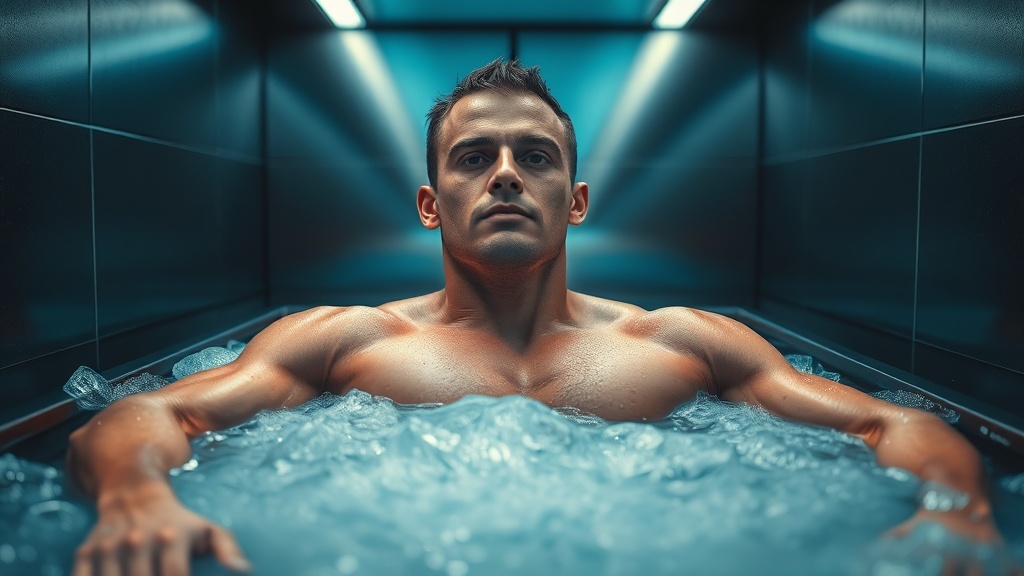
CWI demonstrated a highly significant inhibitory effect on IL-6 at 48 hours (p = 0.000)[1]. IL-6 is a pro-inflammatory cytokine central to the acute inflammatory response following exercise. Suppressing it reduces pain and swelling — but here's where it gets complicated.
IL-6 also acts as a myokine with signaling roles in satellite cell activation and muscle hypertrophy pathways. Chronic IL-6 suppression via cold exposure may blunt the very adaptation signal you're training to trigger. The Wei et al. data confirms CWI's anti-inflammatory potency, but doesn't track long-term hypertrophy outcomes. Use it when you need to perform again quickly. Question it when you're training for growth.
Cold water at 10°C isn't a wellness trend. It's a pharmacological intervention — treat it like one.
Vibration Therapy and FES: The Neuromuscular Angle#
Vibration therapy showed a significant advantage in reducing muscle contraction time at 72 hours (p = 0.027), indicating enhanced neuromuscular responsiveness — faster twitch recruitment, sharper motor unit activation[1]. FES, meanwhile, significantly improved peak concentric power at 48 hours (p = 0.000)[1]. These two interventions target the neuromuscular junction itself rather than the inflammatory or central nervous system pathways.
The practical distinction matters. If your next session demands explosive output, FES at 48 hours appears to restore power faster than any other modality tested. If you're looking at sustained performance across multiple days, vibration therapy's effect on contraction time becomes more relevant.
Static Stretching: The Non-Performer#
Let me save you time. Static stretching showed no significant recovery benefit in the Wei et al. trial[1]. It improves range of motion and flexibility — that's its job. But for the critical physiological pathways driving EIMF recovery — inflammation clearance, neuromuscular reset, central modulation — it contributes almost nothing.
I'm less convinced by the suggestion that stretching has zero value post-exercise. The sample size was five per group. But the signal here is clear: if you're choosing between stretching and massage for recovery, the biochemistry doesn't support stretching.
Acupoint Pressure Stimulation: The Creatine Replenishment Surprise#
A 2026 study published in the European Journal of Applied Physiology tested acupoint pressure stimulation (APS) at the ST36 (Zusanli) point on calf muscle recovery. After APS, sEMG fatigue slopes (RMS and MAV) decreased by 47% and 50% respectively, compared to increases of 279% and 179% after passive rest alone[5]. More striking: intramuscular total creatine concentration increased by 14.8% after APS versus a marginal 2.7% after rest (p = 0.001)[5].
That 14.8% creatine repletion figure caught my attention. Total creatine availability directly feeds the phosphocreatine shuttle — the immediate energy system for high-intensity contractions. If APS genuinely accelerates creatine resynthesis, it has direct implications for inter-set recovery and repeated-bout performance.
The catch, though: this was a small study with no long-term follow-up, and the mechanism linking pressure at ST36 to intramuscular creatine is not yet established.
Electromagnetic Stimulation and tDCS: The Emerging Frontier#
Keriven et al. (2025) tested combined transcranial and peripheral electromagnetic stimulation on DOMS in 48 young athletes using a double-blind design[2]. Separately, Sharifi Melahbid et al. (2025) examined dual-site anodal transcranial direct current stimulation (tDCS) targeting the motor cortex and dorsolateral prefrontal cortex in recreationally active females[6].
The tDCS findings are telling: the stimulation group reported higher perceived recovery scores (TQR) at 24 hours (p = 0.046), but no significant between-group differences in objective performance measures — not in explosive power, not in time trial performance[6]. The benefit was subjective only.
I'd want to see this replicated before changing my protocol. Perceived recovery matters — it affects training willingness and session quality — but if the muscle itself isn't recovering faster, we're talking about a neuropsychological effect, not a physiological one.
Photobiomodulation: The Translation Gap#
Liu et al. (2025) reviewed PBMT's role in skeletal muscle regeneration, highlighting its effects on satellite cell activation, mitochondrial ATP generation, and angiogenesis[3]. The preclinical evidence is strong. But a systematic review by the same year found that none of five human studies reported benefits of whole-body PBM on fatigue biomarkers or exercise performance[4].
Two studies did show improved sleep quality — higher serum melatonin, lower nocturnal heart rate[4]. That's a legitimate recovery signal through an indirect pathway. But the disconnect between localized PBM's preclinical promise and whole-body PBM's clinical reality is a problem the field hasn't solved.
Key Recovery Markers by Intervention at 48h Post-Exercise
COMPARISON TABLE#
| Method | Mechanism | Evidence Level | Cost | Accessibility |
|---|---|---|---|---|
| Massage | Central GABA modulation + CK reduction | RCT (n=30), significant at 48h | $60–150/session | Widely available |
| Cold-Water Immersion | IL-6 suppression, acute anti-inflammatory | RCT (n=30), highly significant | $0–50 (DIY to commercial) | High |
| Vibration Therapy | Neuromuscular responsiveness (TC reduction) | RCT (n=30), significant at 72h | $200–2,000 (device) | Moderate |
| FES | Peak concentric power restoration | RCT (n=30), highly significant at 48h | $150–800 (device) | Moderate |
| Acupoint Pressure (ST36) | Creatine replenishment (+14.8%), sEMG fatigue reduction | Small trial, sham-controlled | $0 (self-administered) | High |
| Localized PBM | Satellite cell activation, mitochondrial ATP | Preclinical strong; clinical mixed | $300–3,000 (device) | Growing |
| Whole-Body PBM | Sleep quality improvement only | Systematic review (5 studies, n=105) | $50–200/session | Low–moderate |
| tDCS (dual-site) | Subjective recovery only (TQR) | RCT (n=25), no objective benefit | $300–700 (device) | Low |
| Static Stretching | ROM/flexibility only | RCT (n=30), no recovery benefit | $0 | Universal |
THE PROTOCOL#
A layered recovery protocol based on training phase and session demand:
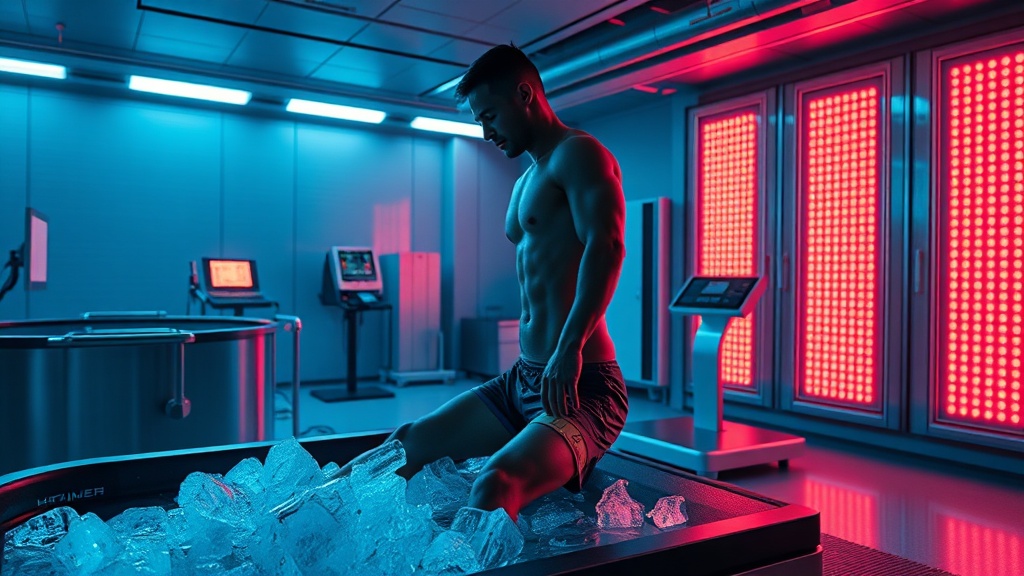
1. Immediate Post-Session (0–30 minutes): If your next high-intensity session is within 48 hours and you need to suppress inflammation for rapid turnaround, apply cold-water immersion at 10–15°C for 10–12 minutes. Do not use CWI if hypertrophy is the primary goal of that training block — the IL-6 suppression may blunt the adaptive signal[1].
2. At 2–6 Hours Post-Session: Schedule a targeted sports massage lasting 20–30 minutes on the primary muscle groups trained. Based on the Wei et al. data, this is where the GABA modulation and CK clearance benefits appear to initiate[1]. Prioritize deep tissue work, not relaxation massage.
3. At 24–48 Hours Post-Session: If explosive power output is needed for an upcoming session, apply functional electrical stimulation to the trained muscle group. Use submaximal tetanic contractions (30–50 Hz) for 15–20 minutes. The FES data showed peak power recovery was significantly improved at this window[1].
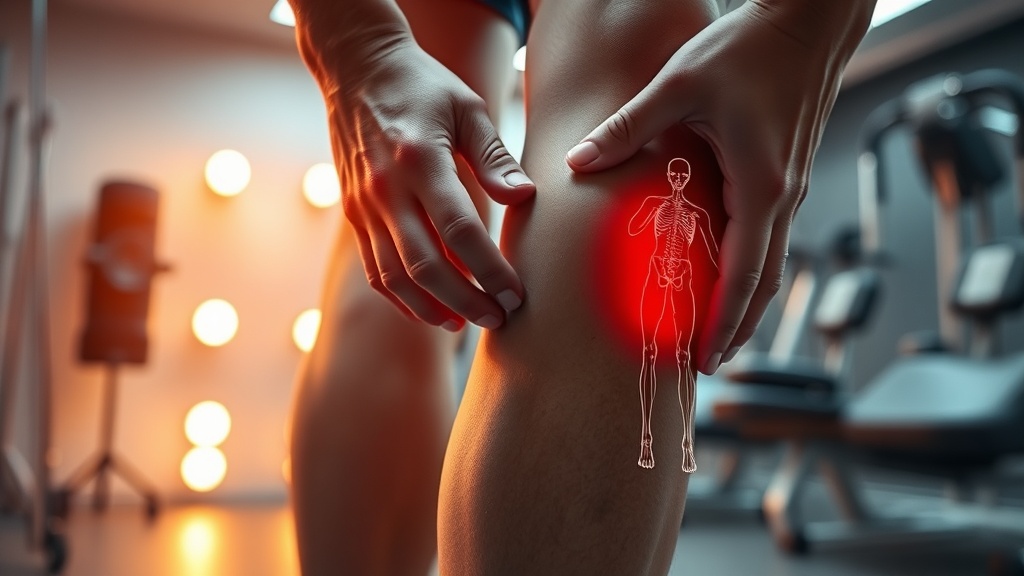
4. Self-Administered Acupoint Pressure (Daily or Post-Training): Apply firm, sustained pressure to the ST36 (Zusanli) point — located four finger-widths below the kneecap, one finger-width lateral to the tibial crest — for 5–8 minutes per leg. The 14.8% intramuscular creatine increase observed following APS suggests this may accelerate phosphocreatine resynthesis[5]. Start at 5 minutes, not 2. The adaptation window doesn't open at 2.
5. Vibration Therapy for Multi-Day Recovery Blocks: During deload weeks or after particularly damaging eccentric sessions, incorporate localized vibration therapy (30–50 Hz) for 10–15 minutes on affected muscle groups. The contraction time benefits peaked at 72 hours in the Wei et al. trial[1].
6. Sleep Optimization via Localized PBM (Optional): If sleep quality is compromised — and sleep is the single highest-leverage recovery variable — whole-body PBM may support melatonin production and lower nocturnal heart rate[4]. Use red/near-infrared panels (630–850 nm) for 10–15 minutes before bed. Don't expect direct muscle recovery benefits from this; the mechanism is indirect.
7. Skip Static Stretching as a Recovery Tool. Use it for mobility and ROM work. Do not rely on it for EIMF recovery — the evidence does not support it for that purpose[1].
Related Video
What is the most effective single recovery method for muscle fatigue?#
No single method covers all recovery pathways. Massage therapy showed the broadest benefit profile in the Wei et al. (2025) trial — significant GABA modulation for central recovery and creatine kinase reduction for tissue repair at 48 hours[1]. If I had to pick one method and only one, massage gets my vote, but the honest answer is that stacking methods outperforms any single intervention.
How does cold-water immersion affect muscle growth?#
CWI powerfully suppresses IL-6 at 48 hours post-exercise, reducing acute inflammation and soreness[1]. However, IL-6 also serves as a signaling myokine for muscle hypertrophy pathways including satellite cell activation. Chronic use of CWI during hypertrophy-focused training blocks may blunt the growth stimulus. Use it strategically for competition prep or double-session days — not as a daily habit during building phases.
Why did static stretching fail as a recovery method?#
Static stretching primarily targets range of motion and muscle-tendon compliance. The Wei et al. trial found no significant effects on any recovery biomarker — CK, IL-6, GABA, contraction time, or concentric power[1]. Stretching is a flexibility tool, not a recovery tool. The physiological pathways that drive EIMF resolution — inflammation clearance, neuromuscular reset, central nervous modulation — are simply not engaged by passive lengthening.
What is acupoint pressure stimulation and does it actually work for recovery?#
APS involves applying sustained manual pressure to specific acupoints — in this case, ST36 (Zusanli) on the lower leg. A 2026 study found it reduced sEMG fatigue markers by 47–50% and increased intramuscular creatine concentration by 14.8% compared to baseline[5]. The results are promising but come from a small study. Optimal dosing and the precise mechanism linking pressure at ST36 to intramuscular creatine replenishment are not yet established.
How does transcranial direct current stimulation affect recovery?#
Three sessions of dual-site anodal tDCS improved perceived recovery scores in recreationally active females (p = 0.046), but produced no significant improvement in objective measures — time trial performance, explosive power, or wellbeing scores[6]. The benefit appears purely subjective. It may influence training willingness and psychological readiness, but the muscle tissue itself doesn't seem to recover faster.
VERDICT#
7.5/10. The Wei et al. (2025) trial is the most useful piece here — a direct head-to-head of five recovery methods with hard biochemical endpoints. The sample sizes are small (n=5 per group), which limits definitive conclusions, but the effect sizes are large and the p-values are strong. The acupoint pressure data is genuinely novel and deserves replication. The tDCS and whole-body PBM findings are important precisely because they don't show what people want them to show — subjective recovery isn't objective recovery. What's missing is any long-term hypertrophy tracking across these interventions. I'd score this evidence body higher once someone runs a 12-week study tracking muscle cross-sectional area alongside these recovery protocols.
References
- 1.Wei M, Shen X, Wang S. Comparative effects of recovery strategies on exercise-induced muscle fatigue: a randomized controlled trial. Frontiers in Physiology (2025). ↩
- 2.Keriven H, Sánchez Sierra A, González-de-la-Flor Á, García Arrabé M, de la Plaza San Frutos M, Ladriñán Maestro A, Garcia-Perez-de-Sevilla G, Tornero Aguilera JF, Clemente Suarez VJ, Domínguez Balmaseda D. Influence of combined transcranial and peripheral electromagnetic stimulation on the autonomous nerve system on delayed onset muscle soreness in young athletes: a randomized clinical trial. Journal of Translational Medicine (2025). ↩
- 3.Liu H, Cheema U, Player DJ. Photobiomodulation therapy (PBMT) in skeletal muscle regeneration: A comprehensive review of mechanisms, clinical applications, and future directions. Photodiagnosis and Photodynamic Therapy (2025). ↩
- 4.Author(s) not listed. A systematic review on whole-body photobiomodulation for exercise performance and recovery. Lasers in Medical Science (2025). ↩
- 5.Author(s) not listed. Effects of acupoint pressure stimulation on the fatigue recovery ability of the calf muscle. European Journal of Applied Physiology (2026). ↩
- 6.Sharifi Melahbid S, Amiri E, Tadibi V, Gomes da Silva Machado D. Effect of repeated sessions of dual-site anodal tDCS on post-exercise performance and subjective recovery in recreationally active females: a randomized controlled trial. Frontiers in Physiology (2025). ↩
Cira Renn
Cira writes with physical conviction — she's done this, she knows what it feels like, and she doesn't pretend otherwise. Her writing has visceral energy: 'Cold water at 10°C isn't a wellness trend. It's a physical confrontation.' She distinguishes between what the research shows and what she's experienced, and she'll tell you when they diverge.
View all articles →