Neuroplasticity and Exercise: How Training Rewires Your Brain

SNIPPET: Exercise directly rewires the brain's structural and functional architecture through neuroplasticity — even in severely injured nervous systems. New research shows resistance training can reverse brain aging by 1.4 to 2.3 years, motor learning reshapes myelin in white matter pathways within four weeks, and spinal cord injury patients exhibit training-induced brain plasticity comparable to healthy controls.
The Science of Neuroplasticity, Exercise, and the Brain That Rebuilds Itself
Neuroplasticity is the nervous system's capacity to reorganize its structure and function in response to experience, injury, or deliberate training. For anyone interested in cognitive longevity, mental health, or peak performance, it represents the single most actionable biological mechanism available — one you can trigger without a prescription. A 2026 randomized controlled trial published in GeroScience found that resistance training reduced biological brain age by up to 2.3 years over two years, as measured by functional MRI-based brain clocks[3]. These findings have rapidly attracted attention from both the clinical rehabilitation and biohacking communities, signaling a shift from aerobic-only dogma toward a more nuanced understanding of how the brain adapts to physical stress.
THE PROTOHUMAN PERSPECTIVE#
We spend a lot of time in this space talking about compounds — nootropics, peptides, NAD+ precursors. And those conversations matter. But the emerging picture from 2026's neuroplasticity research is a reminder that the most potent neurological intervention remains deceptively simple: structured physical movement.
What's new isn't the general claim that exercise is good for your brain. That's been the consensus for two decades. What's new is the specificity. We now have MRI-based evidence showing that four weeks of motor training physically alters myelin density in corticospinal tracts[4]. We have data showing that even after catastrophic spinal cord injury, the brain retains — and sometimes exceeds — healthy levels of structural adaptation[1]. And we have brain aging clocks, trained on thousands of subjects, confirming that lifting heavy things literally winds back the neurological clock[3].
For anyone building a protocol around cognitive performance or neuroprotection, ignoring resistance and motor training is no longer a defensible position.
THE SCIENCE#
Resistance Training Reverses Brain Age#
The LISA (Live Active Successful Aging) randomized trial is, I think, the most significant dataset here. Researchers used resting-state functional MRI data from 2,433 healthy adults to train brain age prediction models, then applied those models to 309 trial participants assigned to heavy-resistance training, moderate-intensity training, or a non-exercise control group[3].
The results over two years: moderate- and heavy-resistance training significantly reduced brain age by 1.4 to 2.3 years (pFDR < 0.05). Heavy training also increased prefrontal functional connectivity — a region critical for executive function, working memory, and impulse regulation.
What I find most interesting about this study is the finding that these effects emerged at the whole-brain level, not within isolated networks. The Default Mode Network, motor systems, cerebellar circuits — none of these individually accounted for the change. Instead, the data suggests a hierarchical organization of brain aging, driven by distributed network-level changes. That's a fundamentally different picture than the "hippocampal volume" story we've been telling about aerobic exercise for years.
But here's where it gets complicated. The study doesn't tell us what the minimum effective dose is. The participants trained for two years. That's commitment most people outside a clinical trial won't sustain. And the difference between moderate and heavy training, while present, wasn't enormous — which actually might be good news for sustainability.
Motor Learning Reshapes Myelin in Four Weeks#
Lehmann et al. (2026) published one of the first in vivo human studies to directly measure myelin-related white matter changes during motor skill learning[4]. Twenty-four healthy adults completed four weeks of balance training, with multi-contrast quantitative MRI tracking changes in tissue density, myelin architecture, neurite structure, and iron content.
The key finding: training-related changes in the aggregate g-ratio — the ratio of the inner axonal diameter to the total outer diameter of a myelinated fiber — were observed in distributed white matter pathways. This included the cortico-ponto-cerebello-thalamo-cortical loop, anterior thalamic radiation, and corticospinal tracts.
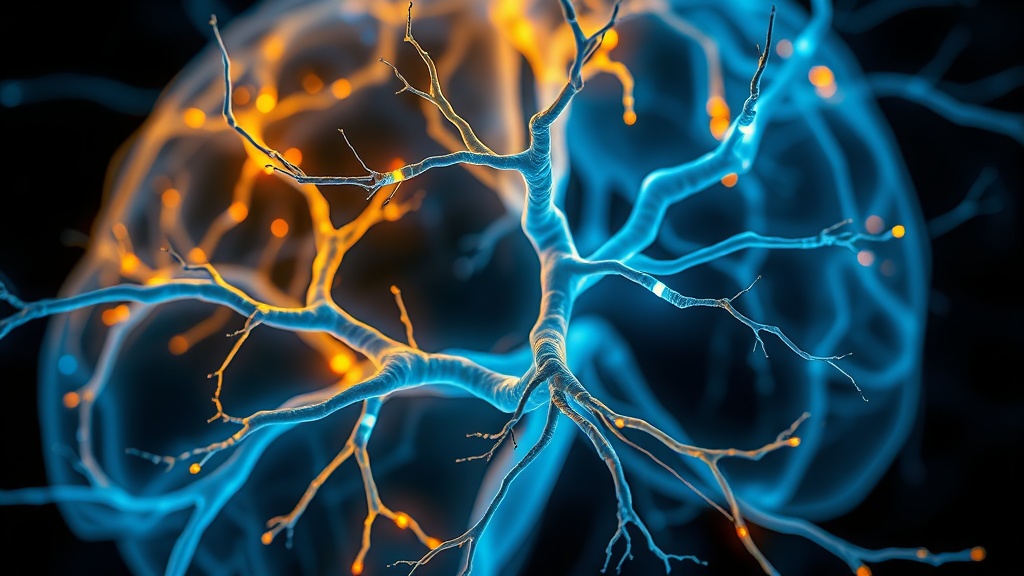
All of these spatially distributed effects converged into a single latent dimension predicting neocortical plasticity. In other words, the brain doesn't adapt piecemeal — it coordinates across tissue types. Myelin, neurites, and glia appear to change together as a unified plasticity response. That's a mechanistic insight that wasn't available before, and it matters because it suggests that the type of training stimulus may matter less than the novelty and coordination demand it places on the motor system.
I should note: 24 subjects is a small sample. The within-subject longitudinal design strengthens it, but I'd want to see replication before drawing strong conclusions about g-ratio modulation as a reliable biomarker.
The Injured Brain Adapts — Sometimes More Than the Healthy One#
This finding genuinely surprised me. A study published in Communications Biology examined 17 chronic spinal cord injury patients and 32 healthy controls, all undergoing a bimanual-bipedal computer-controlled motion game — one hour, four times a week, for one month[1].
Using longitudinal microstructural MRI at 3 Tesla, the researchers tracked changes in both gray and white matter. All SCI patients showed performance improvements, accompanied by spatially and temporally distributed changes in volumetric and myelin-sensitive MRI markers. The SCI patients demonstrated trajectories of training-induced neuroplasticity that were comparable to — and in some cases greater than — healthy controls.
I think the word "greater" is doing important work here. It doesn't mean the injured brain is somehow better at learning. It likely reflects compensatory plasticity — the nervous system, deprived of normal sensory-motor feedback loops, may upregulate its structural adaptation in response to any meaningful input. That's consistent with what we know about autophagy pathways and synaptic homeostasis under conditions of deprivation.
The implication for the biohacking community: if a severely injured nervous system retains this capacity, the ceiling on training-induced plasticity in a healthy brain is almost certainly higher than most people assume.
Psilocin and Neuroplasticity: Promising but Preclinical#
A 2026 study in eLife examined psilocin — the psychoactive metabolite of psilocybin — on human cortical neurons derived from induced pluripotent stem cells[2]. The evidence was rated "convincing" by eLife's assessment panel, with significance rated as "fundamental."
Psilocin provoked a 5-HT2A receptor-mediated increase in BDNF (brain-derived neurotrophic factor) abundance. Transcriptomic profiling showed gene expression signatures that prime neurons toward plasticity. Morphologically, neurons treated with psilocin displayed enhanced complexity, increased synaptic protein expression — particularly in the postsynaptic compartment — and greater excitability and network activity.
Let me push back slightly, though. These are iPSC-derived neurons in a dish. They are not a human brain experiencing psilocybin during psychotherapy. The gap between in vitro neuroplasticity markers and actual clinical outcomes in depression or anxiety is wide. The study is valuable precisely because it isolates the cellular mechanism — but anyone interpreting this as "psilocybin rewires your brain" is skipping several chapters.
Brain Age Reduction by Resistance Training Intensity
COMPARISON TABLE#
| Method | Mechanism | Evidence Level | Cost | Accessibility |
|---|---|---|---|---|
| Heavy Resistance Training | Distributed network-level connectivity changes; prefrontal FC increase | RCT, n=309, 2-year follow-up | Low (gym access) | High |
| Moderate Resistance Training | Whole-brain aging deceleration (–1.4 years) | RCT, n=309, 2-year follow-up | Low | High |
| Balance/Motor Skill Training | Myelin remodeling, g-ratio modulation in white matter | Longitudinal within-subject, n=24 | Low | High |
| Bimanual-Bipedal Rehab Gaming | Gray + white matter structural plasticity (even post-SCI) | Controlled study, n=49 | Moderate (specialized equipment) | Moderate |
| Psilocin (5-HT2A agonist) | BDNF upregulation, synaptic protein expression, neuronal complexity | In vitro iPSC-derived neurons | Varies (legal/clinical access) | Low (regulatory barriers) |
| Aerobic Exercise (traditional) | Hippocampal volume, BDNF release | Multiple RCTs, meta-analyses | Low | High |
THE PROTOCOL#
A neuroplasticity-focused training protocol based on the current evidence. This is not a prescription — it's a framework derived from the studies discussed above. Adjust based on your training history, injury status, and access.
Step 1: Establish a Resistance Training Base (Weeks 1–4) Begin with moderate-intensity resistance training, 3 sessions per week. Focus on compound movements — squats, deadlifts, overhead press, rows. The LISA trial used both moderate and heavy protocols; starting moderate allows adaptation and reduces injury risk[3].
Step 2: Progress to Heavy Resistance (Weeks 5–12) Increase load to 75–85% of one-rep max for primary lifts, maintaining 3–4 sessions per week. The brain aging clock data showed heavier training produced the larger effect (–2.3 years vs. –1.4 years), suggesting intensity matters for neuroplastic outcomes[3].
Step 3: Add Novel Motor Skill Training (Ongoing) Incorporate a balance or coordination challenge 2–3 times per week. This could be slackline training, juggling, dance, or a balance board. Lehmann et al. demonstrated measurable myelin changes from four weeks of balance training[4]. The key variable appears to be coordinative novelty — not just moving, but learning new movement patterns.
Step 4: Incorporate Bimanual-Bipedal Coordination (2× per week) Based on the SCI rehabilitation data, tasks that require simultaneous use of both hands and feet — such as rowing, swimming, or coordination-based gaming — may drive broader structural plasticity across gray and white matter[1].

Step 5: Protect the Neuroplastic Window Prioritize 7–9 hours of sleep. Neuroplasticity consolidation — particularly myelin remodeling and synaptic strengthening — depends heavily on sleep-dependent processes. Consider tracking HRV as a proxy for recovery readiness.
Step 6: Monitor and Adjust Over Months, Not Weeks The LISA trial measured outcomes at 1 and 2 years. Lehmann's myelin study showed changes at 4 weeks. Expect structural adaptations to be slow and cumulative. If you're optimizing for brain health, think in seasons, not cycles.
Related Video
VERDICT#
8.5 / 10
The convergence of these studies is striking. We're no longer arguing about whether exercise changes the brain — we're mapping how, at the level of myelin, g-ratios, and whole-brain aging clocks. The LISA trial is the standout: a large, well-designed RCT with a two-year follow-up showing measurable brain age reversal from resistance training. Lehmann's myelin work adds mechanistic depth, and the SCI data is genuinely moving. I'm docking points because the motor learning study is small (n=24), the psilocin findings remain preclinical, and we still lack clear dose-response curves for translating these findings into optimized protocols. But as a body of evidence for exercise as the most accessible neuroplasticity intervention available? This is as strong as it's been.
Frequently Asked Questions5
References
- 1.Emmenegger T. M. et al.. Neuronal plasticity during motor rehabilitation training after spinal cord injury. Communications Biology (2026). ↩
- 2.Psilocin fosters neuroplasticity in iPSC-derived human cortical neurons. eLife (2026). ↩
- 3.Randomized controlled trial of resistance exercise and brain aging clocks. GeroScience (2026). ↩
- 4.Lehmann N. et al.. Motor learning induces myelin-related white matter changes revealed by MRI-based in vivo histology. Communications Biology (2026). ↩
- 5.Zhang K., Fu Y. et al.. Exploring the landscape of physical activity and neuroplasticity research: a comprehensive bibliometric review. Frontiers in Sports and Active Living (2025). ↩
- 6.Rosso C., Brustio P. R., Manuello J., Rainoldi A.. Neuroplasticity of Brain Networks Through Exercise: A Narrative Review About Effect of Types, Intensities, and Durations. Sports (Basel) (2025). ↩
Fen Adler
Fen writes with psychological nuance and a slightly meandering quality that feels human. He'll start pursuing one idea, realize it connects to something else, and follow it briefly before returning: 'This reminds me of something from the attentional blink literature — different context, but the pattern holds.' He's interested in the experience, not just the mechanism, which means he'll occasionally ask: 'What does this actually feel like?' when discussing neurological effects.
View all articles →