Peptides in Sports Medicine: What the Evidence Actually Shows

SNIPPET: Therapeutic peptides like BPC-157, TB-500, and growth hormone secretagogues are flooding sports medicine clinics, but the honest reality is that almost all evidence remains preclinical. Multiple 2026 reviews confirm strong mechanistic plausibility across PI3K/Akt, mTOR, and IGF-1 pathways, yet human clinical trials are virtually absent. Proceed with caution.
The Boom of Peptides in Sports Medicine: Do We Know Anything, or Are We Just Injecting Hope?
THE PROTOHUMAN PERSPECTIVE#
Peptides represent something genuinely interesting for human performance — short amino acid chains that can tap directly into the signaling cascades governing tissue repair, inflammation resolution, and neuromuscular adaptation. They sit in a pharmacological sweet spot between crude small molecules and bulky biologics. For anyone invested in optimizing recovery, extending athletic careers, or pushing the boundaries of musculoskeletal regeneration, peptides look like the next frontier.
But here's where it gets complicated. The gap between what peptides can do in a petri dish and what they actually do in a living, sweating human athlete is enormous. And the sports medicine world has rushed past that gap, building entire clinical practices on mechanistic plausibility rather than clinical proof. This matters because the people injecting these compounds are not terminally ill patients with no options — they're athletes making elective decisions about their bodies based on evidence that doesn't yet exist in the form it needs to.
THE SCIENCE#
What Exactly Are Therapeutic Peptides?#
Therapeutic peptides are short chains of amino acids — typically between 2 and 50 residues — purposefully engineered or naturally derived to modulate specific biological pathways. They differ from conventional drugs in their target specificity and from large biologics in their chemical tractability[3]. As the Indian Journal of Orthopaedics review published in March 2026 makes clear, there's a critical distinction most practitioners ignore: bioactive peptides (naturally occurring, food-derived) and therapeutic peptides (rationally designed pharmaceutical agents) are subject to entirely different regulatory pathways and evidentiary requirements[3].
This distinction matters. A lot.
The Signaling Cascade Story#
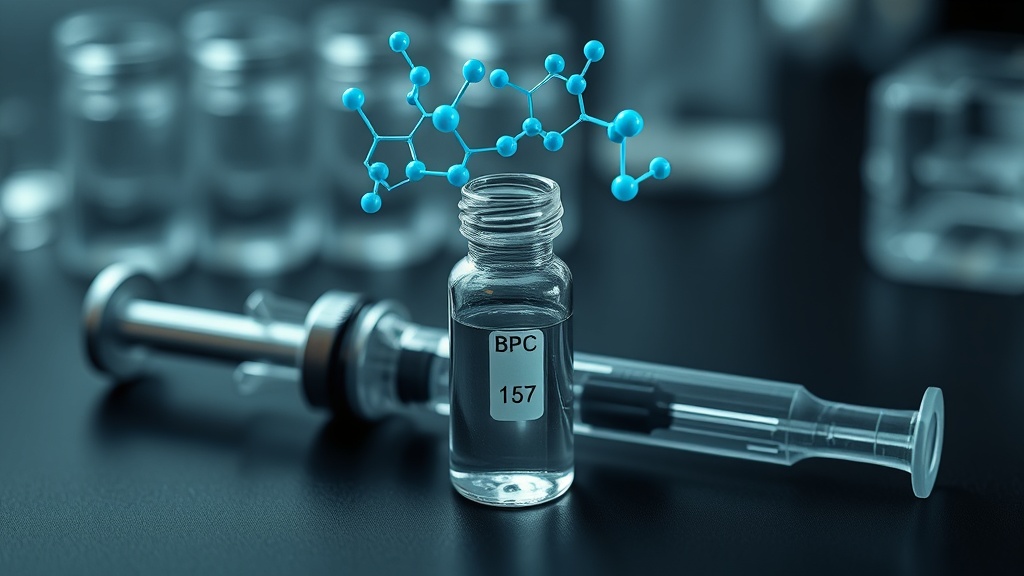
The mechanistic case for peptides in sports medicine is, I'll admit, compelling on paper. Rahman et al. (2026) detail how wound-healing peptides such as BPC-157, TB-500 (Thymosin Beta-4), and GHK-Cu operate through angiogenesis promotion, integrin-mediated extracellular matrix remodeling, and direct fibroblast activation[1]. These aren't vague hand-waving mechanisms — they're specific molecular pathways.
BPC-157 acts on the PI3K/Akt and MAPK signaling cascades, promoting endothelial cell migration and NO-mediated vasodilation. TB-500 upregulates actin polymerization, which is essential for cell migration during wound healing. GHK-Cu drives collagen synthesis and has downstream effects on TGF-β signaling[1].
Growth hormone secretagogues — ipamorelin, CJC-1295, tesamorelin, sermorelin, AOD-9604 — take a different route. They stimulate pulsatile GH release from the anterior pituitary, activating IGF-1 signaling and satellite cell proliferation, the fundamental mechanism for skeletal muscle repair[1]. The appeal for athletes recovering from surgery or chronic tendon injuries is obvious.
Then there's the recovery-enhancing class: epithalon targeting telomerase activation and circadian rhythm optimization, delta sleep-inducing peptide (DSIP) acting on sleep architecture — which directly affects HRV optimization and autonomic recovery — and pinealon modulating mitochondrial efficiency through its effects on cellular energy metabolism[1].
The Neuroactive Angle#
Less discussed but equally relevant: neuroactive peptides like selank, semax, and dihexa enhance brain-derived neurotrophic factor (BDNF) expression and HGF/c-Met pathways critical to neuroplasticity[1]. For athletes recovering from concussion or dealing with chronic neuroinflammation, this is the frontier that interests me most — and the one with the least human data.
The Problem: Where Are the Clinical Trials?#
Here's where I have to dismantle the sales pitch. Every single major review published in the last 12 months reaches the same conclusion: preclinical promise, clinical vacuum.
Rahman et al. state it plainly: "Although preclinical studies are promising, there is a current lack of clinical trials"[1]. The Indian Journal of Orthopaedics review found that "while mechanistic plausibility remains strong across peptide classes, clinical maturity varies significantly" — with only collagen peptides and GLP-1 analogues demonstrating what they call "robust clinical translation"[3]. Everything else? Preclinical stages. DeFoor and Dekker, writing in Arthroscopy, flag the same gap from a military sports medicine perspective[2].
The Chan et al. review in the Journal of Stem Cell Research attempts to provide dosing strategies for compounds like BPC-157 and ipamorelin, but — and this is critical — those dosing protocols are derived from animal pharmacokinetics and practitioner consensus, not from controlled human dose-finding studies[4]. The Cmax, AUC, and half-life parameters that would normally inform a clinical dosing regimen simply don't exist for most of these peptides in humans.
Gutierrez Castrellon et al. confirm that peptides "generally demonstrate favorable safety profiles with minimal adverse events" but immediately note that "challenges remain in improving peptide stability and delivery"[5]. Favorable safety in short-term observation is not the same as established long-term safety. Anyone telling you otherwise either hasn't read the literature or is trying to sell you something.
What Actually Has Evidence?#
Let me be precise about what has crossed the translational threshold:
- Collagen peptides: Multiple human RCTs supporting joint and tendon health. Real evidence.
- GLP-1 analogues (semaglutide, etc.): FDA-approved, extensively trialed. Not sports-specific but metabolically relevant.
- BPC-157: Strong rodent data across gastric, tendon, and ligament models. Zero Phase III human trials.
- TB-500: Animal wound-healing data. Limited human safety data.
- Ipamorelin/CJC-1295: GH release confirmed in humans. Long-term musculoskeletal outcomes? Unknown.
Clinical Evidence Maturity by Peptide Class
COMPARISON TABLE#
| Method | Mechanism | Evidence Level | Cost (Monthly Est.) | Accessibility |
|---|---|---|---|---|
| BPC-157 (injectable) | PI3K/Akt, angiogenesis, ECM remodeling | Preclinical (animal models) | $150–$400 | Grey-market compounding pharmacies |
| TB-500 (injectable) | Actin polymerization, cell migration | Preclinical (animal) | $200–$500 | Grey-market, limited clinical supply |
| Ipamorelin + CJC-1295 | Pulsatile GH release, IGF-1 activation | Limited human PK data | $250–$600 | Compounding pharmacies (prescription) |
| Collagen Peptides (oral) | Direct substrate for connective tissue | Multiple human RCTs | $30–$60 | OTC, widely available |
| PRP Injection | Autologous growth factor delivery | Moderate human trial data | $500–$1,500/session | Sports medicine clinics |
| GLP-1 Agonists (Rx) | Metabolic regulation, body composition | Extensive Phase III data | $800–$1,200 (Rx) | Prescription, FDA-approved |
THE PROTOCOL#
If you choose to explore peptides for sports medicine recovery — and I want to be explicit that this is based on preclinical extrapolation, not established clinical protocols — here's how to approach it with minimal stupidity.
Step 1: Get baseline bloodwork. IGF-1, fasting GH, comprehensive metabolic panel, fasting insulin, inflammatory markers (hsCRP, IL-6 if available). You cannot assess whether a GH secretagogue is doing anything without a baseline. This is non-negotiable.
Step 2: Start with what actually has human evidence. Collagen peptides (15g daily, taken 30–60 minutes before training with 50mg vitamin C) have replicated human trial support for tendon and joint tissue synthesis. This is your foundation, not the exotic stuff.
Step 3: If pursuing BPC-157, understand what you're doing. Typical practitioner protocols use 250–500 mcg subcutaneously, once or twice daily, near the injury site. This dosing derives from rodent allometric scaling, not human dose-finding studies[4]. You are self-experimenting. Track outcomes systematically — pain scores, range of motion, ultrasound imaging if possible.
Step 4: GH secretagogue stacking requires monitoring. Ipamorelin (200–300 mcg) combined with CJC-1295 (100 mcg) administered subcutaneously before bed mimics the natural nocturnal GH pulse. Monitor IGF-1 levels at 4-week intervals. Discontinue if IGF-1 exceeds the upper physiological range for your age — supraphysiological IGF-1 carries theoretical oncological risk that is not adequately studied in this context[1].

Step 5: Cycle and reassess. Most practitioners recommend 8–12 week cycles for GH secretagogues with 4-week washout periods. There is no clinical trial data supporting this specific cycling approach — it's empirical consensus. Reassess bloodwork post-cycle.
Step 6: Prioritize the fundamentals that peptides cannot replace. Sleep architecture (7–9 hours, consistent timing), protein intake (1.6–2.2g/kg), progressive overload in training, and stress management via autonomic regulation. No peptide compensates for broken fundamentals. None.
Related Video
What are therapeutic peptides in sports medicine?#
Therapeutic peptides are short amino acid chains — typically 2 to 50 residues — designed to modulate specific signaling pathways involved in tissue repair, inflammation, and recovery. In sports medicine, the most discussed include BPC-157, TB-500, and growth hormone secretagogues like ipamorelin. They sit pharmacologically between small molecule drugs and large biologics, offering high target specificity[3].
Why is BPC-157 popular among athletes despite limited human data?#
BPC-157 has strong preclinical data showing accelerated healing of tendons, ligaments, and gut tissue in rodent models, acting through PI3K/Akt and MAPK pathways to promote angiogenesis and fibroblast activation[1]. Athletes and sports medicine practitioners have extrapolated these findings into clinical use because the mechanistic rationale is strong and reported side effects appear minimal. But I want to be direct: zero Phase III human trials exist, and popularity is not evidence.
How do growth hormone secretagogues differ from exogenous HGH?#
Secretagogues like ipamorelin and CJC-1295 stimulate your own pituitary to release GH in a pulsatile pattern, preserving the natural feedback loop, whereas exogenous HGH delivers a flat, supraphysiological dose that suppresses endogenous production[1]. This pulsatile release more closely mimics normal physiology and may carry a lower risk profile — though long-term comparative data in athletes doesn't exist yet.
When will we have real clinical trial data on sports medicine peptides?#
Honestly, we don't know yet. Rahman et al. (2026) explicitly call for randomized controlled trials as a priority, and several peptides are in early-phase clinical development[1]. The regulatory landscape is complicated by the fact that many peptides are available through compounding pharmacies without the standard FDA approval pathway. I'd estimate 3–5 years before we see meaningful Phase II/III data on the most popular compounds, if funding materializes.
Who should avoid peptide therapy entirely?#
Anyone with a history of hormone-sensitive cancers should avoid GH secretagogues due to the IGF-1 proliferative signaling risk. Pregnant or breastfeeding individuals, anyone under 18, and people with active malignancies are absolute contraindications. If you're on immunosuppressive therapy, neuroactive peptides like selank or semax could theoretically interfere with neuroinflammatory regulation in unpredictable ways[1]. When in doubt, don't.
VERDICT#
Score: 5/10
The mechanistic science is genuinely interesting — peptides modulate real, well-characterized pathways in tissue repair and recovery. I'm not dismissing that. But the clinical evidence base is, as of 2026, almost entirely preclinical. The sports medicine peptide space is built on rodent data, practitioner anecdote, and patient enthusiasm rather than the controlled human trials that should precede widespread clinical adoption. Collagen peptides and GLP-1 analogues are the exceptions — they've earned their place. Everything else is an informed gamble at best. The field needs Phase II/III trials, standardized compounding quality controls, and honest conversations about what we know versus what we hope. Until then, this is biohacking, not evidence-based medicine. And that distinction matters.
References
- 1.Rahman OF, Lee SJ, Seeds WA. Therapeutic Peptides in Orthopaedics: Applications, Challenges, and Future Directions. J Am Acad Orthop Surg Glob Res Rev (2026). ↩
- 2.DeFoor MT, Dekker TJ. Injectable Therapeutic Peptides—An Adjunct to Regenerative Medicine and Sports Performance?. Arthroscopy (2025). ↩
- 3.Author(s) not listed. Therapeutic and Bioactive Peptides in Musculoskeletal Medicine: A Narrative Review. Indian Journal of Orthopaedics (2026). ↩
- 4.Chan MKS, Wong MBF, Chernykh V, Iemeliyanova M, Alvin G, Nishkumai O, Lakey JRT, Klokol D. Emerging Anabolic and Regenerative Peptides in Athletic Body Re-composition and Bodybuilding: Mechanisms of Action, Dosing Strategies, and Evidence Review. Journal of Stem Cell Research (2025). ↩
- 5.Gutierrez Castrellon P, Lernhardt W, Jenkins I, Casazza K, Robinson B, Mathur E, Andrade D, Uffens J, Andrade-Platas D, Medina-Nolasco A, Lakey JRT. Safety and Efficacy of Peptide-Based Therapeutics in Health Sciences: From Bench to Bedside. Am J Biomed Sci & Res (2025). ↩
Petra Luun
Petra writes with clinical depth and a slight edge of frustration at how poorly understood this space is by both advocates and critics. She will dismantle bro-science and mainstream medical conservatism with equal energy in the same article. Her writing has surgical precision: she explains receptor pharmacology, feedback loops, and half-life considerations in one coherent thread without dumbing any of it down.
View all articles →