
PG-102 GLP-1/GLP-2 Bispecific Agonist: Phase I Trial Results

THE PROTOHUMAN PERSPECTIVE#
The incretin drug landscape just shifted — and most people haven't noticed yet.
For years, the GLP-1 receptor agonist class has dominated metabolic medicine. Semaglutide, tirzepatide, survodutide — each iteration stacks another receptor target onto the GLP-1 backbone. But every one of these compounds shares the same fundamental trade-off: glycemic control comes coupled with significant weight loss, which sounds ideal until you're dealing with advanced type 2 diabetes patients who are already catabolic. These are people losing weight because their disease is destroying them, not because they need to slim down.
PG-102 breaks that coupling. For the first time, a dual incretin agonist demonstrates sustained glucose control without driving further catabolic weight loss. That's not a marginal improvement — it's a mechanistic pivot that redefines who incretin therapy can serve. If you care about metabolic optimization and the future of precision medicine, this is the data point to track.
THE SCIENCE#
What Is PG-102, Exactly?#
PG-102 is a potency-optimized bispecific Fc fusion protein engineered to simultaneously engage both the GLP-1 receptor (GLP-1R) and the GLP-2 receptor (GLP-2R). Published March 24, 2026 in Nature Communications by Yang, Kim, Son et al., this is the first compound to combine these two receptor targets in a single molecule and advance to human clinical testing [1].
Why does this matter for human performance and longevity? Because advanced T2D — characterized by uncontrolled hyperglycemia (HbA1c consistently above 9%) and involuntary weight loss — represents a metabolic failure state that current GLP-1 agonists handle poorly. According to Abdul-Ghani and DeFronzo, patients with very high HbA1c often have no effective option beyond insulin, which carries its own cascade of complications [1]. PG-102 offers a mechanistically distinct alternative.
The adoption signal is early but real: the compound has already completed a phase I human trial (NCT06309667), and the bispecific agonist approach aligns with a broader industry shift toward multi-receptor incretin strategies, as documented in a 2026 review by researchers in Current Obesity Reports [4].
The Preclinical Story: db/db Mice and the Weight Paradox#
The preclinical work used db/db mice — a model of severe, late-stage T2D with leptin receptor deficiency. These animals don't just have high blood sugar; they exhibit catabolic weight loss, meaning their bodies are breaking down tissue because β-cell function has collapsed. This is the mouse equivalent of the patient your endocrinologist is most worried about.
Here's what the data showed: PG-102 achieved superior and sustained glycemic control compared with both semaglutide and tirzepatide in this model. That alone would be noteworthy. But the critical finding is that it did so while preserving body weight [1].
Let me be direct about why this matters. Semaglutide and tirzepatide are extraordinary drugs for obesity-driven T2D. Their weight loss effects are, in many patients, a feature. But in advanced diabetes with catabolic physiology, further weight loss is iatrogenic harm. PG-102 uncouples glycemic control from weight reduction — and that's a fundamentally different pharmacological proposition.
Mechanism: Not Insulin-Driven#
The mechanistic data challenges assumptions. PG-102's glycemic effects were not driven by acute insulinotropic activity — the standard mechanism by which GLP-1 agonists lower blood sugar. Instead, Yang et al. identified two alternative pathways: β-cell preservation and enhanced peripheral glucose uptake [1].
This distinction has real downstream signaling implications. Most GLP-1R agonists work by amplifying the Gs/cAMP/PKA/EPAC axis to potentiate glucose-dependent insulin secretion from remaining β-cells [5]. PG-102 appears to sidestep this by protecting β-cell mass itself — preventing further loss rather than squeezing more insulin out of a failing pancreas. The enhanced glucose uptake component suggests tissue-level metabolic efficiency improvements, possibly involving GLUT4 translocation or improved mitochondrial substrate utilization, though the authors don't fully characterize this pathway yet.
I'd want to see more granular data on the glucose uptake mechanism. The claim is strong; the mechanistic detail is still thin. That said, the β-cell preservation finding aligns with what Zhao et al. reported for ACF210, a dual GLP-1/APJ agonist that also demonstrated β-cell functional improvements in db/db mice [2].
The Bispecific Advantage: Why Dual Targeting Outperforms Combination#
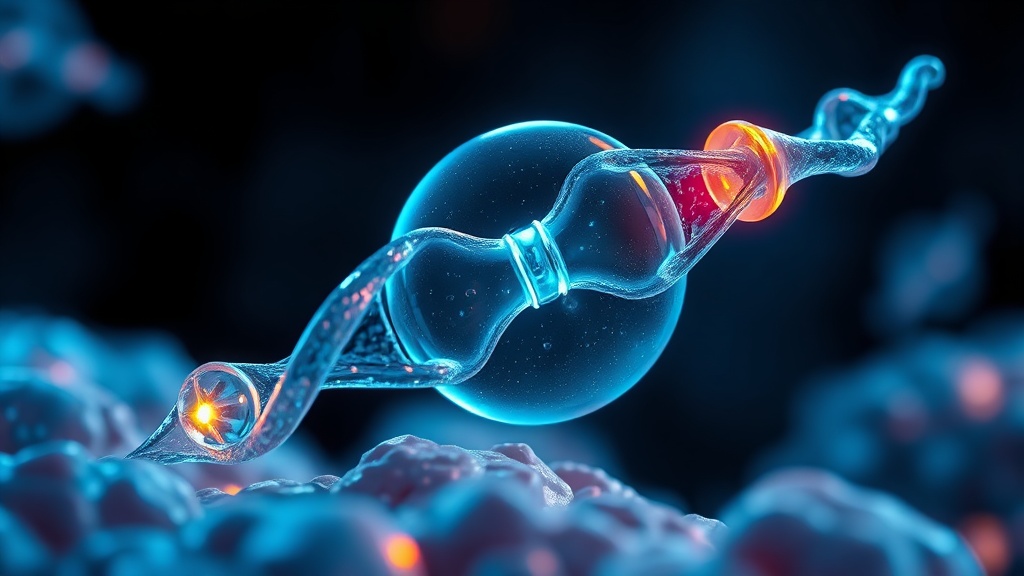
Here's where PG-102 gets genuinely interesting from a receptor pharmacology standpoint. The bispecific molecule outperformed both monospecific Fc fusion agonists and their physical combination [1]. That's not a trivial finding — it means the therapeutic effect requires coordinated, simultaneous engagement of GLP-1R and GLP-2R on the same cell or in close proximity.
Yang et al. demonstrated that PG-102 promoted coordinated receptor trafficking with delayed internalization. In plain terms: when GLP-1R and GLP-2R are engaged simultaneously by a single bispecific molecule, the receptors stay on the cell surface longer before being internalized. This extends the signaling window and changes the qualitative nature of the downstream response.
This is consistent with emerging data on cis-targeting bispecific antibodies, where spatial co-engagement of two receptors creates signaling outputs that neither receptor achieves alone [1]. The AUC of receptor activation — not just the Cmax — shifts fundamentally.
The GLP-2R Component: The Underappreciated Half#
Most readers will be familiar with GLP-1R. GLP-2R is less well known outside gastroenterology.
GLP-2 is co-secreted with GLP-1 from intestinal L-cells [6]. Its primary known role is intestinotrophic — promoting gut mucosal growth and barrier integrity. Teduglutide, a GLP-2 analog, is already approved for short bowel syndrome [1]. But GLP-2R is also expressed on pancreatic cells and in the CNS, and its metabolic roles are underexplored.
The catch, though. We don't yet have a complete picture of what GLP-2R engagement contributes in a metabolic context. The Yang et al. data clearly shows that removing GLP-2R activation eliminates the β-cell preservation and weight-sparing effects. But whether GLP-2R signaling directly protects β-cells, improves nutrient absorption efficiency, modulates gut-pancreas crosstalk, or something else entirely — that's still an open question. I'm less convinced we understand the why than the what.
Phase I Human Trial: Safety First#
The phase I trial enrolled 24 adults with overweight (BMI 25–30 kg/m²) at a single center in the Republic of Korea. This was a randomized, double-blind, placebo-controlled multiple ascending dose study with three weekly dose cohorts: 15 mg, 30 mg, and 30/60 mg [1].
Key safety findings:
- Treatment-emergent adverse events (TEAEs): 83.3% in each PG-102 cohort vs. 66.7% in placebo
- Treatment-related AEs: 83.3% PG-102 vs. 50.0% placebo
- Serious adverse events: Zero
- Discontinuations due to AEs: Zero
- GI events: Mild to moderate
The honest assessment: this is a small, early-phase safety trial. Twenty-four participants tell us the drug doesn't cause acute harm at these doses. That's necessary but insufficient. We cannot extrapolate efficacy, durability, or long-term safety from this data. The preclinical efficacy story is compelling; the human efficacy story hasn't been written yet.
Phase I Adverse Event Rates: PG-102 vs Placebo
COMPARISON TABLE#
| Method | Mechanism | Evidence Level | Cost | Accessibility |
|---|---|---|---|---|
| PG-102 (GLP-1/GLP-2) | Bispecific Fc fusion; β-cell preservation + glucose uptake; delayed receptor internalization | Phase I human trial + preclinical (db/db mice) | Unknown (investigational) | Not available; clinical trials only |
| Semaglutide (GLP-1) | GLP-1R monoagonist; insulin secretion + appetite suppression + gastric slowing | Multiple phase III RCTs; FDA-approved | ~$900–1,350/month (US) | Widely available globally |
| Tirzepatide (GLP-1/GIP) | Dual GLP-1R/GIPR agonist; enhanced insulinotropic signaling via GIP co-activation | Multiple phase III RCTs; FDA-approved | ~$1,000–1,100/month (US) | Widely available in major markets |
| Cotadutide (GLP-1/GCGR) | Dual GLP-1R/GCGR agonist; hepatic fat reduction + BAT activation + insulin sensitization | Phase II trials; preclinical mechanistic data | Unknown (investigational) | Clinical trials only |
| ACF210 (GLP-1/APJ) | Dual GLP-1R/APJ agonist; β-cell function + multi-organ cardio-renal protection | Preclinical only (db/db + HFD/STZ mice) | Unknown (investigational) | Preclinical stage |
| Survodutide (GLP-1/GCGR) | Dual GLP-1R/GCGR agonist; weight loss + hepatic steatosis reduction | Phase II RCTs | Unknown (investigational) | Clinical trials only |
THE PROTOCOL#
This section is speculative by necessity — PG-102 is an investigational compound not available outside clinical trials. No one should attempt to source or self-administer this drug. What I can offer is a framework for monitoring the metabolic parameters this research targets, relevant to anyone managing advanced T2D or optimizing metabolic health.
Step 1: Establish Your Metabolic Baseline Get comprehensive bloodwork: fasting glucose, HbA1c, fasting insulin, C-peptide (a direct marker of endogenous β-cell function), and a lipid panel. C-peptide is the key metric here — it tells you how much insulin your pancreas is actually producing, independent of exogenous insulin administration. Request this specifically; it's often omitted from standard panels.
Step 2: Assess β-Cell Reserve If C-peptide is low (below 0.6 ng/mL fasting), you're in the population PG-102 was designed for — patients with diminished β-cell function where standard GLP-1 agonists may have limited efficacy. Discuss with your endocrinologist whether your current GLP-1 agonist (if you're on one) is achieving adequate glycemic control without excessive weight loss.
Step 3: Monitor for Catabolic Weight Loss Track body composition, not just scale weight. DEXA scans every 6–12 months provide lean mass and fat mass data. If you're losing lean mass while on incretin therapy, that's a signal your treatment may be contributing to catabolic physiology rather than healthy fat reduction.
Step 4: Optimize GLP-2-Adjacent Gut Health While we can't access GLP-2R agonism directly outside of teduglutide (approved only for short bowel syndrome), supporting intestinal L-cell function through dietary strategies may modestly increase endogenous GLP-2 co-secretion. Fermentable fibers (inulin, resistant starch, beta-glucan) at 15–25g daily stimulate L-cell GLP-1 and GLP-2 release [6]. Time fiber intake 20–30 minutes before main meals.

Step 5: Track Glycemic Variability with CGM Continuous glucose monitoring captures what HbA1c misses — glycemic variability, time in range, and postprandial excursions. If you're evaluating any incretin therapy's real-world effect, CGM data over 14-day windows provides far superior resolution. Target time-in-range (70–180 mg/dL) above 70%.
Step 6: Stay Informed on Trial Access PG-102 is registered at ClinicalTrials.gov (NCT06309667). If you have advanced T2D with inadequate glycemic control on current therapies, discuss trial eligibility with your care team. Phase II trials will likely expand enrollment criteria and geographic sites.
Related Video
What is PG-102 and how does it differ from semaglutide or tirzepatide?#
PG-102 is a bispecific Fc fusion protein that simultaneously activates both GLP-1 and GLP-2 receptors — a combination no other approved or late-stage drug targets. Unlike semaglutide (GLP-1 only) or tirzepatide (GLP-1/GIP), PG-102 achieved glycemic control without promoting weight loss in preclinical models, making it potentially suited for advanced T2D patients who are already losing weight due to disease progression [1].
Why would preserving body weight be beneficial in a diabetes drug?#
In early-to-moderate T2D, weight loss is generally therapeutic because excess adiposity drives insulin resistance. But in advanced T2D, patients often experience involuntary catabolic weight loss as β-cell function collapses and the body shifts to breaking down muscle and organ tissue for energy. In this population, further drug-induced weight loss compounds the metabolic crisis rather than alleviating it [1].
How does GLP-2 receptor activation contribute to the drug's effects?#
The full mechanism isn't yet characterized, but Yang et al. demonstrated that the β-cell preservation and weight-sparing effects of PG-102 required dual GLP-1R/GLP-2R engagement — monospecific agonists or their combination didn't replicate these outcomes. GLP-2R activation may contribute through improved gut-pancreas signaling, enhanced nutrient absorption, or direct trophic effects on β-cells, though further research is needed to confirm the precise pathway [1].
When might PG-102 become available to patients?#
Optimal dosing in humans is not yet established. The phase I trial confirmed safety and tolerability, but efficacy trials (phase II/III) are still required. Based on typical incretin drug development timelines, earliest market availability would likely be 3–5 years out, assuming positive phase II results and no safety signals.
How does the multi-agonist approach compare to triple agonists like retatrutide?#
Triple agonists (GLP-1/GIP/glucagon) target weight loss and metabolic improvement through complementary pathways and have shown weight reductions approaching bariatric surgery levels [4]. PG-102 takes a fundamentally different approach — it's not trying to maximize weight loss but rather to provide glycemic control in populations where weight loss is contraindicated. These are non-overlapping therapeutic niches.
VERDICT#
7.5/10
The preclinical pharmacology is genuinely novel. Uncoupling glycemic control from weight loss via bispecific GLP-1/GLP-2 engagement fills a real unmet need in advanced T2D management — a space where current blockbuster incretins actually perform poorly. The receptor trafficking data (delayed internalization from coordinated engagement) is mechanistically elegant and not something I've seen from the monospecific or combination approaches.
But here's my reservation: the human data is a 24-person safety trial. No efficacy endpoints. No long-term exposure data. No advanced T2D patients enrolled — the phase I used overweight adults, not the catabolic diabetic population where this drug theoretically shines. The preclinical-to-clinical translation gap in metabolic medicine is littered with compounds that looked transformative in db/db mice and went nowhere in humans.
I'm watching this one closely. The mechanism is right. The unmet need is real. The data just isn't there yet to call it more than promising.
References
- 1.Yang SI, Kim SW, Son KH. Bispecific GLP-1/GLP-2 agonism in advanced type 2 diabetes: preclinical characterization and a randomized, double-blind, placebo-controlled phase I trial. Nature Communications (2026). ↩
- 2.Zhao Q, Wu Q, Wei H, Du Y, Zhou H. Protective Effects of ACF210, a Dual GLP-1/APJ Receptor Agonist, against Cardiovascular-Kidney-Metabolic Syndrome Induced by T2D. Research Square (Preprint) (2025). ↩
- 3.Author(s) not listed. GLP-1R/GCGR dual agonism dissipates hepatic steatosis to restore insulin sensitivity and rescue pancreatic β-cell function in obese male mice. Nature Communications (2025). ↩
- 4.Author(s) not listed. Dual and Triple Gut Peptide Agonists on the Horizon for the Treatment of Type 2 Diabetes and Obesity. An Overview of Preclinical and Clinical Data. Current Obesity Reports (2025). ↩
- 5.Shao Q, Xiong J, Wu J, Mao J, Hu Q. Research progress on oral glucagon-like peptide-1 receptor agonists in the treatment of diabetes mellitus type 2. Frontiers in Molecular Biosciences (2026). ↩
- 6.Author(s) not listed. GLP-1-based therapies for type 2 diabetes: from single, dual and triple agonists to endogenous GLP-1 production and L-cell differentiation. Diabetology & Metabolic Syndrome (2025). ↩
Petra Luun
Petra writes with clinical depth and a slight edge of frustration at how poorly understood this space is by both advocates and critics. She will dismantle bro-science and mainstream medical conservatism with equal energy in the same article. Her writing has surgical precision: she explains receptor pharmacology, feedback loops, and half-life considerations in one coherent thread without dumbing any of it down.
View all articles →