Real-Time Core Temperature Monitoring in Extreme Cold Exposure

THE PROTOHUMAN PERSPECTIVE#
Cold doesn't care about your preparation narrative. It exposes the gap between what you think your body can handle and what your autonomic nervous system actually does when ambient temperature drops below zero.
What makes these studies matter isn't just the science of thermoregulation — it's the convergence of real-time wearable telemetry, deep learning prediction, and field-validated protocols that are rewriting how humans interact with extreme environments. For the first time, we have continuous physiological data from non-acclimatised individuals operating in severe cold for 10 days straight, transmitted live to a mission control room. This isn't laboratory physiology. This is the real thing — with all the signal noise, battery failures, and environmental interference that entails.
For those of us who use cold exposure as a performance tool, the implications are direct: we can now monitor, predict, and intervene before thermoregulatory failure occurs. The era of guessing your core temperature by how you feel is closing.
THE SCIENCE#
Real-Time Monitoring in the Field: The Skeikampen Expedition#
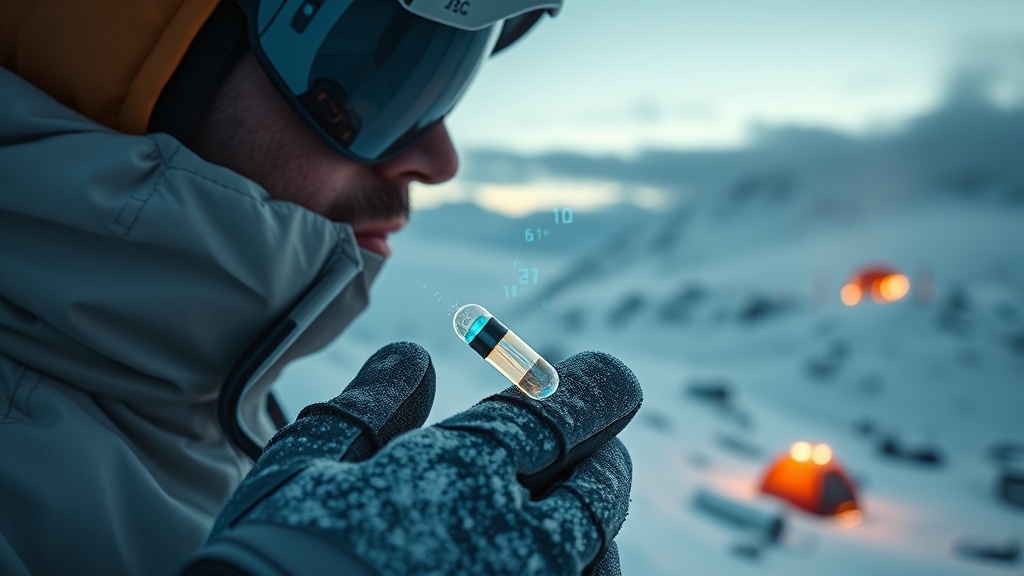
Comadran de Barnola et al. deployed 18 non-acclimatised mountaineers from the United Arab Emirates into a 10-day winter expedition in Skeikampen, Norway [1]. These weren't cold-adapted Scandinavians. They were UAE residents — people whose baseline thermoregulatory set points are calibrated to desert heat. The research team equipped them with ingestible telemetric pills measuring core temperature (Tc), chest-strap heart rate monitors, and a wearable ecosystem using Bluetooth gateways and eSIM-enabled smartwatches for real-time data transmission.
Participants performed 5–6 hours daily of cross-country skiing or snowshoe walking and slept in two camping conditions: quinzhee snow shelters and tents. The quinzhee shelters showed a statistically significant advantage in thermal insulation (p = 0.03), suggesting that snow architecture outperforms fabric tenting for maintaining core temperature during overnight rest in extreme cold [1].
The critical finding: zero cases of hypothermia across the entire 10-day expedition. Real-time data transmission enabled researchers to monitor thermoregulatory strain continuously and intervene proactively. This is a proof-of-concept that live telemetry can function as a safety net in hostile environments where traditional check-ins are inadequate.
But here's where it gets complicated. The study itself notes that extreme cold may affect battery performance and signal quality in telemetric devices. I've experienced this directly — wearable sensors behave differently at -15°C than they do in a controlled lab at 22°C. The feasibility was demonstrated, but the reliability envelope still needs stress-testing.
HRV Suppression at Altitude and in Cold#
Chen et al. conducted a systematic review and meta-analysis of 15 studies involving 698 participants to assess the effects of acute high-altitude exposure (≥2,500 m) on heart rate variability [2]. The findings were unambiguous: SDNN, RMSSD, pNN50, HF, and LF were all significantly reduced after acute exposure (all p < 0.001), while the LF/HF ratio increased significantly (p < 0.001).
This translates to a clear autonomic shift — parasympathetic withdrawal and sympathetic dominance. Your vagal tone drops. Your HRV optimization window shrinks. At altitudes ≥3,500 m, the suppression of SDNN intensified further [2].
What's notable for the biohacking community: trained individuals showed no significant advantage in time-domain HRV metrics compared to healthy untrained adults at altitude. Fitness didn't protect parasympathetic function. However, trained individuals did exhibit a smaller reduction in LF power and a more pronounced LF/HF shift, suggesting their sympathetic nervous systems may respond more efficiently to hypoxic stress [2].
Conformal Deep Learning for Core Temperature Prediction#
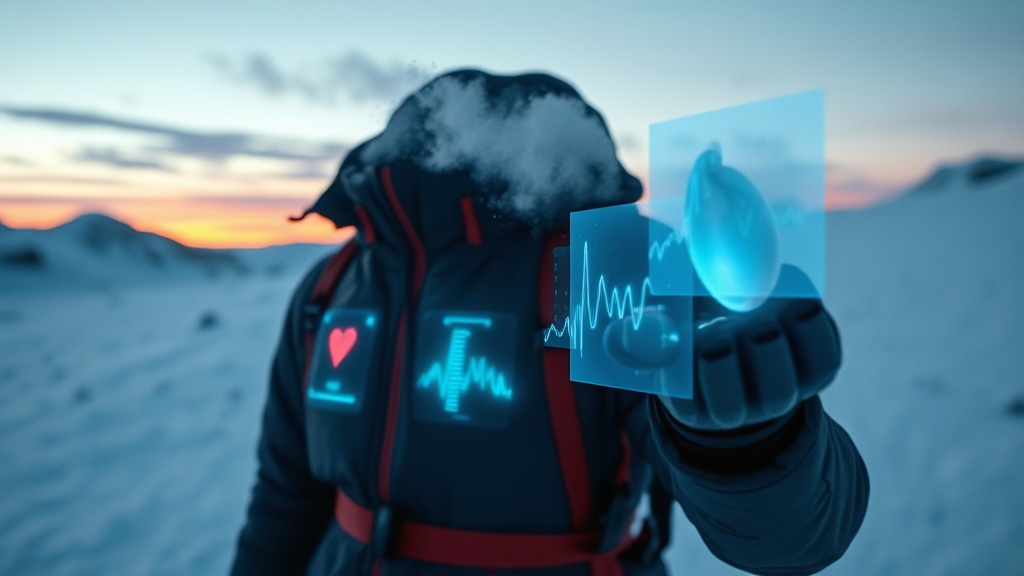
The most technically impressive piece of this research cluster comes from the conformal deep learning framework published in Nature Communications Engineering [3]. Developed from over 140,000 physiological measurements across six operational domains, this model predicts core body temperature non-invasively with a test error of just 0.29°C.
It outperforms the widely used ECTemp™ algorithm by a 12-fold improvement in calibrated probabilistic accuracy [3]. The system uses inputs accessible from standard wearables — heart rate, skin temperature, ambient temperature, and activity level — combined with demographic data.
The real innovation is the uncertainty quantification. Previous non-invasive CBT models gave you a number. This one gives you a number with statistically calibrated confidence intervals. For safety-critical applications, knowing that the model is 95% confident the individual's core temperature is between 37.1°C and 37.8°C is fundamentally different from getting a single point estimate of 37.4°C.
A customizable alert engine allows user-defined thresholds. Set your danger zone, and the system will flag when model confidence suggests you're approaching it. This is the infrastructure for autonomous thermoregulatory monitoring — and it works in both heat and cold extremes.
Cold-Water Immersion: What Military Data Tells Us#
Beres et al. studied 80 Mountain Infantry soldiers during ice-self-rescue training in Norway at -10°C air temperature with 0.5°C water [4]. Cold-water immersion induced the expected autonomic storm — sympathetic cold shock, parasympathetic diving reflexes — but no life-threatening complications occurred in this cohort of healthy soldiers.
The temperature monitoring findings were damning for tympanic thermometry: a median difference of -2.8°C compared to ingestible capsules post-immersion (p < 0.01) [4]. Even with ear canal occlusion, tympanic readings were unreliable after cold-water exposure. If you're relying on an ear thermometer after cold immersion, you're getting fiction.
Cold Acclimation: The Broader Physiological Picture#
Wang et al.'s review in Frontiers in Physiology synthesized the integrated effects of cold acclimation across cardiovascular, metabolic, and immune domains [5]. Long-term winter swimmers (n = 50) demonstrated an 8% reduction in blood viscosity and decreased fibrinogen levels, both associated with reduced cardiovascular risk [5]. Cold acclimation enhances brown adipose tissue activation, improves metabolic regulation, and may modify immune responses — though the review correctly notes considerable individual variability in adaptation protocols.
HRV Index Reduction After Acute High-Altitude Exposure
COMPARISON TABLE#
| Method | Mechanism | Evidence Level | Cost | Accessibility |
|---|---|---|---|---|
| Ingestible Telemetric Pills (e-Celsius) | Radio-frequency core temp transmission from GI tract | Field-validated (n=18, 10-day expedition) [1] | ~$40–60/pill (single use) | Requires medical-grade supply chain |
| Conformal Deep Learning CBT Model | Bidirectional LSTM + conformal prediction from wearable inputs | 140,000+ measurements, 6 domains [3] | Software cost only (uses existing wearables) | High — integrates with standard wearables |
| ECTemp™ Algorithm | Extended Kalman Filter for non-invasive CBT estimation | Widely adopted, validated in multiple settings | Included in compatible devices | Moderate — requires specific hardware |
| Tympanic Thermometry | Infrared measurement of tympanic membrane | Unreliable post-cold exposure (-2.8°C error) [4] | ~$20–50 per device | Very high — consumer available |
| Infrared Thermography (IRT) | Surface skin temperature mapping | Growing evidence in sports science [6] | $500–5,000+ for quality cameras | Moderate — requires equipment and expertise |
THE PROTOCOL#
How to implement evidence-based thermoregulatory monitoring for cold exposure training:
Step 1: Establish Your Baseline Core Temperature Before any cold exposure session, measure your resting core temperature using a validated method. If you have access to ingestible telemetric pills, ingest one 6–8 hours before your session to allow GI transit and stable readings. If using wearable-based estimates, ensure your device has been calibrated with at least 48 hours of continuous wear data.
Step 2: Set Your Thermoregulatory Alert Thresholds Based on the data from Comadran de Barnola et al. [1], core temperature should remain above 36.0°C during cold exposure. Set a primary alert at 36.5°C (early warning) and a secondary alert at 36.0°C (immediate rewarming required). If using a predictive model like the conformal deep learning system [3], configure alerts to trigger when the upper bound of the 95% prediction interval drops below 36.5°C.
Step 3: Structure Your Cold Exposure Progressively Start at 5 minutes, not 2. The adaptation window doesn't open at 2. For cold-water immersion, begin with water temperatures of 10–15°C and work toward colder exposures over 2–4 weeks. The military data from Beres et al. [4] shows that even near-freezing immersion (0.5°C) is survivable for healthy individuals under structured supervision — but these were trained soldiers, not civilians self-experimenting in a garage.
Step 4: Monitor HRV as Your Autonomic Recovery Marker Based on Chen et al.'s meta-analysis [2], expect significant parasympathetic suppression during and immediately after cold or altitude stress. Track your morning RMSSD and SDNN for 72 hours post-exposure. If HRV hasn't returned to within 10% of baseline by 48 hours, extend your recovery before the next exposure session.
Step 5: Optimize Your Shelter and Recovery Environment The Skeikampen data showed quinzhee snow shelters outperformed tents for thermal insulation [1]. For those training in cold environments, your recovery space matters as much as your exposure protocol. Ensure your post-exposure environment allows passive rewarming — layers, insulated sleeping systems, and wind protection. Don't rush active rewarming unless core temperature drops below your alert threshold.
Step 6: Log Everything Record ambient temperature, exposure duration, subjective thermal comfort, core temperature (if available), and morning HRV for every session. Cold acclimation involves individual variability that general protocols can't account for [5]. Your data is your protocol refinement tool.
Related Video
What is the most accurate way to measure core body temperature during cold exposure?#
Ingestible telemetric pills remain the field standard, as demonstrated in both the Skeikampen expedition [1] and the German military ice-immersion study [4]. Tympanic thermometry is unreliable after cold-water exposure, showing errors of -2.8°C compared to capsule readings. Non-invasive deep learning models are closing the gap — the conformal prediction framework achieves 0.29°C accuracy — but haven't yet replaced ingestible sensors for safety-critical monitoring [3].
How does cold exposure affect heart rate variability?#
Acute cold and altitude exposure significantly suppress both time-domain (SDNN, RMSSD, pNN50) and frequency-domain (HF, LF) HRV metrics, while increasing the LF/HF ratio — indicating a shift toward sympathetic dominance [2]. This suppression occurs regardless of fitness level, though trained individuals may show slightly different sympathetic response patterns. Recovery of parasympathetic tone typically requires 24–72 hours depending on exposure intensity.
Who should avoid unmonitored cold exposure?#
Anyone with cardiovascular conditions, uncontrolled hypertension, or arrhythmia history should not engage in cold immersion without medical supervision. The military study by Beres et al. [4] documented autonomic stress responses including sympathetic cold shock and parasympathetic diving reflexes that can trigger arrhythmias or bronchospasm. Even in healthy soldiers, structured supervision was maintained throughout. I'd extend this caution to anyone over 50 who hasn't had a recent cardiac screening.
Why do quinzhee snow shelters outperform tents for thermoregulation?#
Snow is a natural insulator. The Comadran de Barnola et al. study [1] found statistically significant superior insulation in quinzhee shelters compared to tents (p = 0.03). Compacted snow traps air pockets that reduce convective heat loss, while the enclosed dome shape minimizes the volume of air your body needs to heat. A well-built quinzhee can maintain interior temperatures near 0°C even when external temperatures drop to -20°C or below.
How soon will AI-driven core temperature prediction replace invasive monitoring?#
The conformal deep learning model from Nature Communications Engineering [3] represents a significant step — 0.29°C accuracy with calibrated uncertainty from standard wearable inputs. But I'd want to see this validated specifically in extreme cold, not just heat-stress environments. The honest answer is we're probably 3–5 years from regulatory acceptance for safety-critical cold-environment use. The technology works; the validation pipeline is what takes time.
VERDICT#
Score: 7.5/10
This cluster of research represents genuine progress in how we monitor and understand human thermoregulation in extreme cold. The Skeikampen expedition [1] is a strong proof-of-concept for real-time telemetry, and the conformal deep learning model [3] is the most technically mature non-invasive CBT prediction system I've seen. The HRV meta-analysis [2] gives us actionable recovery metrics.
Where I'm less convinced: the expedition sample was 18 people. The deep learning model was validated primarily in heat, not cold. And the military ice-immersion data, while useful, applies to a very specific population. The building blocks are here, but the full edifice of cold-environment autonomous monitoring isn't built yet. I'd rate the underlying science higher than the current practical applicability — which is why this isn't an 8 or 9. Give it two more replication studies and broader population validation, and that score changes.
References
- 1.Comadran de Barnola E, Chan-Twist YCI, Pitsiladis Y, Al Tunaiji H, Verdoukas P, Muniz-Pardos B. Real-time thermoregulatory and cardiovascular monitoring of non-acclimatised mountaineers in extreme cold: a 10-day field expedition study. Frontiers in Physiology (2026). ↩
- 2.Chen X, Du W, Huang C, Li H. Effects of acute high-altitude exposure on heart rate variability: a systematic review and meta-analysis. Frontiers in Physiology (2025). ↩
- 3.Author(s) not listed. Degrees of uncertainty: conformal deep learning for non-invasive core body temperature prediction in extreme environments. Nature Communications Engineering (2025). ↩
- 4.Beres Y, Lechner R, August E, Koch A, Radermacher P, Kulla M, Staps E. Cold-induced stress responses during a self-rescue exercise from accidental immersion in ice water in military personnel. Frontiers in Physiology (2025). ↩
- 5.Wang Y, Liu W, Han D, Qiao Y, Sun W, Wang C, Qin X, Xu J. Integrated effects of cold acclimation: physiological mechanisms, psychological adaptations, and potential applications. Frontiers in Physiology (2025). ↩
- 6.Comeras-Chueca C, Marcen-Cinca N, Valero-Campo C, Berzosa C, Piedrafita E, Gutiérrez H, Bascuas PJ, Bataller-Cervero AV. Thermographic assessment of upper body muscles in climbers as a methodology for comparing different skill levels. Frontiers in Sports and Active Living (2025). ↩
Cira Renn
Cira writes with physical conviction — she's done this, she knows what it feels like, and she doesn't pretend otherwise. Her writing has visceral energy: 'Cold water at 10°C isn't a wellness trend. It's a physical confrontation.' She distinguishes between what the research shows and what she's experienced, and she'll tell you when they diverge.
View all articles →