Sulfur Amino Acid Restriction Mimics Cold Exposure in Fat Tissue

SNIPPET: Dietary sulfur amino acid restriction (SAAR) — cutting methionine and cysteine intake — may mimic cold exposure at the transcriptional level in subcutaneous fat tissue, activating thermogenic "beiging" pathways that increase energy expenditure and fat oxidation. In mouse models, SAAR triggers a cold-like gene expression signature in inguinal white adipose tissue, suggesting a dietary route to fat-burning activation without freezing temperatures.
THE PROTOHUMAN PERSPECTIVE#
This is the kind of finding that rewires how I think about fat loss. Not another calorie deficit argument. Not another cold plunge protocol. What we're looking at is a dietary manipulation — restricting two specific amino acids — that tricks subcutaneous fat tissue into behaving as though the body is cold. The tissue starts expressing thermogenic genes. It starts burning.
For anyone tracking the convergence of longevity research and body composition science, SAAR sits at a critical intersection. We already knew methionine restriction extends lifespan in rodent models. We already knew cold exposure activates brown and beige fat. What's new is the discovery that these two interventions share overlapping transcriptional machinery in specific fat depots — and that diet alone can flip some of those same switches.
This matters because cold exposure has real barriers. Compliance drops. People hate it. A dietary approach that partially replicates the adipose tissue response? That changes the calculus entirely.
THE SCIENCE#
What Is Sulfur Amino Acid Restriction?#
Sulfur amino acid restriction is a dietary intervention that reduces intake of methionine and cysteine — two sulfur-containing amino acids abundant in animal proteins, eggs, and dairy. SAAR has been studied for decades in longevity research, consistently extending lifespan and reducing adiposity in rodent models. Its relevance to human performance optimization lies in its effects on mitochondrial efficiency, glutathione metabolism, and now, adipose tissue thermogenesis[1][3].
With roughly 1 billion people living with obesity globally and GLP-1 receptor agonist drugs raising concerns about long-term energy expenditure reductions, identifying diet-induced thermogenesis (DIT) stimuli that raise metabolic rate is not academic — it's urgent[1].
The 2×2 Design: MetR vs. Cold#
The eLife study used a 2×2 factorial design in male C57BL/6N mice: control diet vs. methionine restriction (MetR), crossed with room temperature (22°C) vs. acute cold exposure (CE, 4°C for 24 hours). Bulk RNA-seq profiled four tissues — liver, interscapular brown adipose tissue (iBAT), inguinal white adipose tissue (iWAT), and epididymal white adipose tissue (eWAT)[1].
The results were tissue-specific, and that specificity is the real story.
In iWAT — the subcutaneous fat depot — MetR activated a transcriptional program that overlapped substantially with cold exposure. Both interventions induced thermogenic and beiging genes. This is the depot that sits under your skin, the one that responds to cold by converting white fat cells toward a beige, heat-producing phenotype. MetR mimicked that response without any temperature change.
In eWAT — the visceral fat depot — MetR did not produce this cold-like signature. The response was distinct. This depot-specific divergence is critical because it tells us SAAR isn't a blunt instrument. It targets subcutaneous fat preferentially at the transcriptional level.
In liver, cold exposure dominated gene induction, while MetR and CE cooperatively repressed a shared set of genes. The combination enriched glucagon signaling, AMPK-linked pathways, and core metabolic pathways — suggesting the two interventions converge on energy-sensing networks in hepatic tissue[1].
In iBAT, cold dominated the thermogenic response, as expected. MetR added relatively little on top of what cold already activated in brown fat.
The Glutathione Mechanism#
Here's where it gets complicated — and more interesting.
Ommi et al. published work showing that the anti-obesity effects of SAAR appear mechanistically linked to glutathione (GSH) depletion[3]. When mice on a SAAR diet were given N-acetylcysteine (NAC) — a GSH precursor — the metabolic benefits reversed. Fat mass came back. Hepatic lipid droplets returned. The lean phenotype vanished.
Conversely, when mice on a normal diet were given BSO (buthionine sulfoximine), a GSH synthesis inhibitor, they exhibited SAAR-like metabolic changes: lower body fat, reduced hepatic lipid accumulation, increased Nrf2 and serine pathway activation[3]. The effect size was smaller than dietary SAAR, and BSO showed a stronger predilection for kidney over liver tissue — but the direction was consistent.
This suggests GSH depletion is not a side effect of SAAR. It may be the mechanism. And that's a provocative claim, because GSH is generally considered protective. The longevity community supplements it. The idea that lowering it — deliberately — could drive fat loss challenges a core assumption.
I'm less convinced this translates cleanly to humans. BSO is not an approved therapeutic, and the dose-response in human kidneys could be very different. But as a mechanistic finding in mice, it's solid.

Cysteine as the Key Signal#
Lee, Orliaguet, and Dixit's team at Yale published in Nature Metabolism demonstrating that cysteine depletion — not methionine alone — triggers adipose tissue thermogenesis and weight loss[2]. Using isotope tracing (13C and 2H), Tao, Wang, and Yang separately confirmed in Life Metabolism that cystine itself, rather than downstream derivatives like taurine or H₂S, directly regulates adiposity[4].
This distinction matters for protocol design. If cysteine is the primary signal, then methionine restriction works partly because methionine is a cysteine precursor. Cut methionine, and cysteine drops. But you could theoretically target cysteine more directly.
The Tao et al. study also found that weekly cycling of SAAR diets preserved metabolic benefits — reduced fat mass and improved glucose sensitivity — without requiring continuous restriction[4]. That's a practical finding. Continuous amino acid restriction is miserable. Cycling may be sustainable.
Exercise Capacity and Fat Oxidation#
Mann, MacArthur, and colleagues at ETH Zurich reported in a bioRxiv preprint that SAAR enhances exercise capacity in mice by boosting fat oxidation in skeletal muscle[6]. This connects SAAR not just to body composition but to physical performance — a direct concern for the biohacking community.
The catch, though: this is a preprint. Not peer-reviewed. The methodology looks reasonable, but I'd want to see it replicated and published before building a training protocol around it.
Methionine Restriction: Tissue-Specific Transcriptomic Overlap with Cold Exposure
COMPARISON TABLE#
| Method | Mechanism | Evidence Level | Cost | Accessibility |
|---|---|---|---|---|
| Sulfur Amino Acid Restriction (SAAR) | Reduces methionine/cysteine → GSH depletion → thermogenic gene activation in iWAT | Multiple rodent studies; 1 small human trial | Low (dietary modification) | Moderate — requires protein source management |
| Cold Exposure (4°C acute) | Direct sympathetic activation → BAT thermogenesis + iWAT beiging | Strong preclinical + human evidence | Low-Moderate (equipment/facility) | Moderate — compliance is a barrier |
| GLP-1 Receptor Agonists | Appetite suppression + central metabolic regulation | Large human RCTs | High ($800-1,500/mo without insurance) | Prescription required |
| BSO (GSH Inhibitor) | Pharmacological GSH depletion mimicking SAAR | Single rodent study | Unknown (research compound) | Not available — research only |
| Caloric Restriction | Global energy deficit → metabolic adaptation | Extensive human and animal data | Free | Low — high dropout rates long-term |
THE PROTOCOL#
Based on the current — predominantly preclinical — evidence, here is a cautious protocol for experimenting with sulfur amino acid modulation. This is not medical advice. This is what the data supports trying, if you choose to.
Step 1: Establish Your Baseline Methionine Intake. Track 5-7 days of normal eating using a tool that breaks down amino acid content (Cronometer works). Average methionine intake on a Western diet runs 1.5-3g/day. You need to know your starting point.
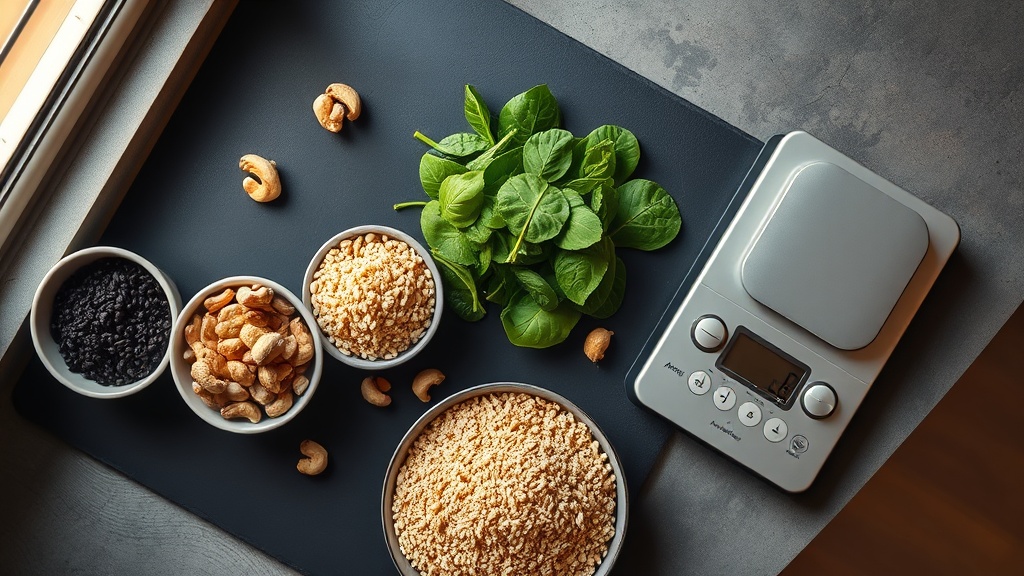
Step 2: Reduce Methionine to ~0.5-0.8g/day for Restriction Windows. This means shifting protein sources away from eggs, dairy, chicken breast, and most animal proteins toward plant-based sources with lower methionine density: legumes, rice, oats, and certain vegetables. This isn't vegan per se — it's methionine-targeted.
Step 3: Implement a Cycling Protocol. Based on Tao et al., weekly cycling preserves benefits[4]. Run 5 days of SAAR followed by 2 days of normal protein intake. This prevents the compliance collapse that continuous restriction guarantees.
Step 4: Do NOT Supplement NAC During Restriction Windows. This is counterintuitive for biohackers who take NAC daily. But the Ommi et al. data is clear — NAC reverses SAAR's metabolic effects by replenishing GSH[3]. If you're restricting sulfur amino acids to trigger thermogenesis, supplementing their downstream product defeats the purpose. Save NAC for your refeeding days if you want it.
Step 5: Stack With Moderate Cold Exposure if Tolerable. The eLife data shows MetR and CE have cooperative effects in liver and additive effects across tissues[1]. You don't need 4°C for 24 hours — that's a mouse protocol. Cold showers at 10-15°C for 5-10 minutes, or cold water immersion at 10°C for 5 minutes post-training, can activate sympathetic thermogenic signaling in humans.
Step 6: Monitor Subjective and Objective Markers. Track body composition (DEXA or calipers monthly), fasting glucose, and if accessible, resting metabolic rate. Subjective warmth — feeling warm despite ambient temperature — is an anecdotal but consistent signal that thermogenesis has upregulated. HRV optimization tracking can also capture shifts in autonomic tone associated with metabolic changes.
Step 7: Reassess at 8 Weeks. Optimal dosing in humans is not yet established. The honest answer is we're extrapolating from mouse data and one small human trial[5]. Eight weeks gives enough signal to assess fat mass changes and glucose sensitivity without excessive commitment to an unproven protocol.
Related Video
What is sulfur amino acid restriction and how does it differ from caloric restriction?#
SAAR specifically reduces methionine and cysteine intake — two amino acids — without requiring an overall calorie deficit. Unlike caloric restriction, which triggers compensatory metabolic slowdown and hunger, SAAR appears to increase energy expenditure through adipose tissue thermogenesis while preserving appetite and locomotion, at least in rodent models[4]. The mechanisms are fundamentally different: caloric restriction reduces energy in; SAAR increases energy out.
Why does methionine restriction affect subcutaneous fat but not visceral fat at the transcriptional level?#
The honest answer is we don't fully know. The eLife study documented that iWAT (subcutaneous) showed a cold-like transcriptional response to MetR while eWAT (visceral) did not[1]. Depot-specific differences in innervation density, receptor expression, and developmental origin likely contribute. Subcutaneous fat is more prone to beiging in general — MetR appears to exploit that existing propensity.
How does glutathione depletion relate to fat loss from SAAR?#
Ommi et al. demonstrated that SAAR lowers hepatic glutathione, which activates Nrf2 and the serine biosynthesis pathway (via Phgdh), culminating in reduced lipid accumulation[3]. When GSH was replenished with NAC, the anti-obesity effects disappeared. This positions GSH not as a bystander but as a potential mediator of SAAR's metabolic benefits — though this remains a preclinical finding in mice.
When should someone avoid sulfur amino acid restriction?#
Anyone with compromised liver or kidney function, active infections requiring robust antioxidant defense, or pregnancy should avoid SAAR protocols. GSH is a critical antioxidant — deliberately lowering it while immunocompromised is reckless. Additionally, anyone on medications metabolized through glutathione conjugation pathways (including acetaminophen) should consult a physician before restricting sulfur amino acids.
How long before metabolic effects of SAAR become measurable?#
In rodent studies, shifts in energy expenditure and fuel utilization appear within days. In the single human trial by Nichenametla et al., changes in the plasma sulfurome and adipose tissue gene expression were measurable within weeks of dietary modification[5]. Based on available data, expect measurable fat mass changes at 4-8 weeks of cycling SAAR in humans, though individual variation will be significant.
VERDICT#
7.5/10.
The science here is genuinely interesting and mechanistically rich. The eLife study is well-designed, the evidence is rated "convincing" by peer reviewers, and the convergence across multiple labs — Yale, ETH Zurich, Shanghai, Cold Spring — gives this more weight than any single paper would. The GSH mechanism is provocative and testable.
But let me be direct about the limitations: this is overwhelmingly mouse data. The one human trial is small. We don't have dose-response curves for methionine restriction in humans, we don't know the long-term safety of cyclical GSH depletion, and the exercise capacity preprint hasn't been peer-reviewed. I've been experimenting with lower-methionine eating windows for about four months, and subjectively the thermogenic effect is real — I run warmer. But I don't have a controlled study backing my n=1.
The depot-specific finding — iWAT but not eWAT — is the kind of specificity that suggests a real mechanism rather than a nonspecific stress response. That gives me more confidence than a blanket "everything improved" claim would. This is early, it's preclinical, and it deserves attention without hype.
References
- 1.Author(s) not listed. Dietary sulfur amino acid restriction elicits a cold-like transcriptional response in inguinal but not epididymal white adipose tissue of male mice. eLife (2026). ↩
- 2.Lee AH, Orliaguet L, Youm YH, Maeda R, Dlugos T, Lei Y, Coman D, Shchukina I, Andhey PS, Smith SR, Ravussin E, Stadler K, Chen B, Artyomov MN, Hyder F, Horvath TL, Schneeberger M, Sugiura Y, Dixit VD. Cysteine depletion triggers adipose tissue thermogenesis and weight loss. Nature Metabolism (2025). ↩
- 3.Ommi NB, Mattocks DAL, Kalecký K, Bottiglieri T, Nichenametla SN. Pharmacological recapitulation of the lean phenotype induced by the lifespan-extending sulfur amino acid-restricted diet. Aging (2025). ↩
- 4.Tao Y, Wang L, Yang L. Dietary sulfur amino acid restriction improves metabolic health by reducing fat mass. Life Metabolism (2025). ↩
- 5.Nichenametla SN. Dietary sulfur amino acid restriction in humans with overweight and obesity: Evidence of an altered plasma and urine sulfurome, and a novel metabolic signature that correlates with loss of fat mass and adipose tissue gene expression. PubMed (2024). ↩
- 6.Mann CG, MacArthur MR, Zhang J, Gong S, AbuSalim JE. Sulfur Amino Acid Restriction Enhances Exercise Capacity in Mice by Boosting Fat Oxidation in Muscle. bioRxiv (2024). ↩
Cira Renn
Cira writes with physical conviction — she's done this, she knows what it feels like, and she doesn't pretend otherwise. Her writing has visceral energy: 'Cold water at 10°C isn't a wellness trend. It's a physical confrontation.' She distinguishes between what the research shows and what she's experienced, and she'll tell you when they diverge.
View all articles →