
Urine DNA Methylation Test for Cervical Cancer Screening

SNIPPET: DNA methylation testing of ASCL1/LHX8 genes on first-void urine may detect precancerous cervical lesions (CIN3+) with 73% sensitivity and 82% specificity, according to a 2026 study in Communications Medicine. This entirely at-home molecular screening approach combines HPV testing with epigenetic triage, potentially eliminating the need for clinic-based Pap smears for initial cervical cancer screening.
THE PROTOHUMAN PERSPECTIVE#
Cervical cancer screening is, frankly, overdue for a paradigm shift. The current model — schedule an appointment, endure a speculum exam, wait for cytology results — creates friction at every step. And friction kills compliance. Globally, screening adherence hovers around 50–70% even in high-income countries, which is annoying, actually, because we've had the molecular tools to do better for years.
What this research signals is a move toward fully decentralized, molecular-first screening. You collect urine at home. The lab tests it for HPV and then runs a DNA methylation panel to triage who actually needs colposcopy. No clinic visit for the initial screen. No cytologist squinting at cells under a microscope.
For the optimization-minded reader, the bigger story here is the maturation of epigenetic biomarkers as clinically actionable tools — not just interesting science. Methylation patterns are becoming readable signals for disease risk, extracted from samples as simple as morning urine. The implications extend well beyond cervical cancer. This is what precision prevention looks like when it finally leaves the research lab.
THE SCIENCE#
What Is Urinary DNA Methylation Screening?#
DNA methylation is an epigenetic modification where methyl groups attach to cytosine residues in CpG dinucleotides, altering gene expression without changing the underlying DNA sequence. In cervical carcinogenesis, specific tumor-suppressor genes become hypermethylated as disease progresses from normal tissue through cervical intraepithelial neoplasia (CIN) grades to invasive cancer. ASCL1 (Achaete-Scute Family BHLH Transcription Factor 1) and LHX8 (LIM Homeobox 8) are two such genes whose methylation levels correlate with disease severity[1]. The critical insight is that fragments of cervical cell DNA — carrying these methylation signatures — shed into urine, making it possible to detect cervical pathology from a non-invasive home-collected sample.
This matters for human performance screening because it represents a broader shift: biomarkers that previously required tissue biopsies or clinician-collected samples are becoming accessible through liquid biopsy approaches. One specific statistic frames the clinical reality — the ASCL1/LHX8 panel achieved a validated AUC of 0.83 for CIN3+ detection in first-void urine[1]. The Dutch cervical screening programme has already been exploring methylation-based triage on self-collected vaginal samples, and multiple research groups across Europe and China are converging on similar approaches[2][3].
The Study Design and What It Actually Shows#
The research team analyzed first-void urine from 69 healthy females and 385 women in a referral population (meaning they already had some clinical indication — CIN or cancer). Samples were split into a training cohort (n = 285) and a validation cohort (n = 160). CIN3+ detection was modeled using multivariate logistic regression combining HPV status with ASCL1/LHX8 methylation levels[1].
Here's what the data shows: methylation levels of both markers increased significantly with disease severity. In the validation cohort, CIN3+ sensitivity landed at 73.0% (95% CI: 57.0–84.6%) with a specificity of 81.9% (95% CI: 73.5–88.1%)[1].
Let me push back on that a bit. A 73% sensitivity means roughly 1 in 4 women with CIN3+ would be missed by this test alone. That's not a replacement for screening — it's a triage tool. The value lies in combining it with HPV testing to create a two-step molecular workflow: HPV-positive women get methylation triage, and only those who are methylation-positive proceed to colposcopy. This reduces unnecessary invasive procedures without (in theory) losing too many true positives.
How This Compares to Other Methylation Panels#
The ASCL1/LHX8 panel isn't operating in isolation. A Dutch validation study on vaginal self-samples tested a three-marker panel (LHX8, EPB41L3, ANKRD18CP) and reported 82% sensitivity at 74% specificity for CIN3+ in a much larger real-world cohort (n = 2,482)[2]. The ASCL1/ZNF582 panel, tested on vulvar tissue, achieved an AUC of 0.93 for high-grade vulvar intraepithelial neoplasia — though that's tissue-based, not urine[4].

Meanwhile, Zhang et al. (2026) compared PAX1/ZNF671 methylation across paired urine, vaginal, and cervical scrape samples and found something I think is underappreciated: urine-based methylation testing for CIN3+ achieved only 48.1% sensitivity, compared to 91.9% for cervical scrapes and 71.4% for vaginal self-samples[3]. That's a significant performance gap for urine.
So the honest framing is this: urine-based methylation screening is the most convenient collection method but currently the least sensitive. The ASCL1/LHX8 panel at 73% CIN3+ sensitivity in urine is actually better than the PAX1/ZNF671 panel's 48.1% in urine — which suggests marker selection matters enormously for this sample type. But I'd want to see head-to-head comparisons of these panels on the same urine samples before drawing firm conclusions.
The Epigenetic Mechanism Worth Understanding#
Why do these particular genes get methylated in cervical cancer progression? ASCL1 functions as a transcription factor involved in neuronal differentiation, and its silencing via promoter methylation appears to be an early event in HPV-driven carcinogenesis. LHX8 encodes a LIM-homeodomain protein involved in developmental patterning. The hypermethylation of these genes isn't random — it reflects the hijacking of epigenetic machinery by persistent HPV infection, which drives progressive silencing of tumor-suppressor pathways through DNA methyltransferase upregulation[1][4].
This is the same fundamental biology underlying autophagy pathway dysregulation in cancer — epigenetic silencing of protective genes allows unchecked cellular proliferation. The methylation signal, in a sense, is a molecular timestamp of disease progression.
CIN3+ Detection: Sensitivity by Methylation Panel and Sample Type
COMPARISON TABLE#
| Method | Mechanism | Evidence Level | Cost | Accessibility |
|---|---|---|---|---|
| ASCL1/LHX8 Urine Methylation | Detects promoter hypermethylation of tumor-suppressor genes in shed cervical DNA via first-void urine | Single validation study (n=160) | Estimated moderate (qMSP-based) | At-home collection, lab processing |
| Pap Smear (Cytology) | Microscopic evaluation of cervical cell morphology | Decades of population data; gold standard sensitivity ~60–80% for CIN3+ | Low–moderate | Requires clinic visit, speculum exam |
| HPV DNA Testing | Detects high-risk HPV genotypes | Large RCTs; sensitivity >90% for CIN3+ but low specificity | Moderate | Self-collection or clinician-collected |
| LHX8/EPB41L3/ANKRD18CP Vaginal Panel | Three-marker methylation on vaginal self-samples | Validated in Dutch screening programme (n=2,482) | Moderate | Self-collection at home |
| PAX1/ZNF671 Multi-sample | Dual methylation markers across sample types | Single comparative study (n=136–140) | Moderate | Variable by sample type |
| PAX1/JAM3 (CISCER) Cervical | Methylation with microecological correlation | Single-center prospective (AUC 0.852 for CIN3+) | Moderate | Requires cervical sample |
THE PROTOCOL#
How to integrate molecular cervical screening into your health optimization routine — based on current evidence and available options:
Step 1: Know your HPV status first. Molecular cervical screening starts with HPV testing. If you're in a country with an organized screening programme (Netherlands, Australia, UK), follow your national schedule. If not, request HPV co-testing at your next gynecological visit. HPV-negative women have extremely low near-term cervical cancer risk, and this determines whether methylation triage is even relevant for you.
Step 2: If HPV-positive, ask about methylation triage options. The ASCL1/LHX8 urine test is not yet commercially available as a routine screening product, but the PreCursor-M platform (which uses ASCL1-based panels) is in clinical development[4]. In the Netherlands, methylation-based triage on self-collected samples is being integrated into the national programme[2]. Ask your provider whether methylation triage is available in your region as an alternative to immediate colposcopy referral.
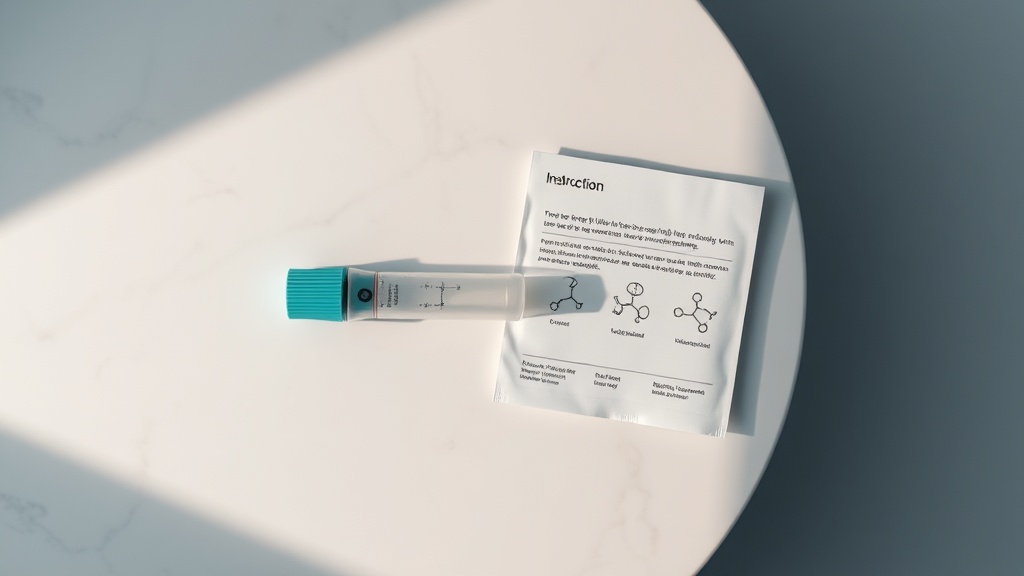
Step 3: If self-collection is available, use first-void urine correctly. The "first-void" designation is critical — it means the initial stream of urine, not a midstream clean-catch sample. First-void urine captures more exfoliated cells from the lower genital tract. Collection should be done first thing in the morning, before washing, into the designated device. Volume matters: typically 20–30 mL of the initial stream[1].
Step 4: Understand what the results mean — and what they don't. A positive methylation result does not mean cancer. It means elevated epigenetic risk markers that warrant further investigation, typically colposcopy with biopsy. A negative result, given the current ~73% sensitivity, does not entirely rule out CIN3+. This is a triage tool, not a standalone diagnostic.
Step 5: Track your screening intervals. For HPV-positive, methylation-negative women, the suggested interval based on emerging data is repeat screening at 12–18 months rather than immediate colposcopy. For HPV-negative women, a 5-year interval remains standard in most guidelines. Log these in whatever health tracking system you use — this is a biomarker with a time dimension.
Step 6: Watch for commercial availability. Several companies are developing urine-based molecular screening kits. The transition from research validation to clinical product typically takes 2–4 years after validation studies. Based on current evidence, expect urine-based HPV + methylation screening to reach broader clinical use by 2028–2029.
Related Video
What is ASCL1/LHX8 DNA methylation testing?#
ASCL1/LHX8 DNA methylation testing measures the degree of epigenetic silencing at two specific gene promoters — ASCL1 and LHX8 — that become increasingly methylated as cervical disease progresses. It's performed using quantitative methylation-specific PCR (qMSP) on DNA extracted from biological samples, including urine. The test functions as a triage step after HPV testing to identify which HPV-positive women need colposcopy.
How accurate is urine-based cervical cancer screening compared to a Pap smear?#
The ASCL1/LHX8 urine panel shows 73% sensitivity at 82% specificity for CIN3+ in validation data — which is comparable to conventional cytology in many settings (Pap smear sensitivity varies widely, from 50–80% depending on the lab)[1]. The key difference isn't raw accuracy — it's accessibility. Urine collection at home eliminates the primary barrier to screening compliance: the clinic visit itself.
Why does first-void urine work for detecting cervical abnormalities?#
First-void urine — the initial stream when you urinate — washes over the vulva and vaginal introitus, picking up exfoliated cells and cell-free DNA that originated from the cervical epithelium. These cells carry the same epigenetic modifications present in cervical tissue. It's not the urine itself that contains the signal; it's the cellular debris suspended in it.
When will urine-based methylation screening be available to the public?#
Honestly, we don't have a firm date. The technology is in late-stage clinical validation. The Dutch screening programme is the most advanced in integrating methylation triage on self-collected samples, but urine-based protocols specifically are still in the validation phase as of 2026. I'd estimate 2–4 years before widespread clinical adoption, depending on regulatory pathways and health system integration.
Who benefits most from this type of screening?#
Women who are underscreened or unscreened — those who avoid cervical screening due to discomfort, cultural barriers, geographic access issues, or simply scheduling friction. In low- and middle-income countries where cytology infrastructure is limited, a molecular-only approach on self-collected samples could be transformative. HPV-positive women who want an alternative to immediate colposcopy are the other key population.
VERDICT#
Score: 7/10
The ASCL1/LHX8 urine methylation study represents a meaningful step toward fully decentralized cervical screening, and I'm genuinely interested in where this goes. But I'm scoring it a 7, not higher, for clear reasons. The validation cohort was small (n = 160). The 73% sensitivity, while acceptable for triage, means a meaningful miss rate that would need to be addressed through repeat testing protocols. And this is a referral population, not a true screening population — performance metrics almost always look worse when you move to general population screening where disease prevalence is lower.
What elevates this above a 6 is the convergence of evidence. Multiple independent groups across Europe and Asia are validating methylation markers on self-collected samples, and the ASCL1/LHX8 panel's performance on urine — the least invasive sample type — is the best reported so far for this collection method. The clinical workflow it enables (HPV test + methylation triage, all from home-collected urine) is genuinely novel and addresses a real compliance problem.
The catch, though: we need a large prospective population-based study before this changes clinical practice. The data is promising. It's not yet definitive.
References
- 1.Clinical performance of ASCL1/LHX8 DNA methylation on first-void urine to screen for cervical cancer. Communications Medicine (2026). ↩
- 2.Clinical validation of a three-marker methylation panel to detect CIN3+ in vaginal self-samples in the Dutch population-based screening programme. Clinical Epigenetics (2025). ↩
- 3.Zhang L, Zhao H, Guo D, Guo H, Miao M, Qin H, Liu Y, Wang Y. Comparative performance of hrHPV testing and PAX1/ZNF671 methylation in triaging women with abnormal cytology: a study of paired urine, vaginal and cervical scrape samples. Frontiers in Oncology (2026). ↩
- 4.Diagnostic Performance of the ASCL1/ZNF582 Methylation Test for Detection of High-Grade Vulvar Intraepithelial Neoplasia and Vulvar Cancer. Molecular Diagnosis & Therapy (2026). ↩
- 5.PAX1/JAM3 methylation in cervical exfoliated cells: a robust diagnostic biomarker for cervical high-grade lesions associated with vaginal dysbiosis. BMC Women's Health (2026). ↩
Saya Kimm
Saya is analytical, methodical, and subtly contrarian about popular biomarker interpretations. She'll specifically challenge what readers think they know: 'Testosterone doesn't tell you what most people think it tells you at a single timepoint.' She writes with a researcher's caution about causation vs. correlation — but instead of hiding behind it, she turns it into an insight.
View all articles →