VR Training for Depression: Neurotransmitter-Plasticity Dual Pathway

SNIPPET: Virtual reality training may significantly reduce depressive symptoms through a dual-pathway mechanism involving neurotransmitter rebalancing and neuroplasticity restoration. A systematic review of 16 RCTs found VR's multimodal sensory stimulation alleviates depression, while a meta-analysis of adolescent interventions reported a medium effect size (Hedge's g = 0.486). EEG evidence shows VR normalizes brain microstate patterns disrupted by depression.
Virtual Reality Training for Depression: How VR Rewires the Brain Through Neurotransmitter and Plasticity Pathways
THE PROTOHUMAN PERSPECTIVE#
I think the word "treatment" is doing too much work when we talk about depression interventions. What we really mean — what matters at the level of lived experience — is whether something changes the texture of a person's day. Whether the weight lifts, even partially. Virtual reality for depression isn't just another digital health novelty. It represents a shift toward immersive neurological intervention — using sensory environments to reach brain systems that talk therapy and pharmaceuticals sometimes miss.
For those of us interested in human performance optimization, this matters because depression isn't merely a mood problem. It's a neuroplasticity problem. It's a neurotransmitter homeostasis problem. And now, the data suggests VR may address both simultaneously — through what Sun et al. call a "neurotransmitter-plasticity dual pathway." If that mechanism holds up in larger trials, we're looking at a tool that doesn't just mask symptoms but may actively participate in neural circuit repair. That's a different category of intervention entirely.
THE SCIENCE#
What VR Actually Does to the Depressed Brain#
Virtual reality-based depression intervention is the use of immersive, computer-generated environments — typically delivered via head-mounted displays — to provide therapeutic sensory stimulation that modulates brain chemistry and structural connectivity. It matters because depression affects approximately 280 million people globally and remains a leading cause of disability, with conventional treatments showing incomplete response rates in roughly one-third of patients [1]. Sun et al.'s 2026 systematic review, published in the Journal of Global Health, synthesized 16 randomized controlled trials and found consistent reductions in depression scale scores across VR protocols [1]. The approach is gaining traction across clinical and research institutions in Asia, Europe, and North America, with multiple research groups now investigating its neural mechanisms.
The dual-pathway model proposed by Sun et al. is what makes this interesting — and what separates VR from, say, a meditation app. The first pathway involves neurotransmitter regulation. VR's multimodal sensory stimulation — visual, auditory, proprioceptive — appears to promote serotonin and dopamine activity through engagement of reward circuitry. The second pathway targets neuroplasticity directly: preliminary biomarker evidence suggests VR may support neural structure recovery and functional network synchronization [1].
But here's where it gets complicated. Sun et al. couldn't perform a quantitative meta-analysis because the heterogeneity across protocols was simply too high. Different VR environments, different session lengths, different control conditions. That's not a fatal flaw — it's an honest acknowledgment that the field is still young.
The EEG Evidence: What Does This Actually Look Like in the Brain?#
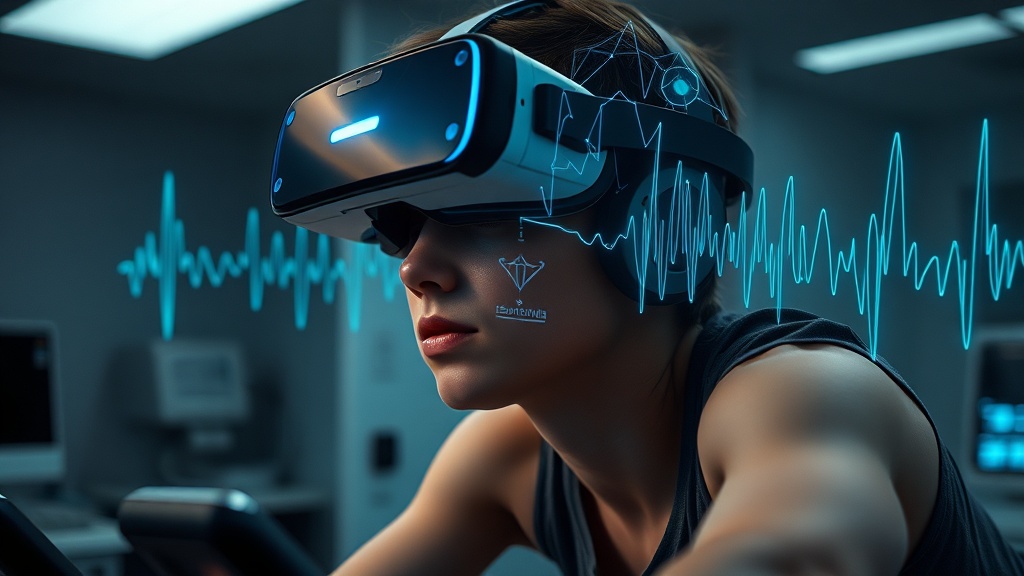
This is where Wang et al.'s work with depressed adolescents adds a crucial layer. Their crossover study with 40 middle-school students compared 15 minutes of VR-enhanced aerobic cycling against conventional cycling, measuring both mood and resting-state EEG [2].
Both conditions improved mood. But VR was statistically superior in reducing depression and lethargy scores (p < 0.01). What does this actually feel like? Probably something like the difference between forcing yourself through a gym session and being genuinely absorbed in movement — the immersion appears to lower the psychological cost of exercise.
The EEG findings are where I lean forward. At baseline, the depressed group showed elevated occurrence and contribution of microstate C with abnormal centroids — a pattern associated with default mode network overactivity and ruminative processing. After VR exercise, microstate distributions normalized. VR specifically reduced microstate C occurrence (p < 0.05), prolonged microstate D duration (p < 0.05), and enhanced B→C and D→B transitions [2].
The correlation data is telling: post-VR B→C transition rate correlated negatively with depression (r = −0.462), while microstate D occurrence correlated positively with pleasure (r = 0.450). This reminds me of something from the attentional blink literature — different context, but the pattern holds. The brain seems to be shifting from a stuck, self-referential processing mode toward more flexible attentional switching.
The Meta-Analytic Picture for Young People#
A separate meta-analysis by researchers published in Discover Psychology examined 19 experimental studies across 16 articles and found VR interventions produced a medium overall effect size (Hedge's g = 0.486) for treating depression in adolescents and young adults [3]. Significant moderating effects emerged for age group, number of sessions, and type of VR technology used.
I'm less convinced by the effect size number in isolation — a Hedge's g of 0.486 is meaningful but not overwhelming, and the confidence intervals across individual studies likely vary. What's more informative is the moderator analysis: it suggests that the specific design of the VR intervention matters enormously. Not all VR is equal. The type of immersion, the therapeutic objective embedded in the experience, and the number of sessions all shift the outcome.
VR for Mindfulness: The Immersion Question#
Xie, Zheng, and Hu's meta-analysis of 25 studies (n = 1,485) found that VR-based mindfulness interventions produced a large effect size (Hedge's g = 0.975) [4]. But the critical finding was the moderator analysis: fully immersive VR outperformed active-interaction VR, and participants with mental health disorders benefited more than healthy individuals. Those with chronic physical conditions showed no significant effects.
This tells us something important about mechanism. The benefit isn't just "distraction" — if it were, active interaction would perform better. Instead, it appears that deep immersion facilitates the kind of present-moment awareness that mindfulness training targets. The brain needs to believe it's somewhere else for the therapeutic effect to take hold.
VR-ACT: Digitizing Therapy Itself#
A quasi-experimental study with 56 participants tested VR-ACT, a system that translates the six core principles of Acceptance and Commitment Therapy into virtual reality experiences [5]. The study identified distinct behavioral patterns — digital phenotypes — in the subthreshold depression group that could serve as potential clinical indicators. This is early-stage work, but the implications for scalable mental health screening are significant.
VR Intervention Effect Sizes Across Meta-Analyses
COMPARISON TABLE#
| Method | Mechanism | Evidence Level | Cost | Accessibility |
|---|---|---|---|---|
| VR Immersive Training | Dual-pathway: neurotransmitter modulation + neuroplasticity via multimodal sensory input | 16 RCTs reviewed; medium effect size (g = 0.486) | $300–$1,500 (headset + software) | Moderate — requires hardware, some technical setup |
| Traditional CBT | Cognitive restructuring, behavioral activation | Strong — decades of RCT evidence | $100–$250/session | Widely available but therapist-dependent |
| SSRIs (Pharmacotherapy) | Serotonin reuptake inhibition | Very strong — large meta-analyses | $10–$50/month (generic) | High — prescription required |
| Traditional Aerobic Exercise | Endorphin release, BDNF upregulation, HPA axis modulation | Strong — multiple meta-analyses | Low — free to minimal | Very high |
| VR-Enhanced Mindfulness | Immersive present-moment awareness, reduced DMN overactivity | 25 studies; large effect size (g = 0.975) | $300–$1,500 | Moderate |
| VR-ACT (Acceptance & Commitment) | Six ACT principles delivered via immersive digital phenotyping | Quasi-experimental (n = 56); feasibility stage | TBD — research prototype | Low — not commercially available |
THE PROTOCOL#
How to integrate VR-based training for mood optimization, based on current evidence:
Step 1: Select the right hardware. Use a fully immersive VR headset (e.g., Meta Quest 3, HTC Vive). The data from Xie et al. clearly shows fully immersive VR outperforms semi-immersive or active-interaction setups for mindfulness and mood outcomes [4]. Screen-based VR is insufficient.
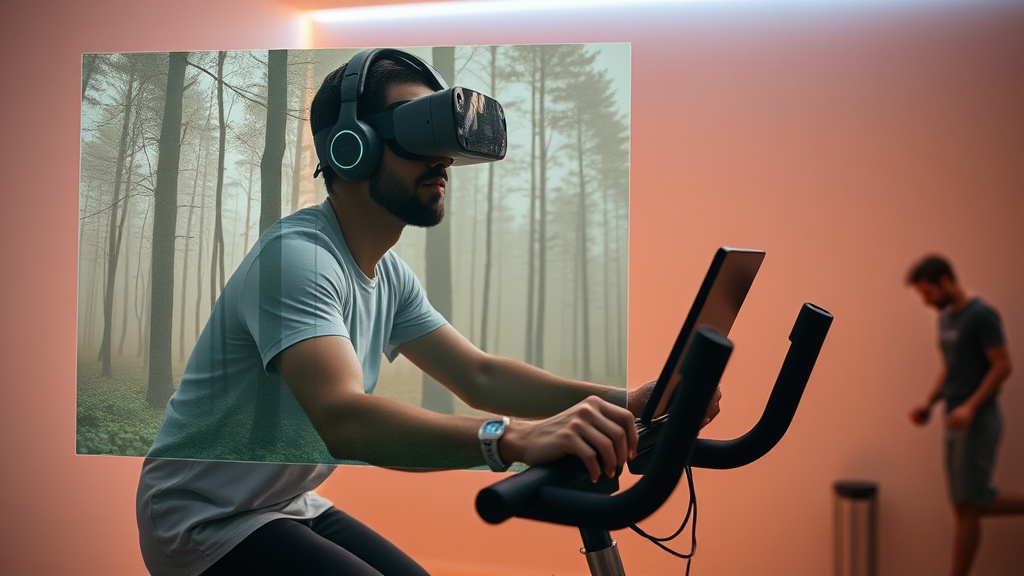
Step 2: Pair VR with aerobic exercise. Wang et al.'s protocol used moderate-intensity VR cycling for 15 minutes [2]. This combination appears to produce stronger mood effects than either VR or exercise alone. Target 50–70% of maximum heart rate. A stationary bike with VR cycling software is the simplest implementation.
Step 3: Prioritize nature-based immersive environments. The evidence suggests low-interaction, nature-friendly virtual environments enhance therapeutic effects [4]. Choose VR experiences featuring forests, coastal settings, or mountain landscapes rather than gamified or high-stimulus environments.
Step 4: Session frequency and duration. Based on the moderator analysis from the adolescent meta-analysis, multiple sessions produce greater effects than single bouts [3]. Aim for 3–4 sessions per week, 15–30 minutes each. Consistency matters more than marathon sessions.
Step 5: Track your response. Use standardized mood measures like the PHQ-9 (freely available) before starting and at 4-week intervals. If you have access to HRV monitoring, track resting HRV as a secondary biomarker — improvements in autonomic balance often parallel mood improvements.
Step 6: Consider VR mindfulness as a complement. On non-exercise days, 10–15 minutes of VR-guided mindfulness in a fully immersive nature environment may extend benefits. This isn't a replacement for clinical treatment if you have diagnosed depression — it's a performance and resilience tool, or an adjunct for those already in care.
Step 7: Know when to stop. Some individuals experience cybersickness (nausea, disorientation) with VR. Start with shorter sessions (5–10 minutes) and build up. If persistent discomfort occurs, this modality may not be for you — and that's fine. Optimal dosing in humans is not yet established, and individual tolerance varies widely.
Related Video
VERDICT#
7.5/10. The mechanistic story here is genuinely interesting — the dual-pathway model linking neurotransmitter modulation and neuroplasticity through immersive VR is more than speculative, but it's not yet proven in the way we'd need for clinical confidence. The EEG microstate data from Wang et al. is the most compelling piece: it shows VR doing something specific to brain dynamics that traditional exercise doesn't replicate as strongly. The effect sizes are real but moderate, and the field's heterogeneity problem is significant. I wouldn't build a depression treatment protocol around VR alone — not yet. But as an adjunct to exercise, therapy, or pharmacotherapy? The signal is strong enough to trial personally. What I'm watching for: larger RCTs with standardized VR protocols, longer follow-up periods, and replication of the microstate findings. If those come through, this moves from "promising" to "standard recommendation."
Frequently Asked Questions5
References
- 1.Sun L, Luo L, Zhang T, Yang Y, Wang C, Luo J. The improvement effects and mechanisms of virtual reality training on depression: a systematic review from a neurotransmitter-plasticity dual-pathway perspective. Journal of Global Health (2026). ↩
- 2.Wang G, Peng T, Ma F, Chi P, Zhang L, Yao S. Brain neural mechanisms underlying VR enhanced aerobic exercise for mood enhancement in depressed adolescents. Frontiers in Human Neuroscience (2026). ↩
- 3.Author(s) not listed. Using virtual reality technology to treat adolescent and young adult depression disorder: a systematic review and meta-analysis. Discover Psychology (2025). ↩
- 4.Xie F, Zheng H, Hu X. The effectiveness of virtual reality in enhancing mindfulness: a systematic review and meta-analysis. Frontiers in Public Health (2025). ↩
- 5.Author(s) not listed. VR-ACT: transforming clinical evidence of acceptance and commitment therapy through virtual reality for subthreshold depression. Virtual Reality (2025). ↩
Fen Adler
Fen writes with psychological nuance and a slightly meandering quality that feels human. He'll start pursuing one idea, realize it connects to something else, and follow it briefly before returning: 'This reminds me of something from the attentional blink literature — different context, but the pattern holds.' He's interested in the experience, not just the mechanism, which means he'll occasionally ask: 'What does this actually feel like?' when discussing neurological effects.
View all articles →