Butyrate Extends Lifespan in Mitochondrial-Deficient Mice: Study

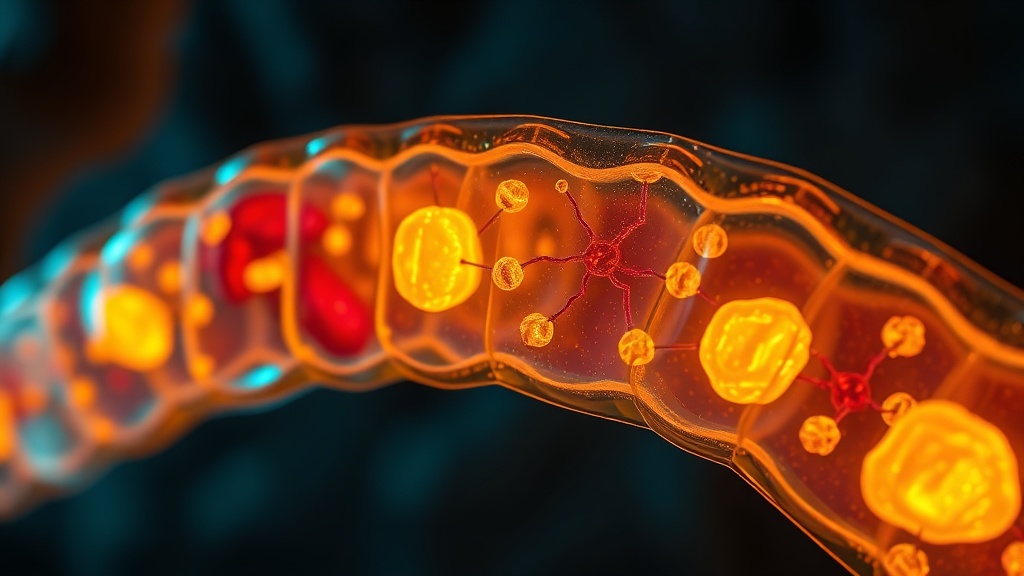
SNIPPET: Butyrate, a short-chain fatty acid produced by gut bacteria, extended lifespan and delayed multiorgan decline in mice with mitochondrial deficiency, according to a March 2026 study in Nature Communications. Tributyrin supplementation restored lost epigenetic histone marks in intestinal tissue. This is preclinical data — not a human protocol yet.
THE PROTOHUMAN PERSPECTIVE#
Here's what caught my attention about this paper: it flips the mitochondrial disease conversation on its head. We've spent decades trying to fix the mitochondria directly — gene therapy, coenzyme Q10, NAD+ precursors. And the answer might partially live in the gut.
The team behind this study, published in Nature Communications in March 2026, showed that when mitochondrial function collapses systemically in mice, the gut barrier breaks down and butyrate-producing bacteria disappear[1]. That's not a side effect. That's a vicious cycle — mitochondrial failure starves the microbiome, the microbiome stops producing the short-chain fatty acids that support intestinal integrity and epigenetic regulation, and everything accelerates downhill.
The implication for the biohacking community is immediate but needs caveats. Butyrate isn't new. Tributyrin supplements aren't new. But the mechanistic link between mitochondrial dysfunction, gut dysbiosis, and recoverable epigenetic marks? That's new. And if you care about mitochondrial efficiency — whether you're optimizing performance or managing a mitochondrial condition — the gut-mito axis just became impossible to ignore.
THE SCIENCE#
The Model: Breaking Mitochondria on Purpose#
The researchers generated a tamoxifen-inducible knockout of TFAM (mitochondrial transcription factor A) in adult mice — called iTfamKO mice[1]. TFAM is essential for mitochondrial DNA maintenance. Without it, mtDNA copy number drops, oxidative phosphorylation collapses, and the animal develops a cascade of pathologies: lipodystrophy, sarcopenia, kidney failure, neurodegeneration, and locomotor dysfunction.
These mice die prematurely. They're a model of accelerated multisystem mitochondrial disease.
What makes this study different from the usual TFAM work is the gut angle. The team didn't just catalogue the organ failures. They looked at the intestinal barrier.
The Gut Falls Apart Too#
iTfamKO mice displayed intestinal barrier disruption and gut dysbiosis[1]. Specifically, the microbial communities shifted, and the production of short-chain fatty acids — particularly butyrate — dropped significantly. This wasn't unique to the TFAM model. Mice carrying a deficient proofreading version of mtDNA polymerase gamma (the mtDNA-mutator mice, a completely different mitochondrial disease model) showed the same intestinal barrier dysfunction and the same reduction in butyrate[1].
Two independent models. Same gut phenotype. That's the kind of convergence that makes you pay attention.
The logical question: is the butyrate loss a consequence or a contributor?
Fecal Transplant and Tributyrin: The Rescue Experiments#
The team ran two interventions. First, they transferred microbiota from healthy control mice into iTfamKO animals. Second, they administered tributyrin — a triglyceride form of butyrate that survives gastric transit and releases butyrate in the intestine.
Both interventions delayed multiple signs of multimorbidity and extended lifespan in the iTfamKO mice[1].
Let me be direct: we don't have exact percentage lifespan extension numbers from the abstract, and I'm not going to fabricate them. What the paper states is that multimorbidity was delayed and lifespan was extended. In a model where these mice die rapidly from systemic organ failure, that's meaningful — but the magnitude matters, and I'd want to see the survival curves before getting too excited.
The Epigenetic Mechanism#
Here's where the science gets sharp. Butyrate is a well-established histone deacetylase (HDAC) inhibitor. But Nshanian et al. demonstrated in a separate 2025 Nature Metabolism study that butyrate and propionate don't just inhibit deacetylation — they serve as direct acyl donors, creating unique histone butyrylation and propionylation marks (H3K18bu, H4K12bu) that regulate gene expression independently of classical acetylation[2].
The iTfamKO study builds on this directly. In TFAM-deficient intestinal tissue, specific histone acylation marks were lost. Butyrate supplementation recovered those marks[1]. This isn't just "butyrate inhibits HDACs and stuff happens." The data suggests butyrate physically restores epigenetic modifications that mitochondrial dysfunction erased.
(And yes, butyrate's dual role — as both an HDAC inhibitor and a direct substrate for novel histone marks — is one of those things that makes simplistic supplement narratives fall apart. It's doing at least two different things at the chromatin level.)
A 2025 review in Cell Communication and Signaling further confirms butyrate's role as what they call an "epigenetic orchestrator," modulating multiple post-translational modifications beyond just acetylation, including activating AMPK and PPAR signaling pathways involved in lipid metabolism[3].
The Immune Dimension#
One more layer. Gaskarth et al. showed in a 2025 Frontiers in Medicine study that butyrate enhances CD8+ T cell effector and memory functions in mice, improving anti-tumor activity through increased IFN-γ production and mTOR phosphorylation[4]. This is relevant because mitochondrial dysfunction doesn't just wreck your organs — it compromises immune surveillance. If butyrate simultaneously supports gut integrity, epigenetic repair, and immune competence, the multi-target effect starts to make biological sense.
But here's where I push back: these are all mouse studies. Every single one. The leap from "butyrate rescues a TFAM-knockout mouse" to "take tributyrin for your mitochondria" is enormous, and I'm less convinced by anyone making that jump without human trial data.
COMPARISON TABLE#
| Method | Mechanism | Evidence Level | Cost | Accessibility |
|---|---|---|---|---|
| Tributyrin (butyrate precursor) | HDAC inhibition + direct histone butyrylation; gut barrier support | Preclinical (mouse models) | Low (~$20-40/month) | OTC supplement |
| Fecal Microbiota Transplant | Restores butyrate-producing bacterial communities | Preclinical for mito disease; clinical for C. diff | High ($500-2,000+) | Requires clinical setting |
| Sodium butyrate supplement | Same mechanism but poor gastric survival | Mixed preclinical | Low (~$15-30/month) | OTC supplement |
| High-fiber diet (prebiotic) | Feeds endogenous butyrate-producing bacteria | Epidemiological + mechanistic | Minimal | Universal |
| CoQ10 / NAD+ precursors | Direct mitochondrial support (electron transport, NAD+ synthesis) | Mixed human + preclinical | Moderate ($30-80/month) | OTC supplement |
THE PROTOCOL#
Based on preclinical evidence — and I want to stress that phrase, preclinical evidence — here is a rational approach if you're interested in supporting butyrate status for gut-mitochondrial health. This is not a treatment for mitochondrial disease. If you have a diagnosed mitochondrial condition, work with your specialist.
Step 1. Start with dietary fiber as the foundation. Aim for 30-40g of diverse fiber daily from resistant starch (cooked and cooled potatoes, green bananas), oats, legumes, and cruciferous vegetables. Your gut bacteria need substrate to produce butyrate endogenously. No supplement replaces this.
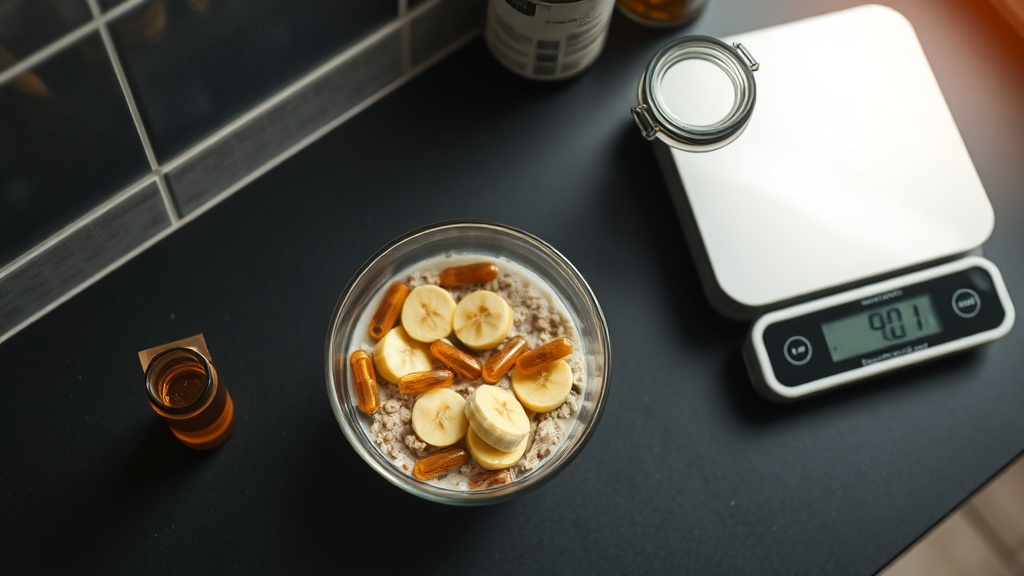
Step 2. If supplementing directly, choose tributyrin over sodium butyrate. Tributyrin survives gastric acid and releases butyrate in the intestine where it's needed. Typical doses in the supplement market range from 300-1,000mg tributyrin per day. Start at the lower end. (There's no established human therapeutic dose for mitochondrial support — that research simply doesn't exist yet.)
Step 3. Time your tributyrin with meals. Fat-soluble compounds absorb better with dietary fat, and tributyrin is a triglyceride. Taking it on an empty stomach is wasteful.
Step 4. Support butyrate-producing bacteria directly with fermented foods — specifically those containing Faecalibacterium prausnitzii and Roseburia species. Kefir, sauerkraut, and kimchi won't guarantee colonization, but dietary diversity feeds the right microbial communities.
Step 5. Track your gut health markers if you're serious about this. GI-MAP or similar stool tests can measure butyrate-producing bacterial abundance. You can't optimize what you don't measure — but also don't over-interpret a single stool test.
Step 6. If you're already supplementing NAD+ precursors (NMN, NR) or CoQ10 for mitochondrial support, don't drop them. The butyrate pathway operates through a different mechanism — epigenetic and gut barrier repair rather than direct electron transport chain support. These approaches are complementary, not competitive.
Related Video
What is butyrate and why does it matter for mitochondrial health?#
Butyrate is a four-carbon short-chain fatty acid produced when gut bacteria ferment dietary fiber. According to the March 2026 Nature Communications study, mitochondrial dysfunction leads to gut dysbiosis and reduced butyrate production, creating a feedback loop that accelerates organ decline[1]. Restoring butyrate levels via tributyrin supplementation recovered lost epigenetic histone marks and extended lifespan in mouse models.
How is tributyrin different from sodium butyrate supplements?#
Tributyrin is a triglyceride — three butyrate molecules attached to a glycerol backbone. It survives stomach acid far better than free sodium butyrate, which tends to be absorbed or degraded before reaching the colon. For intestinal delivery, tributyrin is the more rational choice based on pharmacokinetics, though head-to-head human trials comparing the two for mitochondrial endpoints don't exist.
Who should consider butyrate supplementation?#
Anyone interested in gut barrier integrity and epigenetic health may benefit from supporting butyrate status, primarily through dietary fiber. Supplementation with tributyrin is reasonable for those with known gut dysbiosis or limited fiber intake. However, individuals with diagnosed mitochondrial diseases should not self-treat based on mouse data — consult a specialist who can interpret this research in your clinical context.
Why can't we just eat more fiber instead of supplementing?#
You can, and you should — that's Step 1 of the protocol for a reason. A high-fiber diet feeds butyrate-producing bacteria and supports diverse SCFA production. But in states of severe dysbiosis (or mitochondrial dysfunction that has already disrupted the microbiome), the bacteria needed to ferment that fiber may be depleted. In those cases, direct tributyrin supplementation may bridge the gap while you rebuild microbial diversity.
When might human clinical trials for butyrate in mitochondrial disease begin?#
Honestly, I don't know — and neither does anyone else with certainty. The preclinical data from this 2026 study is strong enough to justify clinical investigation, and butyrate/tributyrin already have safety data in humans for other indications. But mitochondrial diseases are rare, trial recruitment is difficult, and funding is limited. I'd estimate 3-5 years before we see targeted human data, if the field moves quickly.
VERDICT#
7.5/10. The mechanistic story is tight — two independent mouse models converging on the same gut-butyrate phenotype, with both FMT and tributyrin rescuing lifespan. The epigenetic mechanism (histone butyrylation recovery) is specific and testable. Supported by independent 2025 data on butyrate's unique chromatin marks from Nshanian et al. in Nature Metabolism. I'm deducting points because this remains entirely preclinical, the exact lifespan extension magnitude isn't clear from available data, and the leap to human mitochondrial disease protocols is premature. But as a signal for where to direct research attention — and as a low-risk addition to a gut health protocol — butyrate just got substantially more interesting.
References
- 1.Author(s) not listed. Butyrate extends health and lifespan in mice with mitochondrial deficiency. Nature Communications (2026). ↩
- 2.Nshanian M, Gruber JJ, Geller BS, Chleilat F, Lancaster SM, White SM, Alexandrova L, Camarillo JM, Kelleher NL, Zhao Y, Snyder MP. Short-chain fatty acid metabolites propionate and butyrate are unique epigenetic regulatory elements linking diet, metabolism and gene expression. Nature Metabolism (2025). ↩
- 3.Author(s) not listed. Epigenetic orchestrator and drug enhancer: dual roles of butyrate in regulating post-translational modification and optimizing therapeutic delivery. Cell Communication and Signaling (2025). ↩
- 4.Gaskarth DA, Fan S, Highton AJ, Kemp RA. The microbial metabolite butyrate enhances the effector and memory functions of murine CD8+ T cells and improves anti-tumor activity. Frontiers in Medicine (2025). ↩
Tara Miren
Tara is warm but sharp. She will directly contradict popular nutrition narratives mid-article without building up to it: 'The 16:8 window isn't special. The mechanism doesn't care about that specific split.' She uses parenthetical asides like a real person thinking out loud: '(and yes, I've heard every objection to this — they're mostly wrong)'. She'll acknowledge when she changed her mind based on a paper: 'I used to recommend X. I don't anymore.'
View all articles →