Time-Restricted Eating During Prostate Cancer Radiotherapy & ADT

SNIPPET: Time-restricted eating (TRE) — typically a 16:8 fasting-to-eating window — may enhance radiotherapy efficacy and reduce treatment side effects in prostate cancer patients undergoing androgen deprivation therapy. Preclinical evidence suggests TRE exploits the differential stress response, sensitizing cancer cells to radiation while protecting normal tissue. Human trial data remains limited but early signals are promising.
THE PROTOHUMAN PERSPECTIVE#
Here's a question I keep circling back to: why are we still treating cancer nutrition as an afterthought? Patients get meticulous radiation dosimetry down to the millimeter, precision hormone suppression protocols, and then a pamphlet that says "eat well." The emerging research on time-restricted eating during radiotherapy and androgen deprivation therapy for prostate cancer represents something different — an attempt to weaponize metabolic timing against tumor biology.
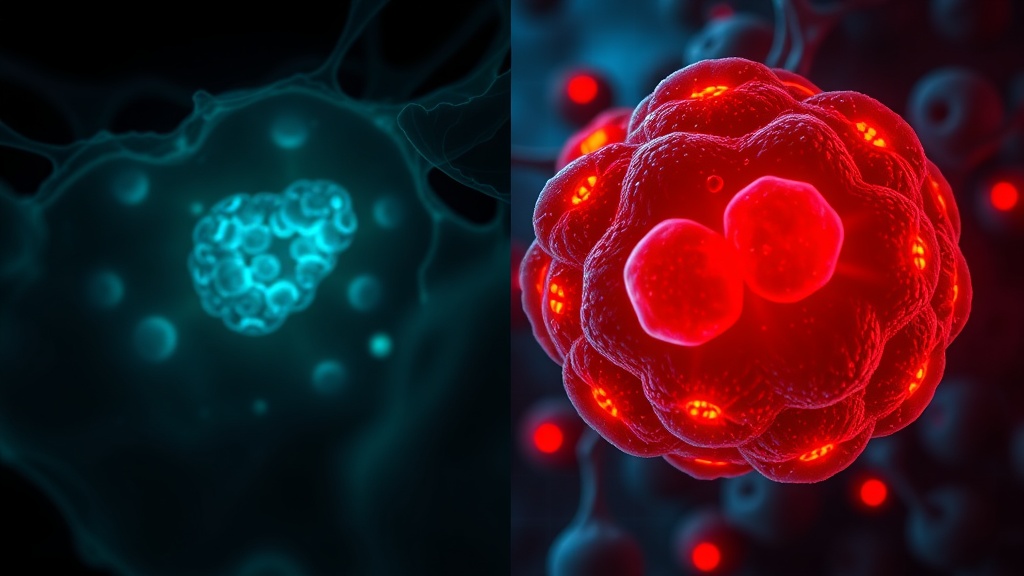
The differential stress response is the mechanism that matters here. Normal cells can downshift under nutrient deprivation. Cancer cells, locked into constitutive growth signaling through RAS, AKT, and mTOR pathways, cannot. That metabolic inflexibility becomes a vulnerability. If TRE can widen the therapeutic window of radiation — making tumors more sensitive while protecting the gut and surrounding tissue — that's not a marginal lifestyle upgrade. That's a potential shift in how we think about adjunctive oncology interventions.
But let me be direct: we're still in early days. The human data is thin. What follows is an honest assessment of where the evidence stands — not where we wish it stood.
THE SCIENCE#
The Differential Stress Response: Why Fasting Hits Cancer Cells Harder#
The core biological rationale is elegant and, importantly, well-characterized in preclinical models. When you restrict nutrient availability, normal cells activate conserved protective pathways — they reduce metabolic activity, upregulate DNA repair mechanisms, and enter a quiescent state that resembles a cellular version of battening down the hatches. This involves downregulation of IGF-1 signaling, activation of AMPK, and enhanced autophagy pathways that clear damaged organelles and proteins.[1]
Cancer cells can't do this. Their oncogenic mutations — constitutive activation of RAS, AKT, and mTOR signaling — mean they're stuck in growth mode regardless of nutrient availability. Under fasting conditions, they remain metabolically active, continue to proliferate, and are consequently more exposed to radiation-induced DNA double-strand breaks.[1]
This divergence — normal cells protected, cancer cells exposed — is what makes the combination biologically plausible, not just theoretically interesting.
The 2020 systematic review by Icard et al. in Advances in Nutrition evaluated 26 studies (17 preclinical, 9 clinical) examining dietary restriction combined with radiotherapy across multiple tumor types. Short-term pre-irradiation fasting consistently increased tumor radiosensitivity in preclinical models while demonstrating relative radioprotection of normal tissue.[2]
Gut Protection During Pelvic Radiation#
This is where it gets particularly relevant for prostate cancer. Pelvic field irradiation hammers the small intestine — gastrointestinal toxicity is one of the most common and quality-of-life-destroying side effects of prostate radiotherapy. Tinkum et al. (2015) published in PNAS that 24-hour fasting protected small intestinal epithelial stem cells from lethal DNA damage in mice, reducing GI toxicity without diminishing the antitumor effect.[3]
Now, the honest caveat: that study used etoposide, not ionizing radiation. Both act primarily through double-strand breaks, so the mechanistic extrapolation isn't unreasonable — but it's still an extrapolation. I'd want to see this replicated with actual radiation before making strong claims.
TRE and Androgen Deprivation Therapy: The Metabolic Side Effect Problem#
Here's where I think TRE might actually have its most immediate clinical value — not in radiosensitization (which is still largely preclinical), but in managing ADT's metabolic devastation. Androgen deprivation therapy causes insulin resistance, dyslipidemia, increased visceral fat, and accelerated sarcopenia. It's a metabolic wrecking ball.
O'Flanagan et al. (2017) in BMC Medicine concluded that intermittent fasting enhances cytotoxic treatment efficacy through the differential stress mechanism and identified it as a more feasible alternative to chronic caloric restriction for patients in active treatment.[4] The feasibility point matters enormously — asking someone undergoing radiation and ADT simultaneously to sustain a 25% caloric deficit is unrealistic for most patients.
The Vega et al. (2024) trial in Nutrients evaluated TRF (16:8) versus caloric restriction in 21 overweight/obese breast cancer patients undergoing curative radiotherapy. Both interventions produced statistically significant weight loss and waist circumference reduction, but TRF showed potentially stronger impact and better adherence than caloric restriction.[5] Changes in LDL, HDL, total cholesterol, triglycerides, glucose, and insulin were not statistically significant — which, in a sample of 21, isn't surprising.
TRE and Cancer-Related Fatigue: A Separate but Relevant Signal#
Kleckner et al. (2025) ran a randomized controlled trial testing a 10-hour eating window over 12 weeks in cancer survivors with persistent fatigue. The TRE group showed a clinically meaningful fatigue reduction (FACIT-F change of 4.1 ± 5.7 versus 0.0 ± 5.4 for control), with an effect size of 0.70 — though the p-value was 0.11 in a sample of just 30 participants.[6]
The effect size is notable. The statistical significance is not. That's exactly the kind of result that says "this warrants a larger trial," not "this is proven." Glucose parameters trended lower in the TRE group, and rest-activity rhythms showed more regularity — both biologically consistent with circadian realignment.
The Stringer et al. (2024) systematic review in Nutrition Reviews represents the most current synthesis of TRE's clinical impact on cancer, though the review itself highlights how sparse the human trial data remains.[7]
TRE vs Control: Fatigue Reduction in Cancer Survivors (FACIT-F Change)
Where I'm Less Convinced#
The problem with this entire evidence base is the jump from preclinical to clinical. Mouse fasting models are compelling, but mice aren't men undergoing 8 weeks of pelvic IMRT with concurrent ADT. The differential stress response has strong mechanistic support — nobody is disputing the biology. What's missing is a well-powered human RCT that shows TRE during prostate radiotherapy actually improves either tumor control or toxicity outcomes.
The Constantine (2026) clinical evidence brief is transparent about this limitation: the strongest mechanistic data remains preclinical.[1] That honesty is refreshing but it also means we're making protocol recommendations based on biological plausibility, not clinical proof.
COMPARISON TABLE#
| Method | Mechanism | Evidence Level | Cost | Accessibility |
|---|---|---|---|---|
| TRE (16:8) during RT | Differential stress response; mTOR/AMPK modulation; circadian realignment | Preclinical strong; human preliminary | Free | High — no equipment needed |
| Caloric Restriction (25%) during RT | Similar metabolic pathways; IGF-1 reduction | Preclinical strong; human limited | Free | Moderate — requires tracking, harder adherence |
| Standard Nutrition Counseling | General nutritional support | Established standard of care | Low (covered by care) | High |
| Ketogenic Diet during RT | Glucose deprivation of tumor cells; altered mitochondrial metabolism | Preclinical mixed; human very limited | Moderate (specialty foods) | Low — difficult during treatment |
| Prolonged Fasting (48-72h) pre-RT | Maximal differential stress response activation | Preclinical strong; human safety concerns | Free | Low — contraindicated in many patients |
THE PROTOCOL#
Important disclaimer: This protocol is based on current preclinical and early clinical evidence. It is not a substitute for oncologist guidance. If you're undergoing active cancer treatment, discuss any dietary changes with your treatment team before implementing them.
-
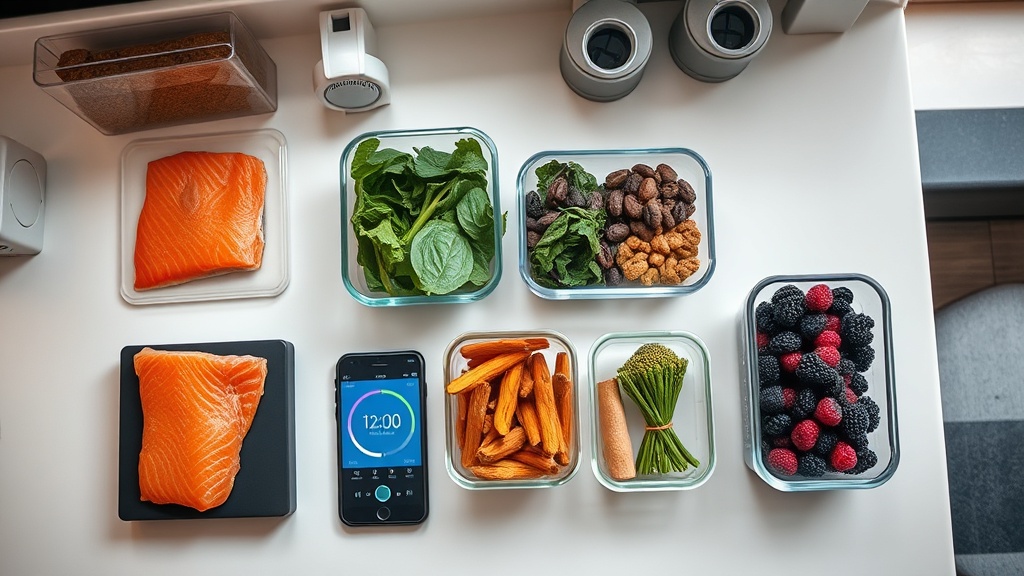
Establish your baseline eating window. Before starting TRE, track your actual eating times for 5-7 days using an app like myCircadianClock (developed by Satchidananda Panda's lab at the Salk Institute). Most people discover their natural eating window is 14-15 hours. You need to know your starting point — don't guess.
-
Compress gradually over 2-3 weeks. Reduce your eating window by 1 hour every 4-5 days until you reach a 10-hour window. Do not jump straight to 16:8 if you're currently eating across 15 hours. (I used to recommend jumping straight in. I don't anymore — adherence collapses by week 2 for most people.)
-
Stabilize at a 10-hour window before narrowing further. Maintain 10 hours for at least 2 weeks. If you're tolerating treatment well and your oncologist agrees, you can narrow to 8 hours. The Kleckner et al. trial used 10 hours and still showed meaningful effects — the 16:8 window isn't special. The mechanism doesn't care about that specific split.
-
Time your eating window to end at least 3 hours before sleep. Circadian biology matters here. An 8am-6pm window is metabolically different from a 12pm-10pm window, even though both are "10 hours." Earlier eating windows align better with insulin sensitivity peaks and cortisol rhythms. If you're doing evening radiation sessions, eat your last meal before treatment, not after.
-
Prioritize protein density within your compressed window. ADT accelerates muscle loss. If you're eating in fewer hours, every meal needs to hit 30-40g protein minimum. Leucine-rich sources (eggs, dairy, fish) are non-negotiable during androgen deprivation. If you're doing fasting to compensate for a bad diet, stop — that's not what this is.
-
Schedule pre-radiation fasting of at least 12-14 hours where possible. Based on the preclinical data showing enhanced radiosensitivity with pre-irradiation fasting, aim to have your radiation session fall during your fasting window. Morning radiation with a first meal at noon is one practical configuration.
-
Monitor and adjust weekly. Track body weight, fatigue levels (subjective 1-10 scale), and GI symptoms. Any unintended weight loss exceeding 2% of body weight per week is a signal to widen your eating window or increase caloric density. Your oncology dietitian should be reviewing these numbers with you.
Related Video
What is time-restricted eating and how does it differ from intermittent fasting?#
Time-restricted eating is a specific form of intermittent fasting where you consume all calories within a defined daily window — typically 8-10 hours — and fast for the remaining 14-16 hours. Unlike alternate-day fasting or 5:2 protocols, TRE doesn't require caloric reduction on any given day. You eat your normal calories, just within a shorter timeframe. The mechanism is primarily circadian and metabolic rather than caloric.
How does TRE potentially improve radiotherapy outcomes in prostate cancer?#
The proposed mechanism is the differential stress response: normal cells downregulate metabolism and activate protective pathways during nutrient deprivation, while cancer cells with constitutive RAS/AKT/mTOR activation cannot adapt and remain vulnerable to radiation-induced DNA damage. Preclinical models consistently show enhanced tumor radiosensitivity with pre-irradiation fasting, according to Icard et al.'s 2020 systematic review.[2] However — and this is critical — no completed human RCT has yet confirmed this specifically for prostate radiotherapy.
Who should avoid TRE during cancer treatment?#
Anyone who is underweight, malnourished, or experiencing significant unintended weight loss should not implement TRE. Patients with diabetes on insulin or sulfonylureas need medical supervision before any fasting protocol due to hypoglycemia risk. If your oncology team has prescribed a specific nutritional plan to maintain weight during treatment, that takes priority over any TRE protocol. This isn't a universal recommendation — it's a targeted intervention for metabolically appropriate patients.
When during the treatment timeline should TRE be started?#
Based on current evidence, the gradual on-ramping period (2-3 weeks) should ideally be completed before radiotherapy begins. Starting a new dietary restriction simultaneously with treatment initiation adds unnecessary stress. If treatment has already started, a slower transition over 3-4 weeks is more prudent. The Vega et al. trial implemented dietary changes concurrent with radiotherapy and found it feasible, but patient-reported adherence was higher when habits were partially established beforehand.[5]
Why isn't TRE already standard of care in oncology?#
Because the human evidence isn't there yet. The preclinical data is strong and the biological rationale is sound, but oncology rightly demands randomized controlled trial data before changing treatment protocols. The existing human trials are small (n=21 to n=30), often in breast cancer rather than prostate cancer specifically, and none have been powered to detect differences in tumor control rates. We need Phase II/III trials with oncologic endpoints — not just feasibility and metabolic markers — before this moves from "promising adjunctive strategy" to standard recommendation.
VERDICT#
Score: 6/10
The biology is sound. The differential stress response is real, well-characterized, and makes a compelling case for combining nutrient restriction with radiotherapy. The preclinical signal is consistently positive across multiple models and tumor types. But here's where I land: the human evidence for TRE specifically during prostate cancer radiotherapy and ADT is essentially nonexistent as direct trial data. We're extrapolating from mouse models, small breast cancer feasibility studies, and a cancer survivorship fatigue trial with 30 participants.
Where TRE likely earns its keep right now is in managing ADT metabolic side effects — insulin resistance, weight gain, circadian disruption — where the evidence for TRE's metabolic benefits is more established from non-oncology literature. As an adjunctive strategy with minimal downside risk for well-nourished patients, it's reasonable to discuss with your oncologist. As a proven radiosensitizer in humans? We're not there. I'd want at least one adequately powered prostate-specific RCT before scoring this higher.
References
- 1.Constantine C. Time-Restricted Eating as an Adjunct to Radiotherapy and Androgen Deprivation Therapy in Prostate Cancer — Clinical Evidence Brief. constantine.name (2026). ↩
- 2.Icard P et al.. How Fasting May Improve Radiotherapy Efficacy and Reduce Its Side Effects. Advances in Nutrition (2020). ↩
- 3.Tinkum KL et al.. Fasting protects mice from lethal DNA damage by promoting small intestinal epithelial stem cell survival. PNAS (2015). ↩
- 4.O'Flanagan CH et al.. When less may be more: calorie restriction and response to cancer therapy. BMC Medicine (2017). ↩
- 5.Vega C, Barnafi E, Sánchez C, Acevedo F, Walbaum B, Parada A, Rivas N, Merino T. Calorie Restriction and Time-Restricted Feeding: Effective Interventions in Overweight or Obese Patients Undergoing Radiotherapy Treatment with Curative Intent for Cancer. Nutrients (2024). ↩
- 6.Kleckner AS, Clingan CL, Youngblood SM, Kleckner IR, Quick L, Elrod RD, Zhu S, Manoogian ENC, Panda S, Badros AZ, Emadi A. Time-restricted eating to address persistent cancer-related fatigue among cancer survivors: a randomized controlled trial. Supportive Care in Cancer (2025). ↩
- 7.Stringer EJ, Cloke RWG, Van der Meer L, Murphy RA, Macpherson NA. The Clinical Impact of Time-restricted Eating on Cancer: A Systematic Review. Nutrition Reviews (2024). ↩
Tara Miren
Tara is warm but sharp. She will directly contradict popular nutrition narratives mid-article without building up to it: 'The 16:8 window isn't special. The mechanism doesn't care about that specific split.' She uses parenthetical asides like a real person thinking out loud: '(and yes, I've heard every objection to this — they're mostly wrong)'. She'll acknowledge when she changed her mind based on a paper: 'I used to recommend X. I don't anymore.'
View all articles →