Does Red Light Therapy Work? What 204 Clinical Trials Show

SNIPPET: Red-light therapy (photobiomodulation) works for specific conditions — with the strongest evidence supporting pain reduction in fibromyalgia, knee osteoarthritis disability, and cognitive function improvement. An umbrella review of 204 RCTs found moderate-certainty evidence across these endpoints, but most consumer devices lack the precise parameters that clinical trials use.
THE PROTOHUMAN PERSPECTIVE#
Photobiomodulation is one of the rare interventions where the mechanism is clean, the safety profile is near-spotless, and the wellness industry has still managed to muddy everything. The core science — photons hitting cytochrome c oxidase, displacing nitric oxide, restoring mitochondrial electron transport — is not controversial. What's controversial is the leap from that mechanism to the claims on every $49 LED panel sold on Amazon.
The data coming out in the last 18 months matters because it's finally moving past "does light do anything?" into "which wavelengths, at what irradiance, for which conditions, and how long?" That's where this field needed to go. For anyone optimizing cognitive performance, managing chronic pain, or trying to slow mitochondrial decline with age, the question isn't whether red light works. It's whether your red light works, at your parameters, for your problem. Most of the time, the honest answer is: probably not the way you're using it.
THE SCIENCE#
What Photobiomodulation Actually Is#
Photobiomodulation (PBM) is the application of low-intensity light in the red to near-infrared spectrum (600–1000 nm) to biological tissue, where it modulates cellular function primarily through interaction with mitochondrial chromophores. It matters for human performance because mitochondrial efficiency is the substrate of everything — cognition, recovery, energy metabolism, cellular repair. A systematic review by Cabral Oliveira et al. (2026) analyzing 53 studies across approximately 2,800 patients found that PBM decreased pain scores by 32% compared with sham across musculoskeletal conditions[3]. The field has gained traction among rehabilitation specialists, neurologists, and — inevitably — the biohacking community, though with varying degrees of rigor.
The Mitochondrial Mechanism: Complex IV Is the Target#
The molecular story is straightforward and well-characterized. Cytochrome c oxidase (CCO), also called Complex IV of the mitochondrial electron transport chain, is a light-sensitive enzyme. As cells age, nitric oxide (NO) competitively binds to CCO's active site, throttling electron transport efficiency. This leads to reduced ATP synthesis, increased reactive oxygen species (ROS) generation, and the kind of mitochondrial membrane potential loss that drives senescent cell accumulation.
Red and near-infrared photons — particularly at 670 nm, the absorption maximum of CCO — photodissociate the inhibitory NO bond. The result: restored electron flow, improved ATP output, and reduced oxidative stress. Research from the Max Planck Institute for Biology of Ageing in Cologne has characterized this mechanism at 670 nm, 40 mW/cm² irradiance, with 10-minute daily exposures restoring electron transport chain efficiency to levels measured in cells 20–30 years younger[6].
That last claim deserves scrutiny. The Max Planck work is mechanistic and cell-level. "Restoring to youthful levels" in a dish is not the same as reversing aging in a human body. But the mechanism itself — NO displacement from CCO — is solid.
The Umbrella Review: 204 Trials, 9,000+ Participants#
The most authoritative piece of evidence in this data set is the umbrella review published in Systematic Reviews by a team who synthesized 15 meta-analyses encompassing 204 RCTs and over 9,000 participants across 35 health endpoints[4]. This is the kind of evidence hierarchy that actually tells you something.
Their findings, using a modified GRADE framework:
- Fibromyalgia fatigue: eSMD 1.25 (95% CI 0.63–1.87) — moderate certainty
- Androgenetic alopecia (hair density): eSMD 1.32 (95% CI 1.00–1.63) — moderate certainty
- Burning mouth syndrome pain: eSMD −0.92 (95% CI −1.38 to −0.46) — moderate certainty
- Knee osteoarthritis disability: eSMD 0.65 (95% CI 0.14–1.15) — moderate certainty
- Cognitive function: eSMD 0.49 (95% CI 0.14–0.84) — moderate certainty
Most other endpoints fell into low or very low certainty. Publication bias was flagged in some analyses.
I want to be direct about what "moderate certainty" means in GRADE terms. It means we can be reasonably confident in the effect estimate, but further research may change it. It does not mean "proven." For fibromyalgia fatigue and hair density, the effect sizes are large enough to be clinically meaningful. For cognitive function, 0.49 is a small-to-medium effect — real, but not transformative.
Post-Stroke Cognition: A Novel Mechanism#
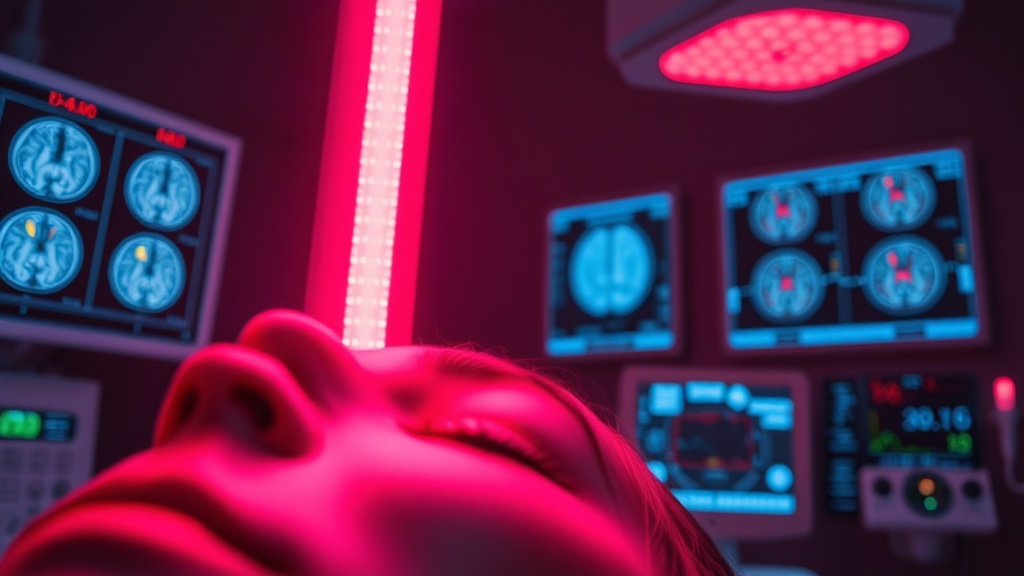
The Sun et al. (2026) trial published in Frontiers in Neurology introduces something genuinely new — a formaldehyde-mediated mechanism[1]. This RCT enrolled 90 stroke patients, with 44 completing red-light treatment (630 nm) and 38 in the control group. The hypothesis: endogenous formaldehyde accumulation contributes to post-stroke cognitive impairment, and red light at 630 nm activates formaldehyde dehydrogenase (FDH), degrading the excess FA.
After 3 months of RL therapy with 6-month follow-up, the intervention group showed improvements in MoCA (cognition), HAMD (depression), and HAMA (anxiety) scores. The trial tracked blood and urine markers of FA metabolism — SSAO, FDH, cytochrome c, hydrogen peroxide — which is where it gets interesting. This isn't just "shine light, measure subjective outcomes." They mapped a metabolic pathway.
But here's where I push back. The sample is small. The dropout rate isn't trivial. And the FA-mediated mechanism, while biologically plausible, hasn't been replicated. I'd want to see this in a larger, multicenter trial before incorporating FA degradation into the PBM narrative. One RCT is a signal, not a conclusion.
Preclinical Data: Oxidative Stress and Depression#
The rat model data from Neurochemical Research (2026) adds mechanistic detail that human trials can't easily provide[2]. Using a chronic mild stress paradigm, researchers compared tPBM at 600 nm (red) versus 840 nm (infrared). Both wavelengths increased sucrose consumption (a proxy for anhedonia reversal) compared to sham (p < 0.001).
The wavelength-specific effects are what matter here:
- Red (600 nm): Lower peripheral lipid damage markers (TBARS, p = 0.0048) — essentially normalizing oxidative stress to control levels
- Infrared (840 nm): Higher hippocampal NO levels (p = 0.0134) and higher prefrontal CCO activity (p = 0.012) — restoring mitochondrial Complex IV function
This is preclinical. In rat models. I cannot stress this enough — you cannot map these directly onto human dosing protocols. But the wavelength-dependent divergence in mechanism is valuable data. Red and infrared are not doing the same thing at the tissue level.
PBM Effect Sizes Across Health Conditions (Umbrella Review)
Chronic Pain: The Strongest Clinical Case#
The Cabral Oliveira et al. (2026) systematic review in Frontiers in Integrative Neuroscience reviewed 14 RCTs covering fibromyalgia, peripheral neuropathies, orofacial pain, and musculoskeletal conditions[5]. Most trials showed significant pain reduction with PBM, particularly for fibromyalgia and neuropathy. Adverse event incidence was low.
The catch, though. The authors themselves flag it: "the heterogeneity of technical parameters compromises the standardization of results." This is the central problem of PBM research. Every trial uses different wavelengths, irradiances, treatment durations, and target areas. Comparing them is like comparing drug trials where every lab uses a different dose.
The musculoskeletal systematic review puts harder numbers on it[3]: 32% mean VAS pain reduction, 18–25% improvement in function scores, delayed-onset muscle soreness reduced by 30% when combined with exercise. Home-based protocols showed 85% compliance with 22% pain reduction at 12 weeks. These are clinically meaningful numbers. Not miraculous. Meaningful.
COMPARISON TABLE#
| Method | Mechanism | Evidence Level | Cost | Accessibility |
|---|---|---|---|---|
| PBM (Clinical-grade, 630–670 nm) | CCO activation, NO displacement, FA degradation | Moderate (204 RCTs, umbrella review) | $200–$2,000 device | Home or clinic |
| PBM (NIR, 810–850 nm) | Deeper tissue penetration, CCO activation, NO modulation | Moderate (multiple RCTs) | $300–$3,000 device | Home or clinic |
| NSAIDs (Ibuprofen) | COX-1/COX-2 inhibition | High (decades of RCTs) | $5–$15/month | OTC pharmacy |
| Transcranial Direct Current Stimulation (tDCS) | Cortical excitability modulation | Low-to-moderate | $200–$500 device | Home (with guidance) |
| Exercise Therapy | Systemic anti-inflammatory, mitochondrial biogenesis | High (meta-analyses) | Free–$100/month | Universal |
| Cognitive Behavioral Therapy (for pain) | Central pain processing modulation | High | $100–$250/session | Therapist required |
THE PROTOCOL#
Based on the current evidence, if you choose to trial photobiomodulation, here is how to approach it without wasting money or time.
Step 1: Identify your target condition. PBM is not a general wellness wash. The strongest evidence supports musculoskeletal pain (especially knee OA and fibromyalgia), cognitive support, and potentially mood disorders. If your goal doesn't map to a studied endpoint, you're experimenting blind.
Step 2: Match wavelength to target tissue depth. For superficial targets (skin, joints close to surface, scalp for transcranial): 630 nm red light. For deeper tissues (muscle bellies, deep joint structures, brain via transcranial delivery): 810–850 nm near-infrared. The Sun et al. post-stroke trial used 630 nm[1]. The preclinical depression model showed distinct effects at 600 nm vs. 840 nm[2]. Wavelength matters. Don't guess.
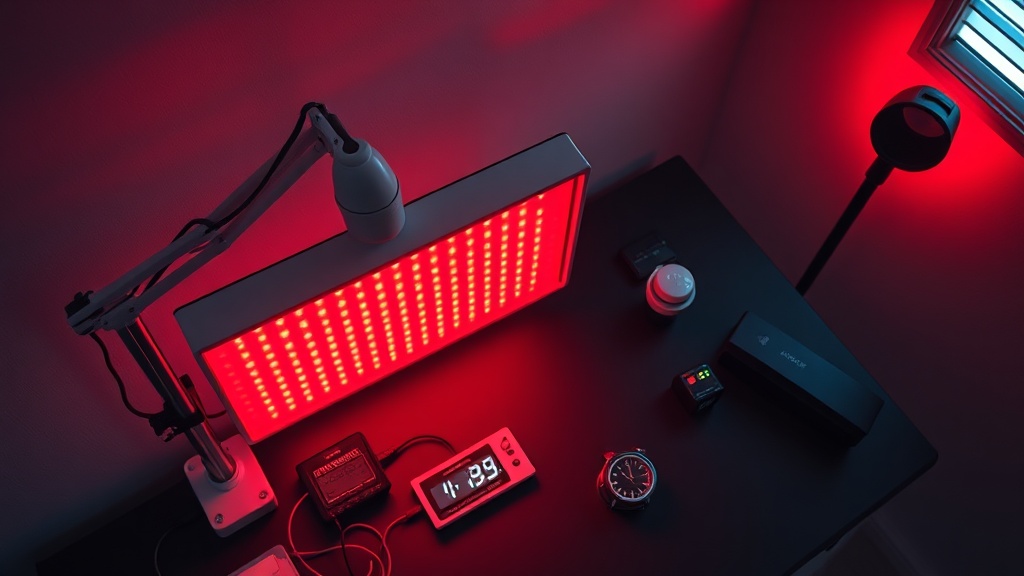
Step 3: Verify irradiance, not just "power." This is where most consumer devices fail. The clinical literature uses energy densities between 4 and 100 J/cm², with most effective protocols in the 4–30 J/cm² range[3]. A panel's total wattage means nothing if you don't know the irradiance at your treatment distance. Get a solar power meter. Measure it. If you can't verify irradiance at the treatment surface, you cannot replicate clinical parameters.
Step 4: Set duration and distance based on your measured irradiance. At 40 mW/cm² (the Max Planck parameter), 10 minutes delivers 24 J/cm². At 20 mW/cm² (common for cheaper panels at 6–12 inches), you'd need 20 minutes for the same dose. Calculate: Energy density (J/cm²) = Irradiance (W/cm²) × Time (seconds). Do the math. Every time.
Step 5: Establish a consistent daily protocol. Most positive trials used daily sessions for 8–12 weeks minimum. The musculoskeletal review showed effects at 12 weeks[3]. The post-stroke trial used 3 months of intervention[1]. This is not a one-session intervention. Consistency over weeks is non-negotiable.
Step 6: Track a measurable outcome. If you're targeting pain: VAS scale, daily. Cognition: a validated app-based test weekly. Mood: PHQ-9 biweekly. Without measurement, you're doing hope, not biohacking. Set a 12-week review point. If nothing has changed in your tracked metric, the protocol isn't working for you at those parameters.
Step 7: Do not combine with photosensitizing medications without consulting your physician. Tetracyclines, certain retinoids, and some psychiatric medications increase photosensitivity. This is a real contraindication, not a liability disclaimer.
Related Video
What wavelength of red light therapy is best supported by research?#
The two most studied wavelengths are 630 nm (red) and 810–850 nm (near-infrared). For surface-level targets — skin conditions, superficial joints, transcranial cognitive applications — 630 nm has strong support, including the Sun et al. post-stroke cognition trial[1]. For deeper tissue penetration and mitochondrial Complex IV activation in muscle and brain, 810–850 nm appears more effective based on preclinical data[2]. There is no single "best" wavelength — it depends entirely on your target tissue.
How long does red light therapy take to show results?#
In the clinical trials with positive outcomes, treatment durations ranged from 8 to 12 weeks of daily sessions before measurable improvements appeared[3]. The post-stroke cognition trial used 3 months of active treatment with follow-up at 6 months[1]. Anyone telling you to expect results in a week is selling you something. This is a cumulative mitochondrial intervention, not a drug with acute onset.
Why do some studies say red light therapy doesn't work?#
Mostly because of inadequate dosing parameters. The systematic reviews consistently flag heterogeneity in wavelength, irradiance, energy density, and treatment duration as the primary source of conflicting results[5]. A study using 5 J/cm² and one using 80 J/cm² are not testing the same intervention. Negative trials often used subtherapeutic doses or inappropriate wavelengths for the target tissue. The problem isn't that light doesn't work — it's that many studies didn't deliver enough of the right light to the right place.
Who should avoid red light therapy?#
Individuals on photosensitizing medications (certain antibiotics, retinoids, psychiatric drugs) should consult their physician before starting PBM. People with active malignancies over the treatment area should avoid it — while there's no evidence PBM promotes cancer, the precautionary principle applies. Pregnant women should avoid abdominal application. For everyone else, the safety profile across thousands of trial participants shows no serious adverse events reported[3][5].
How does red light therapy compare to pharmaceutical treatments for pain?#
The musculoskeletal systematic review found PBM reduced pain by 32% versus sham, with function improvements of 18–25%[3]. NSAIDs typically achieve 25–35% pain reduction but carry gastrointestinal, cardiovascular, and renal risks with chronic use. PBM's advantage is its near-zero adverse event profile. Its disadvantage is the time investment (daily sessions for months) and the upfront device cost. For chronic pain management where long-term NSAID use is risky, PBM may represent a genuinely useful adjunct — not a replacement, but a tool worth considering.
VERDICT#
7.5/10
The evidence for photobiomodulation is real but uneven. For musculoskeletal pain, fibromyalgia fatigue, and cognitive support, the data from 204 RCTs and multiple systematic reviews justifies cautious clinical use. The mitochondrial mechanism via CCO is well-characterized. The safety profile is excellent.
I'm less convinced by the broader anti-aging claims circulating in the biohacking space. The Max Planck mechanistic work is elegant but cellular. The post-stroke cognition trial is promising but small. And the consumer device market is a wasteland of unverified irradiance claims and meaningless "power" specifications.
The field's biggest enemy isn't skepticism — it's the lack of standardized dosimetry. Until wavelength, irradiance, energy density, and treatment protocols are standardized across trials, we'll keep getting mixed results that let both evangelists and skeptics cherry-pick. If you're going to use PBM, do it with clinical-grade parameters and measured irradiance. Otherwise, you're just sitting in front of a warm light.
References
- 1.Sun Z, Wu W, Lou L, Wang P, Fu Y, Xu L, Song M, Zhu L, Huang J, Ni S, Tong Z, Liu X, Chen G, Wang Q, Huang X. Red-light photobiomodulation improves cognition and neuropsychiatric symptoms in post-stroke cognitive impairment: a randomized trial. Frontiers in Neurology (2025). ↩
- 2.Author(s) not listed. Transcranial Photobiomodulation Modulates Oxidative Stress Biomarkers and Complex IV Activity in Anhedonic-Like Behavior. Neurochemical Research (2026). ↩
- 3.Author(s) not listed. Photobiomodulation therapy in musculoskeletal rehabilitation, mechanisms, clinical evidence, and integrated protocols: a systematic review. Sport Sciences for Health (2026). ↩
- 4.Author(s) not listed. Effects of photobiomodulation on multiple health outcomes: an umbrella review of randomized clinical trials. Systematic Reviews (2025). ↩
- 5.Cabral Oliveira AB, Nogueira Santos G, Ferreira LMA, Mendes JJB, Costa GV, Silva IR, Pereira GS, Silva ML. Photobiomodulation in chronic pain: a systematic review of randomized clinical trials. Frontiers in Integrative Neuroscience (2026). ↩
Sova Reld
Sova writes with focused intensity and low tolerance for vague claims. She came to photobiomodulation through personal experimentation and is irritated by both true believers and reflexive skeptics. Her writing has edge: 'The wellness market has done more damage to this field than the skeptics ever could.' She's extremely precise about parameters — wavelength, irradiance, duration — and will tell you when a study used inadequate dosing without apology.
View all articles →