Empagliflozin and Intermittent Fasting for Chemo Cardiotoxicity

SNIPPET: Empagliflozin (EMPA) and time-restricted feeding (TRF) each independently mitigate doxorubicin-induced cardiotoxicity in rat models by lowering arterial pressure, reducing QTc prolongation, and attenuating myocardial inflammation — though combining them showed no additive benefit on blood pressure. Both interventions modulate distinct inflammatory pathways and restore cardiomyocyte integrity, suggesting a promising but still preclinical cardio-oncology strategy.
THE PROTOHUMAN PERSPECTIVE#
Here's why this matters beyond the lab bench: anthracyclines like doxorubicin remain the backbone of chemotherapy for breast cancer, lymphomas, and sarcomas — and they destroy hearts. Not sometimes. Predictably. Dose-dependently. The cardiotoxicity problem has been a known trade-off for decades, and the solutions we have (dexrazoxane, dose capping, liposomal formulations) are incomplete at best.
What this new research from Scientific Reports introduces is a convergence point — a diabetes drug and a fasting protocol, both independently targeting myocardial energy metabolism, both showing cardioprotection in the same doxorubicin model. For the biohacking and longevity community, this is directly relevant. Many of you already practice time-restricted feeding. Some are using SGLT2 inhibitors off-label for metabolic optimization. The question of whether these tools can protect the heart during one of medicine's most cardiotoxic treatments is not abstract — it's personal for anyone facing cancer treatment or supporting someone who is.
THE SCIENCE#
What Doxorubicin Does to the Heart#
Doxorubicin (Dox) is a paradox drug. It kills cancer effectively through DNA intercalation and topoisomerase II inhibition, but it simultaneously generates massive reactive oxygen species (ROS) accumulation in cardiomyocytes[1][4]. When cumulative doses exceed 400 mg/m², the risk of irreversible cardiomyopathy climbs sharply[2]. Cardiovascular complications account for approximately 11% of deaths in breast cancer patients — a number that should make anyone uncomfortable with the status quo[4].
The damage isn't subtle. Dox triggers myocardial remodeling, inflammatory infiltration, extracellular matrix expansion, and leukopenia. It raises systolic, diastolic, and mean arterial pressures. It prolongs QTc intervals. It is, in every measurable way, hostile to the heart.
The Empagliflozin Mechanism#
Empagliflozin is an SGLT2 inhibitor originally designed for type 2 diabetes. But here's what changed the game: the EMPA-REG OUTCOME trial and subsequent studies (EMPEROR-Reduced, EMPEROR-Preserved) demonstrated cardiovascular benefits entirely independent of blood sugar control[5][6]. The drug reduces heart failure hospitalizations, cardiovascular death, and overall mortality in both HFrEF and HFpEF populations.
The mechanism appears to center on mitochondrial efficiency. Wei et al. (2025) demonstrated that empagliflozin modulates the PPARα signaling pathway, shifting failing hearts away from dysfunctional glycolysis and back toward fatty acid oxidation — essentially restoring the heart's preferred fuel source[3]. In their rat model, empagliflozin upregulated PPARα, RXRα, CPT1α, AMPKα, and SIRT1 while suppressing GLUT4 expression and reducing cardiac fibrosis.
Separately, Schnelle et al. (2024) showed empagliflozin restabilizes the mitochondrial respiratory chain in HFpEF by restoring cardiolipin expression — an essential phospholipid for electron transport chain function. Cardiac mitochondrial respiration (Vmax complex IV) was significantly impaired in HFpEF but fully restored by empagliflozin (0.21±0.05 vs. 0.13±0.05 mmol O₂/s/mg; P=0.012)[6].
So you have a drug that rewires myocardial energy metabolism at the mitochondrial level. The question becomes: can it protect against doxorubicin specifically?
The New Study: EMPA + Time-Restricted Feeding vs. Doxorubicin#
The primary study here, published in Scientific Reports in March 2026, tested empagliflozin (10 mg/kg), time-restricted feeding (16:8 protocol), and their combination against doxorubicin-induced cardiotoxicity in rats[1]. The design was straightforward: five groups — control, Dox alone, Dox + EMPA, Dox + TRF, and Dox + EMPA + TRF — over four weeks.
The results are worth breaking down carefully.
Blood pressure: Doxorubicin significantly increased systolic, diastolic, and mean arterial pressures. Both EMPA and TRF individually mitigated this. But here's the catch — combining them produced no additive effect. That's an important negative finding. It suggests the two interventions may converge on the same downstream hemodynamic pathway rather than operating through independent mechanisms.
Electrocardiographic changes: EMPA partially normalized Dox-induced P wave and QRS alterations. Both EMPA and TRF (alone or combined) reduced QTc prolongation — a critical finding given that QTc prolongation is a direct arrhythmia risk factor.
Histology: All treatment groups showed attenuation of Dox-induced myocardial remodeling, restored cardiomyocyte occupancy, reduced extracellular matrix expansion, and decreased inflammatory infiltrate. This is where the data looks genuinely encouraging.
Inflammatory cytokines — and this is where it gets interesting: EMPA and TRF modulated inflammation through distinct pathways. Both lowered TNF. But TRF alone produced the strongest IL-1β suppression. The combined treatment significantly increased IL-10 and TGF-β — anti-inflammatory cytokines that promote tissue repair and immune regulation. This divergence in inflammatory modulation is mechanistically important because it suggests TRF activates autophagy-related anti-inflammatory cascades that EMPA doesn't fully replicate.
Leukocyte counts: All co-treatments prevented Dox-related leukopenia, normalizing white blood cell counts. For cancer patients already immunocompromised by chemotherapy, this is not a minor finding.
The Clinical Case#
The study also included a single clinical case: a cancer patient undergoing doxorubicin therapy who received empagliflozin (10 mg/day) followed by TRF for three months. The patient experienced weight loss, stable blood pressure, and cardiovascular stability — although troponin levels rose. I want to be clear about this: a single case report is not evidence. It's a signal. The troponin elevation is concerning and needs proper investigation in controlled trials. Anyone reading this as "it works in humans" is getting ahead of the data.
Inflammatory Cytokine Modulation by Treatment Group
Complementary Evidence: Exercise and Alternative Compounds#
This study doesn't exist in isolation. Baniasadi et al. (2025) demonstrated that high-intensity interval training (HIIT) attenuates doxorubicin-induced cardiac damage and reduces FoxO4 protein expression in rats — suggesting exercise-based cardioprotection operates through apoptotic pathway inhibition[4]. Meanwhile, computational work by researchers integrating network toxicology and machine learning has identified tanshinone IIA as another candidate for mitigating Dox cardiotoxicity, potentially through modulation of APAF1, AR, and TERT targets[2].
The convergence is clear: the field is moving toward multi-modal cardioprotection — combining pharmacological, nutritional, and exercise-based interventions rather than relying on any single agent.
COMPARISON TABLE#
| Method | Mechanism | Evidence Level | Cost | Accessibility |
|---|---|---|---|---|
| Empagliflozin (SGLT2i) | Mitochondrial respiratory chain stabilization, PPARα pathway modulation, metabolic fuel shifting | Preclinical (Dox-specific); RCTs for heart failure | ~$500/month (brand); generic available in some markets | Prescription required |
| Time-Restricted Feeding (16:8) | Autophagy activation, IL-1β suppression, NAD+ synthesis upregulation, metabolic flexibility | Preclinical (Dox-specific); observational for CV health | Free | Universally accessible |
| Dexrazoxane | Iron chelation, topoisomerase IIβ modulation | Multiple RCTs; FDA-approved for Dox cardioprotection | ~$1,200/cycle | Hospital-administered IV |
| HIIT Exercise | FoxO4 suppression, antioxidant defense enhancement, apoptotic pathway inhibition | Preclinical (Dox-specific); strong CV evidence generally | Free–low cost | Requires baseline fitness assessment |
| Tanshinone IIA | ROS scavenging via SOD activation, EZH2 targeting (anti-TNBC) | Computational/preclinical only | Low (herbal extract) | Supplement availability varies |
THE PROTOCOL#
Let me be direct: this protocol is based on preclinical data with a single supporting clinical case. If you're currently undergoing anthracycline chemotherapy, do not modify your treatment without discussing it with your oncologist and cardiologist. That said, the individual components here have independent safety profiles that are well-characterized.
-
Consult your cardio-oncology team. Before initiating empagliflozin or any fasting protocol during chemotherapy, get baseline echocardiography, troponin levels, and BNP/NT-proBNP measurements. This is non-negotiable. You need a monitoring framework before adding interventions.
-
Empagliflozin initiation (if approved by your physician). The clinical case used 10 mg/day — standard dosing for heart failure indications. Start at 10 mg once daily, taken in the morning. Monitor for hypotension, urinary tract infections, and euglycemic ketoacidosis (a rare but serious SGLT2i side effect, particularly relevant in cancer patients with reduced caloric intake).
-
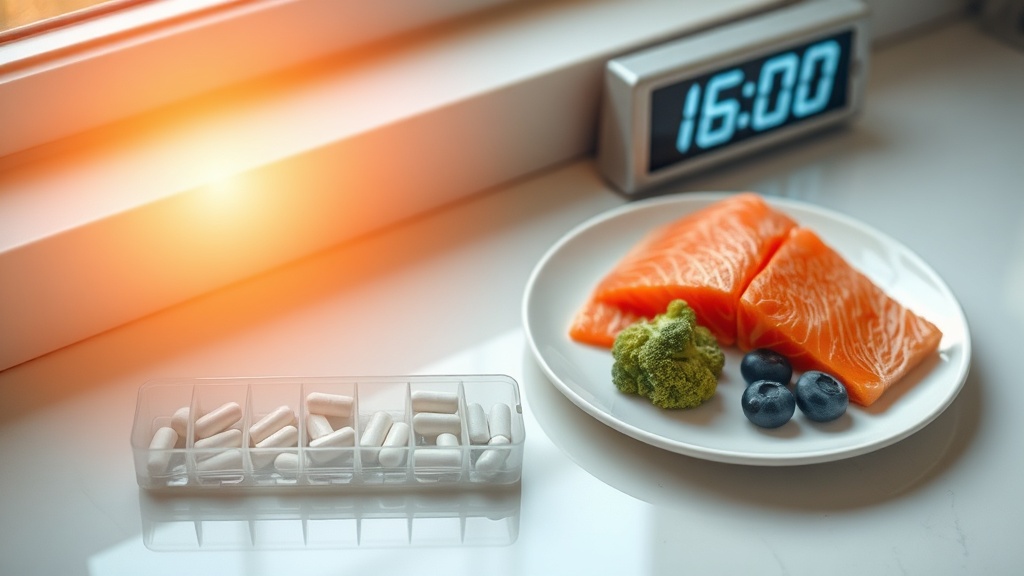
Time-restricted feeding setup. The protocol used a 16:8 window — 16 hours fasting, 8 hours feeding. Based on what the data actually shows, the specific window split isn't magical (and yes, I've been saying this for years). What matters is achieving a sustained fasting period long enough to activate AMPK-mediated autophagy pathways. Align your eating window with your chemotherapy schedule — eat during the hours when nausea is lowest, typically not the day of infusion.
-
Nutrient density during the feeding window. If you're compressing eating into 8 hours during chemotherapy, every meal has to count. Prioritize anti-inflammatory foods: omega-3 fatty acids (wild salmon, sardines), cruciferous vegetables, berries. Maintain protein intake at 1.2–1.6 g/kg to counteract cancer-related muscle wasting. (If you're doing fasting to compensate for a bad diet, stop. That's not what this intervention is about.)
-
Monitor cardiac biomarkers biweekly. Troponin, BNP, and ECG at minimum. The clinical case showed troponin elevation despite cardiovascular stability — this is a red flag that needs tracking. If troponin trends upward consistently, reassess the protocol with your team.
-
Consider adding structured exercise. Based on Baniasadi et al.'s findings, HIIT may provide additional cardioprotection through FoxO4 suppression[4]. However, exercise tolerance during chemotherapy varies enormously. Start with moderate-intensity walking (30 minutes, 3x/week) and escalate only if tolerated. Timing matters — initiate exercise at least 2 hours post-infusion based on the preclinical protocol.
-
Duration and reassessment. The animal study ran four weeks; the clinical case ran three months. Reassess the full protocol at 4-week intervals. If cardiac function remains stable and inflammatory markers trend downward, continue. If any parameter deteriorates, de-escalate.
Related Video
What is empagliflozin and why is it being studied for chemotherapy cardioprotection?#
Empagliflozin is an SGLT2 inhibitor — a drug that blocks glucose reabsorption in the kidneys. Originally developed for diabetes, it demonstrated striking cardiovascular benefits in large clinical trials like EMPA-REG OUTCOME, independent of blood sugar effects. Researchers are now investigating whether its ability to stabilize mitochondrial function and shift myocardial energy metabolism can protect the heart during anthracycline chemotherapy, which causes dose-dependent cardiotoxicity.
How does time-restricted feeding protect the heart differently from empagliflozin?#
Great question, and the answer is genuinely interesting. While both interventions lower TNF and reduce blood pressure in doxorubicin models, TRF produces stronger IL-1β suppression — suggesting it more potently activates autophagy-mediated anti-inflammatory pathways. The combined approach uniquely elevated anti-inflammatory IL-10 and TGF-β. They're not doing the same thing through different doors; they appear to hit overlapping but distinct inflammatory cascades.
Why didn't combining empagliflozin and fasting produce additive blood pressure benefits?#
Honestly, we don't fully know yet. The most plausible explanation is pathway convergence — both interventions may ultimately modulate the same downstream hemodynamic regulators (likely involving natriuresis and vascular resistance), so doubling up doesn't double the effect. I'd want to see dose-response studies and more granular hemodynamic measurements before drawing firm conclusions. It's a finding that tempers enthusiasm, but it doesn't negate the distinct inflammatory benefits of combination.
When should a cancer patient consider adding these interventions?#
Only after discussion with their oncology and cardiology teams. The evidence here is preclinical with a single case report — not sufficient for clinical recommendations. That said, empagliflozin already has established safety data from large heart failure trials, and time-restricted feeding has a manageable risk profile. The highest-yield scenario based on current data would be patients with pre-existing cardiovascular risk factors who are starting anthracycline regimens — but this needs confirmation in prospective clinical trials.
Who should avoid this protocol entirely?#
Patients with type 1 diabetes (euglycemic ketoacidosis risk with SGLT2i), those with severe renal impairment (eGFR <20), anyone with active eating disorders, and patients already experiencing significant chemotherapy-related cachexia. Fasting during cachexia is counterproductive — you cannot activate beneficial autophagy pathways when the body is already in a catabolic crisis.
VERDICT#
Score: 6.5/10
I'm cautiously optimistic but not ready to champion this as a protocol. The mechanistic data is solid — empagliflozin's mitochondrial effects are well-established across multiple independent studies, and the inflammatory modulation data from the combined EMPA + TRF approach is genuinely novel. The fact that TRF alone produced the strongest IL-1β suppression while the combination uniquely boosted anti-inflammatory cytokines gives me something to work with mechanistically.
But let me push back: this is a rat study with a single clinical case tacked on. The clinical case showed troponin elevation, which is the one biomarker you absolutely don't want going up when you're trying to prove cardioprotection. The lack of additive blood pressure benefit from combining interventions is a real limitation, not a footnote. And the sample sizes across these preclinical studies remain small.
I used to be more dismissive of SGLT2 inhibitors beyond their metabolic indications. I'm not anymore — the cardiovascular data is too consistent across too many models. But for cardio-oncology specifically, we need randomized controlled trials in humans before this moves from "interesting preclinical signal" to "actionable protocol." The pieces are there. The proof isn't. Yet.
References
- 1.Author(s) not listed. Empagliflozin and intermittent fasting as a strategy to mitigate anthracycline-induced cardiotoxicity. Scientific Reports (2026). ↩
- 2.Author(s) not listed. Integrating network toxicology, machine learning, and molecular dynamics simulations to reveal tanshinone IIA's dual mechanisms in TNBC and doxorubicin-induced cardiotoxicity. Scientific Reports (2026). ↩
- 3.Wei H, Yin M, Chang J, Feng B, Zhou Q, Li X, Wu P, Guo X, Chen S, Li B, Li S. Empagliflozin's cardioenergetic protective effects through PPARα pathway modulation in heart failure. Frontiers in Pharmacology (2025). ↩
- 4.Baniasadi M, Rakhshan K, Ghardashi-Afousi A, Imani A, Vakili A. High intensity interval training and dalteparin attenuate doxorubicin induced cardiac damage and FoxO4 protein level in rats. Scientific Reports (2025). ↩
- 5.Zebrowska AM. Potential New Applications of Sodium–Glucose Cotransporter-2 Inhibitors Across the Continuum of Cancer-Related Cardiovascular Toxicity. Pharmaceuticals (2025). ↩
- 6.Schnelle S et al.. Empagliflozin Improves Diastolic Function in HFpEF by Restabilizing the Mitochondrial Respiratory Chain. Circulation: Heart Failure (2024). ↩
Tara Miren
Tara is warm but sharp. She will directly contradict popular nutrition narratives mid-article without building up to it: 'The 16:8 window isn't special. The mechanism doesn't care about that specific split.' She uses parenthetical asides like a real person thinking out loud: '(and yes, I've heard every objection to this — they're mostly wrong)'. She'll acknowledge when she changed her mind based on a paper: 'I used to recommend X. I don't anymore.'
View all articles →