Fasting Longevity Secret: It's the Refeeding, Not the Fast

THE PROTOHUMAN PERSPECTIVE#
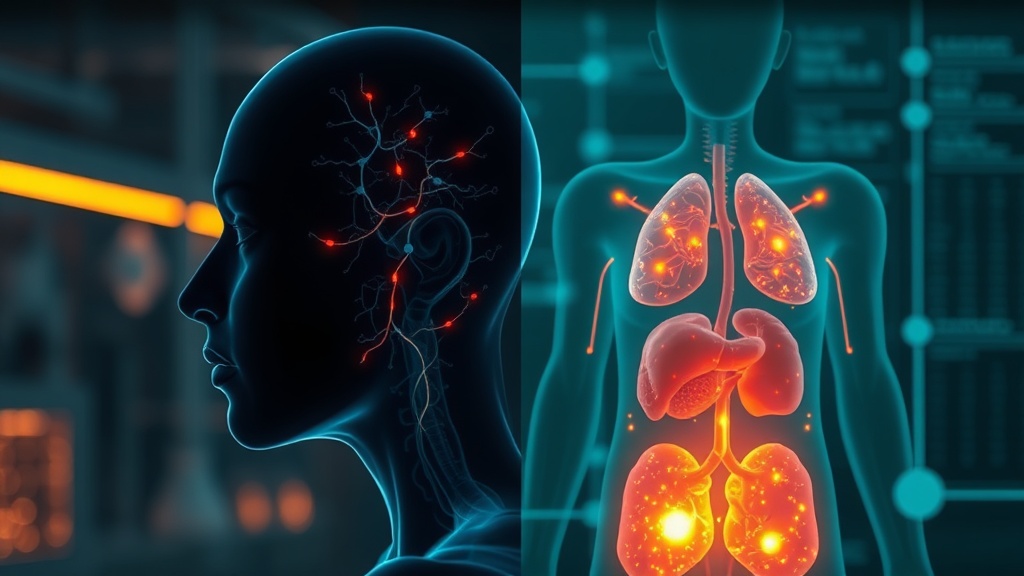
Here's what most fasting evangelists get wrong: they obsess over what happens during the fast. The fat oxidation. The ketone spike. The autophagy window. And sure, those matter. But a January 2026 study in Nature Communications just flipped the script entirely — showing that what your cells do when you start eating again is the actual longevity lever.
This changes how we think about metabolic flexibility at a species level. We've spent a decade optimizing the deprivation phase. Turns out, the restoration phase — specifically, how quickly and completely your body shuts down emergency fat-burning pathways — is what separates organisms that live longer from those that don't. For the biohacking community, this is a fundamental recalibration. Your refeeding protocol might matter more than your fasting window.
And it's not just worms. Parallel human trials are showing that fasting-mimetic compounds can replicate cardiometabolic benefits without the fast itself, and that intermittent fasting restructures molecular pathways far beyond simple weight loss. We're entering an era where fasting science finally has mechanistic teeth.
THE SCIENCE#
The Off-Switch Nobody Was Looking For#
The conventional model of fasting-induced longevity goes something like this: you stop eating, your body mobilizes stored lipids via β-oxidation, mitochondrial efficiency increases, damaged cells get cleared through autophagy pathways, and you emerge metabolically renewed. Clean narrative. Mostly incomplete.
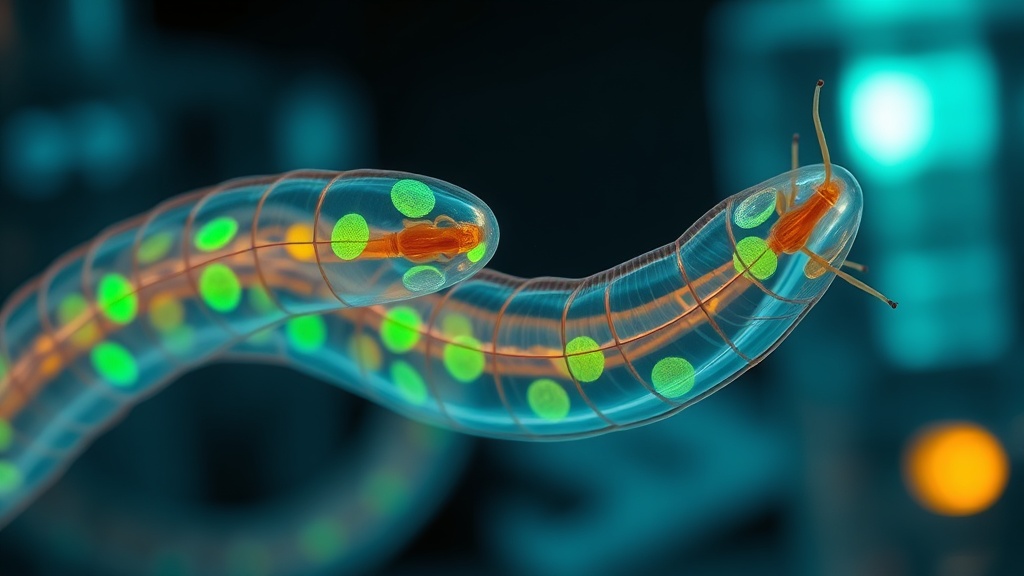
The 2026 study by researchers published in Nature Communications demonstrates that lifespan extension from fasting depends on the silencing of lipid catabolism upon refeeding — not on the catabolic response during starvation itself.[1] Using C. elegans as a model system (still one of the most powerful platforms for dissecting conserved aging mechanisms), the team found that the nuclear hormone receptor NHR-49 activates β-oxidation during the fast. No surprise there. The twist: NHR-49 is not regulated by classical ligand-binding. Instead, it's governed by cofactor-mediated transcriptional attenuation and targeted protein turnover.
The key player? Casein kinase 1 alpha 1 (KIN-19), which silences β-oxidation through primed phosphorylation of NHR-49. When this silencing mechanism was disrupted — when β-oxidation stayed chronically active even after refeeding — the longevity benefit of fasting was completely abolished.[1]
Let me restate that because it's important: organisms that couldn't turn off fat-burning after the fast didn't live longer. The 24-hour fasting protocol extended median lifespan by 40.8%, but only when the metabolic off-switch worked.[1]
I used to think the magic was all in the deprivation window. I don't anymore.
Metabolic Plasticity: The Real Biomarker#
What the KIN-19 finding actually reveals is that metabolic plasticity — the ability to transition efficiently between catabolic and anabolic states — is the true determinant of fasting-induced longevity. This aligns with emerging data on NAD+ synthesis dynamics and HRV optimization: the organisms and people who age best are not those locked into one metabolic mode, but those who switch fluidly between states.
The NHR-49 receptor is conserved across species. Its mammalian homologs (the PPAR family, particularly PPAR-α) are central nodes in lipid metabolism, inflammation, and energy homeostasis. The 6-month intermittent fasting RCT by Barve, Veronese, Bertozzi et al. (2025) in Nature Communications found that PPAR-α pathways were significantly associated with changes in non-HDL cholesterol in middle-aged humans practicing IF — a direct parallel to the worm data.[3]
That trial — 41 participants, ages 30–65, BMI 24.8–35 — showed an 8% reduction in body weight, 16% decrease in body fat, and significant reductions in LDL-cholesterol, non-HDL-cholesterol, and triglycerides (p = 0.001).[3] But the molecular data was the real prize. Untargeted metabolomics and transcriptomic analysis of colon mucosa biopsies revealed significant changes in lipid metabolism, bile acid signaling, and — unexpectedly — a downregulation of GLP-1 and related enteroendocrine hormones.[3]
That GLP-1 finding deserves more attention than it's getting. In an era of semaglutide mania, the fact that IF naturally modulates enteroendocrine signaling raises questions about whether we're medicalizing a pathway that fasting already addresses.
Fasting Without Fasting: The Mimio Trial#
But here's where it gets complicated. Not everyone can fast. Not everyone should. Women in certain life stages, people with eating disorder histories, older adults with sarcopenia risk — the list of contraindications is real.
The first randomized, double-blind, placebo-controlled trial of a fasting-mimetic supplement (Mimio) was published in Scientific Reports in February 2026.[2] Grant, Erfe, Kazaryan et al. tested a formulation containing spermidine, nicotinamide, palmitoylethanolamide (PEA), and oleoylethanolamide (OEA) — compounds naturally elevated during prolonged fasting — in 42 overweight older adults (mean age 62, BMI 27.6, elevated HbA1c).
After 8 weeks of daily supplementation (taken before the first meal), the Mimio group showed:
- Significant reductions in total cholesterol, LDL cholesterol, LDL particle number, oxidized LDL, non-HDL cholesterol, and fasting glucose vs. placebo (p < 0.05)[2]
- 91% vs. 47% of participants improving mealtime appetite control (Fisher's Exact Test p = 0.003)[2]
- Significantly less abdominal pain and bloating
- No significant adverse effects vs. placebo
I'm less convinced by the cognitive and quality-of-life measures — those didn't reach significance. And 42 participants over 8 weeks is a pilot, not definitive proof. The cardiometabolic markers, though, are consistent with what we see in actual fasting trials, which makes the mechanistic argument plausible.
The honest answer: this needs replication in larger cohorts with longer follow-up before anyone should treat it as equivalent to actual fasting. But as a proof-of-concept that fasting's molecular signature can be pharmacologically reproduced? It's the strongest data we have so far.
Biological Age Reversal: The FMD Data#
Longo et al.'s fasting-mimicking diet (FMD) research adds another layer. Their 2024 analysis of two clinical trials showed that three 5-day FMD cycles were associated with a 2.5-year decrease in median biological age, measured by a validated predictor of morbidity and mortality — and this effect was independent of weight loss.[4]
The FMD also reduced insulin resistance, lowered hepatic fat (confirmed via MRI), and increased the lymphoid-to-myeloid ratio, an indicator of immune system rejuvenation.[4] These aren't surrogate endpoints — biological age as measured by validated epigenetic or biomarker-composite clocks is increasingly accepted as a meaningful longevity metric.
Bone Repair: An Unexpected Fasting Dividend#
Reeves et al. (2024) demonstrated something I genuinely didn't expect: intermittent fasting restored bone healing in aged mice to levels comparable to younger animals when combined with localized Wnt3a stimulation.[6] Their transcriptomic data showed that IF made the mechanobiology of aged bone tissue resemble that of younger animals. Even more striking, short-term supplementation with NMN (an NAD+ precursor) or Akkermansia muciniphila recapitulated the IF effect on bone repair.[6]
This has implications for telomere dynamics and tissue regeneration that extend well beyond skeletal health. If fasting can restore osteoprogenitor function in aged organisms, the regenerative potential across other tissue types warrants serious investigation.
Fasting Protocol Outcomes Across Key Studies
COMPARISON TABLE#
| Method | Mechanism | Evidence Level | Cost | Accessibility |
|---|---|---|---|---|
| 24h Periodic Fasting | KIN-19-mediated silencing of β-oxidation via NHR-49; metabolic plasticity restoration | Preclinical (C. elegans), 40.8% lifespan extension | Free | High — requires only time discipline |
| 6-Month Intermittent Fasting (5:2 or similar) | PPAR-α pathway modulation, lipid metabolism restructuring, GLP-1 downregulation | Human RCT (n=41), significant cardiometabolic improvements | Free | Moderate — requires sustained adherence |
| Fasting-Mimicking Diet (FMD, 5-day cycles) | Multi-system regeneration, immune rejuvenation, hepatic fat reduction | Two human clinical trials, 2.5-yr biological age reduction | ~$250/cycle (ProLon) | Moderate — structured food kit required |
| Fasting Mimetic Supplement (Mimio) | Spermidine + nicotinamide + PEA + OEA; postprandial fasting signal mimicry | Human RCT (n=42), 8 weeks, significant LDL/glucose reduction | ~$90/month | High — daily capsule, no fasting required |
| IF + Wnt3a + NMN (Bone Protocol) | Osteoprogenitor expansion, NAD+ synthesis upregulation, tissue mechanobiology restoration | Preclinical (aged mice), eLife peer-reviewed | Variable (NMN ~$40-80/month) | Low — Wnt component not consumer-available |
THE PROTOCOL#
Based on the converging evidence from these studies, here's a practical framework. This isn't a prescription — it's a synthesis of current data for self-experimenters who want to structure their fasting practice around the actual mechanisms now identified.
Step 1: Establish a Periodic 24-Hour Fast (Monthly or Biweekly) The C. elegans data shows a single 24-hour fast in early adulthood was sufficient for significant lifespan extension.[1] For humans, a monthly or biweekly 24-hour water fast (dinner-to-dinner is easiest) provides the metabolic stimulus. Don't overcomplicate this — pick a consistent day and stick with it.
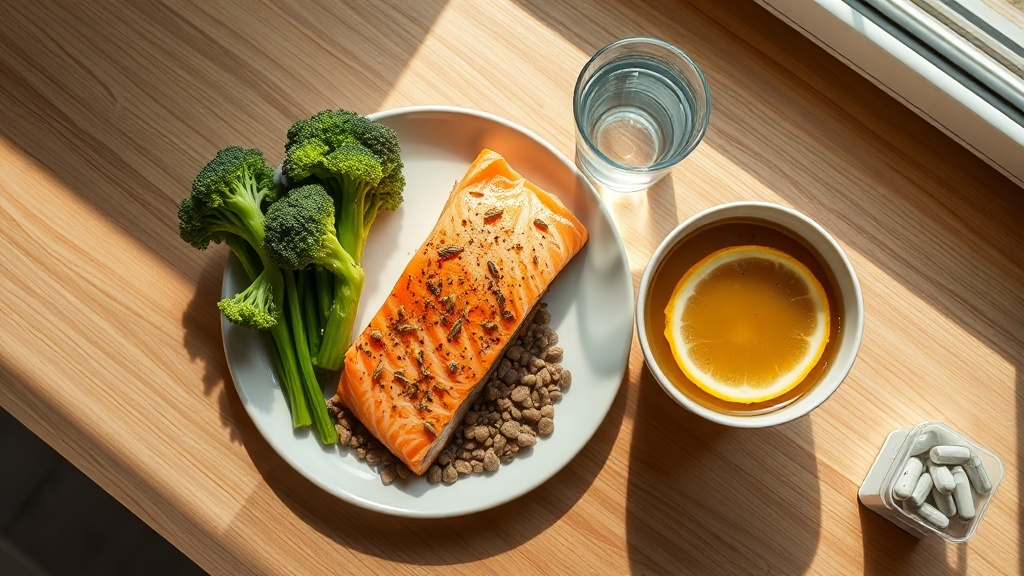
Step 2: Prioritize the Refeeding Window This is the actual intervention based on the KIN-19 data. When breaking your fast, start with low-fat, moderate-protein, high-fiber foods for the first meal. The goal: allow your body to fully silence β-oxidation pathways before introducing a high-fat load. A large avocado-and-bacon meal immediately post-fast may be counterproductive — you want the metabolic off-switch to engage cleanly. Think: steamed vegetables, legumes, a small portion of fish or poultry.
Step 3: Support NAD+ and Autophagy Pathways Daily Between fasts, the Mimio trial data suggests that daily supplementation with fasting-associated metabolites may sustain benefits.[2] A reasonable daily stack based on current evidence:
- Spermidine: 1–2 mg/day (wheat germ extract is the most accessible source)
- Nicotinamide or NMN: 250–500 mg/day (supports NAD+ synthesis)
- PEA (palmitoylethanolamide): 300–600 mg/day
Step 4: Implement a 5-Day FMD Quarterly Longo's data supports 3 cycles of the fasting-mimicking diet for biological age reduction.[4] A quarterly 5-day FMD (~750-1100 kcal/day, plant-based, low-protein) provides a deeper metabolic reset. You can use the commercial ProLon kit or design your own based on published macronutrient ratios (~60% fat from nuts/olives, ~10% protein, ~30% complex carbs).
Step 5: Track Metabolic Flexibility via HRV and Glucose Use a continuous glucose monitor (CGM) during and after fasts to observe your glycemic response to the refeeding meal. If glucose spikes sharply post-fast, your metabolic transition may need work. HRV (via Oura, WHOOP, or Apple Watch) tracked across fasting and refeeding days gives a proxy for autonomic flexibility. You're looking for HRV to increase in the 12–24 hours after breaking the fast — a sign that your system is transitioning smoothly.
Step 6: Adjust for Sex and Life Stage If you're a pre-menopausal woman, consider shorter fasting windows (14–16 hours vs. 24 hours) during the luteal phase. The Barve et al. trial included both men and women but didn't stratify outcomes by menstrual cycle phase.[3] Optimal dosing and fasting duration in women is not yet established — and anyone who tells you otherwise is selling something.
Related Video
What makes this fasting research different from previous longevity studies?#
Most prior work focused on what happens during the fast — autophagy activation, ketogenesis, lipid mobilization. The 2026 Nature Communications study fundamentally shifts the focus to the refeeding phase, identifying KIN-19-mediated silencing of β-oxidation as the actual longevity mechanism.[1] The fat-burning during fasting appears relatively dispensable for lifespan extension. That's a genuine paradigm shift.
How does the Mimio fasting mimetic supplement work?#
Mimio contains four compounds — spermidine, nicotinamide, PEA, and OEA — that are naturally elevated in the body during prolonged fasting.[2] Taken before the first meal, these compounds appear to trigger fasting-like molecular signals in the postprandial (fed) state. In a 42-person RCT, it significantly reduced LDL cholesterol, oxidized LDL, and fasting glucose over 8 weeks without any dietary changes. Promising, but I'd want larger trials before calling it a fasting replacement.
Who should avoid extended fasting protocols?#
Pregnant or breastfeeding women, individuals with a history of eating disorders, people with type 1 diabetes or on insulin, and older adults at risk of sarcopenia should avoid prolonged fasts without medical supervision. The Barve et al. trial noted that prolonged IF may reduce intake of certain micronutrients, highlighting the need for potential supplementation during sustained fasting protocols.[3]
Why does biological age decrease with fasting-mimicking diets?#
The FMD appears to trigger multi-system regeneration — reducing hepatic fat, improving the lymphoid-to-myeloid ratio (a marker of immune age), and lowering insulin resistance.[4] Three 5-day FMD cycles reduced median biological age by 2.5 years as measured by a validated composite biomarker clock, and this was independent of weight loss. The mechanism likely involves coordinated stem cell activation and clearance of senescent cells, though the precise pathway remains under investigation.
When is the best time to break a fast for maximum longevity benefit?#
Based on the KIN-19 silencing mechanism, the critical window is the transition from fasted to fed state.[1] Break your fast with a low-fat, fiber-rich meal to allow β-oxidation pathways to fully deactivate before introducing calorie-dense foods. Timing likely matters less than what you eat first. The 16:8 window isn't special — the mechanism doesn't care about that specific split. What matters is giving your metabolic machinery a clean signal to switch states.
VERDICT#
8.5/10. The KIN-19 discovery is the most mechanistically precise explanation of fasting-induced longevity I've seen — and it comes from a top-tier journal with rigorous methodology. The catch: it's C. elegans data. We're extrapolating from worms to humans, and that gap remains significant despite conserved pathways. The human trials (Barve et al., Grant et al., Longo et al.) provide strong cardiometabolic support but don't yet confirm the specific silencing mechanism in mammalian systems. The Mimio trial is intriguing but small. What earns this a high score is the convergence: multiple independent lines of evidence, from worms to mice to humans, all pointing toward the same conclusion — that metabolic flexibility, not metabolic stress, is the longevity signal. I'm updating my own refeeding protocol based on this data. If the KIN-19 mechanism replicates in mammalian models, this will be the most important fasting finding of the decade.
References
- 1.Author(s) not listed. Silencing lipid catabolism determines longevity in response to fasting. Nature Communications (2026). ↩
- 2.Grant A.D., Erfe M.C.B., Kazaryan A.. A novel fasting mimetic (Mimio) creates fasting-like benefits to hunger control, oxidative stress, and cardiometabolic health in humans. Scientific Reports (2026). ↩
- 3.Barve R.A., Veronese N., Bertozzi B.. Cardiometabolic and molecular adaptations to 6-month intermittent fasting in middle-aged men and women with overweight: secondary outcomes of a randomized controlled trial. Nature Communications (2025). ↩
- 4.Longo V.D.. Fasting-mimicking diet causes hepatic and blood markers changes indicating reduced biological age and disease risk. Nature Communications (2024). ↩
- 6.Reeves J., Tournier P., Becquart P., Carton R., Tang Y., Vigilante A., Fang D., Habib S.J.. Rejuvenating aged osteoprogenitors for bone repair. eLife (2024). ↩
Tara Miren
Tara is warm but sharp. She will directly contradict popular nutrition narratives mid-article without building up to it: 'The 16:8 window isn't special. The mechanism doesn't care about that specific split.' She uses parenthetical asides like a real person thinking out loud: '(and yes, I've heard every objection to this — they're mostly wrong)'. She'll acknowledge when she changed her mind based on a paper: 'I used to recommend X. I don't anymore.'
View all articles →