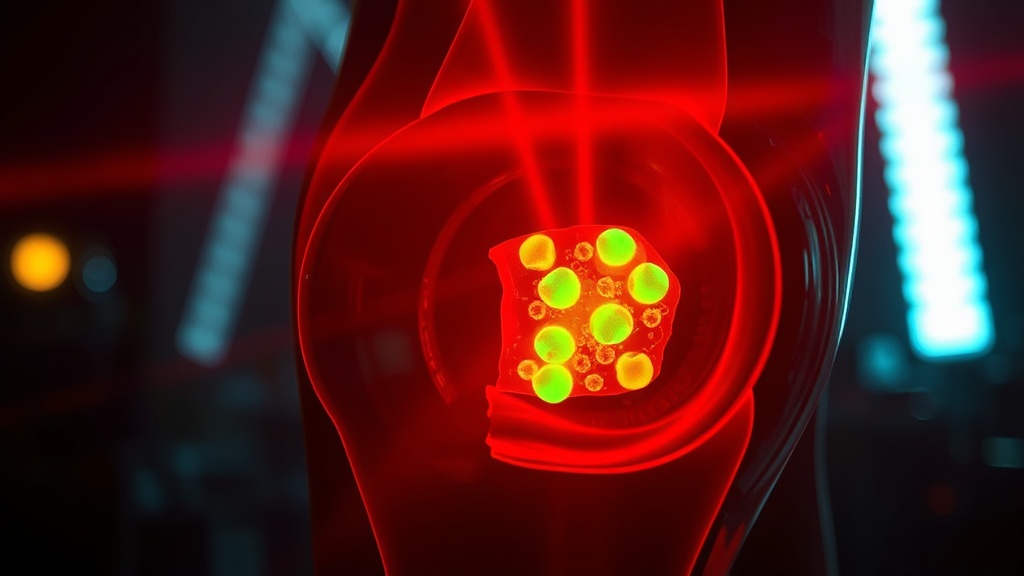
Hypobaric Pressure Kills Senescent Cells via TMEM59 Pathway

THE PROTOHUMAN PERSPECTIVE#
The senolytic field has been stuck in a pharmacological loop. Dasatinib, quercetin, fisetin, navitoclax — every intervention requires swallowing something and hoping it targets the right cells without collateral damage. Now a team has demonstrated that pressure itself — specifically, intermittent hypobaric pressure — can selectively destroy senescent cells by exploiting their own bloated lysosomal burden.
This matters because it shifts the entire paradigm. Instead of chemical selectivity, we're looking at biophysical selectivity. Senescent cells die not because a drug found them, but because their own structural weakness — an excess of lysosomes — makes them vulnerable to a physical force that healthy cells tolerate. If this translates to humans, we're talking about a drug-free senolytic modality with inherent selectivity built into the physics. That's not incremental. That's a category shift.
The supporting research landscape is converging on the same theme: mechanical forces as longevity levers. Chromatin remodeling via mechanical stimulation reverses bone aging. Neuron-type-specific aging clocks reveal that cellular machinery wears unevenly. And fluorescence lifetime imaging now lets us watch senescence happen in real time. The pieces are assembling.
THE SCIENCE#
Hypobaric Pressure as a Physical Senolytic#
Let me be precise about what this study actually showed, because the mechanism is elegant and the parameters matter.
Researchers at the Max Planck Institute applied hypobaric pressure at −375 mmHg — critically, without hypoxia — to both senescent and non-senescent cells. The senescent cells died. The non-senescent cells largely didn't. The mode of death was lysosome-dependent cell death (LDCD), not apoptosis, not necrosis [1].
The molecular cascade works like this: hypobaric pressure activates transmembrane protein 59 (TMEM59), a previously unrecognized mechanosensitive ion channel. TMEM59 activation drives Ca²⁺ influx into the cell. That calcium surge activates calpain 2, a protease that cleaves lysosomal-associated membrane protein 2 (LAMP2). LAMP2 cleavage destabilizes the lysosomal membrane, causing lysosomal membrane permeabilization (LMP) and subsequent cell death [1].
Here's why this is selective: senescent cells accumulate dramatically more lysosomes than healthy cells. More lysosomes means more targets for LMP. More LMP means more lysosomal content leaking into the cytoplasm. More leakage means death. Healthy cells, with their normal lysosomal load, can withstand the same pressure without catastrophic membrane failure.
The selectivity isn't engineered. It's emergent from the biology.
In aged mice, intermittent hypobaric pressure treatment substantially extended lifespan and rescued the osteoporosis phenotype. The treatment also reduced the senescence-associated secretory phenotype (SASP) — the inflammatory cocktail that makes senescent cells toxic to their neighbors [1].
I'll say this plainly: the identification of TMEM59 as a hypobaric pressure-activated ion channel is genuinely new. This isn't Piezo1. This isn't TREK/TRAAK or a TRP channel. This is a distinct mechanosensitive protein responding specifically to negative pressure differentials. That's a finding with implications well beyond senolytics.

Mechanical Rejuvenation Through Chromatin Remodeling#
The hypobaric pressure story doesn't exist in isolation. A parallel study published in Nature Communications demonstrated that moderate mechanical stimulation reverses senescence in bone marrow mesenchymal stem cells (BMSCs) by restoring intracellular traction forces and remodeling chromatin accessibility [3].
Senescent BMSCs show markedly reduced intracellular force. When appropriate mechanical stimulation was applied — and I want to stress "appropriate" because excessive force caused chromatin overextension and DNA damage — the cells recovered. Chromatin accessibility increased at the FOXO1 locus, activating its expression and reversing the senescent phenotype [3].
In aged female mice, these mechanical interventions improved physical performance and showed a tendency to reduce systemic inflammation. The dose-response relationship is critical here: too little force does nothing, too much causes damage. The therapeutic window exists, but it's not wide.
The catch, though. This was demonstrated in mice and in cell culture. The translation to human protocols requires figuring out what "moderate mechanical stimulation" means for a 70-year-old human skeleton. That's non-trivial.
Neuron-Specific Aging Clocks and Neuroprotective Candidates#
A February 2026 study in Nature Aging applied aging clocks to individual neuron types in C. elegans and found something I didn't expect: distinct neurons within the same organism age at different biological rates [2].
Ciliated sensory neurons with high neuropeptide and protein biosynthesis gene expression showed accelerated aging and degeneration. This accelerated aging correlated with functional loss — and could be prevented by pharmacological inhibition of translation. Slow down the protein synthesis machinery, slow down the aging [2].
The researchers then performed an in silico drug screen and identified two compounds: syringic acid (a natural plant metabolite) and vanoxerine (a piperazine derivative), both of which delayed neuronal degeneration in their models. They also identified neurotoxins that accelerate neurodegeneration — meaning the same clock that finds protectors can find poisons [2].
What makes this relevant to the hypobaric pressure story is the convergence on selectivity. Just as hypobaric pressure exploits lysosomal burden to selectively kill senescent cells, neuron-type-specific aging clocks exploit transcriptomic differences to identify which neurons are vulnerable and which are resilient. The future of anti-aging isn't one intervention for all cells. It's matching the intervention to the vulnerability.
Real-Time Senescence Measurement#
One persistent problem in senolytic research: how do you know it's working? Epigenetic clocks require DNA isolation and extensive sample preparation. They're retrospective, not real-time.
A November 2025 study in Nature Aging engineered fluorescence lifetime imaging (S-FLIM) dyes selective for ribosomal RNA, leveraging the fact that nucleolar rDNA methylation changes reliably track with aging and senescence [4]. This strategy enables in vivo, real-time quantification of biological age — from cellular to organismal scales — across C. elegans, mice, and human samples.
For the hypobaric pressure field, this is the missing measurement tool. If you can watch senescent cells die in real time under pressure, you can optimize parameters with precision that population-level assays cannot match.
Lifestyle and Epigenetic Age Acceleration#
And then there's the penguin data. Yes, penguins.
A March 2026 study in Nature Communications examined King penguins transitioning from wild environments to zoo husbandry — sedentary conditions, reliable food, reduced physical demands. The result: extended lifespan but accelerated epigenetic aging, with differential methylation in mTOR and PI3K/Akt pathways [5].
Zoo penguins live longer but age faster epigenetically. The parallel to modern human lifestyles — sedentary, well-fed, metabolically dysregulated — is intentional and well-argued. This is evolutionary evidence that the mismatch between our ancestral activity patterns and modern comfort actively accelerates biological aging through conserved nutrient-sensing pathways.
I'm less convinced this tells us anything we didn't already suspect from human caloric restriction and exercise data. But the cross-species conservation of mTOR-mediated age acceleration under sedentary conditions is a useful data point for anyone still questioning whether lifestyle interventions have genuine epigenetic consequences.
Senolytic Approaches: Mechanism Comparison
COMPARISON TABLE#
| Method | Mechanism | Evidence Level | Estimated Cost | Accessibility |
|---|---|---|---|---|
| Intermittent Hypobaric Pressure | TMEM59 → Ca²⁺ → Calpain 2 → LAMP2 cleavage → LDCD | Preclinical (mouse, in vitro) | Unknown (device-dependent) | Not yet available clinically |
| Dasatinib + Quercetin | Anti-apoptotic pathway inhibition (SCAPs) | Human trials (Phase I/II) | ~$50-100/month | Available off-label |
| Fisetin | Bcl-2/Bcl-xL inhibition, apoptosis induction | Small human trials | ~$20-40/month | OTC supplement |
| Navitoclax (ABT-263) | Bcl-2 family inhibition | Preclinical + oncology trials | Prescription only | Limited (thrombocytopenia risk) |
| Mechanical Stimulation (FOXO1) | Chromatin remodeling via traction force | Preclinical (mouse, in vitro) | Low (exercise/vibration) | Widely accessible |
THE PROTOCOL#
Based on current evidence — and I want to be clear that this is preclinical data, not validated human protocols — here is what the research landscape suggests for those tracking this field.
Step 1: Do not attempt DIY hypobaric pressure therapy. The −375 mmHg parameter used in the study is specific, controlled, and applied intermittently under laboratory conditions. Consumer altitude simulation tents operate on entirely different principles (hypoxic, not hypobaric in the senolytic sense). The TMEM59 activation pathway requires precise negative pressure without hypoxia. Getting this wrong doesn't just fail — excessive or continuous pressure could damage healthy tissue.
Step 2: Optimize your existing senolytic stack while monitoring this research. If you're already using quercetin (500-1000 mg) or fisetin (100-500 mg) intermittently, continue. The data supporting intermittent dosing of flavonoid senolytics in humans, while still early, is stronger than for any physical modality. Dasatinib + quercetin protocols (typically 3 consecutive days per month) have the most advanced human evidence base, though still limited.
Step 3: Prioritize mechanical loading for bone-specific aging. The chromatin remodeling study [3] supports what exercise physiologists have long argued: resistance training and impact loading reverse age-related bone loss. The mechanism now includes FOXO1 activation via restored intracellular traction forces. Aim for weight-bearing exercise 3-4 times weekly, with progressive overload. This is not new advice, but the mechanistic support is.
Step 4: Address the penguin problem — counter sedentary epigenetic acceleration. The mTOR and PI3K/Akt pathway methylation changes observed in sedentary zoo penguins [5] mirror patterns seen in inactive humans. Periodic fasting (time-restricted eating within an 8-10 hour window), regular vigorous exercise, and — if tolerated — cold exposure all modulate these pathways. The point isn't to mimic wild penguin life. It's to avoid the metabolic complacency that accelerates epigenetic aging even while extending chronological lifespan.

Step 5: Track your biological age. The fluorescence lifetime imaging clock [4] isn't consumer-available yet, but DNA methylation-based epigenetic clocks (TruAge, GrimAge) are. Test annually. If your biological age is accelerating despite interventions, something in your protocol isn't working. Measure, don't guess.
Step 6: Watch for TMEM59-targeted clinical trials. The identification of TMEM59 as a hypobaric pressure-specific ion channel opens pharmaceutical possibilities beyond pressure chambers. Small molecules that activate TMEM59 could theoretically replicate the senolytic effect without specialized equipment. This is speculative, but it's the logical next step.
Related Video
What is lysosome-dependent cell death and why does it matter for aging?#
Lysosome-dependent cell death (LDCD) occurs when lysosomal membranes lose integrity, spilling acidic hydrolases into the cytoplasm and triggering cell destruction. It matters for aging because senescent cells accumulate far more lysosomes than healthy cells — making them disproportionately vulnerable to LDCD triggers like hypobaric pressure. This built-in vulnerability creates a natural selectivity mechanism that drug-based senolytics have to engineer artificially.
How does intermittent hypobaric pressure differ from altitude training?#
Altitude training exposes the body to hypoxic conditions — reduced oxygen at lower barometric pressure. The hypobaric pressure used in this study specifically avoids hypoxia; the researchers maintained normal oxygen levels while applying −375 mmHg negative pressure. The senolytic effect operates through mechanical activation of TMEM59 ion channels, not through oxygen-sensing pathways like HIF-1α. These are fundamentally different stimuli despite both involving pressure changes.
When might hypobaric pressure therapy be available for humans?#
Honestly, we don't know yet. The current data is entirely preclinical — mouse models and cell cultures. Human translation requires establishing safe pressure parameters, treatment duration, intermittent dosing schedules, and identifying which tissues respond to transcutaneous pressure application. I'd estimate 5-10 years before any controlled human trials, assuming funding materializes. The TMEM59 pharmacological route might actually arrive faster.
Why do sedentary lifestyles accelerate epigenetic aging even while extending lifespan?#
The penguin study illustrates a paradox: reduced environmental threats extend chronological lifespan, but metabolic complacency — overnutrition, low physical demand — accelerates epigenetic aging through mTOR and PI3K/Akt pathway dysregulation. You live longer but accumulate molecular damage faster. In humans, this manifests as increased healthspan-lifespan gaps: more years alive, but more years in poor health. The solution isn't returning to wild conditions but strategically reintroducing metabolic stress through exercise, fasting, and environmental challenges.
What is TMEM59 and why is its discovery significant?#
TMEM59 (transmembrane protein 59) was identified in this study as a previously unknown mechanosensitive ion channel that responds specifically to hypobaric pressure. Before this work, the known mechanosensitive channels — Piezo1, TREK/TRAAK, TRP family — had not been shown to mediate hypobaric pressure-specific responses. TMEM59's discovery opens an entirely new category of pressure-sensing biology and provides a druggable target for senolytic development beyond physical pressure delivery.
VERDICT#
8.5/10. The hypobaric pressure study is genuinely novel — new mechanism, new target protein, new modality category. The selectivity based on lysosomal burden is biologically elegant and mechanistically sound. I'm giving it high marks because the supporting evidence from the mechanical rejuvenation and aging clock studies creates a converging picture that physical forces are an underexploited axis in longevity science. I'm holding back from a 9 because this is entirely preclinical. Mouse lifespan extension and osteoporosis rescue are encouraging but not sufficient. The human translation gap for a pressure-based therapy is significant — parameters that work in a mouse are not parameters that work in a human femur. And I'd want to see the TMEM59 finding replicated by an independent group before building too much on it. Still, this is one of the more interesting senolytic findings I've seen in the past two years.
References
- 1.Author(s) not listed. Intermittent hypobaric pressure induces selective senescent cell death and alleviates age-related osteoporosis. Nature Biomedical Engineering (2026). ↩
- 2.Author(s) not listed. Aging clocks delineate neuron types vulnerable or resilient to neurodegeneration and identify neuroprotective interventions. Nature Aging (2026). ↩
- 3.Author(s) not listed. Mechanical rejuvenation of senescent stem cells and aged bone via chromatin remodeling. Nature Communications (2026). ↩
- 4.Author(s) not listed. Fluorescence lifetime clocks quantify senescence and aging. Nature Aging (2025). ↩
- 5.Author(s) not listed. Lifestyle change accelerates epigenetic ageing in King penguins. Nature Communications (2026). ↩
Sova Reld
Sova writes with focused intensity and low tolerance for vague claims. She came to photobiomodulation through personal experimentation and is irritated by both true believers and reflexive skeptics. Her writing has edge: 'The wellness market has done more damage to this field than the skeptics ever could.' She's extremely precise about parameters — wavelength, irradiance, duration — and will tell you when a study used inadequate dosing without apology.
View all articles →