
Ketogenic Diet Immune Effects: KETO-MINOX Study Results

SNIPPET: An 8-week energy-restricted Mediterranean-type ketogenic diet significantly reduced body fat, truncal fat, and selectively modulated immune cytokines (IL-5, GM-CSF, IL-8, MCP-1) in women with overweight and obesity, according to the KETO-MINOX randomized trial. However, these advantages over a standard calorie-matched diet did not persist at one-year follow-up, suggesting adherence matters more than macronutrient composition long-term.
THE PROTOHUMAN PERSPECTIVE#
Here's the thing nobody in the keto space wants to hear: the diet works, but not for the reasons most people think — and not permanently.
The KETO-MINOX trial, published in European Journal of Nutrition in March 2026, is one of the first randomized studies to track both immune cytokine modulation and body composition changes from an energy-restricted ketogenic diet across an 8-week intervention and a one-year follow-up. That second part is where it gets interesting. Because while the keto group clearly won the short game — more fat loss, more truncal fat reduction, measurable shifts in inflammatory signaling — by the one-year mark, the standard diet group had caught up almost entirely.
For those of us invested in long-term human performance optimization, this matters. It reframes the ketogenic diet not as a metabolic superweapon but as a potentially useful tool — one that produces real, measurable immunological shifts in the short term, but whose lasting value depends entirely on what you do after the intervention ends. The immune modulation data, particularly around IL-10, hints at something worth watching. But I'm getting ahead of myself.
THE SCIENCE#
What the KETO-MINOX Trial Actually Tested#
A Mediterranean-type ketogenic diet is not the bacon-and-butter free-for-all most people imagine when they hear "keto." Drabińska, Romaszko, and colleagues designed an isocaloric protocol — both the keto group (KETO) and the standard diet group (STD) consumed 1,750 kcal/day[1]. Eighty women with BMIs between 25.5 and 34.9 kg/m² were randomized. No chronic diseases. Assessments at baseline, 4 weeks, 8 weeks, and one year post-intervention.
Sixty-six completed the 8-week phase. Forty-nine showed up for the one-year check. (Those dropout numbers matter — I'll come back to that.)
Short-Term Wins: Fat Loss and Cytokine Shifts#
The KETO group achieved measurably greater reductions in total body weight, total fat mass, and — critically — truncal fat compared to the STD group over 8 weeks[1]. Ketosis adaptation was confirmed around week four, which aligns with what we'd expect from a well-designed protocol at this caloric level.
But the immune data is where this study distinguishes itself. The ketogenic diet selectively modulated four specific cytokines: interleukin-5 (IL-5), granulocyte-macrophage colony-stimulating factor (GM-CSF), interleukin-8 (IL-8), and monocyte chemoattractant protein-1 (MCP-1)[1]. These aren't random markers. MCP-1 is a key chemokine in monocyte recruitment to adipose tissue — it's directly involved in the kind of low-grade chronic inflammation that drives metabolic dysfunction. IL-8 is a neutrophil chemoattractant linked to insulin resistance. GM-CSF modulates both innate and adaptive immune responses.
This selective cytokine modulation suggests that ketosis itself — not just caloric restriction — exerts specific effects on immune signaling pathways. The standard diet, at identical calories, did not produce the same pattern.

The One-Year Reality Check#
And here's where I used to be wrong. I would have predicted that the metabolic advantages of ketosis would compound over time, or at least leave a lasting imprint. They didn't.
At the one-year follow-up (T3), no significant long-term differences in body composition or inflammation were found between groups[1]. The one exception: IL-10, an anti-inflammatory cytokine, was elevated in the KETO group at the one-year mark. That's genuinely intriguing — IL-10 suppresses pro-inflammatory cytokine production and plays a role in autophagy pathway regulation — but a single elevated marker in a 49-person follow-up is a signal, not a conclusion.
The study authors themselves state it plainly: "the effectiveness of dietary interventions is more strongly influenced by participant adherence than by the specific macronutrient composition"[1]. Both diets produced significant weight loss and reduced inflammatory biomarkers. The keto approach just did it faster.
Supporting Evidence: Monocyte Remodeling and Metabolic Shifts#
The KETO-MINOX findings don't exist in isolation. Curreli, Masi, and colleagues at Sapienza University demonstrated in a 2025 pilot study that a very-low-calorie ketogenic diet (VLCKD) shifted monocyte subset distribution in individuals with obesity — increasing classical monocytes while reducing intermediate and non-classical monocytes, effectively restoring immune cell profiles closer to healthy controls[2]. The standard low-calorie diet in that study? No significant monocyte changes. Same story, different immune compartment.
Meanwhile, Basolo et al. showed that a 1-month VLCKD in women with obesity decreased carbohydrate oxidation by 65% while increasing fat oxidation by 11%, with a 7% body weight reduction reflecting 8.8% fat mass loss[3]. The catch, though: lean soft tissue dropped 5.6%, and 24-hour energy expenditure fell 10%. That metabolic adaptation — the body's efficiency reflex — is the elephant in every ketogenic diet room. Your mitochondrial efficiency goes up, yes. But your total energy expenditure goes down. That's not a feature; that's a problem for long-term weight maintenance.
And from the gut microbiome angle, Altomare, Di Rosa, and colleagues found that 28 days of very-low-energy ketogenic therapy increased Akkermansia and Bacteroidetes while decreasing Firmicutes — a shift generally associated with improved metabolic health — but also decreased butyrate, a short-chain fatty acid critical for gut barrier integrity[4]. (If you're doing keto and wondering why your digestion feels off, there's your answer.)
VLCKD Substrate Oxidation Changes After 1 Month
COMPARISON TABLE#
| Method | Mechanism | Evidence Level | Cost | Accessibility |
|---|---|---|---|---|
| Mediterranean-type KD (1,750 kcal) | Ketosis-driven fat oxidation + selective cytokine modulation (IL-5, GM-CSF, IL-8, MCP-1) | RCT, n=80, 1-year follow-up | Low–Moderate (whole foods) | High — no supplements required |
| Standard calorie-restricted diet (1,750 kcal) | Caloric deficit-driven weight loss, general inflammation reduction | RCT (same study), equivalent long-term outcomes | Low | Very High — easiest adherence |
| VLCKD (700–800 kcal) | Aggressive ketosis, monocyte subset remodeling, rapid fat oxidation shift | Pilot studies, n=17–36 | Moderate (often meal replacements) | Moderate — requires medical oversight |
| VLEKT (28-day meal replacement) | Ketosis + gut microbiota remodeling (↑ Akkermansia, ↓ Firmicutes) | Single-arm, uncontrolled, n=41 | Moderate–High (proprietary products) | Low–Moderate — specific products needed |
THE PROTOCOL#
Based on the KETO-MINOX Mediterranean-type ketogenic approach, here's how to implement an evidence-informed version. A few caveats first: this protocol was tested in women with BMI 25.5–34.9 and no chronic diseases. If you have diabetes, kidney issues, or are on medication, talk to your doctor before starting. (I mean that literally, not as a legal disclaimer.)
Step 1: Establish your caloric target. The study used 1,750 kcal/day for both groups. This is not a starvation protocol. Calculate your own target based on a moderate deficit (roughly 20–25% below maintenance). The point is to maintain ketosis under controlled energy restriction, not to crash.
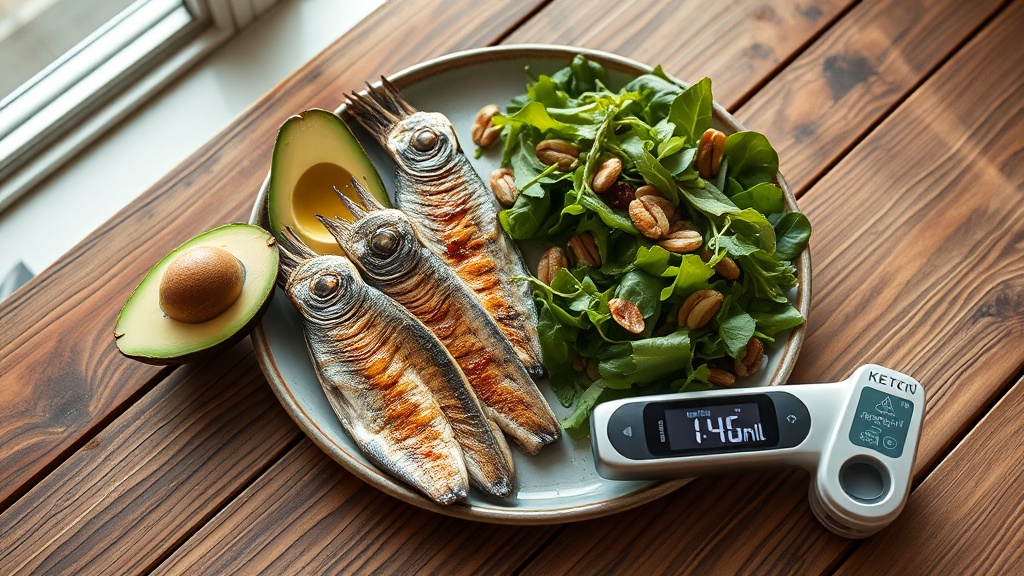
Step 2: Design a Mediterranean-type ketogenic framework. Prioritize olive oil, fatty fish, nuts, leafy greens, avocados, and moderate portions of cheese and eggs. This is not a processed-meat-and-cheese keto. Keep net carbohydrates below 30g/day to achieve ketosis — the KETO-MINOX participants confirmed adaptation around week four[1].
Step 3: Track ketosis objectively. Use urinary ketone strips for the first two weeks, then switch to a blood ketone meter (measuring beta-hydroxybutyrate). You're looking for readings of 0.5–3.0 mmol/L. If you're not in ketosis by week three, your carb intake is too high. Period.
Step 4: Monitor inflammatory markers if possible. The KETO-MINOX study tracked a full cytokine panel. Most people won't have access to that, but a basic high-sensitivity C-reactive protein (hs-CRP) test at baseline and week 8 gives you a reasonable proxy for systemic inflammation changes.
Step 5: Plan your duration and exit strategy. Eight weeks was the intervention period in this trial. The most significant immune modulation occurred in this window. After 8 weeks, the data suggests transitioning to a sustainable dietary pattern — Mediterranean, balanced macros — because the long-term benefits of keto over standard caloric restriction were not sustained[1].
Step 6: Support gut integrity during ketosis. Given the evidence of decreased butyrate on ketogenic protocols[4], add fermented foods (sauerkraut, kimchi) and consider a targeted prebiotic fiber supplement (partially hydrolyzed guar gum or acacia fiber) to maintain short-chain fatty acid production without exceeding carb limits.
Step 7: Reassess at one year. If you've transitioned off keto, the KETO-MINOX data suggests your body composition and inflammatory markers will be comparable to those who never did keto — assuming caloric adherence is equivalent. The lasting benefit may be the IL-10 elevation, but that needs replication before I'd hang my hat on it.
Related Video
What cytokines does a ketogenic diet affect in people with obesity?#
According to the KETO-MINOX trial by Drabińska et al. (2026), an 8-week Mediterranean-type ketogenic diet significantly modulated IL-5, GM-CSF, IL-8, and MCP-1 compared to a standard calorie-matched diet[1]. These cytokines are involved in monocyte recruitment, neutrophil activation, and innate immune signaling. The modulation was short-term — most differences resolved by the one-year follow-up.
How does a ketogenic diet compare to a standard diet for long-term weight loss?#
In the KETO-MINOX study, both the ketogenic and standard diet groups consumed 1,750 kcal/day. While the keto group lost more fat and truncal fat during the 8-week intervention, by one year post-intervention there were no significant differences in body composition between groups[1]. Adherence to any caloric target appears to matter more than the macronutrient split.
Why does energy expenditure drop on a ketogenic diet?#
Basolo et al. (2025) found a 10% decrease in 24-hour energy expenditure after one month of VLCKD in women with obesity[3]. This metabolic adaptation — sometimes called "adaptive thermogenesis" — is the body's response to sustained caloric restriction and altered substrate oxidation. It's not unique to keto, but the combination of rapid fat loss and lean tissue reduction may accelerate it.
What happens to gut bacteria on a ketogenic diet?#
A 28-day ketogenic therapy increased beneficial bacteria like Akkermansia while decreasing Firmicutes, according to Altomare, Di Rosa, et al. (2026)[4]. However, butyrate — a key short-chain fatty acid for gut barrier function — decreased. This creates a paradox: the microbial shifts look favorable, but the metabolite profile raises concerns about long-term gut health.
Who should avoid a ketogenic diet for immune modulation?#
Anyone with chronic kidney disease, type 1 diabetes, or a history of eating disorders should avoid unsupervised ketogenic protocols. The KETO-MINOX study specifically excluded women with chronic diseases[1]. Pregnant or breastfeeding women were also excluded. If you're on immunosuppressive medication, the cytokine-modulating effects of ketosis could interfere with your treatment in ways that haven't been studied.
VERDICT#
6.5/10. The KETO-MINOX trial is well-designed — isocaloric control, randomized, one-year follow-up — and the cytokine data is genuinely novel. The selective modulation of IL-5, GM-CSF, IL-8, and MCP-1 during ketosis tells us something real about how macronutrient composition affects immune signaling beyond simple caloric restriction. But the one-year washout of nearly all advantages is the honest takeaway here. If you're doing keto purely for immune modulation or superior fat loss, the data says: it works short-term, but adherence to any calorie-appropriate diet gets you to the same place eventually. The IL-10 persistence is a thread worth pulling. I'd want to see it replicated in a larger cohort before changing any protocol recommendations. Solid science, measured expectations.
References
- 1.Drabińska N, Romaszko J, White P. Immune-modulating effects of energy-restricted ketogenic diet in women with overweight and obesity: KETO-MINOX study. European Journal of Nutrition (2026). ↩
- 2.Curreli M, Masi D, Recalchi S. The Impact of a Very-Low-Calorie Ketogenic Diet on Monocyte Subsets of Patients with Obesity: A Pilot Study. Nutrients (2025). ↩
- 3.Basolo A, Piaggi P, Angeli V. Effects of 1-Month Very-Low-Calorie Ketogenic Diet on 24-Hour Energy Metabolism and Body Composition in Women With Obesity. The Journal of Clinical Endocrinology & Metabolism (2025). ↩
- 4.Altomare A, Di Rosa C, Giovanetti M. The effects of a very low-energy ketogenic therapy on body composition, gut microbiota and metabolites in overweight subjects. Frontiers in Nutrition (2026). ↩
Tara Miren
Tara is warm but sharp. She will directly contradict popular nutrition narratives mid-article without building up to it: 'The 16:8 window isn't special. The mechanism doesn't care about that specific split.' She uses parenthetical asides like a real person thinking out loud: '(and yes, I've heard every objection to this — they're mostly wrong)'. She'll acknowledge when she changed her mind based on a paper: 'I used to recommend X. I don't anymore.'
View all articles →