Liposomal NAD+ Oral Supplementation Boosts Intracellular Levels 64%

THE PROTOHUMAN PERSPECTIVE#
NAD+ decline is arguably the single most consequential molecular event in human aging. It sits upstream of nearly everything biohackers care about — mitochondrial efficiency, sirtuin-mediated DNA repair, autophagy regulation, and inflammatory signaling. The problem has never been whether NAD+ matters. It's always been: can you actually get it into your cells through oral supplementation?
For years, the answer was functionally no. Pre-formed NAD+ was considered too large and too unstable to survive digestion and cross cell membranes. The entire supplement industry pivoted to precursors — NMN, NR, niacin — hoping the body would synthesize NAD+ from these building blocks. Now, a cluster of studies published between early 2025 and March 2026 suggests liposomal encapsulation may have cracked the delivery problem. If the data holds up — and that's a meaningful "if" at this sample size — this changes the calculus for anyone serious about NAD+ optimization.
THE SCIENCE#
What Is Liposomal NAD+ Delivery?#
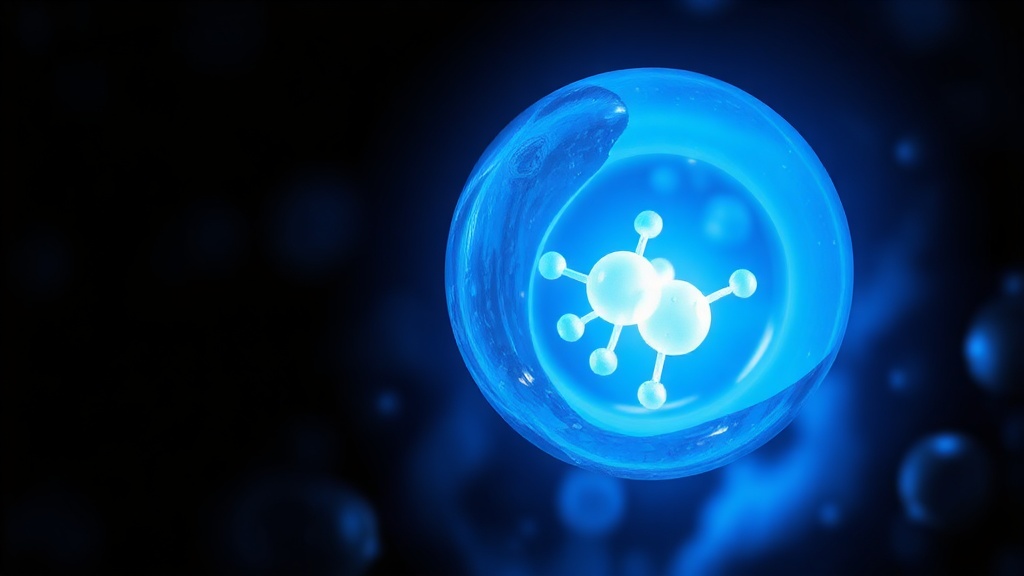
Liposomal delivery is a pharmaceutical encapsulation technology where active compounds are wrapped inside lipid bilayer vesicles — essentially tiny fat-soluble bubbles that protect the payload from gastric degradation and facilitate cellular membrane crossing. It's not new; the technology has been used successfully for chemotherapy drugs and analgesics for decades[3]. What is new is applying it to pre-formed NAD+ molecules, which were previously assumed to be non-viable as oral supplements due to their hydrophilic nature and molecular size.
The Blair et al. crossover study, published in NDNR in March 2026, represents the first human clinical trial to directly measure intracellular NAD+ changes following oral supplementation with liposomal NAD+[1]. Fourteen participants took 1,000 mg daily of two different CELLg8 liposomal NAD+ preparations for two weeks each, separated by a three-week washout. Both preparations produced an average intracellular NAD+ increase exceeding 64% over baseline (p<0.01).
Look, n=14 in a non-randomized design is not going to win any evidence hierarchy awards. I want to be upfront about that. But the statistical significance is there, and the fact that this is the first study to even attempt measuring intracellular (not just blood) NAD+ from oral NAD+ supplementation makes it notable regardless.
The Corroborating Liposomal NMN Data#
Kawakami et al. published a double-blind intervention study in early 2025 comparing liposomal versus non-liposomal NMN at 350 mg/day over four weeks[2]. The liposomal NMN group produced significantly higher blood NAD+ concentrations than the non-liposomal group. This isn't the same molecule — NMN is a precursor, not pre-formed NAD+ — but it reinforces the core thesis that liposomal encapsulation meaningfully improves NAD+-related bioavailability.
The mechanism tracks: liposomes protect the payload through the GI tract and then fuse with cellular membranes, depositing their contents directly into the intracellular environment. For a molecule like NAD+ that otherwise gets degraded before reaching cells, this is a significant pharmacokinetic advantage.
In Vitro Confirmation: Anti-Senescence Effects#
Ministrini et al. at the University of Zurich published in Current Issues in Molecular Biology (2025) a study comparing liposomal NAD+ (LF-NAD+) versus free NAD+ in human aortic endothelial cells and keratinocytes[3]. The liposomal formulation enhanced the anti-senescence properties of NAD+ — improved cellular penetration and stability translated into measurable downstream effects on cellular aging markers. This is cell culture data, not human trial data, but it provides the mechanistic backbone for why liposomal delivery works.
The Precursor Comparison: What Christen et al. Revealed in Nature Metabolism#
Wait, let me be more precise here — because the January 2026 study by Christen et al. in Nature Metabolism fundamentally reframes how we think about NAD+ precursors[4]. In a randomized, open-label, placebo-controlled trial with 65 healthy participants, they compared 14 days of NR, NMN, and nicotinamide (Nam) supplementation.
Key finding: NR and NMN comparably increased circulatory NAD+ levels, but their mechanism depends on microbial conversion to nicotinic acid (NA) in the gut. Nam, by contrast, acutely and transiently affects NAD+ via the salvage pathway but showed no chronic elevation. The proposed model is that NR and NMN elevate NAD+ via the Preiss–Handler pathway after gut bacteria convert them to NA — meaning your microbiome is a critical variable in whether these precursors actually work.
This is a big deal. It means two people taking identical NMN doses could get wildly different results based on their gut microbiome composition. It also raises a question the supplement industry doesn't want to hear: is the expensive NMN you're buying just getting converted to cheap nicotinic acid in your gut anyway?
The Qualia NAD+ Placebo-Controlled Data#
Blomquist et al. ran two randomized, double-blind, placebo-controlled studies on Qualia NAD+, a multi-ingredient formulation[5][6]. The first trial (n=25) showed a 74% NAD+ increase versus 4% with placebo over 28 days (p<0.001). The larger replication (n=63) confirmed a 67% increase versus 4% placebo (p<0.001), with additional improvements in emotional well-being and vitality scores.
I'm less convinced by these than I'd like to be, for one reason: both studies are industry-funded by Qualia Life Sciences. The authors' email addresses are all @qualialife.com. The data looks clean, and the larger study is a proper replication attempt, which earns points. But the conflict of interest is obvious, and neither study has been certified by peer review — both are medRxiv preprints.
NAD+ Level Increases Across Recent Supplementation Trials
COMPARISON TABLE#
| Method | Mechanism | Evidence Level | Estimated Monthly Cost | Accessibility |
|---|---|---|---|---|
| Liposomal NAD+ (oral, 1000 mg) | Direct NAD+ delivery via lipid vesicle encapsulation; bypasses GI degradation | Low — one non-randomized crossover trial (n=14) | $80–$150 | Specialty supplement retailers |
| Liposomal NMN (oral, 350 mg) | Precursor delivery with enhanced bioavailability via liposomal encapsulation | Low-moderate — one double-blind trial | $60–$120 | Online supplement market |
| NR / NMN (standard oral) | Precursor converted to NAD+ via salvage or Preiss–Handler pathway; gut microbiome dependent | Moderate — multiple RCTs including Nature Metabolism comparison | $40–$100 | Widely available |
| Qualia NAD+ (multi-ingredient) | Multi-nutrient formulation targeting multiple NAD+ synthesis pathways | Moderate — two placebo-controlled trials (industry-funded preprints) | $70–$100 | Direct-to-consumer |
| IV NAD+ infusion | Direct intravenous delivery; bypasses all absorption barriers | Low — mostly clinical/anecdotal; limited controlled trial data | $250–$1000/session | Specialty clinics only |
| Nicotinic Acid (Niacin) | Preiss–Handler pathway; potent NAD+ booster but flushing side effects | High — decades of clinical use | $5–$15 | OTC, widely available |
THE PROTOCOL#
Based on the current evidence — and I want to stress that this is early-stage data — here is a practical framework for those considering liposomal NAD+ supplementation.
Step 1: Establish your baseline. Before spending money on any NAD+ booster, get an intracellular NAD+ test. The Jinfiniti IntracellularNAD® test is what Blair et al. used in their study[1]. A baseline measurement is the only way to know if supplementation is actually working for you, not just for the average participant in a small trial.
Step 2: Choose your delivery method based on your priorities. If you want to try direct liposomal NAD+, the Blair et al. study used 1,000 mg daily of CELLg8 liposomal NAD+. If you prefer a precursor approach with liposomal enhancement, Kawakami et al. used 350 mg/day of liposomal NMN[2]. If cost is a primary concern, standard NR or NMN at established doses (300–600 mg/day) remains the most evidence-supported option per the Christen et al. Nature Metabolism data[4].
Step 3: Optimize your gut microbiome concurrently. The Christen et al. findings suggest that NR and NMN efficacy depends on microbial conversion to nicotinic acid[4]. This means a healthy, diverse microbiome isn't optional — it's a prerequisite for precursor-based NAD+ boosting. Prioritize fermented foods, prebiotic fiber, and consider a quality multi-strain probiotic.
Step 4: Take your liposomal NAD+ or NMN supplement in the morning on an empty stomach. While neither study specified timing explicitly, liposomal supplements generally absorb best without competing food in the GI tract. NAD+ also plays a role in circadian regulation, and morning dosing aligns with the body's natural metabolic peak.
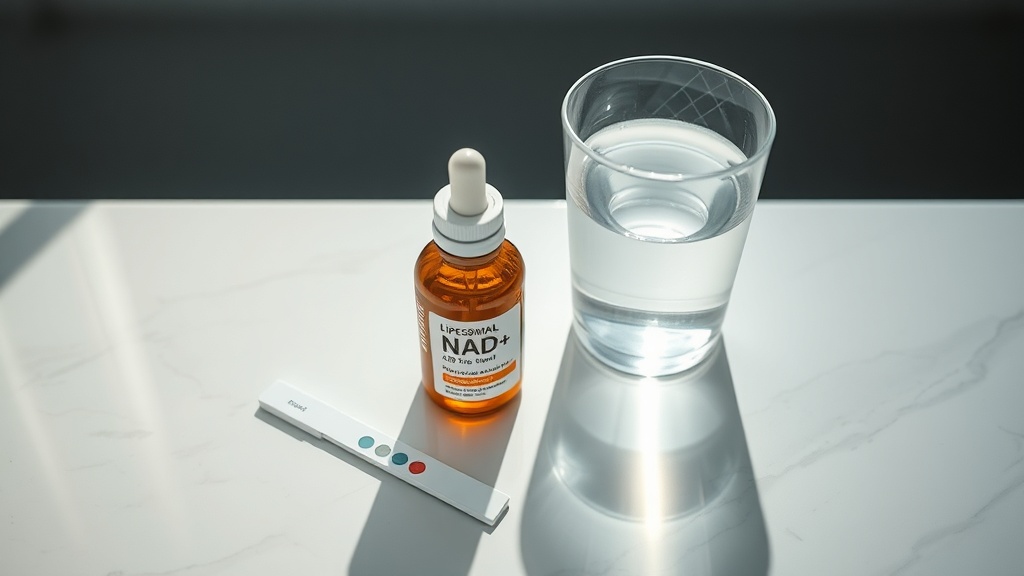
Step 5: Supplement for a minimum of 14 days before retesting. Blair et al. saw significant results at the two-week mark[1]. Blomquist et al. measured at 28 days[5][6]. Give the intervention at least two weeks, ideally four, then retest intracellular NAD+ to assess your individual response.
Step 6: Track subjective markers alongside biomarkers. The Blomquist et al. replication study found improvements in emotional well-being and vitality scores[6]. Keep a simple daily log of energy levels, sleep quality, recovery from exercise, and cognitive clarity. These subjective signals, combined with your NAD+ retest data, will tell you whether the protocol is worth continuing.
Step 7: Reassess every 90 days. NAD+ supplementation is not a set-and-forget intervention. Optimal dosing in humans is not yet established for liposomal NAD+ specifically. Cycle your protocol — two months on, one month off — and retest periodically to detect any plateauing or diminishing returns.
Related Video
What is the difference between liposomal NAD+ and standard NMN or NR supplements?#
Liposomal NAD+ delivers the pre-formed coenzyme itself, wrapped in lipid vesicles that protect it through digestion and help it cross cell membranes directly. Standard NMN and NR are precursors — your body has to convert them into NAD+ through enzymatic pathways. The Christen et al. study in Nature Metabolism showed that NR and NMN may actually depend on gut bacteria converting them to nicotinic acid before they boost NAD+[4], which adds a variable that liposomal direct NAD+ delivery sidesteps entirely.
How much does liposomal NAD+ supplementation cost compared to IV NAD+ therapy?#
Oral liposomal NAD+ supplementation runs roughly $80–$150 per month at the 1,000 mg daily dose used in the Blair et al. study. IV NAD+ infusions, by comparison, cost $250–$1,000 per session at specialty clinics, typically recommended weekly or biweekly. The oral approach is dramatically more accessible, though direct head-to-head efficacy comparisons between liposomal oral and IV delivery don't exist yet.
Why should I care about gut microbiome health when supplementing NAD+ precursors?#
The 2026 Christen et al. study demonstrated that NR and NMN are partially converted to nicotinic acid by gut bacteria before boosting systemic NAD+ through the Preiss–Handler pathway[4]. This means your microbiome composition directly influences how well precursor supplements work. Poor gut health could mean you're wasting money on NMN that never gets properly metabolized. This finding hasn't been widely acknowledged yet in the supplement community.
Who should consider liposomal NAD+ supplementation?#
Based on the current evidence, adults over 40 experiencing age-related decline in energy, recovery, or cognitive performance are the most relevant population — the Blomquist et al. trials enrolled participants aged 35–76[5][6]. However, I'd caution against treating this as a blanket recommendation. The largest trial had only 63 participants. If you have existing metabolic conditions or are on medications that affect NAD+ metabolism, consult a physician who understands these pathways before starting.
When will we have definitive evidence that liposomal NAD+ works long-term?#
Honestly, we don't know yet. The longest trial in this data set ran 28 days. We have zero long-term safety or efficacy data for liposomal NAD+ oral supplementation in humans. The field needs large, multi-center RCTs with 6–12 month follow-up periods before anyone should call this proven. I'd estimate we're 2–3 years away from that level of evidence, assuming funding materializes — which isn't guaranteed given how fragmented the supplement research landscape is.
VERDICT#
Score: 6.5/10
The mechanistic logic is sound, the early data is promising, and the convergence across multiple independent studies (liposomal NAD+, liposomal NMN, multi-ingredient NAD+ boosters) pointing toward 64–74% intracellular increases is genuinely encouraging. The Christen et al. Nature Metabolism paper elevates the entire field by providing a rigorous mechanistic framework for how precursors actually work in humans. But here's where I land: the liposomal NAD+ study that's the centerpiece of this story has 14 participants and no randomization. The Qualia studies are industry-funded preprints. We're in the "interesting hypothesis with preliminary support" phase, not the "change your protocol immediately" phase. If you're already investing in NAD+ supplementation and want to experiment, liposomal delivery is a rational upgrade to try. If you're waiting for proof, keep waiting — it's not here yet.
References
- 1.Blair E, Miller A, McDonald R. Increased Intracellular NAD+ Levels via Oral Supplementation With a Novel Liposomal Delivery Method: A Non-Randomized Crossover Study. NDNR (2026). ↩
- 2.Kawakami S, Maeda Y, Fukuzawa Y. Intervention Study Comparing Blood NAD+ Concentrations with Liposomal and Non-Liposomal Nicotinamide Mononucleotide. Annals of Clinical and Medical Case Reports (2025). ↩
- 3.Ministrini S, Liberale L, Erle HE. A Liposomal Formulation Enhances the Anti-Senescence Properties of Nicotinamide Adenine-Dinucleotide (NAD+) in Endothelial Cells and Keratinocytes. Current Issues in Molecular Biology (2025). ↩
- 4.Christen S, Redeuil K, Goulet L, Giner MP, Breton I, Rota R, Frézal A, Nazari A, Van den Abbeele P, Godin JP, Nutten S, Cuenoud B. The differential impact of three different NAD+ boosters on circulatory NAD and microbial metabolism in humans. Nature Metabolism (2026). ↩
- 5.Blomquist SA, Kelly G, Adães S, Ardagh A, Ramer S, Scuba W. Qualia NAD+® Increases NAD+ In Human Participants: A Randomized, Double-Blind, Placebo-Controlled Study. medRxiv (2025). ↩
- 6.Blomquist SA, Kelly G, Adães S, Ardagh A, Ramer S, Scuba W. Qualia NAD+® Increases NAD+, Improves Well-Being, and Alleviates Aging Symptoms: A Randomized, Double-Blind, Placebo-Controlled Study. medRxiv (2025). ↩
Nael Voss
Nael is data-obsessed and slightly impatient with over-hyped claims. He's tested most of what he covers personally, which means he occasionally contradicts the research when his n=1 doesn't match. His writing moves fast, sometimes too fast — he'll drop a complex mechanism in one sentence and move on. He has a specific verbal tic: 'Look,' when he's about to say something the reader might not want to hear. He's sardonic about supplement marketing but genuinely excited about good mechanistic data.
View all articles →