NAPRT Enzyme Suppresses Colon Cancer via NAD+ Preiss-Handler Path

THE PROTOHUMAN PERSPECTIVE#
The NAD+ conversation has been dominated by NMN and NR for years. Longevity Twitter, biohacking podcasts, every supplement company with a marketing budget — they've all been laser-focused on the salvage pathway. And that's not wrong, exactly. But it's incomplete.
What Wu et al. have done here is shift the lens to the other side of NAD+ biosynthesis: the deamidated Preiss-Handler pathway, driven by an enzyme called NAPRT and fueled by nicotinic acid — plain old niacin. This matters because it reframes NAD+ not just as an anti-aging molecule, but as a tissue-specific tumor suppressor when synthesized through the right route. The finding that NAPRT deficiency accelerates both chemical-induced and age-associated colon tumors in mice is the kind of mechanistic data that should change how we think about gut-specific NAD+ optimization. For anyone tracking colorectal cancer prevention, inflammatory bowel disease, or simply the metabolic health of gut epithelium as they age, this is directly relevant. The Preiss-Handler pathway just became impossible to ignore.
THE SCIENCE#
What NAPRT Actually Does — And Why It's Been Overlooked#
Nicotinic acid phosphoribosyltransferase (NAPRT) is the rate-limiting enzyme in the Preiss-Handler pathway, one of the deamidated routes of NAD+ biosynthesis. Unlike the salvage pathway — where NAMPT converts nicotinamide back into NMN — NAPRT takes nicotinic acid (NA, a form of vitamin B3) and converts it to nicotinic acid mononucleotide (NAMN), which then feeds into NAD+ production through a parallel enzymatic cascade[1].
Here's the thing most people miss: NAD+-producing enzymes have historically been viewed as oncogenic. Cancer cells upregulate these enzymes to fuel their proliferating metabolism. So the default assumption has been that more NAD+ synthesis = tumor-promoting. Wu et al. flip this on its head. At physiological levels, NAPRT doesn't drive cancer — it suppresses it.
The team showed through single-cell RNA sequencing that NAPRT is particularly enriched in gut epithelial cells, where it maintains the NAD+ pool required for an efficient response to stress-induced acute NAD+ depletion[1]. Wait, let me be more precise here — this isn't about global NAD+ levels. It's about having sufficient local NAD+ reserves in colonic epithelium to power PARP-dependent DNA repair when damage occurs.
The Knockout Data: NAPRT Deficiency Is Bad News for the Gut#
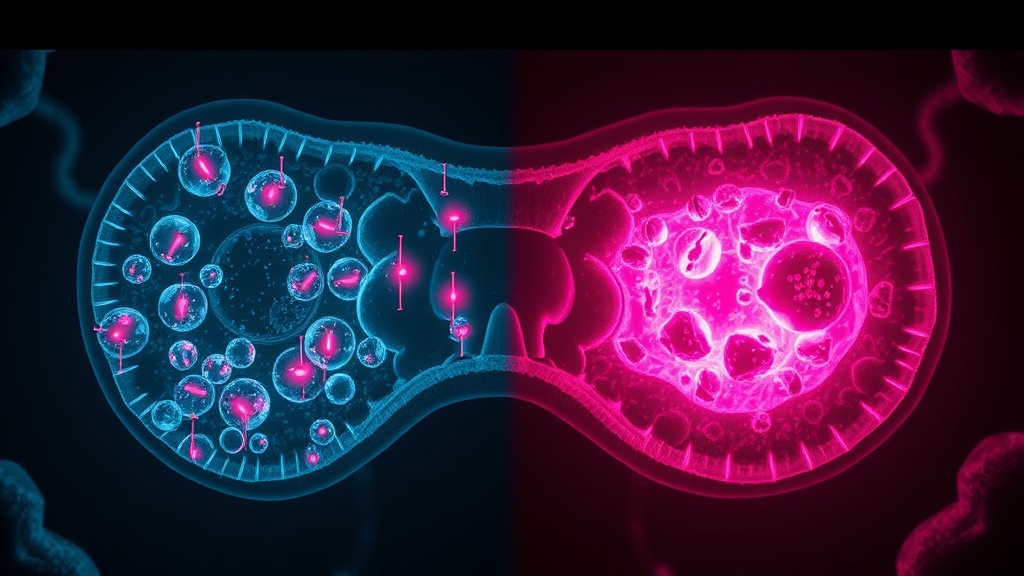
In NAPRT-knockout mice, the consequences were clear across multiple experimental models. NAPRT deficiency impaired poly-(ADP-ribose) polymerase (PARP) activity — the enzymes that detect and initiate repair of DNA strand breaks. Without adequate PARP function, DNA damage accumulates[1].
The knockout mice showed heightened sensitivity to DSS-induced colitis (a standard chemical model for inflammatory bowel disease) and AOM-induced tumorigenesis (a colon cancer model). But the finding that caught my attention: NAPRT-deficient mice also developed spontaneous tumors with aging, independent of any chemical insult[1]. That's the kind of result that elevates this from "interesting enzyme biology" to "potentially clinically relevant."
The Human Correlation#
This isn't just a mouse story. Wu et al. found that low NAPRT expression correlates with poor prognosis across several human cancer types[1]. The RNA-seq and scRNA-seq datasets (deposited under accession numbers GSE271834, GSE271250, and GSE271836) provide a substantial data resource for the field. While correlation isn't causation — I'd want to see interventional human data before getting too excited — the directional alignment between the mouse knockouts and human expression data is the kind of convergent evidence that builds a case.
The Preiss-Handler Pathway Gets a Major Boost From Gut Microbiota#
Here's where this connects to a broader emerging picture. A separate 2026 study published in Nature Metabolism by Zapata-Pérez et al. directly compared NR, NMN, and nicotinamide (Nam) supplementation in 65 healthy humans. Their finding: NR and NMN elevate circulatory NAD+ not primarily through the salvage pathway, but via microbial conversion to nicotinic acid, which then feeds the Preiss-Handler pathway[2].
Look, the NMN crowd is going to love this — and they should, just not for the reasons they think. The mechanism isn't NMN → NMN in your cells. It's NMN → gut microbes → nicotinic acid → NAPRT → NAD+. The Preiss-Handler pathway is the actual workhorse. And NA itself proved to be a potent NAD+ booster in ex vivo whole blood, while NMN, NR, and Nam were not[2].
This dovetails with the Wu et al. finding perfectly. If NAPRT is critical for colon tissue resilience, and NR/NMN are actually working through NAPRT via microbial NA production, then gut health and microbiome composition become central variables in whether your NAD+ supplement actually protects your colon.
CD38: The NAD+ Destroyer at the Gate#
I'm less convinced that simply boosting NAD+ precursors is sufficient without addressing the other side of the equation: NAD+ consumption. Data from Crohn's disease patients show that colonic plasma cells display increased surface levels of CD38, the NADase enzyme that degrades NAD+[3]. Elevated CD38 correlates with NLRP3 inflammasome markers and mitochondrial dysfunction in these patients. So you can pour precursors in through NAPRT, but if CD38 is chewing through your NAD+ pool on the other end, the net effect may be limited.
NRK1 and the Immune Dimension#
Adding another layer: Stavrou et al. (2026) showed that nicotinamide riboside kinase 1 (NRK1) — the enzyme that phosphorylates NR into NMN — plays a critical role in CD4+ T cell metabolism. NRK1 activity restrains excessive T cell activation while promoting survival, partly through cytoplasmic NADP/H generation that controls ROS abundance[4]. During fungal and viral infections, T-cell-intrinsic NRK1 maintained effector CD4+ T cell numbers in affected tissues.
The emerging picture: NAD+ biosynthesis isn't one pathway doing one thing. It's multiple pathways, in specific cellular compartments, regulating distinct functions — from DNA repair in colonocytes to immune calibration in T cells.
NAD+ Pathway Functions by Tissue Context
COMPARISON TABLE#
| Method | Mechanism | Evidence Level | Cost | Accessibility |
|---|---|---|---|---|
| Nicotinic Acid (NA/Niacin) | Direct NAPRT substrate → Preiss-Handler pathway | Human RCT + mouse knockout data | Very low (~$0.03/day) | OTC, widely available |
| NMN Supplementation | Microbial conversion to NA → Preiss-Handler; partial salvage | Human RCT (n=65), 14-day | Moderate (~$1-2/day) | OTC supplements |
| NR Supplementation | Microbial conversion to NA → Preiss-Handler; NRK1-mediated | Human RCT (n=65), 14-day | High (~$1.50-3/day) | OTC supplements |
| Nicotinamide (Nam) | Salvage pathway via NAMPT; acute transient effect only | Human RCT (n=65); no sustained NAD+ increase | Very low (~$0.02/day) | OTC, widely available |
| NAT10 Inhibition | Targets colonic senescence via ac4C modification of DYRK1A | Mouse models only; preclinical | N/A (experimental) | Not available |
THE PROTOCOL#
Based on current evidence — and I want to emphasize this is built from preclinical knockout data, one human comparison trial, and mechanistic extrapolation — here's how I'd approach Preiss-Handler pathway optimization for colon tissue resilience.
Step 1: Prioritize nicotinic acid (niacin) as your primary NAD+ precursor for gut health. Start with 50–100 mg/day of immediate-release nicotinic acid with food. This is the direct NAPRT substrate. The flushing effect is real but manageable at these doses and typically diminishes within 1–2 weeks. Extended-release formulations reduce flushing but may carry different hepatic risk profiles at higher doses.
Step 2: If you're currently taking NMN or NR, don't stop — but understand the mechanism. The Zapata-Pérez et al. data suggests your NMN/NR is likely working through gut microbial conversion to NA anyway[2]. Continue at your current dose (typically 250–500 mg/day for NR; 250–1000 mg/day for NMN), but consider that microbiome health is a prerequisite for efficacy.
Step 3: Support microbiome diversity to enable NA conversion. Consume prebiotic fiber (10–15 g/day from diverse sources: resistant starch, inulin, pectin). The ex vivo fermentation data showed that NR and NMN specifically enhanced microbial growth and metabolism[2] — but this requires a functional, diverse microbiome to begin with. I've personally noticed better subjective gut tolerance of NAD+ precursors after adding resistant starch to my routine, though that's n=1 and worth exactly what you paid for it.
Step 4: Monitor inflammatory markers if you have existing gut conditions. Given the CD38-NAD+ degradation axis seen in Crohn's disease patients[3], those with IBD or chronic gut inflammation may have elevated NAD+ consumption that counteracts supplementation. Track hs-CRP and fecal calprotectin with your physician.
Step 5: Avoid megadosing niacin without medical supervision. Doses above 500 mg/day of nicotinic acid carry hepatotoxicity risk and should only be used under clinical guidance. The NAPRT pathway doesn't require pharmacological doses — physiological levels are what showed the tumor-suppressive effect in the Wu et al. study[1]. More is not better here.
Step 6: Consider timing — take NA/niacin with your largest meal. This reduces flushing and aligns with the gut's circadian metabolic rhythms. If combining with NR or NMN, take those with a separate meal to avoid competitive absorption dynamics, though honestly, the data on timing optimization is thin.
Related Video
What is NAPRT and why does it matter for colon cancer prevention?#
NAPRT (nicotinic acid phosphoribosyltransferase) is the rate-limiting enzyme in the Preiss-Handler deamidated NAD+ biosynthesis pathway. Wu et al. showed in Nature Communications (2026) that physiological NAPRT levels in gut epithelial cells maintain the NAD+ pool needed for PARP-mediated DNA repair. When NAPRT is absent in mouse models, both chemical-induced and age-associated colon tumors develop more readily, and low NAPRT expression correlates with worse prognosis in human cancers[1].
How is the Preiss-Handler pathway different from the salvage pathway most NAD+ supplements target?#
The salvage pathway recycles nicotinamide (Nam) back to NAD+ via NAMPT → NMN → NAD+. The Preiss-Handler pathway uses nicotinic acid (niacin) as its starting substrate, converting it via NAPRT → NAMN → NAAD → NAD+. The key difference: a 2026 human trial showed that NR and NMN actually elevate systemic NAD+ primarily through microbial conversion to NA and the Preiss-Handler route, not through direct salvage[2]. They're parallel routes with different tissue-level consequences.
Why might NMN and NR supplements depend on gut bacteria to work?#
Zapata-Pérez et al. demonstrated that NR and NMN undergo microbial metabolism in the gut, producing nicotinic acid as a byproduct. In ex vivo whole blood experiments, NA was a potent NAD+ booster while NMN, NR, and Nam were not[2]. This suggests the gut microbiome is a critical intermediary — without healthy, diverse gut bacteria, the conversion step may be impaired, potentially reducing supplement efficacy.
Who should consider nicotinic acid supplementation for gut health?#
Based on the current preclinical and early human evidence, individuals with a family history of colorectal cancer, those with chronic inflammatory bowel conditions, or aging adults concerned about gut epithelial integrity may benefit from discussing low-dose nicotinic acid with their physician. However, optimal human dosing for cancer prevention specifically is not yet established — the evidence is strongest in mouse models so far.
When will human clinical trials test NAPRT-targeted cancer prevention?#
No registered human trials specifically targeting NAPRT upregulation for cancer prevention exist as of early 2026. The Wu et al. study provides the mechanistic rationale, but translating mouse knockout data into human interventional protocols requires significant additional work. I'd expect pilot studies within 2–3 years if the scientific community prioritizes this pathway.
VERDICT#
Score: 8/10
This is exactly the kind of mechanistic study that reshapes how we think about an established molecule. Wu et al. don't just show correlation — they use knockout models, scRNA-seq, metabolomics, and human expression data to build a layered case that NAPRT-mediated NAD+ synthesis is tumor-suppressive in the colon. When you combine this with the Zapata-Pérez et al. human trial showing NR/NMN work through the Preiss-Handler pathway via gut microbiota, the picture becomes genuinely compelling.
The limitation — and it's a real one — is that the core cancer prevention data is still murine. I'd dock a point for that. And the human expression correlations, while directionally supportive, can't establish causation. But the mechanistic coherence across multiple datasets, the convergence with independent microbiome research, and the practical simplicity of the potential intervention (nicotinic acid is cheap and available) make this one of the more actionable NAD+ papers I've read this year. Look, if you're spending $60/month on NMN and ignoring a $3 bottle of niacin, this paper is speaking directly to you.
References
- 1.Wu X, Williams JG, Liang H. NAPRT-mediated deamidated NAD biosynthesis enhances colon tissue resiliency and suppresses tumorigenesis. Nature Communications (2026). ↩
- 2.Zapata-Pérez R. The differential impact of three different NAD+ boosters on circulatory NAD and microbial metabolism in humans. Nature Metabolism (2026). ↩
- 3.Jäschke S. Colonic PCs of CDrem patients display increased surface levels of the NADase CD38. Nature Communications (2026). ↩
- 4.Stavrou V, Ali M, Gudgeon N. Cytoplasmic NAD/H synthesis via NRK1 regulates inflammatory capacity and promotes survival of CD4+ T cells. Nature Communications (2026). ↩
- 5.Chen J, Xue M, Mi S. Targeting NAT10 alleviates colonic senescence and elderly-onset colitis by disrupting N4-acetylation of DYRK1A. Nature Communications (2026). ↩
Nael Voss
Nael is data-obsessed and slightly impatient with over-hyped claims. He's tested most of what he covers personally, which means he occasionally contradicts the research when his n=1 doesn't match. His writing moves fast, sometimes too fast — he'll drop a complex mechanism in one sentence and move on. He has a specific verbal tic: 'Look,' when he's about to say something the reader might not want to hear. He's sardonic about supplement marketing but genuinely excited about good mechanistic data.
View all articles →