Near-Infrared Light Therapy for Brain Function: What the Science Shows

SNIPPET: Transcranial photobiomodulation (tPBM) at 1064 nm reorganizes cortical oscillatory networks, shifting brain activity from default mode toward executive network dominance. New research shows a single session modulates prefrontal functional connectivity for up to five days, while clinical trials demonstrate cognitive improvements in post-stroke patients. The evidence is early but directionally consistent.
THE PROTOHUMAN PERSPECTIVE#
Here's what most coverage of "red light for the brain" gets wrong: they treat it like a supplement you swallow and hope for the best. It isn't. Transcranial photobiomodulation is a dosing problem — wavelength, irradiance, target tissue, and duration all interact in ways that most consumer devices completely ignore.
What makes the latest wave of research different is specificity. We're no longer asking "does light do something to the brain?" We're asking what frequencies of neural oscillation change, in which networks, for how long, and does that translate to measurable cognition. That's a fundamentally different question, and the answers coming out of UT Arlington, UT Austin, and clinical centers in China are starting to converge on something real.
For anyone interested in cognitive performance optimization, this matters because tPBM may represent a non-pharmacological method to modulate the same executive networks targeted by stimulants and nootropics — without receptor downregulation, tolerance curves, or next-day crashes. The catch: we're not there yet on standardized protocols.
THE SCIENCE#
Cortical Oscillatory Reorganization: The Bastola et al. MEG/EEG Study#
The most mechanistically detailed study in this batch comes from Bastola, Pruitt, Davenport, Maldjian, Liu, and Alexandrakis at UT Arlington and UT Southwestern, published in Frontiers in Human Neuroscience in January 2026 [1].
Twenty-five healthy adults received acute prefrontal tPBM at 1064 nm while undergoing simultaneous magnetoencephalography (MEG) and electroencephalography (EEG). That dual-modality recording matters — MEG captures magnetic field changes from neuronal currents with excellent temporal resolution, and EEG adds spatial context. Together, they provide a more honest picture of what's happening under the skull than either modality alone.
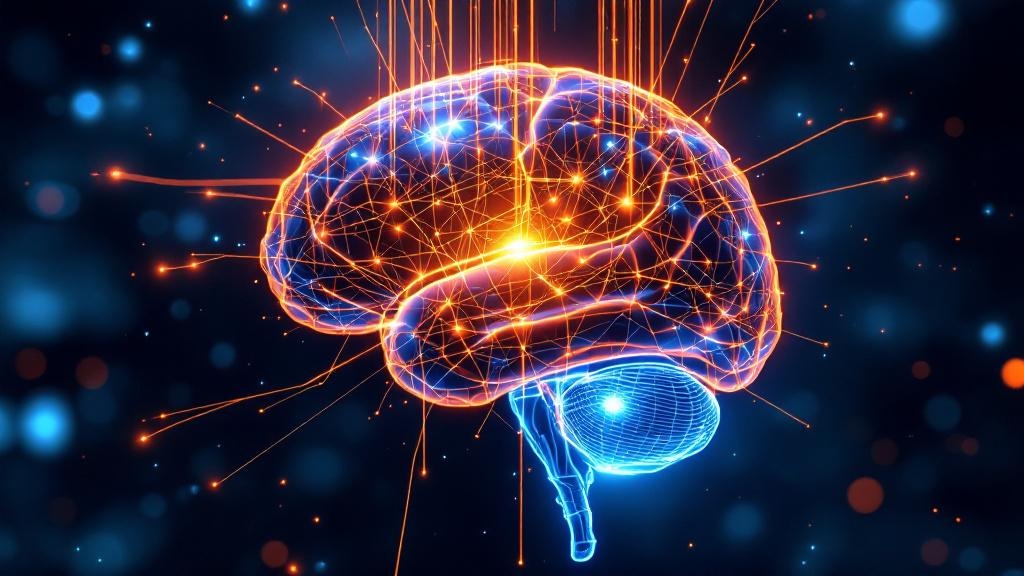
The key finding: tPBM induced frequency-specific reorganization of cortical networks. Alpha oscillations (8–12 Hz) engaged coordinated fronto-visual circuits, while beta activity (13–30 Hz) preferentially recruited higher-order executive regions. Source imaging via sLORETA revealed a post-stimulation shift from default mode network (DMN) dominance toward central executive network (CEN) activity, with stronger directed interactions measured by phase transfer entropy [1].
That DMN-to-CEN shift is significant. The default mode network is associated with mind-wandering and self-referential thought. The central executive network handles working memory, sustained attention, and goal-directed behavior. Pharmacological cognitive enhancers often work by facilitating exactly this transition. tPBM appears to do something similar — non-invasively, with a laser.
But here's where I push back slightly: n=25 is a reasonable pilot for neuroimaging, but it's not large enough to rule out individual variability in skull thickness, melanin content, and cortical folding — all of which affect photon delivery to target tissue. The study used sham controls and within-subject comparisons, which helps, but I'd want to see this replicated with a larger, more diverse cohort before drawing broad conclusions about network-level reorganization.
The infra-slow phase–amplitude coupling analysis was a nice touch. It suggests that tPBM doesn't just shift power in isolated frequency bands — it modulates the hierarchical organization of oscillations, with infra-slow rhythms (<0.1 Hz) gating the amplitude of faster alpha and beta activity. That's a deeper mechanistic insight than most tPBM studies offer.
Duration of Action: The Gonzalez-Lima Lab's 5-Day Finding#
The second critical study comes from O'Connor, Lime, Barrett, and Gonzalez-Lima at UT Austin, published in Frontiers in Behavioral Neuroscience in December 2025 [2]. This one addresses a question I've been asking for years: how long does a single tPBM session actually last?
Twelve healthy adults received transcranial infrared laser stimulation (TILS) at 1064 nm to the right anterior prefrontal cortex. Using a sham-controlled, within-subject crossover design with a 4-week washout period, they measured hemodynamics-derived functional connectivity via 48-channel fNIRS at six time points across five days [2].
The result: a single administration of TILS significantly modulated PFC functional connectivity during cognitively demanding memory tasks (2-back) across the entire 5-day assessment period. No significant effects were observed during resting-state conditions — the connectivity changes only emerged under cognitive load [2].
This is an underappreciated distinction. The brain doesn't just "turn on" after tPBM and stay activated. The modulation appears to be state-dependent — it primes the circuitry for enhanced performance when the system is actually under demand. That's consistent with mitochondrial efficiency improvements: more available ATP doesn't change baseline metabolism, but it increases the ceiling when neurons need to fire at higher rates during cognitive tasks.
The mechanism likely involves cytochrome c oxidase (CCO) upregulation. CCO is the primary chromophore for 1064 nm light — when photons hit this enzyme in the mitochondrial electron transport chain, they dissociate inhibitory nitric oxide, allowing oxygen to bind more efficiently and increasing ATP synthesis. Gonzalez-Lima's lab has published extensively on this mechanism [5], and the 5-day duration finding suggests that a single photon dose may trigger sustained upregulation of mitochondrial bioenergetics rather than a transient activation.
The problem: n=12. I've said this before and I'll say it again — small crossover studies with healthy young adults tell us whether an effect can exist, not whether it reliably exists across populations. The 4-week washout is methodologically sound, but individual differences in prefrontal cortical thickness and vasculature could easily produce variable response durations.
Clinical Translation: Post-Stroke Cognitive Impairment#
Huang, Sun, Wu, and colleagues published a randomized clinical trial in Frontiers in Neurology (November 2025) testing red-light photobiomodulation at 630 nm in post-stroke cognitive impairment (PSCI) patients [4]. This is a different wavelength than the 1064 nm used in the studies above — 630 nm is visible red light with shallower tissue penetration but different chromophore targets.
The trial explored an interesting biological pathway: formaldehyde (FA) accumulation in the brain following stroke may contribute to cognitive decline and depression. Red light at 630 nm can degrade formaldehyde through photocatalytic mechanisms [4]. The study reported improvements in both cognition and neuropsychiatric symptoms in the treatment group relative to controls.
I'm less convinced by this one. The formaldehyde degradation pathway is intriguing but far less established than the CCO mechanism for near-infrared wavelengths. And 630 nm has limited penetration depth — getting therapeutically relevant irradiance to deep cortical structures through skull and meninges at this wavelength requires significant power, and the study details on delivered fluence aren't fully available to me.
The Bibliometric Landscape#
Zhang et al.'s systematic bibliometric analysis in Photodiagnosis and Photodynamic Therapy (October 2025) provides useful context [3]. Analyzing 150 PubMed-indexed studies including 46 clinical trials, the review identified key mechanisms: enhanced ATP synthesis, modulated nitric oxide signaling, improved neuronal excitability, suppressed oxidative stress, anti-inflammatory effects, and ion channel modulation [3].
The review also flagged the central challenge in this field: parameter heterogeneity. Wavelength, irradiance, pulse mode, treatment duration, and target location vary wildly across studies, making direct comparisons nearly impossible. Until the field standardizes dosimetry reporting, meta-analytic conclusions will remain weak.
PBM Research Landscape: Studies Analyzed by Zhang et al.
COMPARISON TABLE#
| Method | Mechanism | Evidence Level | Cost | Accessibility |
|---|---|---|---|---|
| tPBM 1064 nm (clinical laser) | CCO activation → ATP synthesis, NO dissociation, oscillatory network modulation | Multiple small human trials + neuroimaging | $3,000–$8,000 (device) | Low — clinical/research setting |
| tPBM 810 nm (consumer LED panels) | Similar CCO pathway, lower irradiance delivery | Mixed — underdosed in most consumer studies | $200–$1,500 | Moderate — home use |
| Red light 630 nm (transcranial) | Shallow tissue effects, possible FA degradation | Single RCT (post-stroke) | $100–$500 | High — consumer devices |
| tDCS (transcranial direct current) | Neuronal membrane polarization | Dozens of RCTs, mixed replication | $200–$400 | High — home devices available |
| Pharmacological nootropics (e.g., modafinil) | Dopamine/histamine modulation | Strong RCT evidence for wakefulness | $30–$100/month | Moderate — prescription required |
THE PROTOCOL#
Based on the current evidence — and I want to stress that optimal human dosing is not yet fully established — here is a protocol framework drawn from the parameters used in the strongest studies reviewed above.
Step 1. Select a 1064 nm continuous-wave laser source with verified output power. The studies from Gonzalez-Lima's lab and the UT Arlington group use Class IV lasers delivering approximately 3.4 W to the right forehead (anterior PFC). Consumer LED panels at 810–850 nm do not deliver comparable irradiance at the cortical surface and should not be assumed equivalent.
Step 2. Target the right anterior prefrontal cortex. The Gonzalez-Lima lab has consistently shown that right PFC stimulation produces the most reliable effects on memory and attention [2][5]. Position the laser aperture approximately at the Fp2 EEG electrode location (right forehead, roughly 2 cm above the eyebrow and 2 cm lateral from midline).
Step 3. Deliver a single session of approximately 8–12 minutes. The studies reviewed used total energy densities in the range of 50–60 J/cm² at the scalp surface. Do not exceed these parameters without clinical supervision — higher fluences can produce tissue heating without additional benefit.
Step 4. Frequency: based on the O'Connor et al. finding that a single session modulates connectivity for up to 5 days [2], a twice-weekly protocol appears reasonable. This aligns with several published clinical protocols and avoids potential overexposure.
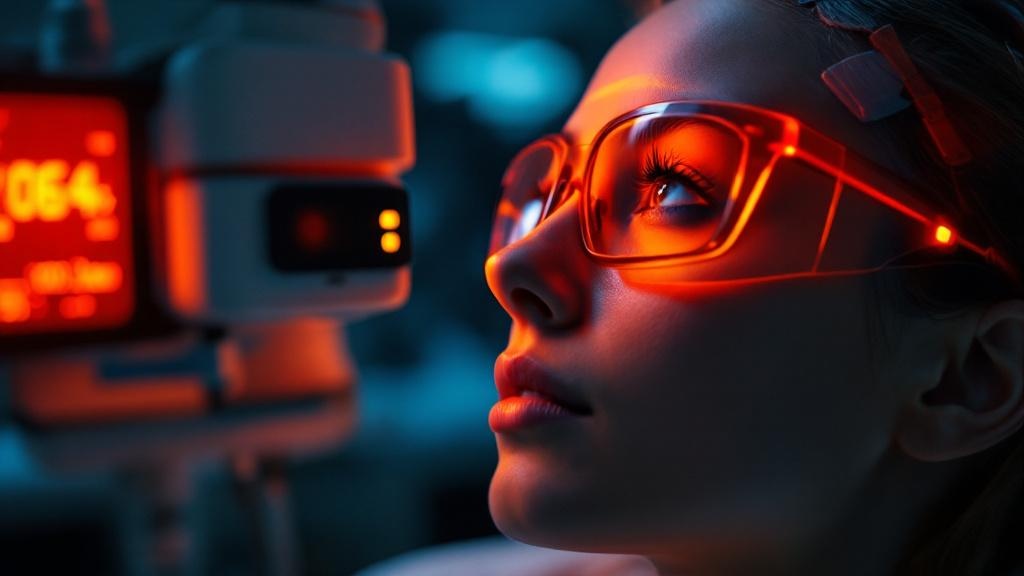
Step 5. Wear appropriate laser safety eyewear rated for 1064 nm. NIR at this wavelength is invisible to the human eye but can cause retinal damage. This is non-negotiable.
Step 6. Track cognitive outcomes using a standardized assessment. The 2-back working memory task used by O'Connor et al. [2] is freely available and provides a repeatable measure of prefrontal function. Test before your first session and at days 1, 3, and 5 post-session to evaluate your individual response.
Step 7. If using a consumer device (810–850 nm LED), understand the limitations. Lower wavelength, lower irradiance, and LED divergence mean significantly less energy reaches the cortex. If you choose to trial these devices, keep expectations calibrated and extend session duration to 15–20 minutes to partially compensate for lower delivered fluence.
Related Video
What is transcranial photobiomodulation and how does it work?#
Transcranial photobiomodulation (tPBM) delivers near-infrared light — typically at 1064 nm — through the skull to brain tissue, where it is absorbed by cytochrome c oxidase in the mitochondrial electron transport chain. This absorption dissociates inhibitory nitric oxide from the enzyme, allowing more efficient oxygen utilization and increased ATP production. The downstream effects include changes in neural oscillations and functional connectivity, as demonstrated by Bastola et al. [1].
How long do the cognitive effects of a single tPBM session last?#
According to O'Connor et al.'s crossover study at UT Austin, a single administration of 1064 nm laser stimulation to the right prefrontal cortex modulated functional connectivity for up to five days during cognitively demanding tasks [2]. Effects were not significant during resting-state, suggesting the benefit is state-dependent — it shows up when you actually need the cognitive performance.
Who should avoid transcranial photobiomodulation?#
Anyone with photosensitive conditions, active brain lesions, or who is taking photosensitizing medications should avoid tPBM until cleared by a clinician. The clinical trial registered as NCT07209683 on ClinicalTrials.gov [6] is studying effects in both young and older adults, but current evidence is largely limited to healthy young adults and post-stroke patients. Pregnant women and individuals with epilepsy are typically excluded from tPBM trials.
Why does wavelength matter so much in photobiomodulation?#
Wavelength determines which chromophore absorbs the photon and how deeply light penetrates tissue. At 1064 nm, the primary target is cytochrome c oxidase in neuronal mitochondria, and penetration through skull and meninges is sufficient to reach cortical tissue. At 630 nm (visible red), penetration is shallower and the mechanisms may differ — Huang et al. reported formaldehyde degradation at this wavelength in post-stroke patients [4]. Most consumer devices operate at 810–850 nm, which is a reasonable compromise but delivers less cortical irradiance than a 1064 nm laser.
How does tPBM compare to other non-invasive brain stimulation techniques?#
Transcranial direct current stimulation (tDCS) modulates neuronal membrane potential directly, while tPBM operates through mitochondrial bioenergetics — a fundamentally different mechanism. tPBM may have longer-lasting effects per session (up to 5 days vs. minutes to hours for tDCS), but tDCS has a much larger evidence base with dozens of RCTs. Neither has the pharmacological precision of nootropics, but both avoid systemic side effects.
VERDICT#
7/10.
The mechanistic data is getting genuinely interesting. The Bastola et al. MEG/EEG work [1] showing frequency-specific cortical reorganization is exactly the kind of evidence this field needs — it moves beyond "light hits brain, brain works better" toward actual network-level explanations. The Gonzalez-Lima lab's 5-day duration finding [2] is clinically meaningful if it replicates.
But. Sample sizes remain small. Parameter standardization is absent. The consumer device market is a mess of underdosed products making overclaimed promises. And we still have no large, multi-site RCT testing tPBM for cognitive enhancement in healthy adults with adequate power to detect clinically meaningful effect sizes.
The science is ahead of the products. That's the right order — but it means anyone implementing this today is essentially running their own n=1 experiment. If you're precise about parameters and honest about expectations, that's reasonable. If you're buying a $200 LED headband and expecting limitless-pill results, save your money.
References
- 1.Bastola S, Pruitt T, Davenport EM, Maldjian JA, Liu H, Alexandrakis G. Transcranial 1064-nm laser photobiomodulation modulates frequency-specific cortical source dynamics and functional connectivity in healthy adults. Frontiers in Human Neuroscience (2026). ↩
- 2.O'Connor P, Lime T, Barrett DW, Gonzalez-Lima F. Photobiomodulation mechanisms: duration of action in the human prefrontal cortex. Frontiers in Behavioral Neuroscience (2025). ↩
- 3.Zhang Z, Xue X, Liu P, Zhang C, Li J, Liu Y, Jiang Y, Lv S, Wang L, Zhou H, Shen W, Yang S, Wang F. The role of photobiomodulation in modulating neural activity and brain function: A systematic bibliometric analysis. Photodiagnosis and Photodynamic Therapy (2025). ↩
- 4.Huang X, Sun Z, Wu W, Lou L, Wang P, Wang Q, Fu Y, Xu L, Song M, Zhu L, Huang J, Ni S, Chen G, Liu X, Tong Z. Red-light photobiomodulation improves cognition and neuropsychiatric symptoms in post-stroke cognitive impairment: a randomized trial. Frontiers in Neurology (2025). ↩
- 5.Liu H, Nizamutdinov D, Huang JH. Transcranial photobiomodulation with near-infrared light: a perspective. Neural Regeneration Research (2023). ↩
- 6.Author(s) not listed. The Effect of Near-infrared Light Therapy on Brain Function and Cognition in Young and Older Adults. ClinicalTrials.gov (2025). ↩
Sova Reld
Sova writes with focused intensity and low tolerance for vague claims. She came to photobiomodulation through personal experimentation and is irritated by both true believers and reflexive skeptics. Her writing has edge: 'The wellness market has done more damage to this field than the skeptics ever could.' She's extremely precise about parameters — wavelength, irradiance, duration — and will tell you when a study used inadequate dosing without apology.
View all articles →