NIR Light Targets Ferroptosis to Prevent Post-Surgery Brain Fog

SNIPPET: Near-infrared (NIR) light therapy may improve postoperative cognitive dysfunction (POCD) by suppressing Lcn2-dependent ferroptosis in hippocampal neurons, according to Zhong et al. in Experimental Neurology (2026). In preclinical models, NIR treatment reduced iron accumulation and neuronal death, pointing toward a non-pharmacological neuroprotective strategy for surgical patients — though human trials remain absent.
THE PROTOHUMAN PERSPECTIVE#
Every year, millions of people over 65 walk into operating rooms with intact cognition and walk out with memory gaps, attentional deficits, and processing speed that never fully recovers. POCD isn't a footnote — it's a mass-scale cognitive insult affecting up to 40% of elderly non-cardiac surgery patients and 60% of cardiac surgery patients. The fact that we still treat this as an acceptable side effect of anesthesia is, frankly, a failure of priorities.
What makes the Zhong et al. study worth paying attention to is the mechanism it identifies: ferroptosis. Not generic inflammation. Not vague oxidative stress hand-waving. A specific, iron-dependent cell death pathway operating through Lcn2 in hippocampal neurons — and a non-invasive intervention (NIR light) that appears to interrupt it. If this translates to humans, transcranial photobiomodulation could become a standard perioperative neuroprotective protocol. That's a big "if." But the mechanistic specificity here is what separates this from the usual noise.
THE SCIENCE#
What Is Postoperative Cognitive Dysfunction?#
Postoperative cognitive dysfunction is a clinically recognized decline in memory, concentration, information processing, and psychomotor function that emerges days to months after surgery under general anesthesia. It is not the same as postoperative delirium — POCD is subtler, longer-lasting, and in some patients, permanent. The incidence in patients over 65 reaches 40% following major non-cardiac procedures and up to 60% after cardiac surgery[4]. POCD increases the likelihood of developing Alzheimer's disease and elevates mortality risk[2]. Neuroinflammation has long been identified as a central driver, but the specific downstream pathways have remained poorly mapped.
Ferroptosis: The Iron Problem in Neurons#
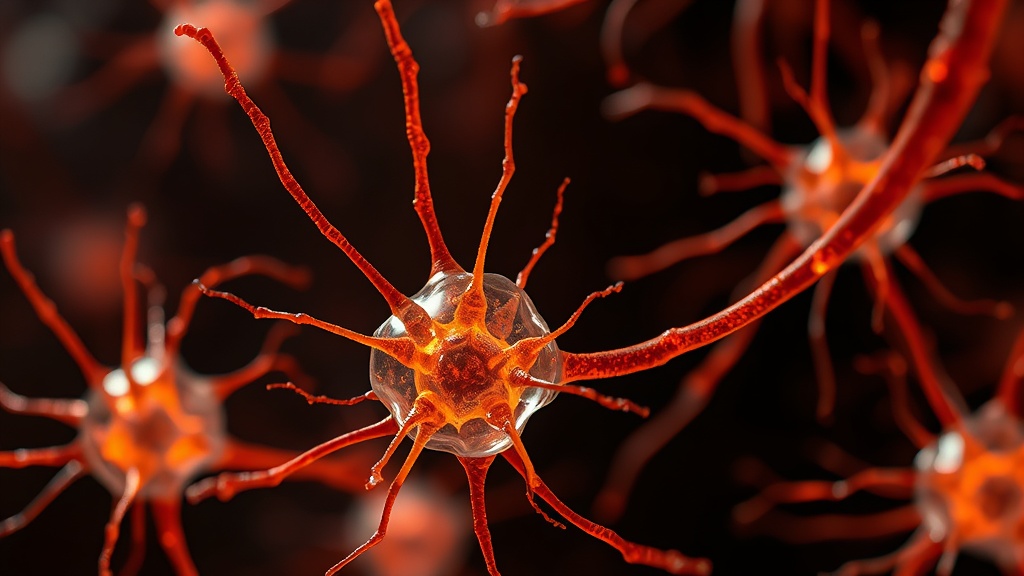
Here's where the field has shifted. Ferroptosis — iron-dependent, lipid-peroxidation-driven cell death — is emerging as a convergence point for multiple POCD mechanisms. Unlike apoptosis, ferroptosis doesn't follow the neat caspase cascade. It's messier. Cells accumulate free iron, glutathione (GSH) gets depleted, GPX4 (the enzyme that neutralizes lipid peroxides) drops, and malondialdehyde (MDA) surges. The cell membrane disintegrates from the inside out.
Multiple studies now point to ferroptosis as a key executor in POCD pathology. The Zhong et al. study specifically identifies Lipocalin-2 (Lcn2) as the upstream regulator[1]. Lcn2, also known as neutrophil gelatinase-associated lipocalin, is an iron-trafficking protein that gets upregulated following surgical trauma and anesthesia exposure. In HT22 hippocampal neurons — the workhorse cell line for this kind of research — Lcn2 upregulation correlated with elevated iron concentrations, reduced GPX4 expression, and increased markers of lipid peroxidation.
Separately, work by the team behind the Communications Biology paper demonstrated that the cGAS-STING pathway in microglia feeds into neuronal ferroptosis via the RUNX1/RBM47 axis[2]. RBM47 stabilizes cGAS mRNA, amplifying inflammatory signaling that ultimately suppresses MEF2C — a transcription factor protective against ferroptosis. When they knocked down RBM47 in BV2 microglial cells, the conditioned medium from those cells rescued HT22 neurons: GSH and SOD went up, MDA and iron went down.
The Morin study in Scientific Reports adds another layer — the flavonoid Morin appears to inhibit ferroptosis through the miR-138-5p/SIRT1 axis, upregulating SLC7A11 and GPX4 while suppressing p53[4]. Three independent research groups, three different upstream triggers, all converging on the same ferroptotic endpoint in hippocampal neurons.
That convergence matters. It suggests ferroptosis isn't an artifact of one model — it's a central mechanism.
How NIR Light Interrupts the Cascade#
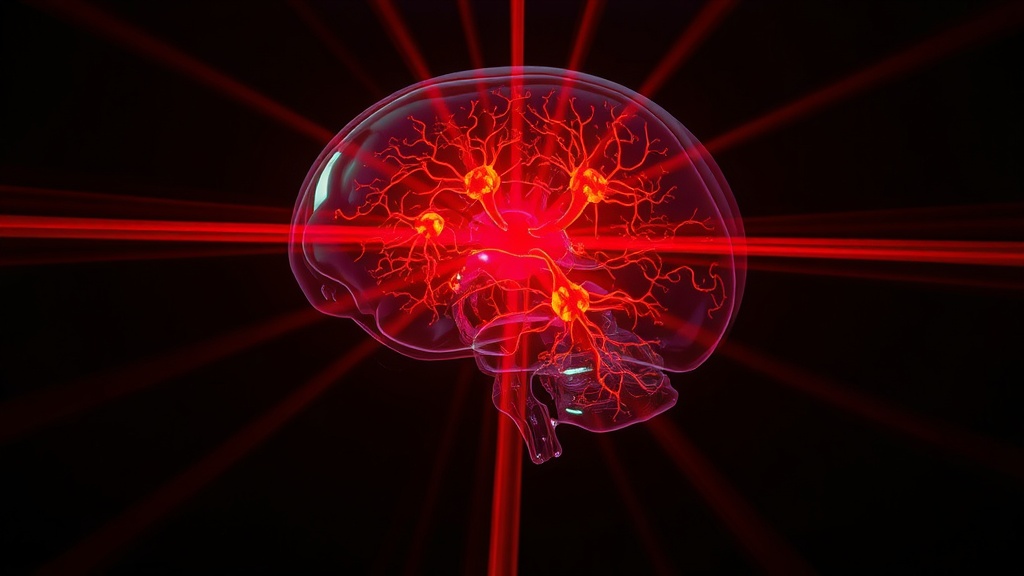
The Zhong et al. finding is mechanistically specific: near-infrared light treatment downregulated Lcn2 expression in hippocampal tissue, which in turn reduced iron accumulation and suppressed ferroptotic markers[1]. This isn't just "light reduces inflammation." The proposed chain is: NIR → Lcn2 suppression → reduced iron trafficking into neurons → preserved GPX4 activity → reduced lipid peroxidation → neuronal survival.
This aligns with earlier work showing transcranial NIR promotes remyelination through the AKT1/mTOR pathway in aged mice with postoperative neurocognitive disorder[3]. That study, indexed on PubMed, demonstrated that NIR didn't just protect neurons — it actively promoted myelin repair, suggesting multiple parallel neuroprotective mechanisms operating simultaneously.
But here's where it gets complicated. The Zhong et al. study used HT22 cells (an immortalized mouse hippocampal line) and animal models. No human subjects. No clinical parameters. We don't know the wavelength used with precision from the available abstract, we don't know irradiance, we don't know treatment duration or timing relative to surgery. These are not minor details — in photobiomodulation, they are everything.
The Parameter Problem#
I've said it before and I'll keep saying it. Wavelength matters. Irradiance matters. Time matters. Tissue penetration depth matters. Most consumer NIR devices operate at 810–850 nm, but transcranial photobiomodulation research has used everything from 670 nm to 1064 nm with wildly different dosing protocols. A study showing neuroprotection in mice tells us the mechanism is plausible — it does not tell us what device to buy.
The honest answer: optimal NIR dosing parameters for perioperative neuroprotection in humans are not established. Anyone selling you a transcranial device claiming to prevent post-surgery cognitive decline right now is ahead of the evidence.
COMPARISON TABLE#
| Method | Mechanism | Evidence Level | Cost | Accessibility |
|---|---|---|---|---|
| NIR Light (Transcranial PBM) | Lcn2 suppression → reduced ferroptosis; AKT1/mTOR remyelination | Preclinical (mouse/cell models) | $200–$2,000 (consumer devices) | Moderate — devices available, no clinical protocols |
| Morin (Flavonoid) | miR-138-5p/SIRT1 axis → GPX4 upregulation → ferroptosis inhibition | Preclinical (mouse/cell models) | Low ($10–$30/month supplement) | High — available as supplement |
| RU.521 (cGAS Inhibitor) | cGAS-STING pathway suppression → reduced microglial inflammation | Preclinical (mouse models) | Research-grade only | Very low — not commercially available |
| Standard Care (Anesthesia Monitoring) | BIS-guided depth of anesthesia, avoidance of anticholinergics | Clinical RCTs | Included in surgical costs | High — standard of care |
| Cognitive Prehabilitation | Preoperative cognitive training to build reserve | Small human trials | Low–moderate | High |
POCD Incidence by Surgery Type in Patients Over 65
THE PROTOCOL#
Preface: This protocol is speculative. It synthesizes the available preclinical data into a framework for those who want to explore transcranial NIR as a perioperative neuroprotective strategy. This is not medical advice — it's a hypothesis-driven starting point based on current evidence.
Step 1: Pre-Surgical Baseline Assessment At least two weeks before scheduled surgery, establish a cognitive baseline. Use a validated tool — the Montreal Cognitive Assessment (MoCA) is accessible and takes 10 minutes. Record your score. This gives you a reference point to detect any post-surgical changes that might otherwise go unnoticed.
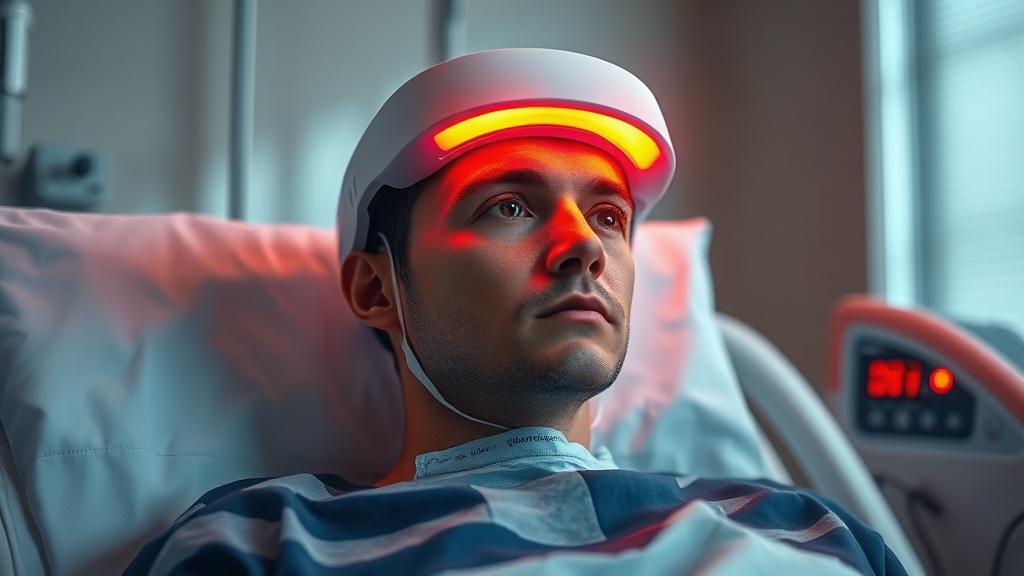
Step 2: Begin Transcranial NIR Pre-Loading (7–14 Days Pre-Surgery) Based on the broader photobiomodulation literature (not the Zhong study specifically, which did not provide clinical dosing), consider transcranial NIR sessions using an 810 nm device at 25–50 mW/cm² irradiance, applied to the forehead and temporal regions for 20 minutes per session, daily. The rationale: building mitochondrial efficiency and potentially downregulating Lcn2 expression before the surgical insult occurs.
Step 3: Perioperative Iron Awareness Discuss iron status with your surgical team. Ferroptosis is iron-dependent — elevated serum ferritin may represent a modifiable risk factor. This doesn't mean avoiding iron; it means knowing where you stand. A simple ferritin panel before surgery is cheap and informative.
Step 4: Post-Surgical NIR Protocol (Days 1–14) Resume transcranial NIR sessions as soon as feasible post-surgery. Same parameters: 810 nm, 25–50 mW/cm², 20 minutes daily. The Zhong et al. data suggests the neuroprotective window involves Lcn2 suppression during the acute post-surgical inflammatory phase[1]. Earlier is likely better, though we don't have human timing data.
Step 5: Nutritional Ferroptosis Defense Support endogenous GPX4 activity through selenium supplementation (100–200 mcg/day — selenium is the cofactor for GPX4 synthesis) and adequate glutathione precursors (N-acetylcysteine 600 mg twice daily). The Morin data suggests flavonoid supplementation may also support the SIRT1/SLC7A11 pathway[4]. Morin is found in mulberries, osage orange, and some supplements, though bioavailability data in humans is limited.
Step 6: Post-Surgical Cognitive Monitoring Repeat MoCA at 1 week, 1 month, and 3 months post-surgery. Compare to baseline. Any decline of 2+ points warrants further evaluation. Don't dismiss persistent brain fog as "normal recovery."
Related Video
What is postoperative cognitive dysfunction and who is most at risk?#
POCD is a decline in memory, attention, and processing speed that can persist weeks to months after surgery under general anesthesia. Patients over 65 are most vulnerable, with incidence rates reaching 40–60% depending on the type of surgery[4]. It's distinct from delirium — quieter, longer, and often undiagnosed.
How does near-infrared light potentially protect neurons after surgery?#
According to Zhong et al., NIR light appears to suppress Lcn2, a protein that traffics iron into hippocampal neurons[1]. By reducing iron accumulation, NIR may prevent ferroptosis — a specific type of cell death driven by lipid peroxidation. This has only been demonstrated in preclinical models so far. I'd want to see at least a pilot human trial before calling this proven.
What is ferroptosis and why does it matter for brain health?#
Ferroptosis is an iron-dependent form of cell death characterized by glutathione depletion, GPX4 inactivation, and catastrophic lipid membrane damage. It's now implicated in Alzheimer's disease, stroke, and POCD. Three independent research groups have converged on ferroptosis as a central mechanism in post-surgical cognitive decline[1][2][4], which strengthens the case considerably.
Can I use a consumer NIR device to prevent POCD?#
Technically, transcranial NIR devices are available commercially. Practically, no device has been validated for perioperative neuroprotection in humans. The parameters that matter — wavelength, irradiance, treatment timing — have not been established in clinical trials for this specific application. Consumer devices vary enormously in actual power output. Measure, don't assume.
How does this compare to pharmaceutical approaches like Morin?#
Morin targets ferroptosis through a different upstream pathway (miR-138-5p/SIRT1) but arrives at the same endpoint — preserved GPX4 activity and reduced iron-driven cell death[4]. NIR is non-pharmacological and targets Lcn2 directly. Neither has human clinical trial data for POCD. They could theoretically be complementary, but that's speculation until someone designs the trial.
VERDICT#
Score: 6.5/10
The mechanistic story is compelling. Three independent research groups identifying ferroptosis as a convergence point for POCD pathology — through Lcn2, RUNX1/RBM47/cGAS-STING, and miR-138-5p/SIRT1 — is the kind of triangulation that makes me pay attention. The Zhong et al. NIR finding adds a non-invasive intervention angle that's genuinely interesting.
But let me be direct about the limitations. This is entirely preclinical. Mouse models and HT22 cell lines. No human dosing. No clinical wavelength or irradiance specifications in the available data. No control group details from the abstract alone. The gap between "NIR suppresses Lcn2 in mouse hippocampal cells" and "use this device before your hip replacement" is enormous, and the wellness market will absolutely try to close that gap prematurely.
I'm cautiously optimistic about the mechanism. I'm not yet optimistic about the application. When someone runs a properly controlled human trial with specified NIR parameters and cognitive outcomes — then we'll talk about protocols with real confidence.
References
- 1.Zhong J et al.. Near-infrared light improves postoperative cognitive dysfunction by alleviating Lcn2-dependent ferroptosis induced neuronal injury. Experimental Neurology (2026). ↩
- 2.Multiple contributors. Microglial RUNX1/RBM47 ablation inhibits neuronal ferroptosis via regulating the cGAS-STING-MEF2C pathway in mice with postoperative cognitive dysfunction. Communications Biology (2025). ↩
- 3.Author(s) not listed. Transcranial near-infrared light promotes remyelination through AKT1/mTOR pathway to ameliorate postoperative neurocognitive disorder in aged mice. PubMed indexed journal (2025). ↩
- 4.Multiple contributors. Morin improves postoperative cognitive dysfunction by mediating the miR-138-5p/SIRT1 axis to regulate ferroptosis. Scientific Reports (2026). ↩
Sova Reld
Sova writes with focused intensity and low tolerance for vague claims. She came to photobiomodulation through personal experimentation and is irritated by both true believers and reflexive skeptics. Her writing has edge: 'The wellness market has done more damage to this field than the skeptics ever could.' She's extremely precise about parameters — wavelength, irradiance, duration — and will tell you when a study used inadequate dosing without apology.
View all articles →