β-NMN Preserves Muscle Strength in Sepsis via SIRT3 Pathway

SNIPPET: β-Nicotinamide mononucleotide (β-NMN) preserves skeletal muscle strength in septic mice by rescuing mitochondrial function through the SIRT3-NAD⁺ axis, according to Saida et al. in Scientific Reports (2026). Muscle mass recovered naturally after sepsis, but strength did not — until acute-phase β-NMN administration maintained mitochondrial morphology and force output without changing muscle size.
THE PROTOHUMAN PERSPECTIVE#
Here's what caught my attention about this paper: it separates muscle mass from muscle function. That distinction matters enormously for anyone thinking about human performance, aging, or recovery from critical illness.
We've spent years obsessing over hypertrophy — bigger muscles, more protein, progressive overload. But sepsis survivors regain their muscle size and still can't produce force. The bottleneck isn't the contractile machinery. It's the power plant. Mitochondria stay broken even after the tissue rebuilds itself.
This reframes the entire conversation around muscle quality versus quantity. If your mitochondria are hyperacetylated and SIRT3 is downregulated, you can have all the myofibrils you want — they won't fire properly. β-NMN, administered during the acute insult, appears to prevent that mitochondrial collapse. For the biohacking community, this is a specific, mechanistic reason to care about NAD⁺ precursors beyond the usual longevity hand-waving. And for critical care medicine, it opens a nutritional intervention window that doesn't currently exist.
THE SCIENCE#
Sepsis Destroys Mitochondria While Sparing Muscle Mass#
Sepsis is a systemic inflammatory response to infection that kills roughly 11 million people annually worldwide. Among survivors, intensive care unit–acquired weakness (ICU-AW) is devastatingly common — and poorly understood at the molecular level[1].
What Saida et al. (2026) demonstrated using a cecal slurry-induced sepsis model in male mice is that body weight and skeletal muscle mass recover by day 14 post-sepsis. The muscles look normal by weight. But grip strength remains significantly impaired[1]. This is the dissociation that matters: the tissue is there, but it doesn't work.
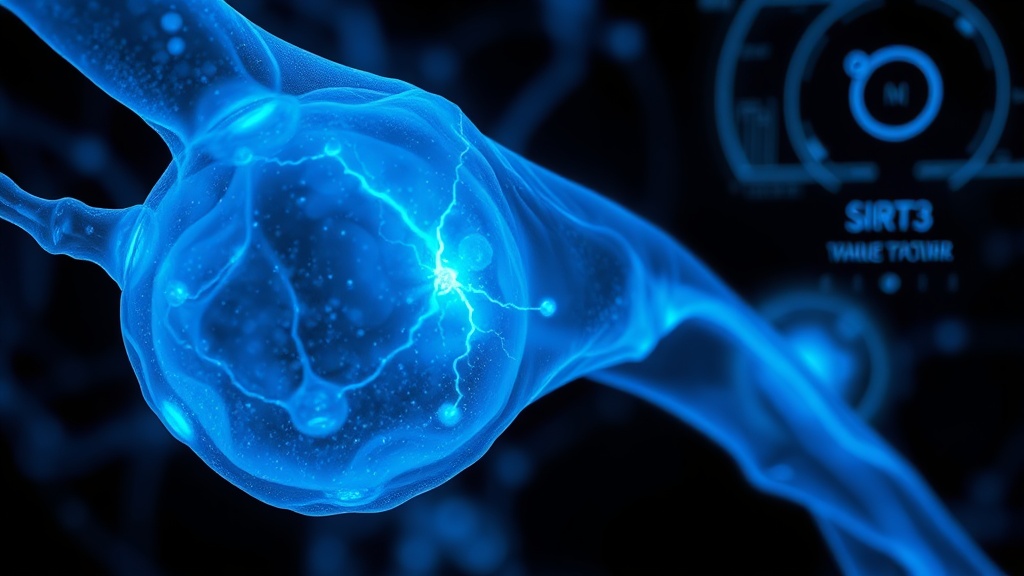
Wait, let me be more precise here. The transcriptomic analysis — RNA-seq deposited under accession GSE310375 — revealed two pathways lighting up like signal flares: the sirtuin signaling pathway and mitochondrial dysfunction. Specifically, SIRT3, the primary mitochondrial NAD⁺-dependent deacetylase, was downregulated in septic muscle tissue[1].
The SIRT3-Acetylation Cascade#
SIRT3 is the gatekeeper of mitochondrial protein acetylation. When it drops, lysine acetylation of mitochondrial proteins increases — and that's exactly what the biochemical analyses confirmed[1]. Mass spectrometry identified several proteins in the hyperacetylated band, including multiple complex I subunits of the electron transport chain.
Look, the NMN crowd is going to love this — and they should, just not for the reasons they think. This isn't a blanket "NMN makes your muscles better" story. It's a precise mechanistic chain: sepsis → SIRT3 downregulation → hyperacetylation of complex I → impaired mitochondrial respiration → persistent weakness despite normal muscle mass.
The authors are careful to note that whether these hyperacetylated proteins are direct SIRT3 targets remains to be determined[1]. That's an important caveat. We're seeing correlation with mechanistic plausibility, not a fully closed causal loop.
The sirtuin-NAD⁺ connection itself is well-established. Imai et al. demonstrated back in 2000 that Sir2 (the yeast homolog) functions as an NAD-dependent histone deacetylase[2], and Lombard et al. later confirmed that SIRT3 regulates global mitochondrial lysine acetylation in mammals[3]. What's new here is the application to sepsis-induced muscle dysfunction specifically.
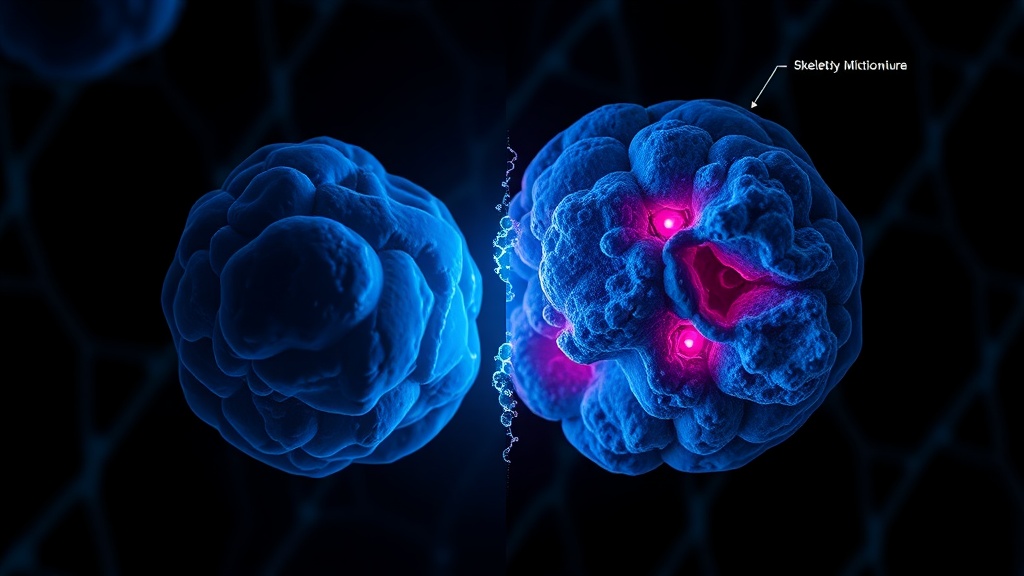
β-NMN Rescues Mitochondrial Respiration In Vitro and Muscle Strength In Vivo#
The in vitro work used C2C12 myotubes — a standard muscle cell line. When the researchers knocked down SIRT3, mitochondrial respiration cratered. Treatment with β-NMN partially rescued energy production[1]. Partially. Not completely. That word matters.
In vivo, acute-phase administration of β-NMN preserved mitochondrial morphology and skeletal muscle strength without altering muscle mass[1]. This is the headline finding. The β-NMN didn't make muscles bigger — it kept them functional by maintaining mitochondrial integrity during the septic insult.
The timing detail is critical: acute-phase administration. Not post-recovery supplementation. Not chronic dosing. The intervention happened during the initial septic challenge. Whether delayed administration would produce similar results is unknown.
I'm less convinced by one aspect of this study, and I'll say it plainly: this is a mouse model with a relatively small sample (the paper doesn't report large cohort numbers), using a single NMN formulation, in male mice only. The sex-specific limitation is acknowledged in the title itself. We have zero human data here. None.
Prior NMN-Sepsis Research Provides Context#
This study doesn't exist in a vacuum. Cao et al. (2023) previously demonstrated NMN as a therapeutic agent to alleviate multi-organ failure in sepsis[4]. Ni et al. showed NMN protects septic hearts in mice by preventing cyclophilin F modification[5]. And Yamamoto et al. (2014) established that NMN protects the heart from ischemia and reperfusion injury[6].
So there's a pattern forming: NMN appears to protect multiple organ systems during acute inflammatory stress, likely through the shared NAD⁺-sirtuin axis. But here's where it gets complicated — each organ system may have different dose-response curves, different critical windows, and different downstream effectors. We can't assume skeletal muscle behaves identically to cardiac tissue.
COMPARISON TABLE#
| Method | Mechanism | Evidence Level | Cost | Accessibility |
|---|---|---|---|---|
| β-NMN (acute-phase) | NAD⁺ precursor → SIRT3 activation → mitochondrial deacetylation | Preclinical (mouse model, in vitro) | ~$40–80/month (consumer grade) | Widely available as supplement |
| Early mobilization + nutrition | Mechanical loading + protein synthesis stimulus | Multiple human RCTs, ESPEN guidelines | Low (hospital-based) | Standard ICU protocol |
| IV NAD⁺ infusion | Direct NAD⁺ repletion | Limited human case series | $500–1,500/session | Specialty clinics only |
| NR (Nicotinamide Riboside) | Alternative NAD⁺ precursor via NRK pathway | Human trials (non-sepsis contexts) | ~$30–60/month | Widely available as supplement |
| Standard ICU nutrition | Caloric/protein support | Strong (ESPEN guidelines) | Low | Universal in ICU settings |
THE PROTOCOL#
Important disclaimer: This protocol is based on preclinical mouse data only. No human clinical trials have tested β-NMN for ICU-acquired weakness. Consult a physician before making any changes to critical care nutrition.
-
Understand the intervention window. Based on the Saida et al. data, β-NMN was administered during the acute phase of sepsis — not after recovery. If you're a clinician considering this as adjunctive therapy, the timing appears to matter more than chronic dosing. Early data suggests starting with the intervention as close to the onset of systemic inflammation as possible[1].
-
Dosing considerations from existing human NMN research. While this study used a mouse model, prior human NMN trials (in non-sepsis contexts) have used doses ranging from 250 mg to 1,200 mg daily. The allometric scaling from mouse to human dosing is imprecise, but 250–500 mg/day represents the most commonly studied range in human supplementation trials.
-
Prioritize the β-NMN isoform specifically. The study used β-nicotinamide mononucleotide, not α-NMN. Most commercial NMN supplements contain the β isoform, but verify the label. The stereochemistry matters for enzymatic recognition in the NAD⁺ salvage pathway.
-
Combine with standard ICU nutritional protocols, not as replacement. The ESPEN guidelines on clinical nutrition in the intensive care unit remain the evidence-based standard[7]. β-NMN, if it translates to humans, would be an adjunct — layered on top of adequate caloric and protein delivery, not instead of it.
-
Monitor biomarkers if accessible. In a research or clinical context, tracking NAD⁺ metabolites in blood, along with markers of mitochondrial function (lactate clearance, HRV optimization as a proxy for autonomic recovery), could help assess whether NMN supplementation is reaching the target pathway.
-
Do not extrapolate to healthy muscle performance. This study specifically addresses sepsis-induced mitochondrial dysfunction. There's no evidence from this paper that β-NMN enhances muscle strength in healthy individuals. The mechanism — rescuing SIRT3-mediated deacetylation — is relevant when that system is pathologically suppressed, not under normal conditions.
Related Video
What is ICU-acquired weakness and why does it persist after sepsis?#
ICU-acquired weakness is a syndrome of generalized muscle weakness that develops during critical illness, affecting up to 80% of sepsis survivors. According to Saida et al. (2026), the weakness persists even after muscle mass recovers because the underlying mitochondrial dysfunction — driven by SIRT3 downregulation and protein hyperacetylation — remains unresolved[1]. The muscles are structurally intact but energetically compromised.
How does β-NMN protect muscles during sepsis?#
β-NMN serves as a precursor to NAD⁺, the essential coenzyme that fuels sirtuin deacetylases including SIRT3. In the mouse model, acute-phase β-NMN administration preserved mitochondrial morphology and maintained muscle force output[1]. The proposed mechanism is that boosting NAD⁺ levels sustains SIRT3 activity, which keeps mitochondrial complex I subunits properly deacetylated and functional.
When might human clinical trials for NMN in sepsis begin?#
Honestly, we don't know yet. The Saida et al. paper establishes preclinical proof-of-concept, but translating this to a human ICU trial requires safety data, dose-finding studies, and regulatory approval. Prior NMN human safety data exists from non-sepsis contexts, which could accelerate the process, but I'd estimate we're at least 2–3 years from a properly powered human trial.
Why was this study limited to male mice only?#
The authors explicitly restricted the study to male mice, likely to control for hormonal variables — estrogen has independent effects on mitochondrial function and NAD⁺ metabolism. This is a significant limitation. Whether the SIRT3-NMN axis behaves identically in female mice (or humans of any sex) remains entirely untested in this context.
What is the difference between NMN and NR for NAD⁺ supplementation?#
Both NMN (nicotinamide mononucleotide) and NR (nicotinamide riboside) are NAD⁺ precursors, but they enter the salvage pathway at different points. NMN is one enzymatic step closer to NAD⁺ than NR. Whether this translates to meaningful differences in tissue-level NAD⁺ repletion — particularly in skeletal muscle during sepsis — is not yet established. This study only tested β-NMN[1].
VERDICT#
Score: 7/10
This is a mechanistically clean preclinical study that identifies a specific, actionable pathway — SIRT3 downregulation leading to mitochondrial hyperacetylation and persistent muscle weakness after sepsis. The dissociation between muscle mass recovery and muscle function recovery is a genuinely important finding that challenges how we think about ICU rehabilitation.
But let me be direct: it's a mouse study. Male mice only. The in vitro rescue was partial, not complete. The authors themselves acknowledge that whether the hyperacetylated proteins are direct SIRT3 targets is unconfirmed. And the jump from "β-NMN preserved muscle strength in septic mice" to "take NMN for ICU-AW" is a canyon, not a step.
I give it a 7 because the mechanistic data is solid, the experimental design is appropriate, and the clinical question — how do we treat post-sepsis muscle dysfunction? — is genuinely important and underserved. The NAD⁺ precursor intervention has biological plausibility backed by multiple prior studies. But until this moves into human trials, it's a promising lead, not a protocol.
References
- 1.Saida M, Saeki N, Sakai H. β-Nicotinamide mononucleotide preserves muscle strength in septic male mice. Scientific Reports (2026). ↩
- 2.Imai S, Armstrong CM, Kaeberlein M, Guarente L. Transcriptional silencing and longevity protein Sir2 is an NAD-dependent histone deacetylase. Nature (2000). ↩
- 3.Lombard DB. Mammalian Sir2 homolog SIRT3 regulates global mitochondrial lysine acetylation. Molecular and Cellular Biology (2007). ↩
- 4.Cao T. Nicotinamide mononucleotide as a therapeutic agent to alleviate multi-organ failure in sepsis. Journal of Translational Medicine (2023). ↩
- 5.Ni R. Nicotinamide mononucleotide protects septic hearts in mice via preventing cyclophilin F modification and lysosomal dysfunction. Molecular Medicine (2023). ↩
- 6.Yamamoto T. Nicotinamide mononucleotide, an intermediate of NAD+ synthesis, protects the heart from ischemia and reperfusion. PLoS ONE (2014). ↩
- 7.Singer P. ESPEN guideline on clinical nutrition in the intensive care unit. Clinical Nutrition (2019). ↩
Nael Voss
Nael is data-obsessed and slightly impatient with over-hyped claims. He's tested most of what he covers personally, which means he occasionally contradicts the research when his n=1 doesn't match. His writing moves fast, sometimes too fast — he'll drop a complex mechanism in one sentence and move on. He has a specific verbal tic: 'Look,' when he's about to say something the reader might not want to hear. He's sardonic about supplement marketing but genuinely excited about good mechanistic data.
View all articles →