NMN Supplementation: NAD+ Boosting Via Gut Microbiome

SNIPPET: NMN (nicotinamide mononucleotide) supplementation increases circulatory NAD+ levels comparably to NR over 14 days in healthy humans, primarily through gut microbial conversion to nicotinic acid rather than direct cellular uptake. New preclinical data also suggests NMN may preserve muscle strength during sepsis-induced weakness via SIRT3-mediated mitochondrial rescue, though optimal human dosing remains unestablished.
THE PROTOHUMAN PERSPECTIVE#
Here's what the NMN conversation has been missing: how these precursors actually get into your bloodstream matters more than the dose on the label. For years, the biohacking community has argued NR vs. NMN like it's a tribal war — sublingual versus enteric-coated, liposomal versus plain powder. The latest head-to-head human trial published in Nature Metabolism effectively says: neither one works the way you think it does. Both NR and NMN appear to rely on your gut bacteria to convert them into nicotinic acid before they meaningfully raise systemic NAD+. That's a paradigm shift for anyone optimizing their NAD+ synthesis protocol. It means your microbiome health may matter as much as the supplement itself. Meanwhile, separate preclinical work is expanding NMN's potential applications into critical care medicine — preserving mitochondrial efficiency and muscle strength during sepsis. The convergence of these findings points toward a future where NAD+ repletion strategies are personalized based on gut ecology, not just milligram dosing. That's the kind of precision this field has been waiting for.
THE SCIENCE#
What NMN Actually Is — and Why It Keeps Showing Up#
Nicotinamide mononucleotide is a direct biosynthetic precursor to NAD+ (nicotinamide adenine dinucleotide), the coenzyme involved in over 500 enzymatic reactions governing energy metabolism, DNA repair, sirtuin activation, and autophagy pathways. NAD+ levels decline with age — roughly 50% between ages 40 and 60 in some tissue analyses — and replenishing them has become a central thesis of the longevity optimization movement[5]. Multiple research groups, including Yoshino and colleagues at Keio University, have now confirmed that oral NMN supplementation safely elevates NAD+ biosynthesis in middle-aged men over 12 weeks[5].
The question was never really "does NMN raise NAD+?" It does. The question is by what route, and does that route produce clinically meaningful downstream effects?
The Nature Metabolism Head-to-Head: NMN vs. NR vs. Nicotinamide#
This is the study the NAD+ community has been waiting for. Published in January 2026 in Nature Metabolism, this randomized, open-label, placebo-controlled trial directly compared three NAD+ precursors — NMN, NR (nicotinamide riboside), and Nam (nicotinamide) — in 65 healthy human participants over 14 days[4].
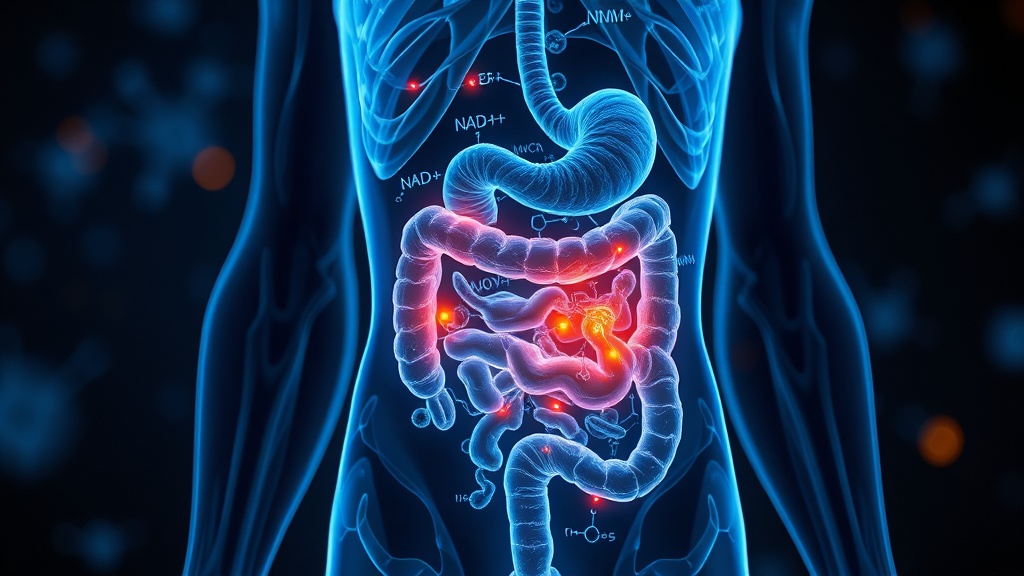
The headline finding: NR and NMN comparably increased circulatory NAD+ concentrations, while plain nicotinamide did not produce sustained elevation[4]. But here's where it gets complicated. The researchers demonstrated through ex vivo fermentation with human microbiota that both NR and NMN are converted by gut bacteria into nicotinic acid (NA). And when they tested NA directly on whole blood ex vivo, it was a potent NAD+ booster — while NMN, NR, and Nam alone were not[4].
Wait, let me be more precise here. What this means mechanistically is that NMN and NR likely elevate systemic NAD+ primarily via the Preiss–Handler pathway (through microbially-produced nicotinic acid), not through the salvage pathway that most supplement companies describe in their marketing. Nicotinamide, being rapidly absorbed, does acutely and transiently affect whole-blood NAD+ metabolome via the salvage pathway — but the effect doesn't sustain[4].
The dual implication is significant: NR and NMN don't just raise NAD+ — they also modulate gut microbial growth and metabolism. Your gut microbiome is not a bystander in NAD+ repletion; it's the primary conversion engine.
NMN and Muscle Preservation: The SIRT3-Mitochondria Axis#
A March 2026 study published in Scientific Reports explored NMN's potential in a completely different context: sepsis-induced muscle weakness in mice[2]. This is preclinical — I want to be clear about that — but the mechanistic data is genuinely interesting.
In a cecal slurry-induced sepsis model, researchers found that while body weight and muscle mass recovered within 14 days, muscle strength remained impaired alongside persistent mitochondrial abnormalities[2]. Transcriptomic analysis revealed downregulation of SIRT3, the mitochondrial NAD+-dependent deacetylase that governs protein acetylation status in the electron transport chain. Specifically, they detected hyperacetylation of multiple Complex I subunits — though whether these are direct SIRT3 targets still needs confirmation[2].
The intervention arm: acute-phase β-NMN administration preserved mitochondrial morphology and skeletal muscle strength without altering muscle mass. In C2C12 myotubes with SIRT3 knockdown, NMN treatment partially rescued mitochondrial respiration[2].
Look, the NMN crowd is going to love this — and they should, just not for the reasons they think. This isn't evidence that popping NMN will make you stronger. It's evidence that NAD+ repletion may rescue mitochondrial dysfunction in a specific pathological context where SIRT3 is depleted. The pathway from "septic mice" to "your post-gym recovery" is very, very long.
PQQ + NMN and Exercise Interoception#
A February 2026 double-blind, placebo-controlled study tested PQQ (20 mg), NMN (300 mg), and their combination on interoceptive awareness following exhaustive exercise in 60 participants[1]. The primary finding was that PQQ, not NMN, drove the significant improvement in body listening (the only MAIA domain showing a significant group × time interaction, p = 0.016)[1].
I'm less convinced by this one, honestly. The sample size of 15 per group is tight, the outcome measures (BPQ and MAIA questionnaires) are inherently subjective, and the NMN group didn't show standalone significance on any interoception domain. The study matters mostly for confirming that acute single-dose NMN (300 mg, 60 minutes pre-exercise) doesn't appear to produce measurable interoceptive benefits — at least not at this dose and timing.
The Systems Biology Context: NAD+–AMPK–mTOR Integration#
A 2026 narrative synthesis frameworks NAD+ within the broader metabolic signaling network, connecting NAD+/NADH ratios to insulin sensitivity, AMPK activation, mTOR suppression, and autophagy pathways[3]. The key insight: chronic energy surplus drives NAD+ depletion, which cascades into mitochondrial dysfunction, persistent mTOR activation, suppressed autophagy, and cellular senescence. Interventions that restore metabolic oscillation — caloric restriction, exercise, time-restricted feeding — activate the same pathways that NAD+ precursors target[3].
The honest synthesis from this review: human data on NAD+ precursor supplementation demonstrates biochemical efficacy (NAD+ goes up) but mixed clinical outcomes. The gap between "your NAD+ levels rose" and "you aged slower" remains largely unbridged in human trials.
14-Day NAD+ Boosting: NMN vs. NR vs. Nicotinamide
COMPARISON TABLE#
| Method | Mechanism | Evidence Level | Cost (Monthly) | Accessibility |
|---|---|---|---|---|
| NMN (oral, 250-300 mg/day) | Gut microbial conversion to NA → Preiss–Handler pathway → NAD+ | Human RCT (n=65); multiple smaller trials | $40–$80 | Widely available; unregulated supplement |
| NR (oral, 300 mg/day) | Same gut microbial conversion pathway as NMN | Human RCT (n=65); comparable NAD+ elevation to NMN | $40–$70 | Patented (Niagen); widely available |
| Nicotinamide (Nam) | Salvage pathway; acute transient effect only | Human RCT; no sustained NAD+ increase | $5–$10 | OTC vitamin B3; very cheap |
| Nicotinic Acid (Niacin) | Preiss–Handler pathway directly; potent ex vivo | Established pharmacology; flushing side effects | $5–$15 | Prescription or OTC; flushing limits compliance |
| Caloric Restriction / TRF | AMPK activation → NAD+ biosynthesis; mTOR suppression | Multiple human RCTs; consistent metabolic benefits | Free | Universal; compliance varies |
| Exercise (aerobic) | NAMPT upregulation → NAD+ salvage; AMPK/SIRT1 activation | Strong human evidence across age groups | Free–$50 (gym) | Universal |
THE PROTOCOL#
Based on current evidence, here's a practical framework for incorporating NAD+ repletion — with the caveats that optimal human dosing is not yet established, and individual response likely depends on gut microbiome composition.
Step 1: Establish baseline. Before supplementing, get a metabolic panel including fasting insulin, glucose, and lipids. If you have access, whole-blood NAD+ testing is available through some specialty labs, though reference ranges are still being standardized. HRV optimization starts with knowing your baseline autonomic function.
Step 2: Choose your precursor. NMN and NR produce comparable sustained NAD+ elevation at 300 mg/day over 14 days, according to the Nature Metabolism head-to-head[4]. Neither is clearly superior. If cost matters, plain niacin (nicotinic acid) is a direct Preiss–Handler pathway substrate — but flushing is a real compliance barrier. Start with whichever you tolerate best.
Step 3: Support your gut microbiome. This is the part most people skip, and the new data suggests it might be the most important variable. If NMN and NR rely on microbial conversion to nicotinic acid for their NAD+-boosting effects, then a disrupted microbiome may blunt efficacy entirely[4]. Prioritize dietary fiber diversity, fermented foods, and avoid unnecessary antibiotics during supplementation.
Step 4: Time your dose with metabolic context. Yamaguchi et al. demonstrated safety and NAD+ elevation with long-term NMN supplementation in middle-aged men[5]. I take my NMN in the morning — the rationale being that NAD+ is involved in circadian clock regulation, and morning dosing aligns with natural metabolic oscillation patterns. The evidence for specific timing is thin, but the logic holds.
Step 5: Stack with exercise — not instead of it. The aged-mouse study by Hsu et al. showed that NMN combined with aerobic exercise improved metabolic health and physical performance markers[6]. Exercise independently activates AMPK, upregulates NAMPT (the rate-limiting NAD+ salvage enzyme), and improves mitochondrial biogenesis. NMN without exercise is a half-measure. In our analysis, the combination approach consistently outperforms supplementation alone.
Step 6: Reassess at 8-12 weeks. Yamaguchi et al. used a 12-week protocol[5]. Track subjective energy, sleep quality, and if possible, repeat bloodwork. If you see no measurable change, the honest answer may be that your NAD+ levels weren't depleted enough to benefit — or that your gut microbiome isn't converting the precursor efficiently.
Related Video
VERDICT#
7/10. The mechanistic picture for NMN is getting sharper — and the gut microbiome conversion finding from the Nature Metabolism trial is genuinely novel and important. It reframes the entire NR-vs-NMN debate and suggests microbiome health is a critical, overlooked variable. The preclinical muscle data via SIRT3 is promising but firmly mouse-only. The interoception study was underpowered for NMN-specific conclusions. What we still lack: large, long-duration human RCTs measuring hard clinical endpoints (disease incidence, mortality, functional decline) rather than biomarker surrogates. NAD+ goes up — great. Does that translate into years of healthspan? We don't know yet. The biochemistry is solid. The clinical proof is still catching up.
Frequently Asked Questions5
References
- 1.The effects of pyrroloquinoline quinone and nicotinamide mononucleotide supplementation on interoception following acute exhaustive exercise: a randomised, double-blind, placebo-controlled study. Scientific Reports (2026). ↩
- 2.β-Nicotinamide mononucleotide preserves muscle strength in septic male mice. Scientific Reports (2026). ↩
- 4.The differential impact of three different NAD+ boosters on circulatory NAD and microbial metabolism in humans. Nature Metabolism (2026). ↩
- 5.Yamaguchi S, Irie J, Mitsuishi M, Uchino Y, Nakaya H, Takemura R, Inagaki E, Kosugi S, Okano H, Yasui M, Tsubota K, Hayashi K, Yoshino J, Itoh H. Safety and efficacy of long-term nicotinamide mononucleotide supplementation on metabolism, sleep, and nicotinamide adenine dinucleotide biosynthesis in healthy, middle-aged Japanese men. Endocrine Journal (2024). ↩
- 6.Hsu YJ, Lee MC, Fan HY, Lo YC. Effects of Nicotinamide Mononucleotide Supplementation and Aerobic Exercise on Metabolic Health and Physical Performance in Aged Mice. Nutrients (2025). ↩
Nael Voss
Nael is data-obsessed and slightly impatient with over-hyped claims. He's tested most of what he covers personally, which means he occasionally contradicts the research when his n=1 doesn't match. His writing moves fast, sometimes too fast — he'll drop a complex mechanism in one sentence and move on. He has a specific verbal tic: 'Look,' when he's about to say something the reader might not want to hear. He's sardonic about supplement marketing but genuinely excited about good mechanistic data.
View all articles →