PBM Boosts Antioxidants in Radiotherapy Oral Mucositis Study

THE PROTOHUMAN PERSPECTIVE#
Oral mucositis is one of the most debilitating side effects of head and neck radiotherapy. It destroys mucosal tissue, makes eating almost impossible, and frequently forces treatment interruptions that compromise cancer outcomes. For the performance optimization community, the implications here go beyond oncology. PBM's demonstrated ability to upregulate endogenous antioxidant enzymes — SOD, glutathione — and suppress pro-inflammatory cytokines maps directly onto the oxidative stress pathways that drive cellular aging and mitochondrial dysfunction. If photobiomodulation can rescue mucosal tissue under the extreme oxidative assault of ionizing radiation, the question becomes: what can precisely dosed light therapy do for systemic redox balance in healthier populations? This study doesn't answer that. But it gives us mechanistic data — salivary biomarkers measured at three time points during active radiotherapy — that moves PBM from "it seems to help" toward "here's what it's actually doing at the molecular level." That matters.
THE SCIENCE#
What Photobiomodulation Actually Is — and Isn't#
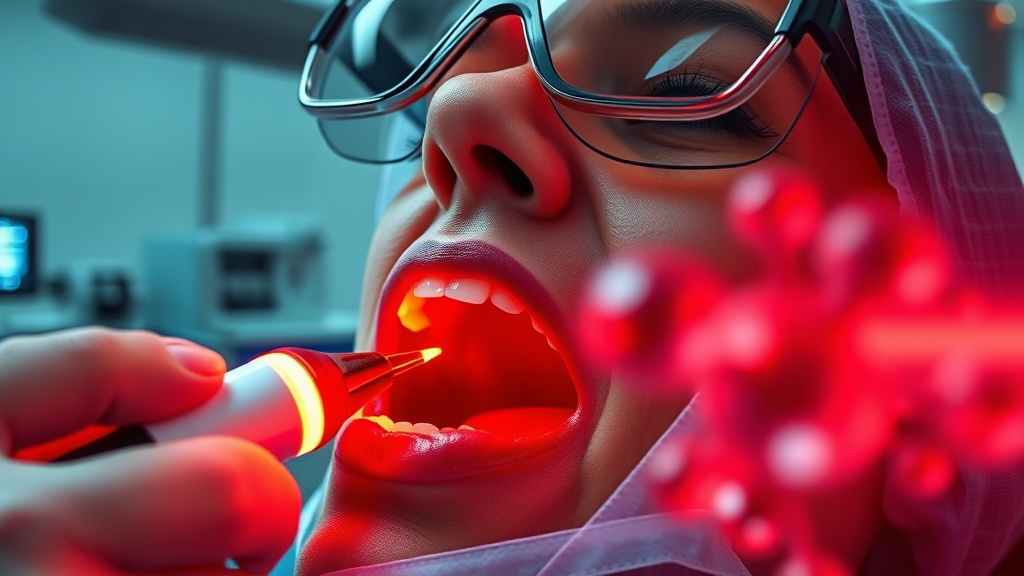
Photobiomodulation is the application of low-level light energy — typically red (630–660 nm) or near-infrared (808–850 nm) wavelengths — to biological tissue to modulate cellular function. It is not heating. It is not ablation. The primary target is cytochrome c oxidase in mitochondrial complex IV, where photon absorption drives increased electron transport, ATP synthesis, and downstream signaling cascades including nitric oxide release and reactive oxygen species (ROS) modulation[1].
Why does this matter for cancer patients undergoing radiotherapy? Because radiation doesn't just kill tumor cells. It generates massive oxidative stress in surrounding healthy tissue, overwhelming endogenous antioxidant systems and triggering inflammatory cascades that manifest clinically as oral mucositis (OM) — painful ulceration of the oral mucosa affecting up to 80% of head and neck cancer patients[2].
The study published in Scientific Reports by researchers evaluating HNSCC patients is the first I've seen that tracks six salivary biomarkers across three radiotherapy time points while comparing intraoral versus extraoral PBM delivery[1]. Small sample. But the biomarker panel is well-chosen.
The Biomarker Data: What Changed and When#
Here's where it gets specific. The researchers collected unstimulated saliva at pre-RT, mid-RT, and final-RT from 18 PBM-treated patients (10 intraoral, 8 extraoral) and 20 healthy controls.
Superoxide dismutase (SOD) — a frontline antioxidant enzyme — was consistently elevated throughout radiotherapy in PBM-treated patients compared to healthy controls (p < 0.001). This is the standout finding. SOD catalyzes the dismutation of superoxide radicals into hydrogen peroxide and oxygen. Elevated SOD activity during active radiation exposure suggests PBM is upregulating endogenous antioxidant defense, not just masking symptoms.
Glutathione (GSH) levels increased significantly at mid-RT (p < 0.01). GSH is the cell's master antioxidant — central to detoxification, mitochondrial protection, and redox signaling. A mid-treatment spike suggests a compensatory antioxidant response, possibly PBM-mediated.
Malondialdehyde (MDA) — a lipid peroxidation marker indicating oxidative damage — showed a transient increase at mid-RT (p < 0.05), particularly in the intraoral PBM group. But here's what matters: MDA was not associated with OM severity (p > 0.05). Lipid peroxidation was occurring, but it wasn't translating into worse clinical outcomes.
Myeloperoxidase (MPO) activity was significantly elevated at all RT time points across all OM severity grades (p < 0.05–0.01). MPO is a neutrophil-derived enzyme marking active inflammation. Its persistent elevation indicates ongoing inflammatory load — PBM didn't eliminate neutrophilic inflammation, it existed alongside upregulated antioxidant defenses.
IL-6 and IL-10 — pro-inflammatory and anti-inflammatory cytokines respectively — both decreased from pre-RT to final-RT compared to controls (p < 0.05)[1]. The simultaneous reduction of both is interesting. It suggests PBM isn't simply suppressing inflammation or boosting anti-inflammatory pathways — it appears to be modulating the overall cytokine milieu downward. I'd want to see this replicated with a larger panel before drawing firm conclusions.
The Trismus Prevention Data#
A separate randomized, triple-blind, placebo-controlled trial (n = 46) published in Lasers in Medical Science adds another dimension[3]. Using extraoral infrared laser (~808 nm, 0.1 W, 3 J per point, 107 J/cm²) applied to masticatory muscles and TMJ, PBMT-treated patients showed significantly less reduction in mouth opening during radiotherapy (p = 0.005) and lower prevalence of Grade 1 trismus (p = 0.002).
Parameters matter here. Wavelength: 808 nm. Power: 0.1 W. Energy per point: 3 J. Irradiation time: 30 seconds per point. These are not arbitrary numbers. This is a well-dosed protocol, and the triple-blind design with placebo control is the strongest methodology I've seen in a PBM trismus trial.
The catch, though. Mouth opening didn't differ between groups at six-month follow-up. PBM prevented trismus during radiotherapy but didn't confer lasting structural protection. That's an honest limitation the authors reported clearly.
Immune Cell Modulation: The Mouse Data#
A preclinical study in C57BL/6 mice demonstrated that PBM inhibited early ulcer aggravation by decreasing neutrophils and Th1 cells while promoting M2 macrophage polarization and regulatory T cell (Treg) generation[4]. This is mechanistically consistent with the human salivary data — reduced neutrophilic markers, shifted immune balance toward resolution rather than perpetuation.
But this is mouse data. I need to flag that. The immune modulation patterns are suggestive, not confirmatory for human clinical practice.
The Systematic Review Perspective#
A 2026 systematic review of six RCTs (n = 200 patients with hematologic malignancies) found that PBM using red wavelengths was effective in preventing chemotherapy-induced oral mucositis, reducing frequency, pain intensity, and improving quality of life[5]. All six trials used red wavelengths; only one combined red with infrared.
The total sample across all six RCTs is 200 patients. That's not nothing, but it's not definitive either. The GRADE assessment and Cochrane risk-of-bias tool were applied, which is good methodology. But I'm less convinced by the evidence certainty when the pooled sample is this small.
Key Salivary Biomarker Changes During PBM-Supported Radiotherapy
COMPARISON TABLE#
| Method | Mechanism | Evidence Level | Cost | Accessibility |
|---|---|---|---|---|
| Intraoral PBM (Red/NIR) | Direct mucosal photon absorption → cytochrome c oxidase activation → SOD/GSH upregulation, cytokine modulation | Small human trial (n=10), biomarker-confirmed | Moderate (clinical-grade device: $2,000–$15,000) | Requires trained clinician |
| Extraoral PBM (808 nm NIR) | Transcutaneous delivery → deeper tissue penetration, masticatory muscle protection | RCT (n=46), triple-blind placebo-controlled | Moderate (same device class) | Requires trained clinician; easier application |
| Cryotherapy (oral ice chips) | Vasoconstriction → reduced mucosal drug exposure | Multiple RCTs, MASCC/ISOO guideline-supported | Very low ($0–5 per session) | Universally available |
| Palifermin (KGF-1) | Keratinocyte growth factor → epithelial cell proliferation | Phase III RCTs, FDA-approved for HSCT | Very high (~$5,000–$10,000 per course) | Prescription only, limited indication |
| Benzydamine rinse | Topical anti-inflammatory (COX inhibitor) | Multiple RCTs, guideline-recommended | Low (~$15–30) | OTC in many countries |
THE PROTOCOL#
Based on the parameters reported across these studies, here's what a PBM-supported radiotherapy protocol looks like. This is for clinical teams managing OM in head and neck cancer patients — not a DIY recommendation.
Step 1: Pre-treatment assessment. Establish baseline mouth opening measurement (maximum interincisal opening) and collect unstimulated saliva for baseline biomarker assessment if tracking oxidative stress markers. Document OM grade using WHO or NCI-CTCAE scale.
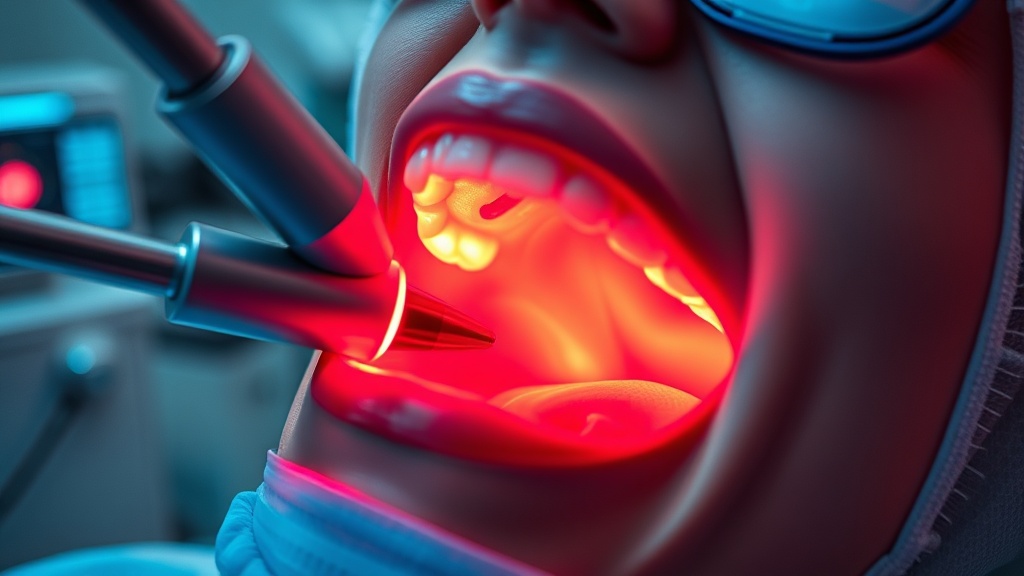
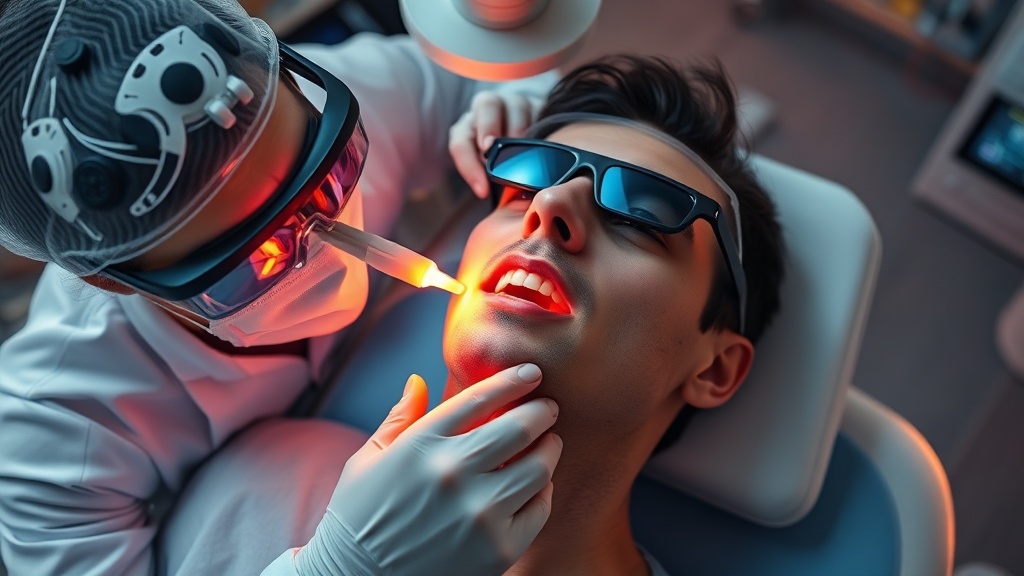
Step 2: Select delivery method. For direct mucosal lesions and OM prevention, intraoral PBM with red wavelength (630–660 nm) applied point-by-point to oral mucosa. For trismus prevention and deeper tissue targets (masseter, temporalis, TMJ, medial pterygoid), extraoral infrared at ~808 nm.
Step 3: Dose parameters for extraoral trismus prevention. Wavelength: 808 nm. Power output: 0.1 W. Energy per point: 3 J. Irradiation time: 30 seconds per point (yielding 107 J/cm²). Apply to anterior temporalis, masseter, TMJ bilaterally, and intraorally to medial pterygoid[3].
Step 4: Treatment frequency and duration. Apply PBM five times weekly, beginning from the first radiotherapy session and continuing until OM healing is confirmed[1]. This is not a once-a-week intervention. Frequency matters.
Step 5: Monitor clinical and biomarker outcomes. Track OM severity grade at each session. If salivary biomarker monitoring is available, collect unstimulated saliva at pre-RT, mid-RT, and final-RT for SOD, GSH, MDA, MPO, IL-6, and IL-10 assessment.
Step 6: Post-RT follow-up. Continue mouth opening measurements at 1, 3, and 6 months post-treatment. Note that the trismus prevention benefit observed during RT may not persist at six months — ongoing monitoring is essential[3].
Related Video
What is photobiomodulation and how does it work for oral mucositis?#
Photobiomodulation is the therapeutic application of red or near-infrared light to tissue, targeting cytochrome c oxidase in mitochondria to enhance cellular energy production and modulate oxidative stress. In oral mucositis, PBM appears to upregulate antioxidant enzymes like SOD and glutathione while reducing inflammatory cytokines, which may protect mucosal tissue from radiation-induced damage[1]. It's applied directly to oral tissue (intraoral) or through the skin (extraoral) depending on the target.
How does intraoral PBM differ from extraoral PBM in clinical outcomes?#
Intraoral PBM delivers light directly to mucosal surfaces and is primarily used for OM lesion management, while extraoral PBM penetrates through skin to reach deeper structures like masticatory muscles and the TMJ. The biomarker study found both approaches modulated oxidative stress similarly[1], and the trismus trial showed extraoral 808 nm NIR significantly prevented mouth opening restriction during radiotherapy (p = 0.005)[3]. Neither is categorically superior — the choice depends on the clinical target.
Why did both IL-6 and IL-10 decrease during PBM treatment?#
Honestly, this is one of the more puzzling findings. IL-6 is pro-inflammatory and IL-10 is anti-inflammatory, so you'd expect them to move in opposite directions. Their parallel decrease suggests PBM may be dampening overall cytokine production rather than selectively suppressing inflammation. The authors interpret this as immune modulation, but I'd want to see a broader cytokine panel and larger sample before concluding what's actually happening at the signaling level.
When should PBM treatment begin relative to radiotherapy?#
Based on the protocols in these studies, PBM should begin at the first radiotherapy session — not after OM develops[1]. This is a preventive strategy. Starting PBM after severe OM has already established is a different clinical scenario with potentially different outcomes. The five-times-weekly frequency from RT initiation is the protocol supported by the current data.
Who is a candidate for PBM during cancer treatment?#
Patients with head and neck squamous cell carcinoma undergoing radiotherapy or chemoradiotherapy are the primary candidates studied. A systematic review also supports PBM for patients with hematologic malignancies receiving chemotherapy[5]. PBM is used as supportive therapy — not as a cancer treatment — and there is no current evidence suggesting it interferes with antitumor efficacy of radiation or chemotherapy.
VERDICT#
Score: 6.5/10
The biomarker data is genuinely interesting. SOD elevation at p < 0.001 across all RT time points in PBM-treated patients is a strong mechanistic signal. The trismus RCT is well-designed — triple-blind, placebo-controlled, and clinically meaningful. But the primary oxidative stress study has 18 patients in the treatment arms. Eighteen. No randomization described, no blinding mentioned, and a healthy control group that wasn't undergoing RT (which complicates every comparison). The systematic review covers only 200 patients across six trials spanning 27 years. I believe PBM works for OM management — the mechanistic plausibility is strong and the direction of evidence is consistent. But the field still suffers from small samples, heterogeneous protocols, and a lack of large multicenter RCTs. The parameters used in the trismus trial are the most precisely reported I've seen recently, and that study earns its credibility. The biomarker study tells us what PBM may be doing, but the evidence base needs to grow before clinical guidelines can be written with real confidence.
References
- 1.Author(s) not listed. Effect of intraoral and extraoral photobiomodulation on salivary oxidative stress and inflammatory cytokines in patients with radiotherapy-induced oral mucositis. Scientific Reports (2026). ↩
- 2.Liu S, et al.. Status of treatment and prophylaxis for radiation-induced oral mucositis in patients with head and neck cancer. Frontiers in Oncology (2021). ↩
- 3.Author(s) not listed. Effects of photobiomodulation on trismus in head and neck cancer patients after radiotherapy: a prospective, randomized, triple-blind, placebo-controlled clinical trial. Lasers in Medical Science (2026). ↩
- 4.Author(s) not listed. Photobiomodulation limits oral ulcer development by regulating the immune response. BMC Oral Health (2025). ↩
- 5.Author(s) not listed. Is photobiomodulation an effective preventive strategy for oral mucositis in patients with hematologic diseases undergoing chemotherapy?: A systematic review of randomized controlled trials. Lasers in Medical Science (2026). ↩
Sova Reld
Sova writes with focused intensity and low tolerance for vague claims. She came to photobiomodulation through personal experimentation and is irritated by both true believers and reflexive skeptics. Her writing has edge: 'The wellness market has done more damage to this field than the skeptics ever could.' She's extremely precise about parameters — wavelength, irradiance, duration — and will tell you when a study used inadequate dosing without apology.
View all articles →