Photobiomodulation for Hashimoto's Thyroiditis: PBM Evidence

SNIPPET: Targeted photobiomodulation (PBM) using red (630–670 nm) and near-infrared (810–850 nm) light applied to the neck may reduce thyroid autoantibodies and improve gland function in Hashimoto's thyroiditis. Clinical trials show significant TPOAb reductions and levothyroxine dose decreases, though evidence remains early-stage and protocols need standardization.
Photobiomodulation for Hashimoto's Thyroiditis: Can Light Therapy Modulate Autoimmune Thyroid Destruction?
THE PROTOHUMAN PERSPECTIVE#
Hashimoto's thyroiditis affects an estimated 5% of the global population, and conventional medicine has one answer: replace the hormone your dying gland can no longer produce. That's it. No intervention targeting the autoimmune destruction itself. No protocol to slow the lymphocytic infiltration chewing through thyroid tissue year after year.
This is why targeted photobiomodulation matters. Not because it's a cure — it isn't — but because it represents the first adjunctive approach with randomized controlled trial data suggesting we can actually modulate the local immune environment of a specific organ using light. For the optimization-minded, this shifts the conversation from passive hormone replacement to active tissue preservation. The thyroid is shallow, vascular, and photosensitive. If PBM works anywhere in autoimmunity, the thyroid is where we'd expect to see it first.
The implications extend beyond Hashimoto's. If targeted cervical PBM can demonstrably reduce autoantibody titers and preserve glandular function, we're looking at a template for organ-specific photobiomodulation across multiple autoimmune conditions.
THE SCIENCE#
What Is Photobiomodulation, and Why the Thyroid?#
Photobiomodulation is the application of specific wavelengths of red and near-infrared light to biological tissue to produce non-thermal therapeutic effects. It is not the same as infrared saunas, heat lamps, or whatever red light panel a wellness influencer is selling on Instagram. The distinction is wavelength, irradiance, and dosimetry — and most consumer devices get at least one of these catastrophically wrong.
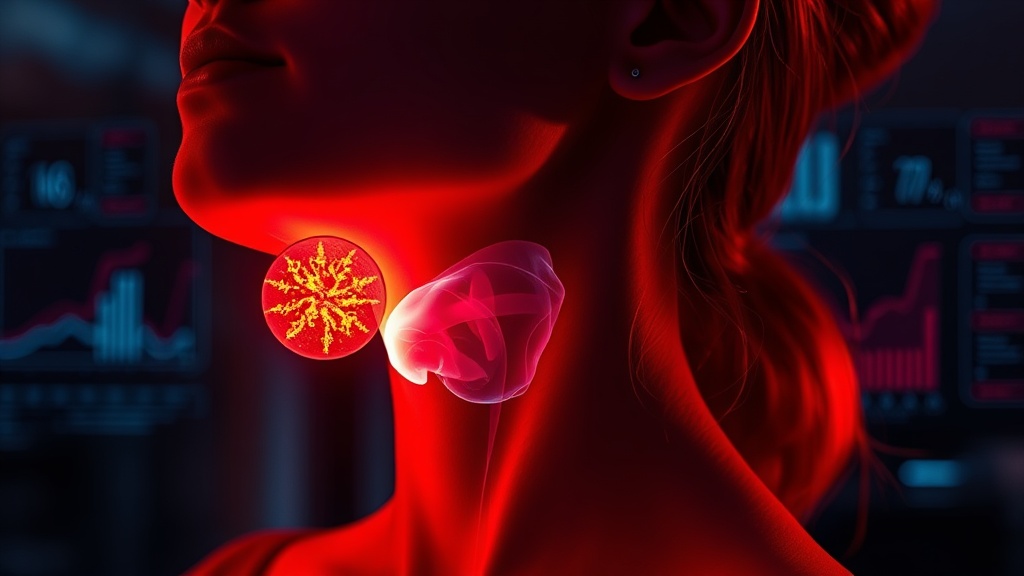
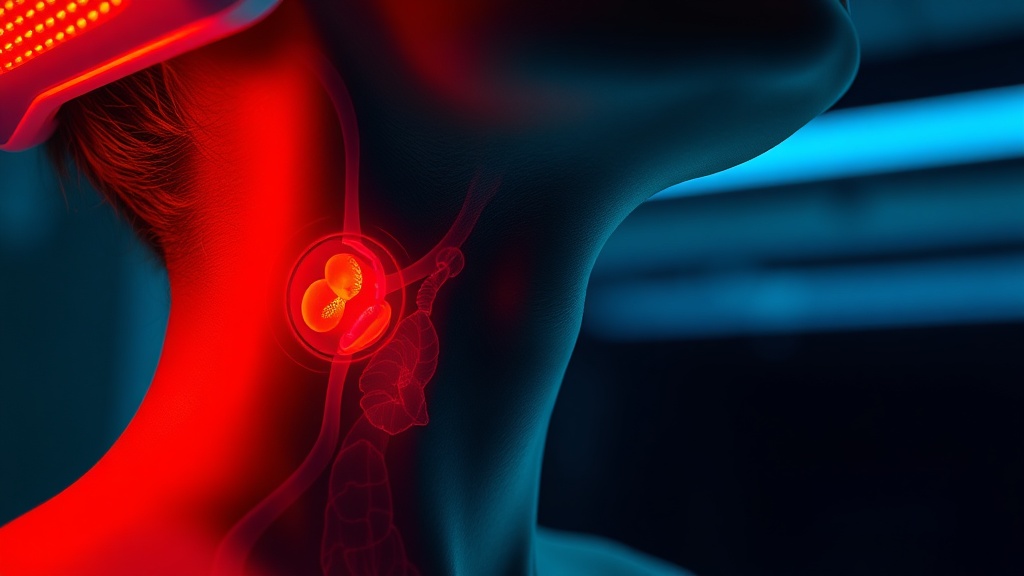
The thyroid gland sits 2–3 cm below the skin surface of the anterior neck, making it one of the most accessible internal organs for transcutaneous light delivery. Near-infrared wavelengths (810–850 nm) penetrate to this depth with minimal attenuation, which is not the case for deeper organs like the liver or pancreas [1]. This anatomical advantage is not trivial. It's the entire reason thyroid-specific PBM has more clinical traction than PBM for, say, autoimmune hepatitis.
The Mitochondrial Mechanism: Cytochrome c Oxidase#
PBM's primary biological target is cytochrome c oxidase (CCO), Complex IV of the mitochondrial electron transport chain. Red and NIR photons are absorbed by CCO's copper and heme centers, displacing inhibitory nitric oxide from the binding site. The result: enhanced mitochondrial efficiency, increased ATP synthesis, and a controlled burst of reactive oxygen species that acts as a signaling molecule rather than a destructive agent [1][4].
This is where the cascade begins. The transient ROS pulse activates nuclear factor erythroid 2-related factor 2 (Nrf2), upregulating antioxidant response elements. Simultaneously, the released NO triggers local vasodilation, improving microcirculation in the irradiated tissue. In a thyroid gland choked by lymphocytic infiltration and progressive fibrosis, restored blood flow isn't a minor detail.
But here's where it gets interesting for autoimmunity specifically.
NF-κB Suppression and Immune Modulation#
The downstream effect that matters most for Hashimoto's is the suppression of NF-κB signaling. NF-κB is the master transcription factor driving pro-inflammatory cytokine production — TNF-α, IL-1β, IL-6 — the same cytokines fueling thyroid parenchymal destruction [4]. Al Balah, Rafie, and Osama's 2025 review in Lasers in Medical Science confirmed that PBM modulates macrophage polarization (shifting M1 pro-inflammatory toward M2 anti-inflammatory phenotypes), suppresses dendritic cell maturation, and influences T-cell differentiation [4].
This isn't hypothetical. These are documented cellular responses at specific wavelength and fluence parameters.
The anti-fibrotic angle deserves attention too. Hashimoto's doesn't just inflame — it scars. Progressive fibrosis replaces functional thyroid tissue, and this is largely irreversible. Early data suggests PBM may attenuate fibrotic remodeling through TGF-β pathway modulation, though I'd want to see dedicated thyroid-specific fibrosis studies before making strong claims here [1].
The Clinical Evidence: What the Trials Actually Show#
The Berisha-Muharremi et al. study presented at the 26th European Congress of Endocrinology (ECE 2024) is the most relevant recent trial [2]. Seventy-four female subjects with Hashimoto's thyroiditis, aged 20–50, were divided into two groups: PBM plus conventional treatment versus conventional treatment alone. The PBM protocol used 820 nm wavelength, 200 mW power output, continuous wave, 20 seconds per point, 32 J/cm² fluence, twice weekly for three consecutive weeks.
Both groups received levothyroxine, vitamin D3 supplementation (for those below 40 ng/dL), and 100 μg daily selenium.
The PBM group showed reductions in anti-TPO and anti-TG antibodies compared to controls. This is the data point that matters. Not thyroid hormone levels — those are easily manipulated with levothyroxine dosing. Antibody reduction suggests actual immunomodulation at the gland level.
Let me push back on this, though. Seventy-four subjects is small. The treatment duration was only three weeks. And the study was presented as a conference abstract, not a full peer-reviewed publication with detailed methodology available for scrutiny. I'm less convinced by conference presentations than by papers where I can read the statistics section myself.
The Hossein-Khannazer et al. 2022 review in Journal of Lasers in Medical Sciences examined the broader LLLT-for-thyroiditis literature and found that across multiple small trials, PBM consistently showed TPOAb reductions, improved thyroid echogenicity on ultrasound (suggesting reduced inflammation and edema), and in some cases, levothyroxine dose reductions [3]. The consistency across trials is encouraging. The sample sizes are not.
The Umbrella View#
A 2025 umbrella review in Systematic Reviews by an international research team assessed PBM across 15 meta-analyses covering 204 RCTs and over 9,000 participants [5]. Autoimmune thyroiditis was not a primary endpoint in this review, but the overall finding is telling: PBM showed significant effects for 12 of 35 health outcomes examined, with the strongest evidence for fibromyalgia, osteoarthritis disability, and cognitive function. Most outcomes had low-to-moderate certainty of evidence due to heterogeneity and small-study effects.
The honest assessment: PBM works for something. The question is whether thyroid autoimmunity is one of those somethings, and we don't have definitive large-scale evidence yet.
PBM Effect Sizes Across Health Conditions (eSMD)
COMPARISON TABLE#
| Method | Mechanism | Evidence Level | Cost | Accessibility |
|---|---|---|---|---|
| Levothyroxine (Standard of Care) | Exogenous T4 replacement; does not address autoimmunity | High (decades of RCT data) | Low (~$10–30/month) | Universal (prescription) |
| Targeted Cervical PBM (820 nm) | CCO activation, NF-κB suppression, local immunomodulation | Low-Moderate (small RCTs, conference data) | Moderate ($200–800 device; clinics $50–150/session) | Growing (clinics, consumer devices) |
| Selenium Supplementation (200 μg) | Selenoprotein-mediated antioxidant activity; modest TPOAb reduction | Moderate (multiple RCTs, mixed results) | Low (~$5–15/month) | Universal (OTC) |
| Low-Dose Naltrexone (LDN) | Opioid receptor antagonism; immune modulation | Low (case series, small trials) | Low (~$30–50/month compounded) | Limited (off-label prescription) |
| Whole-Body Red Light Panels | Systemic PBM; non-targeted wavelengths | Very Low (no thyroid-specific trials) | High ($300–2,000+ device) | Wide (consumer market) |
THE PROTOCOL#
Based on the available clinical parameters from published trials, here is a structured protocol for targeted thyroid PBM. This is not medical advice — it is a summary of research protocols for discussion with your healthcare provider.
-
Select the correct device and wavelength. You need a device capable of delivering 810–850 nm near-infrared light. Some protocols also incorporate 630–670 nm red light. Wavelength matters. Not 940 nm. Not 1060 nm. Not broadband infrared. The chromophore target — cytochrome c oxidase — has specific absorption peaks. A 200 mW output minimum is consistent with the Berisha-Muharremi trial parameters [2].
-
Determine irradiance and fluence. Target 32 J/cm² per point on the anterior neck, delivered at approximately 200 mW in continuous wave mode. This requires roughly 20 seconds per application point with a ~0.125 cm² spot size. If you're using a larger aperture device, calculate the adjusted time: fluence (J/cm²) = power density (W/cm²) × time (seconds).
-
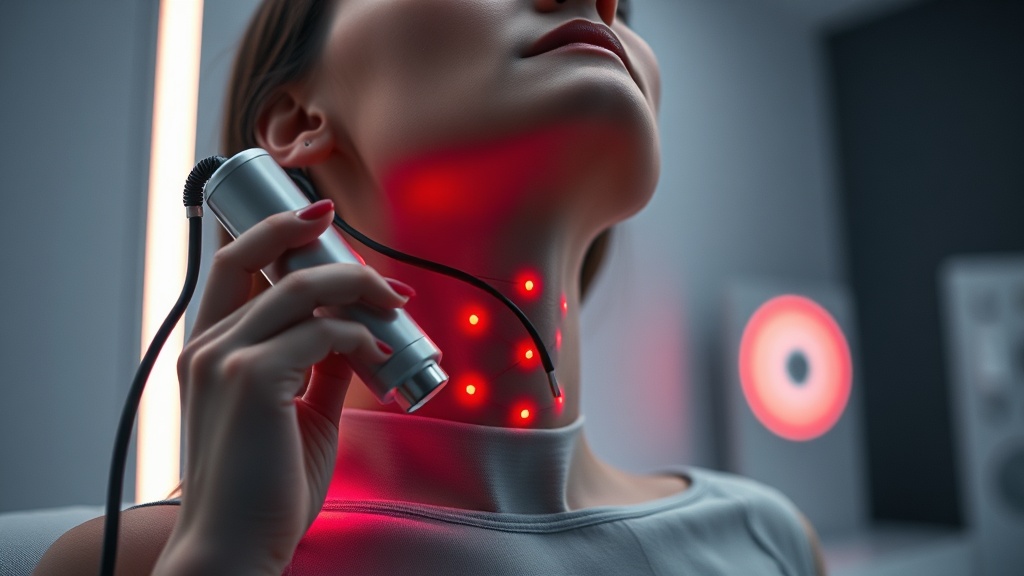
Map application points. Apply light to 4–6 points distributed across the anterior cervical region, covering both thyroid lobes. Direct contact with skin yields better energy transfer than holding the device at a distance. Keep the device perpendicular to the skin surface.
-
Set the treatment schedule. The clinical protocol used twice-weekly sessions for three consecutive weeks (6 sessions total) as an initial loading phase [2]. Some practitioners extend to 8–12 weeks. Optimal duration for Hashimoto's is not established.
-
Maintain conventional treatment. Do not reduce or discontinue levothyroxine without physician supervision and serial thyroid function testing. PBM is adjunctive. Continue selenium (100–200 μg/day) and vitamin D optimization (target >40 ng/dL) as used in the clinical protocols.
-
Track biomarkers. Measure TPOAb, TgAb, TSH, free T3, and free T4 at baseline, 6 weeks, and 12 weeks. Thyroid ultrasound at baseline and 3 months can document changes in echogenicity and gland volume. Without measurement, you're guessing.
-
Reassess at 12 weeks. If antibody titers show meaningful decline (>20% reduction in TPOAb from baseline), the protocol may warrant continuation. If no change, the intervention isn't working for you. Move on.
Related Video
What is photobiomodulation for Hashimoto's thyroiditis?#
Photobiomodulation for Hashimoto's is the targeted application of red and near-infrared light (630–850 nm) to the neck to modulate the local autoimmune inflammatory response in the thyroid gland. It works primarily by activating cytochrome c oxidase in thyroid cell mitochondria, enhancing ATP production, reducing inflammatory signaling, and improving local blood flow. It is used as an adjunctive therapy alongside standard levothyroxine treatment, not as a replacement.
How effective is PBM at reducing thyroid antibodies?#
Small randomized controlled trials have shown statistically significant reductions in TPOAb and TgAb titers in PBM-treated groups compared to controls receiving conventional treatment alone [2][3]. However, the sample sizes are modest (under 100 subjects), treatment durations are short, and long-term follow-up data is limited. I wouldn't call it proven — I'd call it promising enough to warrant larger trials.
Who should consider targeted thyroid PBM?#
Individuals with confirmed Hashimoto's thyroiditis who have persistently elevated autoantibodies despite adequate levothyroxine replacement and who are interested in adjunctive strategies may discuss PBM with their endocrinologist. It is not appropriate for undiagnosed thyroid conditions, active thyroid cancer, or as a substitute for hormone replacement therapy. Pregnant individuals should avoid cervical PBM until safety data is available.
Why don't whole-body red light panels work the same way?#
Whole-body panels deliver diffuse, non-targeted irradiation. The thyroid requires specific wavelengths at sufficient fluence to penetrate 2–3 cm to the gland. Most consumer panels are designed for skin-level penetration and do not deliver the concentrated energy density (32 J/cm²) used in clinical thyroid protocols [1]. Targeted is not optional here — it's the entire point.
When might PBM become standard of care for Hashimoto's?#
Honestly, we're years away. The current evidence base includes small RCTs and conference presentations. We need multi-center trials with 500+ participants, standardized dosimetry, long-term follow-up (2+ years), and direct comparison with other immunomodulatory strategies. The mechanism is sound. The clinical proof is still accumulating.
VERDICT#
Score: 6.5/10
The biophysics is real. Cytochrome c oxidase absorbs these wavelengths. The downstream cascade — ATP enhancement, NO release, NF-κB suppression — is well-documented at the cellular level. The thyroid's anatomical accessibility gives PBM a genuine advantage here that doesn't exist for most organs.
But the clinical data is thin. Small trials, short durations, conference abstracts. The Berisha-Muharremi trial is the best we have for thyroid-specific PBM in Hashimoto's, and it's 74 subjects over three weeks. I've changed my own protocols based on less, but I wouldn't tell someone to invest $500+ in a device based on this evidence alone.
What I will say: if you already have a quality NIR device with the right specs, pointing it at your thyroid twice a week costs you nothing but time. The risk profile is exceptionally low. The potential upside — actual autoantibody reduction, potential levothyroxine dose reduction — is meaningful for the millions living with progressive glandular destruction that no current standard therapy addresses.
Watch this space. The mechanism deserves better trials than it's gotten.
References
- 2.Berisha-Muharremi V, Tahirbegolli B, Phypers R, Hanna R. Efficacy of Photobiomodulation as an additional Therapy in Hashimoto Thyroiditis. Endocrine Abstracts (2024). ↩
- 3.Hossein-Khannazer N, Kazem Arki M, Keramatinia A, Rezaei-Tavirani M. Low-Level Laser Therapy in the Treatment of Autoimmune Thyroiditis. Journal of Lasers in Medical Sciences (2022). ↩
- 4.Al Balah OF, Rafie M, Osama A. Immunomodulatory effects of photobiomodulation: a comprehensive review. Lasers in Medical Science (2025). ↩
- 5.Author(s) not listed. Effects of photobiomodulation on multiple health outcomes: an umbrella review of randomized clinical trials. Systematic Reviews (2025). ↩
Sova Reld
Sova writes with focused intensity and low tolerance for vague claims. She came to photobiomodulation through personal experimentation and is irritated by both true believers and reflexive skeptics. Her writing has edge: 'The wellness market has done more damage to this field than the skeptics ever could.' She's extremely precise about parameters — wavelength, irradiance, duration — and will tell you when a study used inadequate dosing without apology.
View all articles →