Photobiomodulation for Trismus in Head and Neck Cancer: RCT Results

THE PROTOHUMAN PERSPECTIVE#
Trismus — the inability to fully open your mouth — sounds minor until you can't eat, speak, or breathe properly. For the estimated 69% of head and neck cancer patients who develop it after radiotherapy, it's a cascading disaster: nutritional decline, speech impairment, compromised oral hygiene, and a quality of life collapse that most oncology teams still treat as an afterthought. The new Borges et al. trial is the first triple-blind, placebo-controlled study to apply photobiomodulation preventively during IMRT/VMAT — not after damage is already done. That distinction matters. The data suggests PBMT can hold the line on mouth opening during radiation, buying patients functional time when they need it most. But I want to be clear about the limits: the effect vanished at six months. This isn't a cure. It's a holding pattern. And holding patterns, in oncology supportive care, are still worth paying attention to.
THE SCIENCE#
What Is Radiation-Induced Trismus?#
Radiation-induced trismus (RIT) is fibrotic restriction of the masticatory muscles — primarily the masseter, medial pterygoid, and temporalis — caused by ionizing radiation damage during head and neck cancer treatment. The clinical threshold is a maximum mouth opening (MMO) of ≤35 mm[1]. For context, normal MMO ranges from 40–60 mm. Drop below 35 and basic functions — chewing, dental access, even intubation — become compromised.
Up to 69% of head and neck cancer patients develop trismus after radiotherapy, according to prevalence data cited by Borges et al.[1]. That's not a rare side effect. That's the majority.
The underlying pathology involves radiation-triggered fibroblast activation, collagen deposition, and progressive tissue fibrosis. Think of it as scarring at the cellular level — the masticatory muscles lose their elasticity and contractile range. Once established, RIT is notoriously difficult to reverse.
The Borges et al. Trial: Parameters and Outcomes#
Here's what they actually did. Forty-six patients undergoing IMRT or VMAT for head and neck cancer were randomized equally into PBMT and placebo groups — triple-blind, which means patients, clinicians, and assessors were all blinded. That's rare in PBM research and immediately raises the credibility floor.
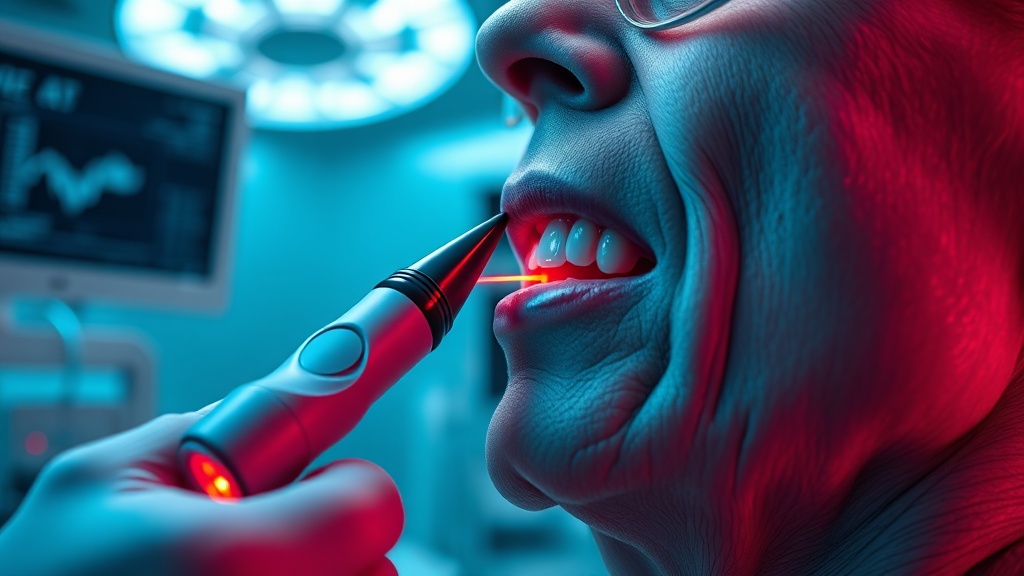
The protocol: extraoral infrared laser at ~808 nm, 0.1 W continuous wave, 3 J per point, 30 seconds per point (107 J/cm²). Application sites: anterior temporalis, masseter, temporomandibular joint (extraoral), and medial pterygoid (intraoral). Daily application during the radiotherapy course.
The results during radiotherapy were statistically significant. The PBMT group showed a significantly smaller reduction in mouth opening compared to placebo (p = 0.005). Prevalence of masticatory muscle pain and grade 1 trismus was also lower in the PBMT group (p = 0.002)[1].
But here's where it gets complicated.
At the six-month follow-up, mouth opening did not differ between groups. The protective effect was transient. No significant differences were observed in the DMFT index, OHIP-14 quality of life scores, or Anderson Symptom and Overall Performance scores between groups at any time point[1].
Mechanism: Why Would Light Help Fibrosis?#
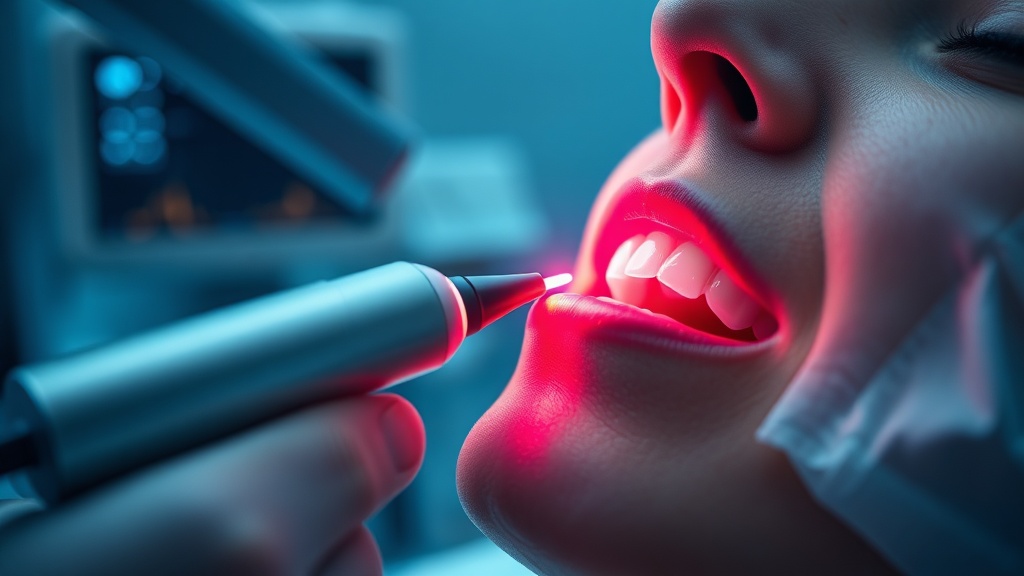
The proposed mechanism runs through cytochrome c oxidase in the mitochondrial electron transport chain. Near-infrared photons at 808 nm are absorbed by this chromophore, which may upregulate ATP synthesis and modulate nitric oxide release[1]. The downstream cascade — at least in preclinical models — involves reduced pro-inflammatory cytokine expression, attenuated fibroblast hyperactivation, and improved local microcirculation.
I say "may" and "proposed" deliberately. The mechanistic evidence for PBM in fibrosis prevention is largely drawn from in vitro and animal models. Karu et al. demonstrated that cellular effects of low-power laser therapy can be mediated by nitric oxide release from cytochrome c oxidase, but extrapolating that to human masticatory muscle fibrosis involves several leaps[1]. The Borges trial gives us a clinical signal. It does not give us a confirmed mechanism.
The Combination Approach: Aboelez et al.#
A parallel RCT by Aboelez et al. compared three modalities for treating (not preventing) established radiation-induced trismus: threaded tapered screw appliance (TTSA) alone, low-level laser therapy alone, and TTSA combined with LLLT[2].
Thirty-six patients, 12 per group. At six months, the combined TTSA + LLLT group showed the greatest improvement in MMO, lowest VAS pain scores, and best Gothenburg Trismus Questionnaire outcomes, all with statistical significance (p < 0.0001)[2].
The combination outperformed either modality alone. Worth noting: this was a treatment study, not a prevention study. Different clinical question, different patient population (established trismus vs. patients about to undergo RT).
The Broader Evidence Landscape#
Anarte-Lazo et al. conducted a scoping review of 24 RCTs evaluating rehabilitation interventions for treatment-induced trismus in HNC patients[3]. Their finding should give everyone pause: the theoretical justification for most interventions is poorly articulated, and the underlying mechanisms remain poorly understood. Thirteen studies focused on prevention (primarily exercise therapy), while the rest addressed established trismus using exercise, manual therapy, electrotherapy, or combined approaches.
The honest answer is that the field is fragmented. Exercise protocols vary wildly, PBM parameters differ between studies, and outcome measures aren't standardized. Anarte-Lazo et al. explicitly call for future research guided by theoretical models[3]. I agree. We're still building the evidence base, not summarizing it.
Trismus Prevention and Treatment Outcomes Across Studies
COMPARISON TABLE#
| Method | Mechanism | Evidence Level | Cost | Accessibility |
|---|---|---|---|---|
| PBMT (~808 nm, preventive) | Mitochondrial photon absorption → anti-inflammatory cascade, reduced fibroblast activation | Single RCT (n=46), triple-blind, placebo-controlled | Moderate (clinical laser device ~$3,000–$8,000) | Requires trained clinician; not widely available in oncology settings |
| TTSA (Threaded Tapered Screw) | Mechanical forced mouth opening → stretching of fibrotic tissue | Single RCT (n=36), parallel design | Low ($50–$200 per device) | Patient self-administered after training |
| TTSA + LLLT (Combined) | Mechanical stretch + photobiomodulation synergy | Single RCT (n=36), parallel design | Moderate–High | Requires both device and clinician |
| Exercise therapy (jaw stretching) | Active/passive range of motion → tissue remodeling | Multiple RCTs, variable quality | Very low | Self-administered; high compliance variability |
| TheraBite® device | Passive jaw motion stretching | Limited RCTs | Moderate ($200–$500) | Patient self-administered |
THE PROTOCOL#
For clinicians considering PBMT as a preventive adjunct during head and neck radiotherapy, the following protocol is based on the Borges et al. parameters. This is not a consumer biohacking protocol. This requires clinical supervision, appropriate laser equipment, and patient selection.
Step 1: Confirm patient eligibility — patients undergoing IMRT or VMAT for head and neck cancer, without pre-existing trismus or TMJ disorders that would confound measurement. Baseline MMO should be recorded using standardized calipers.
Step 2: Equipment setup — use a calibrated infrared diode laser at approximately 808 nm wavelength. Set to continuous wave mode, 0.1 W (100 mW) output power. Energy per point: 3 J. Exposure time: 30 seconds per point. This yields an energy density of approximately 107 J/cm² per point[1].
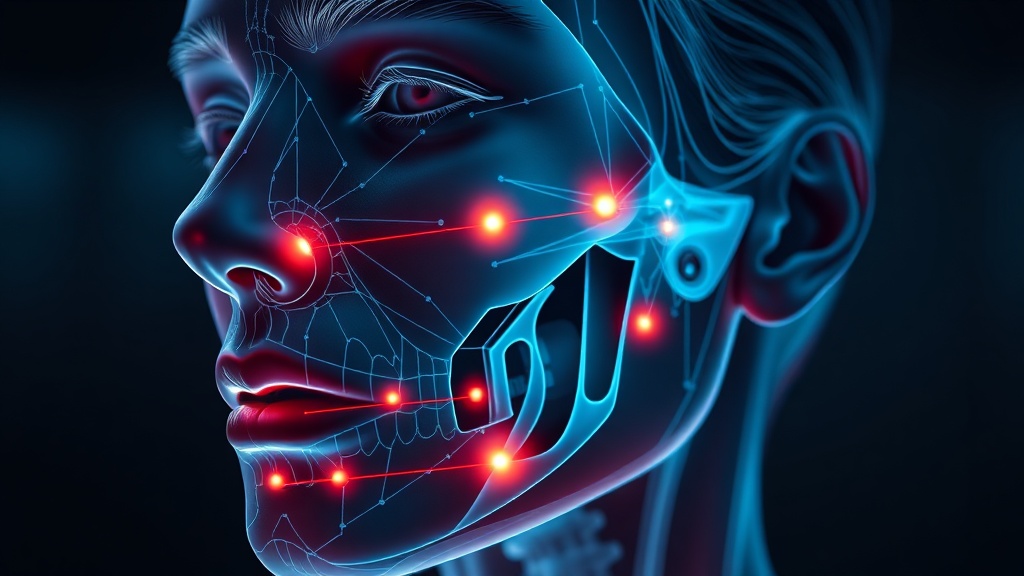
Step 3: Application sites — apply extraorally to bilateral anterior temporalis muscles, masseter muscles, and temporomandibular joints. Apply intraorally to the medial pterygoid muscles. Maintain consistent probe contact and perpendicular angle to tissue surface.
Step 4: Treatment frequency — daily sessions throughout the radiotherapy course. Each session covers all application sites bilaterally.
Step 5: Monitoring — measure MMO daily using digital or manual calipers. Record VAS pain scores for mouth opening and masticatory muscle palpation. Track any adverse events, though the Borges trial reported none.
Step 6: Post-RT follow-up — continue monitoring MMO at regular intervals (1 month, 3 months, 6 months). Based on current evidence, the PBMT protective effect may not persist beyond the active treatment period[1]. Consider complementary interventions (jaw exercises, mechanical stretching devices) for sustained benefit.
Step 7: For established trismus, early data from Aboelez et al. suggests combining LLLT with mechanical stretching (TTSA) may yield superior outcomes to either modality alone[2]. If you choose to trial this combination, the LLLT parameters in that study should be referenced separately, as they differ from the Borges prevention protocol.
What is photobiomodulation therapy and how does it work for trismus?#
Photobiomodulation therapy uses specific wavelengths of light — typically in the red to near-infrared range (600–1000 nm) — to modulate cellular processes. For trismus, the proposed mechanism involves photon absorption by cytochrome c oxidase in mitochondria, which may enhance ATP production and suppress inflammatory pathways that drive radiation-induced fibrosis. The evidence for this mechanism in human masticatory muscles specifically is still developing.
How effective is PBMT at preventing radiation-induced trismus?#
In the Borges et al. triple-blind RCT, PBMT significantly reduced the decline in mouth opening during radiotherapy (p = 0.005) and lowered the prevalence of masticatory muscle pain and grade 1 trismus (p = 0.002)[1]. However — and this is the part most people will skip — the effect did not persist at six months post-treatment. So "effective during treatment" is accurate. "Effective long-term" is not supported by this data.
Who should consider PBMT for trismus prevention?#
Based on current evidence, candidates are patients undergoing IMRT or VMAT for head and neck cancer who are at high risk for trismus — particularly those receiving radiation to fields that include the masticatory muscles. This is a clinical intervention requiring professional administration. I'd want to see this replicated in a larger trial before calling it standard of care, but the signal is real enough to justify discussing with your radiation oncology team.
Why doesn't the protective effect last beyond radiotherapy?#
Honestly, we don't know yet. One hypothesis: PBMT may suppress acute inflammatory processes during active radiation exposure but cannot prevent the slower fibrotic remodeling that continues for months after RT ends. The fibrosis pathway has momentum. Light therapy during treatment may slow the initial damage but not halt the downstream collagen deposition. This needs dedicated mechanistic research.
How does PBMT compare to jaw exercise protocols for trismus?#
Exercise therapy (active and passive jaw stretching) has a longer evidence history but highly variable outcomes — partly because protocols, compliance, and outcome measures differ enormously across studies[3]. PBMT offers a passive, clinician-administered approach that doesn't depend on patient compliance. The Aboelez et al. data suggests combining mechanical stretching with LLLT may be superior to either alone[2]. I'd lean toward combination approaches for established trismus, and PBMT as adjunctive prevention during RT.
VERDICT#
Score: 6.5/10
The Borges et al. trial is genuinely well-designed — triple-blind, placebo-controlled, and registered. That alone puts it ahead of most PBM research in this space. The during-treatment effect on mouth opening and muscle pain is statistically significant and clinically meaningful. But 46 patients is still a small sample. The effect disappearing at six months is a real limitation, not a minor footnote. And the quality of life measures (OHIP-14, Anderson scores) showed no between-group differences, which tempers the clinical enthusiasm. I'm cautiously positive. This is a credible signal that PBMT can reduce acute trismus burden during radiotherapy. It is not yet evidence that it changes long-term outcomes. The field needs larger, multi-center replication with longer follow-up and standardized outcome measures. Wavelength matters. Irradiance matters. Time matters. And right now, sample size matters most.
References
- 1.Borges MM, Malta CE, Ribeiro RS, Cetira-Filho EL, de Moura JF, Rebouças LM, Costa FW, Silva PB, Mota MR. Effects of photobiomodulation on trismus in head and neck cancer patients after radiotherapy: a prospective, randomized, triple-blind, placebo-controlled clinical trial. Lasers in Medical Science (2026). ↩
- 2.Aboelez MA, Ibrahim AM, ElSawy MA, Sayed El-Khamisy NE. Efficiency of different treatment modalities on radiation induced trismus for maxillofacial cases: a parallel randomized clinical trial. BMC Oral Health (2025). ↩
- 3.Anarte-Lazo E, Bravo-Vazquez A, Bernal-Utrera C, Torres-Lagares D, Falla D, Rodríguez-Blanco C. The Rationale and Explanation for Rehabilitation Interventions in the Management of Treatment-Induced Trismus in People with Head and Neck Cancer: A Scoping Review of Randomized Controlled Trials. Medicina (Kaunas) (2025). ↩
- 4.Borghesi Brunelli G, Pinheiro S. Combined extraoral and intraoral photobiomodulation for the prevention and management of oral mucositis and Xerostomia caused by the treatment of head and neck cancers. Lasers in Medical Science (2025). ↩
Sova Reld
Sova writes with focused intensity and low tolerance for vague claims. She came to photobiomodulation through personal experimentation and is irritated by both true believers and reflexive skeptics. Her writing has edge: 'The wellness market has done more damage to this field than the skeptics ever could.' She's extremely precise about parameters — wavelength, irradiance, duration — and will tell you when a study used inadequate dosing without apology.
View all articles →