Photobiomodulation Therapy for Musculoskeletal Pain: Evidence Review

THE PROTOHUMAN PERSPECTIVE#
Twenty percent of the global adult population lives with chronic musculoskeletal pain. That's not a niche problem — it's a species-wide performance bottleneck. Every compromised joint, every inflamed tendon, every herniated disc represents lost adaptive capacity. The pharmaceutical response has been predictable: NSAIDs, opioids, gabapentinoids. Partial relief. Significant side effects. Dependency risks.
PBMT offers something different. Not a molecule you swallow, but photons you absorb. The mechanism targets the mitochondrial electron transport chain directly — the same organelle that powers every cellular process from muscle contraction to neural signaling. When we talk about optimizing human performance, we're ultimately talking about optimizing energy production at the cellular level. This is where light-based therapy intersects with the core biohacking thesis: that the body's repair systems can be upregulated through precise, targeted interventions.
The latest systematic review, published March 2026, consolidates evidence that has been accumulating for decades but has never been properly synthesized into actionable protocols. That changes now.
THE SCIENCE#
What PBMT Actually Does at the Cellular Level#
Photobiomodulation therapy applies non-ionizing light in the red to near-infrared spectrum (600–1,000 nm) to biological tissues. The primary chromophore — the molecule that absorbs the light — is cytochrome c oxidase (CCO), a key enzyme in the mitochondrial electron transport chain [4]. When CCO absorbs photons in this wavelength range, it dissociates inhibitory nitric oxide from its binding site, restoring electron flow and increasing mitochondrial membrane potential. The downstream effects cascade: increased ATP production, a transient burst of reactive oxygen species (ROS) that activates redox-sensitive transcription factors like NF-κB, and upregulation of anti-inflammatory cytokines [2][4].
This isn't speculative. The CCO mechanism has been documented across multiple cell types and confirmed via spectroscopic analysis. What remains debated — and I'll get to this — is how reliably these cellular effects translate to clinical outcomes across different tissue depths, skin types, and device configurations.
The 2026 Systematic Review: 53 Studies, ~2,800 Patients#
The March 2026 review published in Sport Sciences for Health by Al Timimi and colleagues represents one of the most extensive consolidations of PBMT evidence for musculoskeletal conditions to date [1]. Fifty-three studies spanning randomized controlled trials, pilot studies, and comparative cohorts were analyzed. The protocols used wavelengths between 630 and 904 nm with energy densities of 4–100 J/cm².
Here's what the data shows:
- Mean VAS pain reduction: 32% (range 28–40%) compared to sham across knee osteoarthritis, tendinopathies, low back pain, and postoperative pain
- Functional score improvements: 18–25% on validated scales (WOMAC for knee OA, ODI for back pain, NDI for neck disability)
- Prehabilitative PBMT decreased postoperative pain by 18% and accelerated recovery by approximately 10 days
- Exercise adjunct use improved strength outcomes by 25% and decreased delayed-onset muscle soreness (DOMS) by 30%
- Home-based protocols achieved 85% compliance with a 22% VAS pain reduction at 12 weeks
- Zero serious adverse events reported across the entire dataset
That 32% pain reduction is meaningful but not earth-shattering. For context, NSAIDs typically achieve 25–35% pain reduction in similar populations, but with gastrointestinal and cardiovascular risks that accumulate with chronic use. PBMT achieves comparable analgesia with a safety profile that makes NSAIDs look reckless by comparison.
The Neuropathic Pain Angle#
Chacur, Watkins, Rocha, and Martins published a complementary review in Frontiers in Photonics (December 2025) focusing specifically on PBMT for neuropathic pain [2]. The mechanism here extends beyond simple mitochondrial activation. In neuropathic pain models — chronic constriction injury, spared nerve injury, diabetic neuropathy — PBMT modulates glial cell activation, reduces pro-inflammatory cytokines (TNF-α, IL-1β, IL-6), and upregulates brain-derived neurotrophic factor (BDNF), which supports neural repair and plasticity.
The catch, though. Most of this neuropathic evidence is preclinical. Mouse models. Rat sciatic nerve ligation. The analgesic effects are consistent across these models, and the neuroprotective outcomes are encouraging. But I'd want to see this replicated in large human RCTs before anyone starts claiming PBMT "treats" neuropathy. The authors themselves acknowledge this gap — they call for standardized protocols, exploration of remote/systemic PBMT strategies, and investigation of sex-based response differences [2].
That last point matters more than most people realize. Hormonal differences affect inflammation pathways. Skin pigmentation affects photon penetration depth. If your PBMT protocol doesn't account for the person receiving the light, you're just pointing a device and hoping.
The Chronic Pain Systematic Review#
Cabral Oliveira, Santos, and colleagues published a February 2026 systematic review in Frontiers in Integrative Neuroscience covering 14 RCTs specifically examining PBMT for chronic pain conditions [3]. Their populations included fibromyalgia, peripheral neuropathies, orofacial pain, and musculoskeletal pain.
The signal was strongest for fibromyalgia and neuropathy — conditions where conventional pharmacotherapy performs worst. Low adverse event incidence across all trials reinforced PBMT's safety profile. But here's my frustration with this literature: the heterogeneity of technical parameters across trials makes comparison nearly impossible. Wavelength, energy density, pulse mode, treatment duration, spot size — they're all over the place. You can't build a protocol from 14 studies that each used different parameters.
This is the field's central problem, and it has been for twenty years.
PBMT Outcomes vs. Sham in Musculoskeletal Rehabilitation
COMPARISON TABLE#
| Method | Mechanism | Evidence Level | Cost | Accessibility |
|---|---|---|---|---|
| PBMT (630–904 nm) | Mitochondrial CCO activation, anti-inflammatory cytokine modulation, ROS signaling | Moderate-High (53 studies, ~2,800 patients; multiple systematic reviews) | $200–$2,000 for consumer devices; $30–$80/clinical session | Growing — clinical and home-based options available |
| NSAIDs (oral) | COX-1/COX-2 inhibition, prostaglandin suppression | High (decades of RCTs, meta-analyses) | $5–$30/month | Universal — OTC availability |
| Transcutaneous Electrical Nerve Stimulation (TENS) | Gate control theory, endorphin release | Moderate (mixed results in systematic reviews) | $30–$150 for consumer units | High — widely available OTC |
| Corticosteroid Injection | Glucocorticoid-mediated inflammation suppression | High for short-term; weak for long-term | $100–$300/injection | Requires clinical administration |
| Exercise Therapy Alone | Neuromuscular adaptation, endorphin release, mechanotransduction | High (gold standard for MSK rehab) | Free to low cost | Universal |
| PBMT + Exercise (Combined) | Synergistic: mitochondrial priming + mechanical loading | Moderate-High (25% strength gain, 30% DOMS reduction vs. exercise alone) | Additive cost of both modalities | Requires planning but feasible |
THE PROTOCOL#
Based on the parameters most consistently associated with positive outcomes across the reviewed literature, here is a structured approach. A disclaimer: optimal dosing in humans is not fully established, and individual response varies. If you choose to trial this, start conservatively.
Step 1: Select the Right Wavelength and Device The evidence clusters around two wavelength windows: 630–660 nm (red) for superficial tissues (skin, tendons within 1–2 cm of surface) and 808–904 nm (near-infrared) for deeper structures (joints, deep muscle, nerve). If you're treating knee osteoarthritis or low back pain, you need NIR. A 630 nm panel won't reach the joint capsule. Laser-based devices deliver coherent, collimated light with superior tissue penetration compared to LED panels — this distinction matters and most consumer marketing ignores it entirely [6].
Step 2: Establish Energy Density Parameters The systematic review data supports energy densities between 4 and 12 J/cm² per treatment point for most musculoskeletal applications [1][5]. Higher densities (up to 100 J/cm²) appeared in some protocols, but the biphasic dose response (Arndt-Schulz curve) means more is not better. Excessive dosing can inhibit the very cellular processes you're trying to stimulate. Calculate your dose: Power (W) × Time (s) / Spot area (cm²) = Energy density (J/cm²).
Step 3: Treatment Timing and Frequency For prehabilitation: begin 3–5 sessions before surgery, targeting the surgical site with NIR wavelengths. For exercise enhancement: apply PBMT immediately before training — pre-exercise application showed the strongest evidence for strength gains and DOMS reduction [1][6]. For chronic pain management: 3 sessions per week for 4–8 weeks, then reassess. Home-based protocols achieved meaningful results with consistent use over 12 weeks [1].
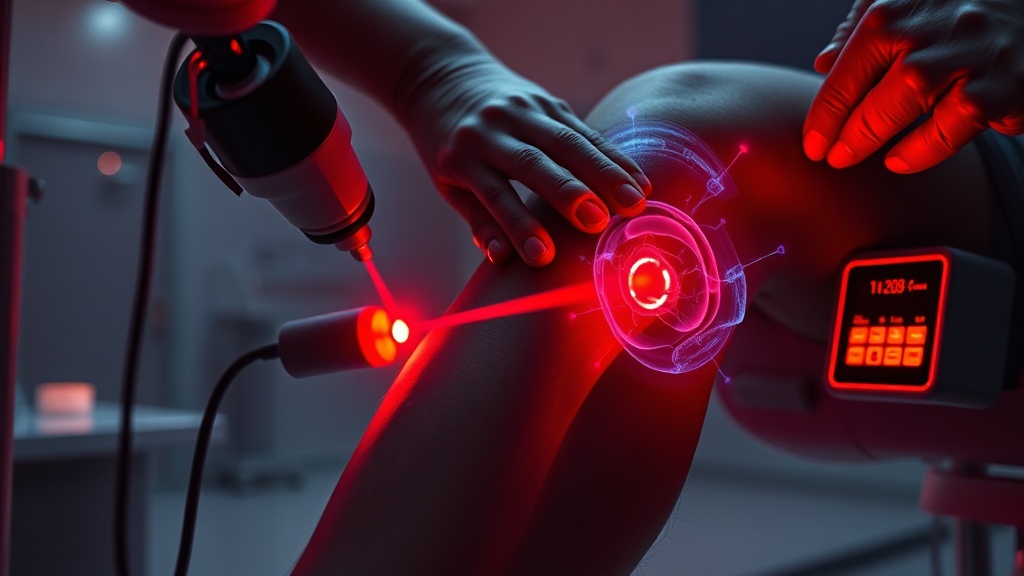
Step 4: Application Technique Direct skin contact with the probe or panel. No clothing, no barriers. Grid pattern across the treatment area — don't just aim at the point of maximum pain. For knee OA, treat medial and lateral joint lines, the suprapatellar region, and the popliteal fossa. For low back pain, bilateral paraspinal application at the affected segments. Hold each point for 30–60 seconds depending on your power output and target J/cm².
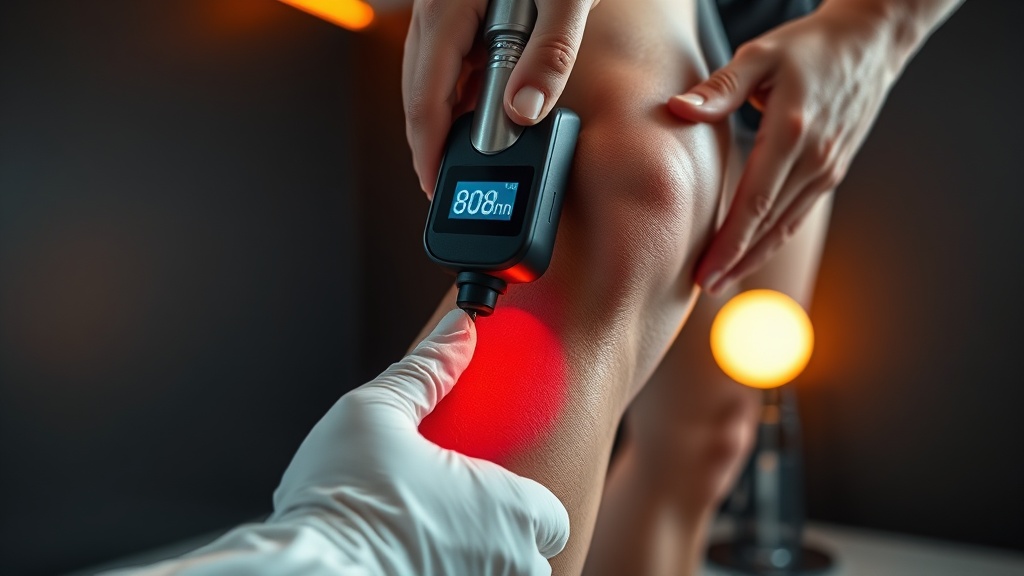
Step 5: Combine with Exercise Therapy PBMT is not a standalone intervention for musculoskeletal rehabilitation. The strongest outcomes occurred when PBMT was combined with structured exercise [1][5]. Use PBMT to reduce pain and prime mitochondrial function, then load the tissue. The 25% strength improvement and 30% DOMS reduction seen in the Al Timimi review were specifically in combined protocols.
Step 6: Track and Adjust Use a validated pain scale (VAS or NRS) weekly. Track functional metrics relevant to your condition — range of motion, grip strength, walking distance, whatever applies. If you don't see measurable improvement by week 4, reassess your parameters before concluding PBMT doesn't work for you. The device, the dose, and the application technique all need to be right simultaneously. Most failures are parameter failures.
Related Video
What is photobiomodulation therapy and how does it differ from heat therapy?#
PBMT uses specific wavelengths of red and near-infrared light (600–1,000 nm) to trigger photochemical reactions in mitochondria — primarily through cytochrome c oxidase activation. It is explicitly non-thermal; the therapeutic effect comes from photon absorption, not tissue heating. Infrared saunas and heat packs work through entirely different mechanisms (vasodilation via thermal energy). Conflating the two is one of the most common mistakes in the consumer wellness space.
How long does it take for PBMT to show results in musculoskeletal pain?#
In the clinical trials reviewed, meaningful pain reduction (≥20% VAS decrease) typically appeared within 2–4 weeks of consistent treatment at 3 sessions per week [1][3]. Prehabilitative applications showed benefits within the first post-surgical week. Home-based protocols demonstrated sustained improvement at 12 weeks with 85% adherence. Individual response varies — tissue depth, skin pigmentation, device quality, and dosing accuracy all influence timelines.
Why do some PBMT studies show no effect?#
Parameter variability is the primary culprit. A study using inadequate energy density, wrong wavelength for the target tissue depth, or insufficient treatment duration will produce null results — and then get cited as evidence that PBMT "doesn't work." The 2025 Journal of Translational Medicine review specifically flagged that negative outcomes clustered in trials with non-standardized dosimetry and inconsistent energy delivery [4]. Device type also matters: LED panels and laser probes have fundamentally different beam characteristics.
Who should avoid photobiomodulation therapy?#
PBMT is contraindicated over active malignancies (light may stimulate tumor cell metabolism), directly over the eyes without protective eyewear, and over the thyroid in patients with thyroid disorders unless specifically directed by a clinician. Pregnant women should avoid abdominal application. Beyond these, the safety profile across the reviewed literature was exceptional — zero serious adverse events across approximately 2,800 patients [1].
How does PBMT compare to TENS for chronic musculoskeletal pain?#
PBMT and TENS operate through entirely different mechanisms. TENS modulates pain signaling at the spinal cord level (gate control theory) while PBMT targets cellular bioenergetics and inflammatory pathways at the tissue level. The evidence base for PBMT in musculoskeletal conditions is currently stronger, with a 32% mean VAS reduction versus sham [1], while TENS systematic reviews show more mixed results. They're not mutually exclusive — some clinicians use both in the same session.
VERDICT#
7.5 / 10
The data is real. A 32% pain reduction across 53 studies with ~2,800 patients isn't trivial, and the safety profile is genuinely impressive — I can't name another analgesic modality with zero serious adverse events across that many trials. The prehabilitation and exercise-adjunct applications are where PBMT looks strongest, and those are exactly the use cases that matter most for performance-oriented populations.
But I'm docking points for the field's ongoing failure to standardize dosimetry. Twenty-plus years of research and we still can't agree on energy density ranges? The 4–100 J/cm² spread across included studies is absurd — that's not a protocol range, it's an admission that nobody has nailed down the parameters. The neuropathic evidence remains mostly preclinical. And the chronic pain review only included 14 RCTs — not nothing, but not enough to build definitive guidelines.
I've used PBMT personally for tendinopathy and found it effective — but only after dialing in the parameters over several weeks. Most people won't have the patience or technical knowledge for that. The consumer device market is a minefield of underpowered LED panels marketed with clinical laser data. If the field wants broader adoption, it needs to solve the standardization problem. Until then, PBMT remains a powerful tool for the informed user and a frustrating gamble for everyone else.
References
- 1.Al Timimi Z. Photobiomodulation therapy in musculoskeletal rehabilitation, mechanisms, clinical evidence, and integrated protocols: a systematic review. Sport Sciences for Health (2026). ↩
- 2.Chacur M, Watkins LR, Rocha IRC, Martins DO. Photobiomodulation therapy in neuropathic pain: mechanisms, evidence, and future directions. Frontiers in Photonics (2025). ↩
- 3.Cabral Oliveira AB, Santos GN, Ferreira LMA, Mendes JJB, Costa GV, Silva IR, Pereira GS, Silva ML. Photobiomodulation in chronic pain: a systematic review of randomized clinical trials. Frontiers in Integrative Neuroscience (2026). ↩
- 4.Author(s) not listed. From light to healing: photobiomodulation therapy in medical disciplines. Journal of Translational Medicine (2025). ↩
- 5.Alayat MS, Sroge RA, Awali A, Fadil A, Malibari OB, Ajawi RH, Wali EN, Hafiz S, Yamani S. The Effectiveness of Photobiomodulation Therapy on Pain and Function in Patients with Patellofemoral Pain Syndrome — A Systematic Review and Meta-Analysis. Journal of Clinical Medicine (2025). ↩
- 6.Lawrence J, Sorra K. Photobiomodulation as Medicine: Low-Level Laser Therapy (LLLT) for Acute Tissue Injury or Sport Performance Recovery. Journal of Functional Morphology and Kinesiology (2024). ↩
Sova Reld
Sova writes with focused intensity and low tolerance for vague claims. She came to photobiomodulation through personal experimentation and is irritated by both true believers and reflexive skeptics. Her writing has edge: 'The wellness market has done more damage to this field than the skeptics ever could.' She's extremely precise about parameters — wavelength, irradiance, duration — and will tell you when a study used inadequate dosing without apology.
View all articles →