Postbiotic-Plant Supplement Boosts Gut Barrier and Immunity

THE PROTOHUMAN PERSPECTIVE#
The thing about your gut lining is that it's simultaneously the largest immune organ you own and the thinnest barrier between your internal ecosystem and a hostile world. One cell layer thick. That's it.
What makes this research from the University Federico II interesting isn't any single ingredient — we've seen quercetin studies, we've seen butyrate studies, we've heard the LGG pitch a thousand times. What's genuinely new here is the combinatorial approach: postbiotics plus plant-derived compounds tested as a unified formulation on human enterocytes. The supplement upregulated tight-junction proteins, boosted mucus production, and — critically — stimulated antimicrobial peptides that most supplement companies don't even know exist.
For anyone tracking the biohacking space, this matters because the conversation is finally shifting from "take a probiotic and hope" to "engineer specific barrier cascades with defined postbiotic inputs." That's a fundamentally different paradigm. It's ecosystem-level thinking applied to supplement design. Whether it translates from cell culture to your actual intestines is the question nobody can answer yet — and anyone who tells you otherwise is selling something.
THE SCIENCE#
Postbiotics: Not Probiotics, and That's the Point#
Let me clear up a persistent confusion first. Postbiotics are preparations of inanimate (dead) microorganisms and/or their bioactive components that confer a health benefit[5]. They are not probiotics. They don't need to survive your stomach acid, they don't require refrigeration, and they don't colonize anything. The thing about postbiotics that makes them attractive for supplement formulation is precisely their stability — they're heat-resistant, shelf-stable, and their mechanisms are more reproducible than tossing live bacteria into the chaos of someone's existing microbiome[2].
The Oglio et al. (2026) study tested a specific four-component formulation: heat-inactivated Lacticaseibacillus rhamnosus GG (LGG), butyrate, quercetin, and Perilla frutescens extracts[1]. This formulation emerged from the Postbiotics and Plant-derived compounds against Allergy (PPA) project at the University Federico II in Naples. Their hypothesis was straightforward — combining postbiotic components with plant-derived modulators might produce synergistic effects on gut barrier function that individual compounds cannot achieve alone.
The Barrier Model and What They Actually Measured#
The researchers used an experimental model of the human epithelial gut barrier — Caco-2 enterocyte monolayers, which are the standard workhorse for this type of research. They measured transepithelial electrical resistance (TEER), which is essentially a readout of how tight the cellular junctions are. Higher TEER means a more intact barrier. Lower TEER means molecules (and endotoxins, and allergens) are leaking through.
Exposure to the supplement formulation significantly increased TEER values, with the highest dose of 1000 μg/mL reaching statistical significance (p < 0.01)[1]. Beyond electrical resistance, the team documented increased expression of tight-junction proteins, enhanced mucus production, and improved enterocyte differentiation markers. This is a cascade effect — you're not just tightening one junction, you're pushing the entire epithelial ecosystem toward a more mature, more defended state.
But here's where it gets interesting. The formulation also markedly stimulated the expression of two innate immunity peptides: β-defensin-2 and cathelicidin LL-37[1]. These antimicrobial peptides are part of your first-line mucosal defense. β-defensin-2 is directly bactericidal and plays a role in immune tolerance — its dysregulation is implicated in food allergy pathogenesis. LL-37 modulates inflammation and promotes epithelial wound healing. Most gut barrier studies focus exclusively on tight junctions and ignore the antimicrobial peptide layer entirely. They didn't ignore it here, and the results were substantial.
Corroborating Data: The Broader Postbiotic-Barrier Picture#
This isn't happening in isolation. Cercamondi et al. (2025) demonstrated that a postbiotic derived from Limosilactobacillus fermentum and Lactobacillus delbrueckii protected intestinal barrier function in human colon organoid tubules — a more sophisticated model than standard Caco-2 monolayers[2]. All three tested concentrations (5, 10, and 20 mg/mL) resulted in significantly better TEER recovery after barrier disruption (p < 0.001). The 20 mg/mL dose also reduced multiple pro-inflammatory cytokines including IL-8, IL-11, and IL-4 (p < 0.01). Dose-dependent. Reproducible. That's what you want to see.
On the plant-extract side, Wallner et al. (2025) screened 210 plant extracts for barrier-improving properties and found that only 5% increased TEER in initial screening, with just 6 candidates surviving validation in Caco-2 cells[3]. The strongest performers — Lamium galebdolon, Anthriscus sylvestris, and Asparagus officinalis — modulated expression of claudin-1, claudin-3, occludin, and ZO-1. Critically, combinations of selected plant extracts showed additive effects exceeding individual extracts, supporting the rationale behind multi-component formulations like the PPA supplement.
The yeast protein work from Van den Abbeele et al. (2026) adds another dimension. Using an ex vivo model with gut microbiota from older adults, yeast protein at a dose equivalent to 40 g/day supported barrier integrity, reduced pro-inflammatory markers, increased IL-10, and stimulated butyrate-producing microbes[6]. This reinforces the concept that barrier enhancement isn't just about what you put on the epithelium — it's about what your resident microbiome produces in response.
TEER Recovery by Postbiotic Concentration (Colon Organoid Model)
The Limitations I Can't Ignore#
I'm less convinced by one thing: every study here is preclinical. Cell cultures. Organoids. Ex vivo models. Not a single human swallowed anything. The Oglio et al. supplement was tested on enterocyte monolayers, not in actual human guts with real microbiome diversity, real dietary variability, and real inter-individual immune differences. They didn't control for baseline diversity, which makes the result promising but far from prescriptive.
The honest answer is that the jump from "this tightened junctions in a Caco-2 monolayer" to "this will fix your leaky gut" is enormous. Caco-2 cells are derived from a colorectal adenocarcinoma line. They approximate intestinal epithelium, but they are not intestinal epithelium. Organoid models like those used by Cercamondi et al. are closer, but still lack the full microbiome-host crosstalk that defines the living gut ecosystem.
COMPARISON TABLE#
| Method | Mechanism | Evidence Level | Cost | Accessibility |
|---|---|---|---|---|
| PPA Supplement (LGG + Butyrate + Quercetin + Perilla) | Tight junction upregulation, mucus production, β-defensin-2 and LL-37 stimulation | In vitro (Caco-2 enterocytes) | Unknown (not commercially available yet) | Not yet available |
| Lactobacillaceae-derived postbiotic | TEER recovery, cytokine modulation (IL-8, IL-4 reduction) | In vitro (colon organoid tubules) | Moderate (commercial product exists) | Available as Humiome® Post LB |
| Plant extract combinations (Wallner et al.) | Claudin/occludin/ZO-1 modulation, antioxidant, anti-inflammatory | In vitro (MDCK-II, Caco-2) | Low–Moderate | Individual extracts commercially available |
| Live LGG probiotic | Colonization-dependent barrier support, SCFA production | Multiple human RCTs | Low ($15–30/month) | Widely available |
| Butyrate supplementation (standalone) | Direct SCFA fuel for colonocytes, HDAC inhibition | Small human trials + extensive preclinical | Low ($10–25/month) | Widely available |
| Yeast protein (gut barrier route) | Microbiome-mediated SCFA increase, indole production, barrier reinforcement | Ex vivo human microbiota model | Moderate | Emerging availability |
THE PROTOCOL#
Based on current preclinical evidence, here's how to approach postbiotic-plant barrier support. I want to be clear: optimal dosing in humans is not yet established for the PPA formulation specifically. This protocol draws on the broader evidence base.
Step 1: Establish baseline gut barrier status. Consider zonulin testing or lactulose-mannitol permeability testing through a functional medicine provider. Without a baseline, you're optimizing blind. Your gut doesn't care about your supplement brand — it cares about its current state.
Step 2: Introduce butyrate supplementation. Start with 300–600 mg tributyrin (the most bioavailable form) daily with meals. Butyrate is the primary fuel for colonocytes and acts as an HDAC inhibitor that may support tight-junction protein expression. This is the most evidence-backed component of the formulation.
Step 3: Add quercetin. A dose of 500–1000 mg daily, taken with fat-containing meals for absorption. Quercetin has demonstrated barrier-protective and anti-inflammatory properties across multiple preclinical models[3]. Phytosome forms (quercetin bound to phospholipids) show improved bioavailability in available pharmacokinetic data.
Step 4: Consider a heat-inactivated LGG postbiotic. This is distinct from live LGG probiotics. If you can source a verified heat-inactivated LGG preparation, early data suggests starting with the equivalent of 10⁹–10¹⁰ inactivated cells daily[1]. If unavailable, a standard live LGG probiotic (10–20 billion CFU) remains well-supported by human trial data.
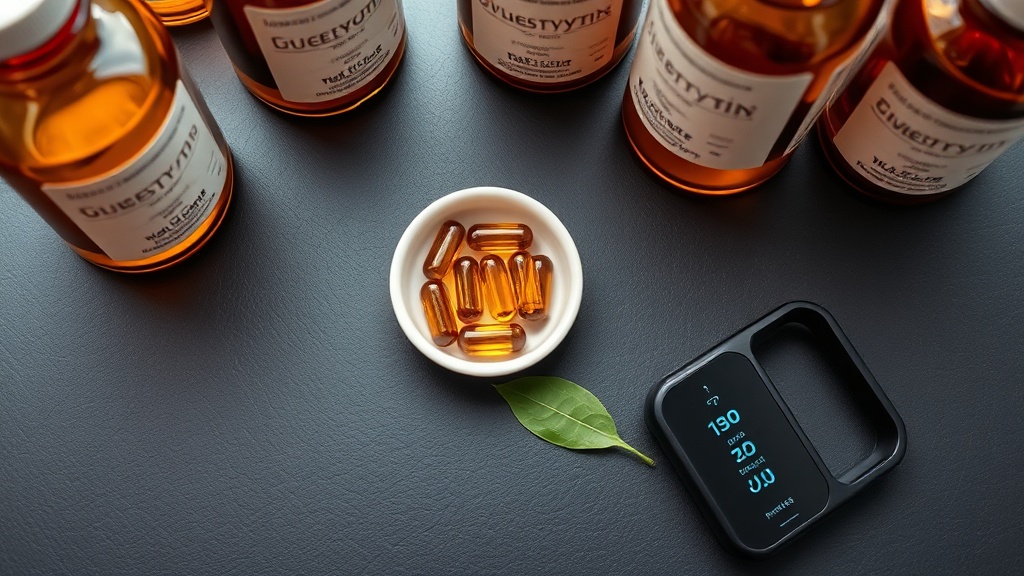
Step 5: Incorporate Perilla frutescens. Available as perilla seed oil or standardized leaf extract. Doses used in allergy research typically range from 150–300 mg rosmarinic acid equivalent daily. This is the least standardized component — product quality varies wildly.
Step 6: Support the ecosystem, not just the supplements. Fermentable fiber intake (10–15 g/day from diverse sources) feeds butyrate-producing bacteria endogenously. Polyphenol-rich foods provide additional tight-junction support. The supplements are inputs into a system — if the system is starved of substrate, the supplements accomplish less.
Step 7: Reassess after 8–12 weeks. Repeat barrier permeability markers if available. Track symptom changes (bloating, food sensitivities, skin reactivity) as indirect signals. Adjust based on response, not ideology.
Related Video
What are postbiotics and how do they differ from probiotics?#
Postbiotics are preparations of dead (inactivated) microorganisms or their metabolic byproducts — things like short-chain fatty acids, peptides, and cell wall fragments. Unlike probiotics, they don't need to be alive to work. This gives them practical advantages: longer shelf life, no refrigeration requirements, and more consistent dosing. The trade-off is that we understand their mechanisms less completely than live organism effects.
Why does this supplement combine postbiotics with plant extracts?#
The PPA project hypothesized that postbiotic components (heat-inactivated LGG, butyrate) and plant compounds (quercetin, perilla) would produce complementary or additive effects on barrier function. Wallner et al. (2025) demonstrated that plant extract combinations show additive barrier-tightening effects beyond single extracts[3], and the Oglio et al. data suggests the combination enhanced both structural barrier integrity and antimicrobial peptide production simultaneously[1]. Whether this is truly synergistic or merely additive hasn't been formally tested.
How does gut barrier integrity relate to allergic diseases?#
A compromised gut barrier allows antigens — food proteins, bacterial fragments, environmental molecules — to cross the epithelium and trigger immune responses that wouldn't occur with an intact barrier. This is the "leaky gut" hypothesis of allergic disease, and while the term gets overused in wellness marketing, the underlying biology is legitimate. Tight-junction dysfunction and reduced antimicrobial peptide secretion are documented in allergic patients, making barrier restoration a rational therapeutic target.
When will this specific supplement be available for humans?#
Honestly, we don't know yet. The PPA formulation exists as a research product. It would need to complete human safety and efficacy trials before commercialization. The individual components — butyrate, quercetin, LGG, and perilla — are all commercially available separately. Combining them yourself approximates the formulation, but without matching the exact ratios and preparation methods used in the study.
Who would benefit most from a postbiotic-plant barrier support protocol?#
Based on the research framing, the primary target population appears to be individuals with allergic diseases — food allergy, atopic dermatitis, allergic rhinitis — where barrier dysfunction is a recognized pathogenic factor. However, anyone with evidence of increased intestinal permeability (elevated zonulin, positive lactulose-mannitol test) could theoretically benefit. I'd want to see replicated human data before making strong claims for any specific population.
VERDICT#
Score: 6.5/10
The science here is mechanistically sound and the combinatorial approach is genuinely thoughtful — I appreciate that they didn't just test another single-ingredient wonder supplement. The upregulation of β-defensin-2 and LL-37 alongside tight-junction enhancement is a finding worth paying attention to. But every result comes from cell culture models. No humans were involved. No microbiome diversity was accounted for. The PPA formulation doesn't exist as a product you can buy, and the jump from Caco-2 monolayers to clinical outcomes has killed more promising supplements than I can count. I'd bump this to an 8 if they publish a well-designed human pilot. Until then, it's interesting preclinical data that supports a protocol you can largely build yourself from existing supplements — which, honestly, is more useful than waiting for the perfect formulation.
References
- 1.Oglio F, Coppola S, Cadavere A, Di Santillo R, Mauriello V, Michelini M, Iorio RF, Caldaria E, Carucci L. Novel Food Supplement Containing a Combination of Postbiotics and Plant-Derived Compounds Regulates Epithelial Barrier Integrity and Immune Response in Human Enterocytes. Foods (2026). ↩
- 2.Cercamondi CI, Bendik I, Eckhardt E, Mak T, Seifert N, Kuratli K, Richard N, Tamasi B, Mussler B, Wintergerst E. A Postbiotic Derived from Lactobacillaceae Protects Intestinal Barrier Function in a Challenge Model Using Colon Organoid Tubules. Foods (2025). ↩
- 3.Wallner M, Stadlbauer V, Blank-Landeshammer B, Heckmann M, Sadova N, Iken M, Pitari GM, Weghuber J. Plant extracts identified by in vitro high-content screening improve epithelial barrier function and attenuate oxidative and inflammatory stress. Pharmacological Research - Natural Products (2025). ↩
- 5.Asefa Z, Belay A, Welelaw E, Haile M. Postbiotics and their biotherapeutic potential for chronic disease and their feature perspective: a review. Frontiers in Microbiomes (2025). ↩
- 6.Van den Abbeele P, Vu LD, Poppe J, van Hengel IAJ, Baudot A, Zhang Y, Chen Z, Yan J. Yeast protein modulates metabolites derived from the human gut microbiota of older male adults ex vivo to strengthen gut barrier function and reduce inflammation. Frontiers in Microbiology (2026). ↩
Dax Miyori
Dax is comfortable with complexity and slightly impatient with people who want clean answers about the microbiome. He writes in systems terms and will point out when a study ignored confounding microbial variables: 'They didn't control for baseline diversity, which makes the result almost uninterpretable.' He uses 'ecosystem' and 'cascade' frequently — not as jargon, but because they're accurate.
View all articles →