Red Light Therapy for Brain Disorders: What the Science Shows

THE PROTOHUMAN PERSPECTIVE#
The brain is the most metabolically expensive organ you own. It burns roughly 20% of your total energy output while comprising 2% of body mass. When mitochondrial efficiency drops — through stroke, TBI, infection, or age — cognition is the first casualty. That's not opinion. That's thermodynamics.
What makes the current wave of photobiomodulation research worth paying attention to is specificity. We're no longer talking about shining a red light at your forehead and hoping for the best. The studies published between late 2025 and early 2026 are interrogating distinct wavelengths at defined irradiances against specific pathologies, with sham controls and biomarker tracking. This is the field growing up. Not all the way — I still have problems with sample sizes and parameter standardization — but the trajectory matters.
For anyone optimizing cognitive performance or recovering from neurological injury, tPBM represents a non-pharmacological intervention that targets the electron transport chain directly. No liver metabolism. No receptor desensitization. The mechanism is physical, not chemical. That distinction changes the risk calculus entirely.
THE SCIENCE#
Formaldehyde Degradation: A Novel Mechanism in Post-Stroke Recovery#
Most people in the photobiomodulation space talk about cytochrome c oxidase. Sun et al. (2025) went somewhere different — and it caught my attention.
Their randomized controlled trial enrolled 90 stroke patients with post-stroke cognitive impairment (PSCI), with 44 completing the red light intervention arm and 38 in the control group[1]. The wavelength was 630 nm. The mechanism they targeted? Formaldehyde-dehydrogenase (FDH) activation. Endogenous formaldehyde accumulates after stroke via semicarbazide-sensitive amine oxidase (SSAO) activity, and this formaldehyde burden directly impairs cognition and mood. Red light at 630 nm activates FDH, which degrades formaldehyde.
The trial ran for 3 months of active therapy followed by 3 months of observation. They measured MoCA, MMSE, Hamilton Depression (HAMD), Hamilton Anxiety (HAMA), and the Barthel Index at baseline and 6 months. They also quantified blood and urine levels of SSAO, FDH, and formaldehyde metabolites. This is the kind of biomarker-backed design I want to see more of — not just "patients felt better," but here's what changed in the blood.
The catch, though. The study was exploratory, the sample after dropout was modest (82 total completers), and it was published in Frontiers in Neurology — a decent journal but not top-tier. I'd want replication before building a protocol around formaldehyde degradation specifically.
Mitochondrial Complex IV and Oxidative Stress in Depression Models#
The February 2026 paper in Neurochemical Research gives us cleaner mechanistic data, albeit in rats[2]. The team used a chronic mild stress (CMS) model — the standard preclinical depression paradigm — and compared transcranial PBM at 600 nm (red) versus 840 nm (infrared) against sham.
Both wavelengths increased sucrose consumption compared to sham (p < 0.001), which is the behavioral readout for anhedonia reversal. But the biology diverged by wavelength. Red light (600 nm) reduced peripheral lipid damage markers (TBARS, p = 0.0048) to levels matching non-stressed controls. Infrared (840 nm) elevated hippocampal nitric oxide (p = 0.0134) and restored prefrontal cytochrome c oxidase (CCO/complex IV) activity to control levels (p = 0.012 vs. red group).
This is important. Different wavelengths are doing different things at the mitochondrial and redox level. Red is cleaning up oxidative damage peripherally. Infrared is restoring electron transport chain function centrally. Treating them as interchangeable — which most consumer device companies do — is sloppy.
TBI Recovery: Glial Polarization and the 1064 nm Window#
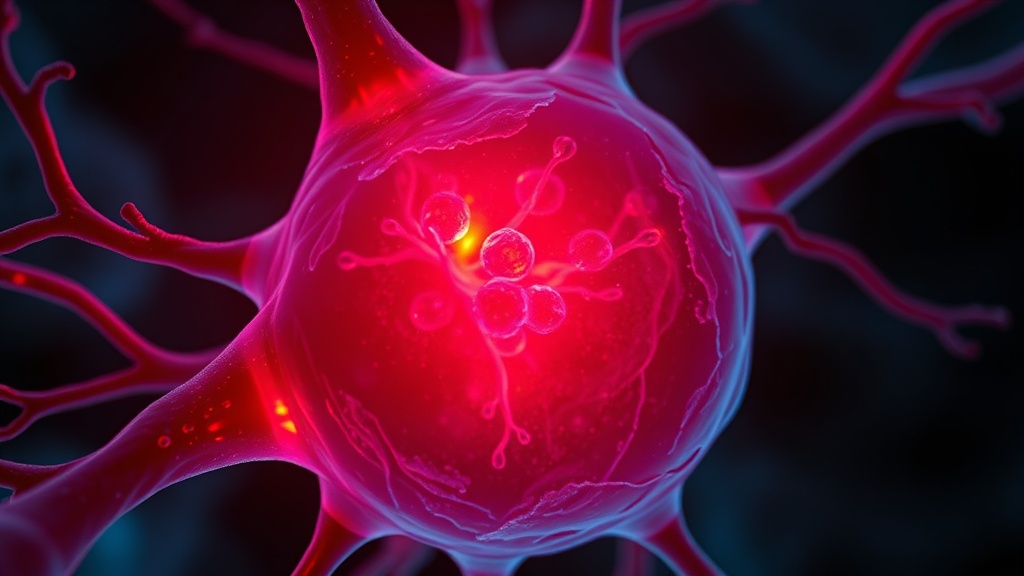
The November 2025 study in Journal of Translational Medicine used 1064 nm LEDs in a murine TBI model — 25 mW/cm² for 12 minutes daily over 14 days[3]. This is near-infrared territory, deeper penetration than red wavelengths.
The results were striking across behavioral and molecular endpoints. TBI mice treated with PBM showed reduced anxiety and depression-like behavior, improved spatial cognition (Y-maze alternation), and enhanced rotarod performance. At the tissue level: inhibited neuronal apoptosis, promoted neurogenesis, upregulated neurotrophic factors, strengthened blood-brain barrier integrity via tight junction proteins, and — here's the key finding — shifted both microglia and astrocytes from pro-inflammatory to anti-inflammatory phenotypes.
Glial polarization is a big deal. Chronic neuroinflammation after TBI is what converts an acute injury into a progressive neurodegenerative condition. If 1064 nm tPBM genuinely modulates glial phenotype, it's addressing the mechanism that makes TBI outcomes worse over years, not just the symptoms.
Animal study, though. I want to be clear about that.
Long-COVID Brain Fog: The First Sham-Controlled Human Trial#
The January 2026 pilot trial is, in my view, the most clinically relevant piece here — and the most frustrating[4]. Forty-three adults with post-COVID cognitive dysfunction were randomized to 8 weeks of daily intranasal and transcranial PBM (Vielight Neuro RX Gamma) or sham, 20 minutes per day, 6 days per week.
The primary outcome — composite cognitive score change at Day 56 — showed a mean difference of 0.043 favoring active treatment (95% CI −0.007 to 0.092, p = 0.088). That's not statistically significant by conventional thresholds. Attention tasks did reach significance at multiple timepoints (p < 0.050). A prespecified subgroup of participants under 45 showed significant improvement (p = 0.028).
Here's where I'm less convinced: secondary outcomes for mobility and fatigue actually favored the sham group. And the study was funded by Vielight Inc., the device manufacturer. That doesn't invalidate the data, but it demands scrutiny. The sample was small (41 analyzed), and the effect size on the primary endpoint was modest.
Compliance was excellent (median 55 days of use), and no serious adverse events occurred. Safety isn't the question. Efficacy at this dosing protocol, for this population, remains unproven.
Cortical Network Reorganization in Healthy Adults#
Bastola, Pruitt et al. (2026) published the most mechanistically elegant work in this batch[6]. Using simultaneous MEG and EEG in 25 healthy adults, they showed that a single session of 1064 nm prefrontal tPBM reorganized oscillatory activity in a frequency-specific manner.
Alpha oscillations shifted toward coordinated fronto-visual circuits. Beta activity recruited executive regions. The default mode network ceded dominance to the central executive network. Infra-slow rhythms (below 0.1 Hz) modulated alpha and beta amplitudes — nesting faster oscillations within slower temporal frameworks.
This is the mechanistic bridge between "light hits cytochrome c oxidase" and "people think better." If tPBM reproducibly shifts brain network engagement from default mode to executive mode, you have a physiological basis for the cognitive enhancement claims. In 25 subjects. Once. Without a cognitive performance readout. So — promising architecture, not proof of clinical utility yet.
Key Findings Across tPBM Wavelengths in Brain Disorders
COMPARISON TABLE#
| Method | Mechanism | Evidence Level | Cost | Accessibility |
|---|---|---|---|---|
| tPBM 630 nm (Red) | FDH activation, formaldehyde degradation, peripheral oxidative stress reduction | 1 human RCT (n=82), 1 animal study | $200–800 (LED panels) | High — home devices available |
| tPBM 810–840 nm (NIR) | Mitochondrial CCO activation, nitric oxide signaling, neuroinflammation modulation | 1 small human RCT (n=43), animal data | $1,000–2,500 (Vielight-class devices) | Moderate — specialized headsets |
| tPBM 1064 nm (NIR Laser) | Deep-tissue CCO activation, glial polarization shift, cortical network reorganization | Animal TBI data, 1 human EEG/MEG study (n=25) | $3,000–6,000 (clinical-grade lasers) | Low — mostly clinical/research settings |
| SSRIs (for depression comparison) | Serotonin reuptake inhibition | Hundreds of RCTs, meta-analyses | $10–50/month | Very high — prescription |
| Cognitive Rehabilitation (post-stroke) | Task-specific neural plasticity | Strong meta-analytic support | $100–300/session | Moderate — requires trained therapist |
| Hyperbaric Oxygen (TBI/long-COVID) | Increased tissue oxygenation, angiogenesis | Mixed RCT results | $150–300/session | Low — specialized chambers |
THE PROTOCOL#
Based on the current evidence — and I want to emphasize that no standardized clinical protocol exists yet — here is a reasonable framework for those exploring tPBM for cognitive support. This is not medical advice. It's a synthesis of what the data suggests.
Step 1: Define Your Target Condition and Select Wavelength Accordingly Not all wavelengths serve all purposes. For post-stroke or age-related cognitive support, the data points toward 630 nm (red) for formaldehyde and oxidative stress pathways. For depression-related mitochondrial dysfunction or TBI neuroinflammation, near-infrared (810–1064 nm) appears more appropriate based on current preclinical and early clinical evidence. Pick the wavelength for the mechanism you're targeting.
Step 2: Verify Device Parameters — Do Not Skip This Irradiance matters more than most users realize. The TBI animal study used 25 mW/cm² at 1064 nm. The long-COVID trial used the Vielight Neuro RX Gamma, which delivers approximately 25 mW/cm² intranasally and lower transcranially. Many consumer "red light therapy" headbands deliver under 5 mW/cm² at the scalp. If your device doesn't list irradiance at the target tissue — not just at the LED surface — you're guessing.
Step 3: Establish a Consistent Dosing Schedule The long-COVID trial used 20 minutes per session, 6 days per week, for 8 weeks[4]. The post-stroke trial ran for 3 months[1]. The TBI animal protocol was 12 minutes daily for 14 days[3]. Session duration of 12–20 minutes appears consistent across studies. Daily application for a minimum of 8 weeks is the shortest human protocol showing any cognitive signal.
Step 4: Track Cognitive Outcomes With Standardized Tools Do not rely on subjective feeling alone. Use a free cognitive battery — Creyos (used in the long-COVID trial), MoCA (available via healthcare providers), or even consistent dual n-back testing — at baseline, 4 weeks, and 8 weeks. Without measurement, you have no data on yourself.
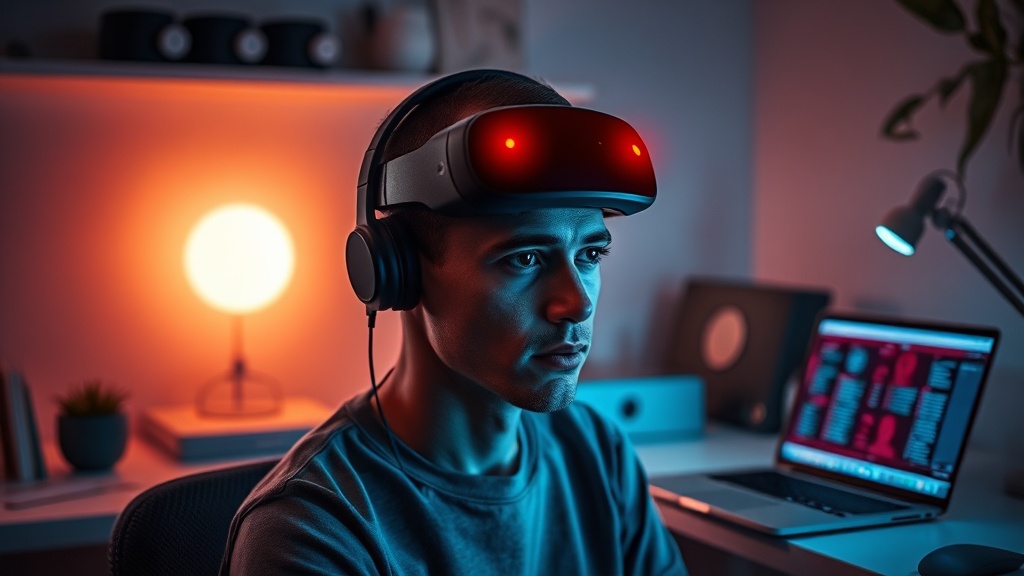
Step 5: Monitor for Adverse Effects and Adjust The safety profile across all studies reviewed was clean — no serious adverse events reported in any trial. Common mild effects include transient warmth at application sites and occasional headache. If headaches persist beyond the first week, reduce session duration by 50% and reassess. If you have a history of photosensitivity or are on photosensitizing medications, consult your physician before starting.
Step 6: Reassess at 8 Weeks If cognitive testing shows no measurable improvement after 8 weeks of consistent daily use with a properly specified device, the honest answer is: this may not be working for you at these parameters. The long-COVID trial's overall p-value was 0.088 — which means even in a controlled setting, the effect wasn't universal.
Related Video
What wavelength of red light is best for brain health?#
There isn't a single "best" wavelength — it depends on what you're targeting. Red light at 600–630 nm appears effective for formaldehyde degradation and peripheral oxidative stress, according to Sun et al. (2025). Near-infrared at 810–1064 nm penetrates deeper into cortical tissue and may better address mitochondrial complex IV function and neuroinflammation. Most consumer devices don't let you choose, which is part of the problem.
How long does transcranial photobiomodulation take to show cognitive effects?#
The shortest human protocol showing any cognitive signal was 8 weeks of daily use in the long-COVID brain fog trial[4]. The post-stroke RCT ran for 3 months of active treatment with assessment at 6 months[1]. Expecting results in days or even 2–3 weeks is not supported by any published human data I've reviewed.
Is transcranial red light therapy safe?#
Across all studies examined — including human RCTs and animal protocols — no serious adverse events were reported. The long-COVID trial had high compliance and recorded only mild, transient effects. That said, long-term safety data beyond 6 months doesn't really exist yet for any tPBM brain protocol.
Who should avoid photobiomodulation therapy?#
Anyone on photosensitizing medications (certain antibiotics, retinoids, some chemotherapy agents) should consult their physician first. People with active brain tumors, epilepsy not controlled by medication, or implanted cranial devices should avoid tPBM until safety data in those populations exists. The current trials explicitly excluded these groups.
Why do different tPBM studies report conflicting results?#
Parameter chaos. Wavelength, irradiance, pulse frequency, treatment duration, application site, and device design all vary across studies. The systematic review by Lasers in Medical Science (2025) identified this explicitly — heterogeneity in dosimetry is the single biggest barrier to drawing firm conclusions[5]. Until the field standardizes parameters, study-to-study contradictions are inevitable.
VERDICT#
6.5 / 10
The mechanistic story is getting sharper — mitochondrial complex IV activation, glial polarization shifts, formaldehyde degradation, cortical network reorganization. These are real biological pathways with real measurements behind them. But the human clinical evidence remains thin. The strongest human RCT (post-stroke, n=82) is exploratory. The long-COVID trial missed statistical significance on its primary endpoint. The most compelling mechanistic data comes from animal models. I'd rate the plausibility at 8/10 and the proven clinical utility at about 5/10. If you have access to a properly specified device and a condition that hasn't responded well to standard treatment, the risk-benefit ratio is reasonable for self-experimentation — but go in with measurement tools and realistic expectations. The field needs larger, multi-site RCTs with standardized parameters before tPBM for brain disorders moves from "promising" to "proven."
References
- 1.Sun Z, Wu W, Lou L, Wang P, Fu Y, Xu L, Song M, Zhu L, Huang J, Ni S, Huang X, Wang Q, Chen G, Liu X, Tong Z. Red-light photobiomodulation improves cognition and neuropsychiatric symptoms in post-stroke cognitive impairment: a randomized trial. Frontiers in Neurology (2025). ↩
- 2.Author(s) not listed. Transcranial Photobiomodulation Modulates Oxidative Stress Biomarkers and Complex IV Activity in Anhedonic-Like Behavior. Neurochemical Research (2026). ↩
- 3.Author(s) not listed. Transcranial photobiomodulation promotes traumatic brain injury recovery via modulating glial cell polarization and neuroinflammation: a study of 1064 nm light-emitting diodes. Journal of Translational Medicine (2025). ↩
- 4.Author(s) not listed. Photobiomodulation for cognitive dysfunction (Brain Fog) in post-COVID-19 condition: a randomized double-blind sham-controlled pilot trial. PBM Foundation (2026). ↩
- 5.Author(s) not listed. Transcranial photobiomodulation therapy in older women regarding cognitive functions: a systematic review. Lasers in Medical Science (2025). ↩
- 6.Bastola S, Pruitt T, Davenport EM, Liu H, Alexandrakis G, Maldjian JA. Transcranial 1064-nm laser photobiomodulation modulates frequency-specific cortical source dynamics and functional connectivity in healthy adults. Frontiers in Human Neuroscience (2026). ↩
Sova Reld
Sova writes with focused intensity and low tolerance for vague claims. She came to photobiomodulation through personal experimentation and is irritated by both true believers and reflexive skeptics. Her writing has edge: 'The wellness market has done more damage to this field than the skeptics ever could.' She's extremely precise about parameters — wavelength, irradiance, duration — and will tell you when a study used inadequate dosing without apology.
View all articles →