rTMS for MS Fatigue: Premotor Stimulation Trial Protocol

THE PROTOHUMAN PERSPECTIVE#
MS fatigue isn't the kind of tiredness you sleep off. It's a systems-level failure — neural networks misfiring, cortical excitability thrown off, the brain burning energy on processes that should be automatic. Up to 95% of people with MS report it, and we've had essentially nothing to offer them. Pharmacological options have failed repeatedly in rigorous trials. That's not a gap in the market. That's a crisis.
What makes this moment worth paying attention to: researchers at Copenhagen University Hospital are no longer guessing where to point the magnetic coil. They've identified a specific cortical target — the left dorsal premotor cortex — based on converging evidence about excitation–inhibition imbalance. They're measuring the neurochemical response with 7T MRI spectroscopy, not just asking patients if they feel better. This is neuromodulation moving from "let's try stimulating here" to precision targeting. For the biohacking and performance optimization community, the implications extend beyond MS. Fatigue as a cortical excitability problem is a framework that applies to anyone pushing cognitive limits.
THE SCIENCE#
What We Know About MS Fatigue (And Why Current Treatments Fail)#
Multiple sclerosis is a chronic autoimmune neurodegenerative disease affecting approximately 2.8 million people globally[6]. The disease destroys oligodendrocytes, strips myelin from axons, and progressively degrades central nervous system function. But the symptom that patients consistently rank as most disabling isn't weakness or spasticity — it's fatigue. Between 78% and 95% of MS patients experience clinically significant fatigue[1].
The pharmacological graveyard here is extensive. Amantadine, modafinil, methylphenidate — all have been tried. A randomized cross-over trial comparing these three agents against placebo found no significant effects on MS fatigue[2]. Let that sink in. The three most commonly prescribed fatigue medications performed no better than sugar pills.
The problem, as I see it, is that we've been treating fatigue as a downstream symptom rather than a primary cortical dysfunction. Emerging evidence now points to disrupted excitation–inhibition (E/I) balance in the premotor cortex as a potential driver of MS fatigue[1]. This isn't peripheral tiredness. This is the brain's own signal processing going haywire — GABAergic and glutamatergic transmission falling out of sync, forcing compensatory neural recruitment that drains cognitive and motor reserves.
The Copenhagen Protocol: Precision rTMS#
Nygaard, Siebner, and colleagues at the Danish Research Centre for Magnetic Resonance have designed what I'd call the most mechanistically informed rTMS trial for MS fatigue to date[1]. Published in Frontiers in Neurology in February 2026, this study protocol lays out a randomized, double-blinded, sham-controlled, parallel-group design with 58 patients receiving either active or sham TMS.
The key differentiators:
Target: Left dorsal premotor cortex. Not the DLPFC, which is where most previous brain stimulation studies for fatigue have aimed. Not the motor cortex. The premotor cortex — chosen specifically because of evidence linking E/I imbalance in this region to fatigue pathophysiology.
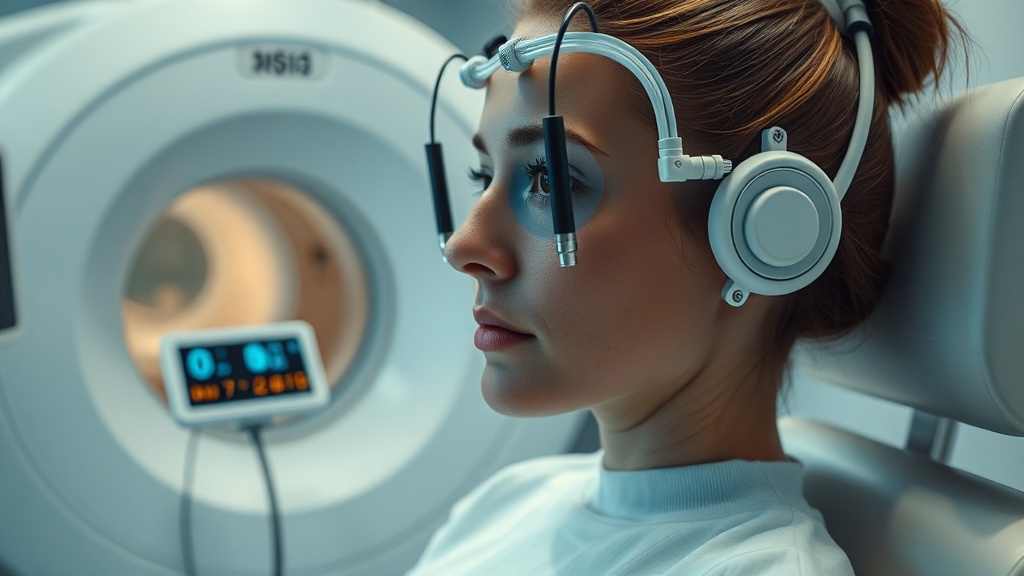
Protocol: Low-frequency paired-pulse rTMS delivered over five consecutive days. This is not the high-frequency repetitive stimulation or intermittent theta burst that dominates most rTMS literature. Paired-pulse protocols can selectively probe and modulate intracortical inhibitory circuits — targeting GABA-A receptor–mediated short-interval intracortical inhibition (SICI).
Measurement: 7T MR spectroscopy to directly quantify glutamate and GABA concentrations in the stimulated region, alongside TMS-derived measures of cortical excitability. The primary outcome is change in Fatigue Scale for Motor and Cognitive Functions (FSMC) scores six days post-treatment.
Equipment: B65-Cool-A/P coil connected to a MagPro XP Orange Edition stimulator (MagVenture), with a sham coil designed for effective blinding.
The tDCS Disappointment#
Here's where it gets complicated. While rTMS targets specific cortical circuits with electromagnetic pulses, transcranial direct current stimulation (tDCS) takes a blunter approach — passing weak electrical current through scalp electrodes to modulate cortical excitability across broader regions.
Charvet et al. (2025) published one of the largest single-center trials of tDCS for MS fatigue in Scientific Reports[3]. The numbers were impressive on paper: 117 participants randomized, 92% completion rate, 30 daily sessions over six weeks of either active or sham tDCS paired with BrainHQ cognitive training, targeting the DLPFC.
The result? Both groups showed significant reductions in fatigue, with no significant difference between active and sham tDCS. The cognitive training itself may have driven the improvement. The tDCS added nothing measurable.
I'm less surprised than I probably should be. The DLPFC montage for fatigue has always struck me as imprecise — like trying to fix a specific circuit by electrifying the entire neighborhood. And the sham condition used 0.034 mA constant current during 20-minute sessions, which may have produced subthreshold neuromodulatory effects, further muddying the comparison. The blinding worked — patients couldn't tell which group they were in — but the control condition may not have been truly inert.
Why Target Matters More Than Technology#
The FETEM trial from Matias-Guiu et al. (2024) takes yet another approach — a phase 3, multicentre, cross-over design comparing amantadine and/or intermittent theta burst stimulation (iTBS) for MS fatigue[2]. The iTBS protocol is faster than conventional rTMS (roughly 3 minutes versus 20–40 minutes per session) and has demonstrated non-inferiority to traditional repetitive protocols in other contexts.
But here's my pushback on FETEM: it combines two interventions with individually weak evidence bases and tests them in a cross-over design that introduces significant carry-over risk for neuromodulation effects. The six-week washout period between conditions may not be sufficient if rTMS induces lasting plasticity — which is, after all, the entire therapeutic premise.
Stevens et al. (2024) add another layer with their TAURUS.2 phase II trial examining rTMS for remyelination in MS — not fatigue specifically, but using broad diffuse stimulation with a circular 90-mm coil at 25% maximum stimulator output[5]. Their preclinical mouse data showed enhanced endogenous remyelination with low-intensity rTMS. The fatigue measures in this trial are secondary outcomes, but the remyelination angle is genuinely novel.
The throughline across all these trials: nobody has yet published results showing that any form of transcranial stimulation definitively reduces MS fatigue versus sham. The Copenhagen trial's innovation is its mechanistic specificity — targeting a precise circuit implicated in the pathophysiology, then measuring whether stimulation actually changes E/I balance at that site.
Sample Sizes in Key TMS/tDCS Trials for MS Fatigue
COMPARISON TABLE#
| Method | Mechanism | Evidence Level | Cost (est. per course) | Accessibility |
|---|---|---|---|---|
| Premotor paired-pulse rTMS (Nygaard et al.) | Low-frequency paired pulses targeting E/I balance in left dorsal premotor cortex | Protocol only — no results yet | $2,000–4,000 (clinical setting) | Specialist TMS clinics only |
| DLPFC tDCS + cognitive training (Charvet et al.) | Weak DC current over prefrontal cortex paired with BrainHQ | RCT completed — no benefit vs. sham | $300–800 (home-based device) | Home-based with telehealth supervision |
| iTBS (Matias-Guiu et al.) | Theta burst stimulation modulating cortical excitability | Phase 3 protocol — no results yet | $1,500–3,000 (clinical setting) | Specialist TMS clinics |
| Amantadine | Dopaminergic / NMDA receptor antagonism | Multiple RCTs — no significant benefit vs. placebo | $30–100/month | Widely available by prescription |
| Broad diffuse rTMS (Stevens et al.) | Low-intensity stimulation for remyelination support | Phase II — safety established, efficacy pending | $2,000–4,000 (clinical setting) | Research settings only |
THE PROTOCOL#
For anyone considering TMS for MS-related fatigue — or practitioners evaluating these protocols — here's what the current evidence base supports. I want to be direct: no protocol has yet demonstrated definitive efficacy for MS fatigue in a completed, adequately powered RCT. These steps reflect best practices from the trial designs reviewed, not proven clinical protocols.
Step 1: Clinical assessment and screening. Confirm MS diagnosis (McDonald criteria), document current disease-modifying therapy, and quantify fatigue using a validated instrument — the FSMC or Modified Fatigue Impact Scale (MFIS). Screen for depression, which confounds fatigue measurement. An EDSS between 1.5 and 6.0 is the typical inclusion range across these trials[1][5].
Step 2: Neuronavigation setup. If targeting the premotor cortex per the Copenhagen protocol, structural MRI is essential for accurate coil placement. The left dorsal premotor cortex should be identified anatomically, not estimated from scalp landmarks. This is non-negotiable — landmark-based targeting introduces 1–2 cm of spatial error, which in the premotor cortex means potentially stimulating entirely different functional circuits.
Step 3: Stimulation parameter selection. The Copenhagen protocol uses low-frequency paired-pulse rTMS delivered via a figure-eight coil (MagVenture B65-Cool-A/P). For those following the TAURUS.2 approach, iTBS at 25% maximum stimulator output with a 90-mm circular coil for broader coverage is the alternative[5]. These are fundamentally different approaches — precision targeting versus diffuse stimulation. Choose based on your clinical rationale.
Step 4: Treatment schedule. The Copenhagen protocol delivers stimulation over five consecutive days[1]. The TAURUS.2 trial uses 20 sessions over four weeks (daily weekday sessions)[5]. The FETEM trial extends to six weeks of combined intervention[2]. Honestly, optimal dosing in humans is not yet established. The tDCS literature suggests that too few sessions produce no cumulative effect, but the Charvet trial's 30 sessions over six weeks also showed nothing[3].
Step 5: Outcome tracking. Administer the FSMC or MFIS at baseline, immediately post-treatment, and at follow-up intervals (the Copenhagen trial measures at day 6 post-treatment). Track secondary measures: 7T MR spectroscopy for GABA/glutamate ratios if available, or at minimum, paired-pulse TMS measures of SICI as a proxy for intracortical inhibition. Without objective neurophysiological measures, you're relying entirely on subjective report — and sham effects in neuromodulation trials are substantial.
Step 6: Safety monitoring. rTMS is generally well-tolerated. The TAURUS phase I trial confirmed safety of 20 sessions in MS patients[5]. Monitor for headache (most common side effect), scalp discomfort at stimulation site, and — rarely — seizure risk, particularly in patients on medications that lower seizure threshold. tDCS-specific risks include skin irritation under electrodes.
Related Video
What is repetitive transcranial magnetic stimulation (rTMS) and how does it work for MS fatigue?#
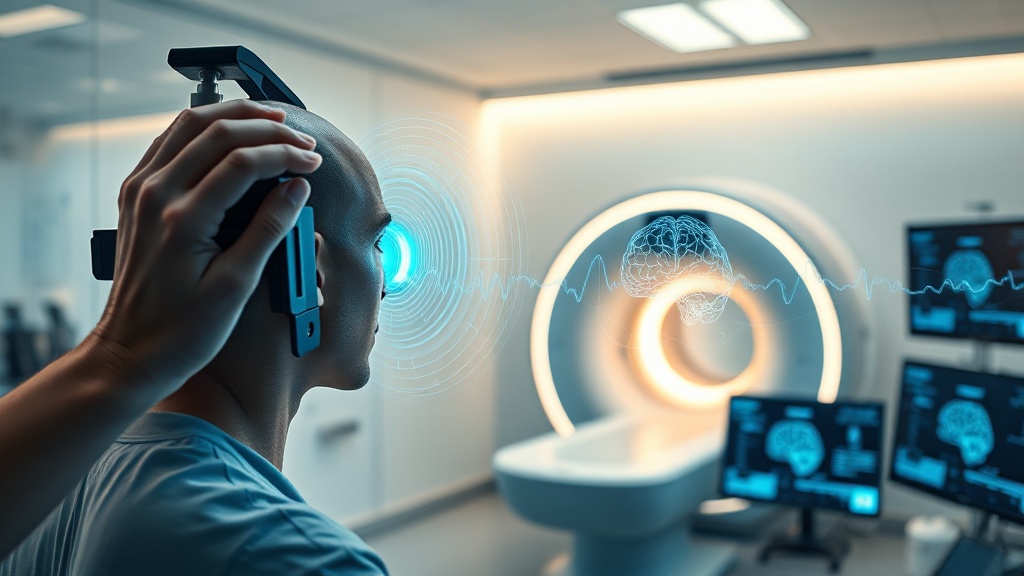
rTMS uses rapidly changing magnetic fields delivered through a coil placed against the scalp to induce electrical currents in specific brain regions. For MS fatigue, the hypothesis is that stimulation can restore disrupted excitation–inhibition balance in cortical circuits — particularly the premotor cortex — that may be driving the sensation of fatigue independent of physical exertion. It's non-invasive, doesn't require anesthesia, and sessions typically last under an hour.
How does rTMS differ from tDCS for treating fatigue?#
rTMS delivers focused electromagnetic pulses that can depolarize neurons directly, while tDCS passes weak constant current that only modulates the probability of neuronal firing. rTMS offers greater spatial precision and stronger neurophysiological effects per session, but requires clinical equipment costing $30,000+. tDCS devices cost a few hundred dollars and can be used at home, but the largest completed trial (Charvet et al., n=117) showed no benefit over sham for MS fatigue[3]. Different tools, different precision levels, currently neither proven.
Why have pharmacological treatments failed for MS fatigue?#
The honest answer is that we still don't fully understand MS fatigue's pathophysiology. Amantadine, modafinil, and methylphenidate all target monoaminergic neurotransmitter systems, but if fatigue in MS arises primarily from disrupted cortical E/I balance and maladaptive neural compensation for demyelinated circuits, then boosting dopamine or norepinephrine is addressing the wrong mechanism entirely. A recent cross-over trial found none of these drugs outperformed placebo[2].
When will results from the Copenhagen premotor rTMS trial be available?#
The trial (NCT06569550) is registered and the protocol was published in February 2026. Given the five-day treatment protocol and relatively small sample size (n=58), I'd estimate preliminary results could emerge within 12–18 months, assuming enrollment proceeds on schedule. The 7T MR spectroscopy component may add processing time but will provide the most valuable mechanistic data.
Who is a candidate for rTMS treatment for MS fatigue?#
Based on the trial inclusion criteria, candidates are adults with relapsing-remitting MS, stable and relapse-free for at least six months, with documented fatigue on validated scales, and an EDSS score indicating mild to moderate disability[1][5]. Exclusion criteria typically include active depression, seizure history, metallic implants incompatible with TMS, and pregnancy. Outside of clinical trials, rTMS for MS fatigue remains experimental — no regulatory body has approved it for this indication.
VERDICT#
Score: 6.5/10
The Copenhagen trial represents a genuine step forward in how we think about treating MS fatigue — targeting a specific cortical mechanism rather than throwing stimulation at the prefrontal cortex and hoping. The 7T spectroscopy component elevates this above most neuromodulation trials in the field. But let's be clear about where we stand: this is a study protocol, not results. The only large completed trial of transcranial stimulation for MS fatigue (Charvet et al.) was negative. Prior rTMS trials have been too small or too vague in their targeting to draw conclusions. The mechanistic logic here is sound — E/I imbalance in the premotor cortex is a plausible driver of MS fatigue — but plausible hypotheses fail all the time. I want to see the data before adjusting my priors. The field needs this trial to work, but needing it doesn't make it so.
References
- 1.Nygaard S, Madsen MAJ, Wiggermann V, Cabras C, Christiansen L, Svatkova A, Lundell H, Chow HH, Christensen JR, Sellebjerg F, Blinkenberg M, Siebner H. Repetitive transcranial magnetic stimulation to alleviate fatigue in multiple sclerosis—study protocol for a randomized sham-controlled double-blinded clinical trial. Frontiers in Neurology (2026). ↩
- 2.Matias-Guiu JA, González-Rosa J, Hernández MA, Martínez-Ginés ML, Portolés A, Pérez-Macías N, Benito-León J, Padrón I, Prieto J, Matias-Guiu J. Amantadine and/or transcranial magnetic stimulation for fatigue associated with multiple sclerosis (FETEM): study protocol for a phase 3 randomised, double-blind, cross-over, controlled clinical trial. BMJ Open (2024). ↩
- 3.Charvet L, Goldberg JD, Li X, Best P, Lustberg M, Shaw M, Zhovtis L, Gutman J, Datta A, Bikson M, Pilloni G, Krupp L. Home-based transcranial direct current stimulation paired with cognitive training to reduce fatigue in multiple sclerosis. Scientific Reports (2025). ↩
- 5.Stevens N, Ezegbe C, Fuh-Ngwa V, Makowiecki K, Zarghami A, Nguyen PT, Sansom J, Smith K, Laslett LL, Denham M, Cullen CL, Barnett MH, Hinder MR, Breslin M, Young KM, Taylor BV. A phase II trial examining the safety and preliminary efficacy of repetitive transcranial magnetic stimulation (rTMS) for people living with multiple sclerosis. Trials (2024). ↩
- 6.Abualait T, Mukhtar S, Murtaza G, Al-hussain F, Ali EN, Bashir S. Exploring the therapeutic and rehabilitative role of transcranial magnetic stimulation in multiple sclerosis. European Review for Medical and Pharmacological Sciences (2025). ↩
Sova Reld
Sova writes with focused intensity and low tolerance for vague claims. She came to photobiomodulation through personal experimentation and is irritated by both true believers and reflexive skeptics. Her writing has edge: 'The wellness market has done more damage to this field than the skeptics ever could.' She's extremely precise about parameters — wavelength, irradiance, duration — and will tell you when a study used inadequate dosing without apology.
View all articles →