Semaglutide Gut Microbiota Sphingolipid Brain Protection Study

SNIPPET: Semaglutide may protect against diabetic cognitive impairment by remodeling gut microbiota and normalizing brain sphingolipid metabolism, according to a multi-omics mouse study by Kang, Li et al. (Frontiers in Microbiology, 2026). The GLP-1 agonist enriched beneficial Bacteroides and Barnesiella, depleted pro-inflammatory Desulfovibrio, and corrected dysregulated ABCA2-mediated sphingolipid pathways in the hippocampus — linking microbial ecosystem shifts to neuroprotection.
THE PROTOHUMAN PERSPECTIVE#
The thing about semaglutide is that everyone wants to talk about weight loss. But the more interesting cascade — the one that should concern anyone optimizing for cognitive longevity — is what this drug does to the microbial ecosystem sitting in your gut and, by extension, to lipid signaling in your brain.
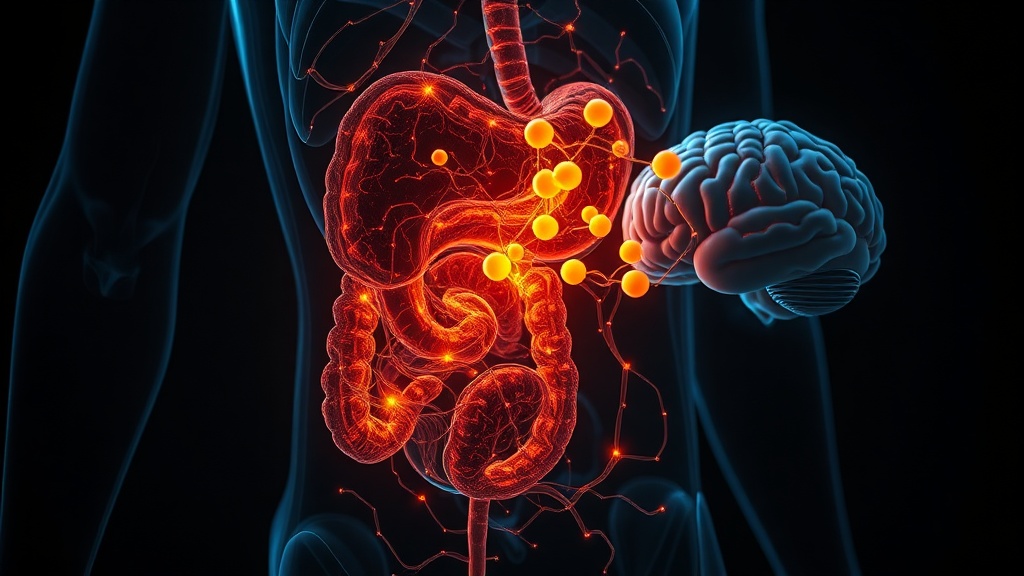
This new multi-omics study from Fujian Medical University doesn't just show that semaglutide improves cognition in diabetic mice. It maps the route: gut microbiota remodeling → bile acid normalization → sphingolipid pathway correction in the hippocampus. That's a three-node signaling chain from colon to cortex. For anyone in the biohacking space who still treats the gut and brain as separate optimization targets, this is a direct challenge to that framework.
What makes this matter right now is convergence. Three independent research groups — working on diabetes, Parkinson's, and epilepsy — are all pointing at the same microbiota-sphingolipid axis as a critical mediator of neurological outcomes. That's not coincidence. That's an emerging systems-level pattern, and it has real implications for how we think about neuroprotection protocols.
THE SCIENCE#
Semaglutide Remodels the Gut Ecosystem in Diabetic Mice#
Kang, Li et al. used a 12-week semaglutide treatment protocol in a mouse model of diabetic cognitive impairment (DCI). The approach was unusually thorough: fecal shotgun metagenomics, targeted bile acid profiling, cerebral proteomics, and brain metabolomics — all integrated to trace the gut-brain communication pathway[1].
At the microbial level, semaglutide treatment enhanced α-diversity — a standard measure of ecosystem health that reflects both the richness and evenness of microbial species. More specifically, beneficial genera Bacteroides and Barnesiella were enriched, while the pro-inflammatory genus Desulfovibrio was depleted[1]. That last point matters more than it might seem. Desulfovibrio is a hydrogen sulfide producer implicated in gut barrier degradation and systemic inflammation. Its depletion is consistently associated with reduced neuroinflammatory signaling.
The behavioral data confirmed the biology: semaglutide-treated mice showed reversed cognitive deficits, rescued hippocampal neuronal survival, and restored synaptic integrity[1].
The Sphingolipid Connection — Where It Gets Interesting#
Here's where I need you to pay attention, because this is the mechanistic finding that sets this study apart.
The researchers identified a dysregulated sphingolipid pathway in the DCI brain. Sphingolipids are structural components of neuronal membranes and active signaling molecules involved in autophagy pathways, apoptosis, and synaptic plasticity. In the diabetic mice, the transporter ABCA2 (ATP-binding cassette transporter A2) was upregulated — a protein involved in sphingolipid and cholesterol trafficking across cell membranes[1].
Semaglutide treatment corrected this ABCA2 upregulation, and the normalization tracked with restored bile acid profiles in both fecal and cerebral compartments[1]. The implication: the drug's microbial remodeling in the gut creates a downstream cascade that reaches sphingolipid metabolism in the hippocampus. This is not a single-target drug effect. It's an ecosystem-level intervention rippling through multiple metabolic layers.
Converging Evidence: Sphingolipids Across Neurological Conditions#
The thing about the microbiota-sphingolipid axis is that it keeps showing up. Gong, Lin et al. (2025) used Mendelian randomization to establish causal links between gut microbiota and generalized epilepsy, identifying sphingomyelin species as significant mediators (P = 0.009)[3]. Their metabolomics validation in refractory epilepsy patients on MCT diets confirmed elevations in specific sphingomyelin subtypes — directionally consistent with the mouse data from the semaglutide study.
Meanwhile, Jin et al. (2026) found that symmetric Parkinson's disease patients — those with more severe cognitive and motor profiles — showed enrichment of Desulfobacterota in their gut microbiota, the same sulfate-reducing phylum that includes Desulfovibrio[2]. The overlap is hard to ignore.
And then there's the probiotic angle. Jin X. et al. (2026) demonstrated that L. rhamnosus GG upregulated BDNF and SYN1 (synaptic genes), increased GABA release by 1.7-fold, and suppressed IL-6 and TNF-α — all through SCFA-mediated pathways that converge on the same neuronal survival mechanisms that semaglutide appears to activate via sphingolipid normalization[4].
Li et al. (2025) added pediatric data showing that children with refractory epilepsy exhibited distinct gut microbiota dysbiosis with enrichment of Clostridiales, alongside altered CSF metabolites — further reinforcing the gut-brain metabolic axis in neurological disease[6].
The pattern emerging across these studies: microbial diversity → bile acid/SCFA normalization → sphingolipid/lipid signaling correction → neuroprotection. Each study captures a different slice of the same cascade.
Key Microbial Shifts with Semaglutide Treatment in DCI Mice
COMPARISON TABLE#
| Method | Mechanism | Evidence Level | Cost | Accessibility |
|---|---|---|---|---|
| Semaglutide (GLP-1 agonist) | Gut microbiota remodeling → bile acid normalization → sphingolipid pathway correction | Preclinical mouse model (single study) | High (~$900–1,300/month without insurance) | Prescription only |
| L. rhamnosus GG + B. longum 1714 | SCFA production → BDNF/SYN1 upregulation → GABA/serotonin modulation | In vitro + multi-omics (preclinical) | Low (~$20–40/month) | Over-the-counter |
| MCT Diet Intervention | Sphingomyelin elevation → seizure pathway modulation | Small human trial (n=9) + MR analysis | Moderate (~$50–100/month) | Self-administered with guidance |
| Yeast Protein (40g/day) | Butyrate production → barrier integrity → anti-inflammatory metabolites | Ex vivo human microbiome (n=6) | Low (~$30–60/month) | Over-the-counter |
| Standard Metformin (diabetes) | AMPK activation, some microbiome effects | Multiple large RCTs | Very low (~$4–30/month) | Prescription |
THE PROTOCOL#
Based on current evidence — and I want to be clear that most of this is preclinical or early-stage — here's a gut-brain optimization framework informed by these findings. Treat this as a hypothesis-driven protocol, not a prescription.
Step 1: Assess Your Baseline Microbial Diversity Get a comprehensive gut microbiome test (shotgun metagenomic, not just 16S rRNA if possible). Look specifically at Desulfovibrio levels and overall α-diversity scores. Without knowing your starting ecosystem, any intervention is a shot in the dark.
Step 2: Reduce Pro-Inflammatory Microbial Load If Desulfovibrio or other sulfate-reducing bacteria are elevated, prioritize dietary sulfur reduction — limit processed meats, excess cruciferous vegetables (temporarily), and high-sulfite foods. This isn't about eliminating sulfur entirely; it's about ecosystem rebalancing.
Step 3: Introduce Targeted Probiotics Based on the Jin X. et al. data[4], a combination of Lactobacillus rhamnosus GG (minimum 10 billion CFU) and Bifidobacterium longum 1714 (minimum 1 billion CFU) daily may support GABAergic and serotonergic pathways. Take on an empty stomach, morning or evening — your gut doesn't care about your supplement brand, but timing relative to meals affects colonization.
Step 4: Support Sphingolipid Metabolism Through Diet Include dietary sources of sphingolipids: eggs, dairy, and soy products contain bioavailable sphingomyelin. MCT oil (5–15 mL/day, titrated up slowly to avoid GI distress) may also support sphingomyelin levels, consistent with the Gong et al. findings in epilepsy patients[3].

Step 5: Consider GLP-1 Agonist Discussion with Your Physician If you're managing type 2 diabetes or metabolic syndrome and cognitive decline concerns you, the semaglutide data — while preclinical — adds a rationale for discussing GLP-1 agonist therapy that goes beyond glycemic control. This is a conversation with your endocrinologist, not a self-prescription decision.
Step 6: Track Cognitive and Metabolic Markers Use HRV optimization tracking as a proxy for autonomic nervous system health (vagal tone connects directly to the gut-brain axis). Pair with periodic cognitive assessments — even simple tools like the MoCA screen — to monitor trends over 3–6 month cycles.
Step 7: Diversify Protein Sources for Microbiome Support Van Den Abbeele et al. showed that yeast protein at 40g/day equivalent restored butyrate-producing microbes and increased microbial diversity in older adults' microbiomes ex vivo[5]. Rotating between yeast protein, soy protein, and conventional sources may support broader ecosystem diversity compared to relying solely on whey.
Related Video
What is the gut-brain sphingolipid axis?#
It's the signaling cascade where gut microbial composition influences bile acid metabolism, which in turn affects sphingolipid processing in the brain. Sphingolipids are critical for neuronal membrane integrity, synaptic plasticity, and cell survival signaling. When the gut ecosystem is disrupted — particularly with elevated pro-inflammatory species like Desulfovibrio — this cascade appears to dysregulate brain sphingolipid homeostasis.
How does semaglutide affect gut bacteria?#
In the Kang, Li et al. mouse study, 12 weeks of semaglutide treatment increased microbial α-diversity, enriched beneficial genera like Bacteroides and Barnesiella, and reduced Desulfovibrio populations[1]. I'd want to see this replicated in human cohorts before making strong claims, but the ecosystem-level shift is directionally consistent with what we'd expect from an anti-inflammatory gut intervention.
Who should consider a gut-brain optimization protocol?#
Anyone managing type 2 diabetes with emerging cognitive concerns, or individuals with metabolic syndrome who want to take a proactive approach to neuroprotection. That said, we genuinely don't know enough to make strong recommendations for neurologically healthy individuals — and anyone who tells you otherwise is selling something. Start with baseline testing.
Why are sphingolipids important for brain health?#
Sphingolipids constitute a major fraction of brain lipids. They regulate autophagy pathways, neuronal apoptosis, and synaptic vesicle trafficking. Dysregulated sphingolipid metabolism has been implicated in Alzheimer's, Parkinson's, and now diabetic cognitive impairment. The ABCA2 transporter identified in this study is specifically involved in intracellular sphingolipid distribution.
When will human clinical trials confirm these findings?#
The honest answer: probably 3–5 years for well-powered RCTs specifically examining semaglutide's microbiome-sphingolipid-cognition axis in humans. Several GLP-1 agonist cognitive trials are underway, but most aren't designed with multi-omics endpoints. The Gong et al. MR data provides some human-relevant causal inference, but interventional proof is still ahead of us[3].
VERDICT#
7/10.
The mechanistic story here is genuinely compelling — a multi-omics approach that traces a coherent pathway from gut microbiota through bile acids to brain sphingolipid metabolism. The convergence with independent sphingolipid findings in epilepsy (Gong et al.) and Parkinson's (Desulfovibrio in Jin J-Y. et al.) adds real weight. But — and this is a significant but — this remains a single mouse study. They didn't control for baseline microbial diversity across individual animals (a recurring problem in this field), the sample sizes are unstated in the abstract, and the sphingolipid pathway characterization appears to be association rather than proven causation. The ABCA2 finding is intriguing but needs knockdown or overexpression validation. I'm less convinced by the bile acid normalization data without seeing dose-response curves. As a signal pointing toward future human research? Strong. As a basis for changing your protocol today? Premature. Watch this space, but don't overhaul your stack based on it.
References
- 1.Kang H, Li X, Lin Y, Zhan M, Zeng F, Xiao Z, Qi L, Wang L, Liu X, Chen Z, Liu L. Multi-omics profiling implicates gut microbiota-sphingolipid interplay in the neuroprotective effects of semaglutide on diabetic cognitive impairment. Frontiers in Microbiology (2026). ↩
- 2.Jin J-Y, Li D, Qian S, Gao F, Li Z-Q, Cheng X-Y, Liu C-F, Mao C-J, Wang F, Jin H, Zhang J-R. Distinct gut and oral microbial profiles differentiate patients with symmetric/asymmetric Parkinson's disease. Frontiers in Human Neuroscience (2026). ↩
- 3.Gong J, Lin M, Chen L, Xiong W, Zhang Y, Liu C, Chen S, Lin W, Zhu C, Huang H. Microbiota–sphingolipid pathway in generalized epilepsy: evidence from Mendelian randomization and clinical metabolomics. Frontiers in Microbiology (2025). ↩
- 4.Jin X, Li Z, Cai H. Integrating microbial genomics and neurotranscriptomics to understand the impact of probiotic strains on neurological health. Frontiers in Cellular and Infection Microbiology (2026). ↩
- 5.Van Den Abbeele P, Vu LD, Poppe J, van Hengel IAJ, Baudot A, Zhang Y, Chen Z, Yan J. Yeast protein modulates metabolites derived from the human gut microbiota of older male adults ex vivo to strengthen gut barrier function and reduce inflammation. Frontiers in Microbiology (2026). ↩
- 6.Li Y, Lin Z, Shi X, Li Z, Wu J, Li F, You D, Wang X, Liu Z. Multi-omics integration reveals gut microbiota dysbiosis and metabolic alterations of cerebrospinal fluid in children with epilepsy. Frontiers in Microbiology (2025). ↩
Dax Miyori
Dax is comfortable with complexity and slightly impatient with people who want clean answers about the microbiome. He writes in systems terms and will point out when a study ignored confounding microbial variables: 'They didn't control for baseline diversity, which makes the result almost uninterpretable.' He uses 'ecosystem' and 'cascade' frequently — not as jargon, but because they're accurate.
View all articles →