Why Biomarkers Are Critical in Drug Discovery and Trials

SNIPPET: Biomarkers are critical in modern drug discovery because they allow researchers to stratify trial participants by biological age, monitor real-time responses to geroprotective interventions, and predict mortality risk independent of chronological age. New frameworks evaluating 39 biomarkers across 20,000+ individuals reveal that the best age-predictors and the best mortality-predictors are entirely different tools — a distinction that changes how we design longevity trials.
THE PROTOHUMAN PERSPECTIVE#
The longevity industry has a measurement problem, and it's finally being forced to confront it. For years, we've operated under the assumption that if a biomarker can tell you how old you are biologically, it can also tell you how likely you are to die. Turns out, those are two separate questions — and the correlation between them is essentially zero (R = 0.12)[3]. This matters for anyone optimizing their own biology because it means the epigenetic clock result you got from a consumer test may be telling you something real about your methylation patterns while telling you almost nothing about your actual disease trajectory.
What's shifting now is the infrastructure. Longevity biotechnology companies are being asked to standardize how they collect biomarker data across clinical trials[1], digital biomarkers from wearables are being integrated into drug development pipelines[4], and a new 7-biomarker clinical aging clock built from routine blood work may make biological age estimation accessible to anyone with a standard lab panel[2]. The era of biomarker fragmentation is ending. The era of biomarker utility is beginning. And the implications for drug discovery — and for your personal protocol — are substantial.
THE SCIENCE#
What biomarkers of aging actually are (and aren't)#
Biomarkers of aging are quantitative parameters that report on an individual's biological age — either alone or as composites[1]. The FDA's BEST framework classifies them into three categories: molecular (epigenetic clocks, proteomics, metabolomics), physiological (cardiovascular function, grip strength, pulmonary capacity), and digital (wearable-derived continuous signals like HRV optimization metrics, gait speed, glucose variability)[4].
The distinction matters more than most people realize. A molecular biomarker like a DNA methylation clock captures something about your epigenetic landscape. A physiological biomarker like VO2 max captures something about your actual organ function. These are not interchangeable, and treating them as if they are is one of the field's persistent errors.
Furrer and Handschin made this point directly in their 2025 commentary: functional biomarkers still outperform molecular ones when it comes to correlation with mortality and clinical utility in humans[5]. Most molecular aging biomarkers remain associative. Very few have been conclusively validated in human interventional trials. Which is annoying, actually, given how much attention (and venture capital) has flowed toward molecular clocks.
The clock accuracy ≠ mortality prediction problem#
Here's where it gets complicated. The Biolearn framework — an open-source evaluation platform developed to standardize assessment of 39 aging biomarkers across over 20,000 individuals from diverse cohorts — produced a finding that should make everyone reassess their assumptions[3].
The ability of traditional aging clocks to predict chronological age does not correlate with their ability to predict mortality (R = 0.12, P = 0.67). These metrics capture distinct biological processes.
The Horvath skin and blood clock achieved the highest chronological age accuracy (R² = 0.88). But when you look at mortality prediction, GrimAge2 dominated — with a hazard ratio of 2.57 for mortality and 2.00 for healthspan prediction[3]. These are not subtle differences. The clock that's best at telling you your biological age is not the clock that's best at telling you whether you'll be alive in ten years.
I'll be honest — I find the field's slow uptake of this distinction frustrating. People are spending hundreds of dollars on consumer epigenetic tests calibrated primarily for chronological age prediction, then making lifestyle and supplement decisions based on those results as if they're mortality signals. They're not. Or at least, we can't assume they are.
The 7-biomarker clinical clock: simplicity as a feature#
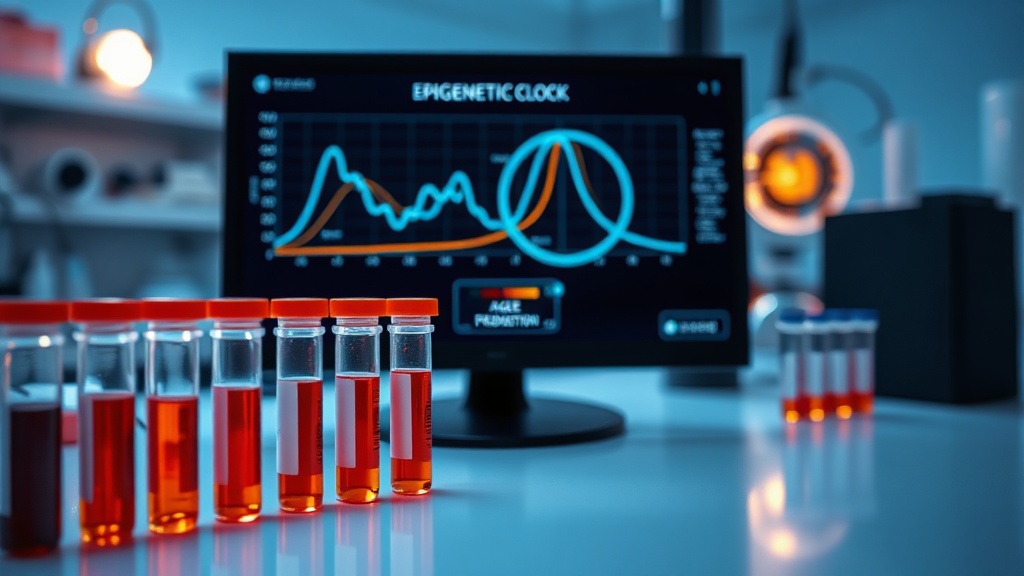
Against this backdrop, the 7-biomarker clinical aging clock developed from 59,741 healthy samples in a Southeast Asian cohort represents a genuinely different approach[2]. Instead of requiring expensive methylation arrays or multi-omic panels, this clock uses routine blood biochemistry markers — the kind you get from a standard lab panel.
The researchers also introduced a novel correction method addressing the systematic skew in predictions from first-generation clocks. This improved accuracy of age-acceleration predictions for disease risks and enhanced interpretability for disease-driven and organ-specific aging processes — crucially, without relying on mortality data[2].
What I find most clinically actionable here: the clock is robust even in the presence of acute infections or transient immune activation. That's a real-world consideration that most molecular clocks ignore entirely. If your biological age estimate spikes every time you get a cold, it's not a useful tool for longitudinal tracking. This clock was validated across NHANES and UK Biobank cohorts, demonstrating multi-ethnic generalizability[2].
Digital biomarkers: the continuous monitoring frontier#
Digital biomarkers — derived from sensors and wearable analytics — offer something molecular and physiological biomarkers cannot: continuous, real-time data streams[4]. Glucose tracking to optimize insulin dosing, wearable ECG to measure heart rhythms and de-risk cardiovascular trials, accelerometer-based gait analysis as a proxy for neurological function.
But here's the catch, though. A 2026 systematic review found that among 415 articles using the term "digital biomarker," only 31% provided a clear definition, with 127 different definitions identified among those that did[4]. The field is pre-standardization. Evidence generation is costly, regulatory reviews are often redundant, commercial incentives fall short, and data silos remain biased and non-representative.
The proposed path forward involves harmonized qualification pathways, value-based reimbursement, and adaptive post-market evidence loops[4]. It's a reasonable framework. Whether it actually happens at regulatory speed is another question.
Standardization for longevity trials#
The recommendations published in npj Aging for biomarker data collection in longevity biotechnology company (LBC) clinical trials address a structural gap[1]. Right now, every LBC is collecting biomarker data differently — different panels, different timepoints, different processing pipelines. This makes cross-trial comparison nearly impossible and wastes enormous amounts of valuable clinical data.
The proposed framework calls for pre-competitive alignment on shared tools, standardized collection protocols, and practices that enable future reuse of clinical data[1]. Wide adoption would allow parallel validation and benchmarking efforts for aging biomarkers with minimal additional effort per trial. The economic argument alone is persuasive — the costs of chronic diseases are projected to hit USD 47 trillion by 2030, and slowing aging by just one year of life expectancy is estimated to be worth USD 38 trillion[2].
Aging Clock Performance: Age Accuracy vs. Mortality Prediction
COMPARISON TABLE#
| Method | Mechanism | Evidence Level | Cost | Accessibility |
|---|---|---|---|---|
| Epigenetic Clocks (Horvath, GrimAge2) | DNA methylation pattern analysis at CpG sites | High — validated across large cohorts (n > 20,000)[3] | $300–$500 per test | Requires specialized lab; consumer kits available |
| 7-Biomarker Clinical Clock | Routine blood biochemistry composite scoring | Moderate-High — validated in NHANES + UK Biobank[2] | $30–$80 (standard blood panel) | Any clinical lab worldwide |
| Digital Biomarkers (Wearables) | Continuous sensor data (HRV, glucose, gait) | Emerging — definition not yet standardized[4] | $200–$800 device + subscription | Consumer-accessible but data interpretation varies |
| Functional Biomarkers (VO2 max, grip strength) | Direct physiological capacity measurement | High — decades of mortality correlation data[5] | $50–$200 per assessment | Gym, clinic, or home-based |
| Multi-omic Panels (Proteomics, Metabolomics) | Broad molecular profiling across multiple pathways | Moderate — high accuracy but limited interventional validation | $500–$2,000+ | Specialized research or DTC labs |
THE PROTOCOL#
How to build a personal biomarker tracking system informed by the latest evidence:
Step 1: Establish your functional baseline first. Before spending on molecular clocks, get the biomarkers with the strongest mortality correlation measured: VO2 max (via a cardiopulmonary exercise test or validated estimation), grip strength (dynamometer), gait speed, and resting blood pressure. These are cheap, accessible, and backed by decades of human data[5]. Record your values and retest every 6 months.
Step 2: Get a comprehensive blood panel using the 7-biomarker clinical clock approach. Request a standard metabolic panel from your physician — the markers used in the clinical aging clock are routine blood biochemistry[2]. Track fasting glucose, liver enzymes, kidney function markers, and lipid profiles. Use these values longitudinally, not as one-time snapshots. A single timepoint tells you almost nothing about trajectory.
Step 3: Layer in an epigenetic clock — but choose the right one for your goal. If your primary interest is chronological age estimation, the Horvath skin and blood clock has the highest accuracy (R² = 0.88). If your interest is mortality risk and healthspan, GrimAge2 is the stronger predictor (HR = 2.57)[3]. Do not assume they measure the same thing. They do not.
Step 4: Add continuous digital biomarkers for real-time feedback. Use a CGM (continuous glucose monitor) for 2–4 week blocks to assess metabolic flexibility and glucose variability. Track HRV nightly via a validated wearable (Oura, Whoop, or Apple Watch). Use these as leading indicators — they shift faster than molecular markers and can signal when autophagy pathways, NAD+ synthesis efficiency, or mitochondrial function are being disrupted by lifestyle factors.
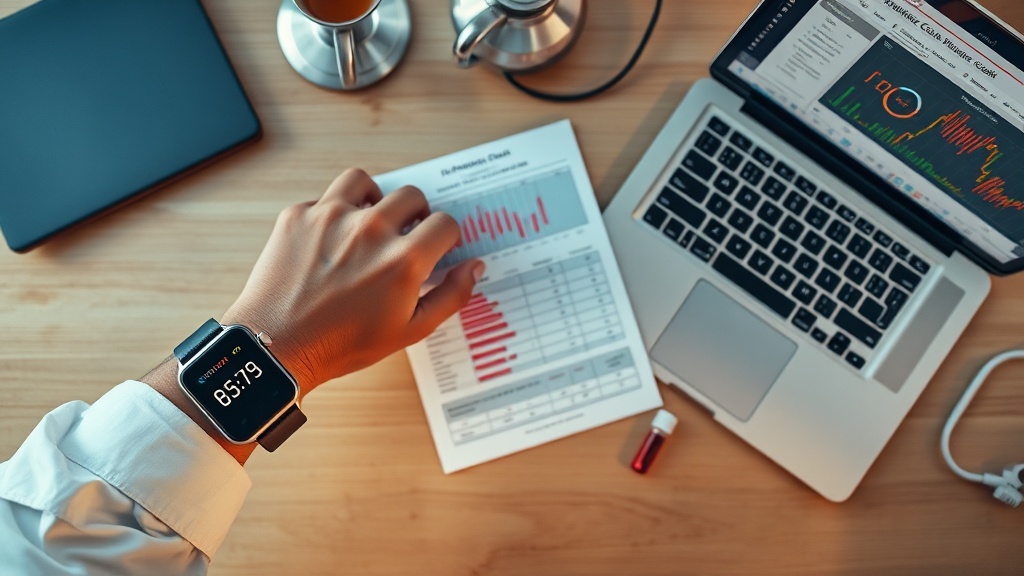
Step 5: Reassess and recalibrate quarterly. Compare your biomarker trajectories — not isolated values — across all tiers (functional, blood, molecular, digital). Look for concordance or divergence. If your epigenetic age is dropping but your VO2 max is declining, that's a signal worth investigating. If your HRV is trending upward while your fasting glucose is worsening, don't celebrate yet. The goal is convergent improvement across multiple biomarker classes, not optimization of any single number.
Step 6: Contribute your data if possible. Frameworks like Biolearn[3] and the LBC standardization recommendations[1] depend on diverse, longitudinal datasets. If you're enrolled in any longevity-focused program, ask whether your anonymized data can be contributed to open research efforts. The field advances faster with shared infrastructure.
Related Video
What is the difference between biological age and chronological age?#
Chronological age is simply time since birth. Biological age, as estimated by aging clocks, reflects the rate at which your body is actually deteriorating at the molecular, cellular, or organ-system level. Two people born in the same year can have biological ages that differ by a decade or more, depending on genetics, lifestyle, and disease burden[2].
Why don't the best age-predicting clocks also predict mortality?#
Because predicting how old someone looks molecularly and predicting how likely they are to die involve different biological processes. The Biolearn analysis showed the correlation between chronological age prediction accuracy and mortality prediction was R = 0.12 — essentially negligible[3]. GrimAge2, which incorporates smoking pack-years and plasma protein surrogates, captures mortality-relevant biology that pure age-prediction clocks miss.
How much does biological age testing cost?#
It ranges dramatically. A standard blood panel for the 7-biomarker clinical clock runs $30–$80 through most labs. Epigenetic methylation tests from consumer companies cost $300–$500. Multi-omic panels can exceed $2,000. Functional assessments (VO2 max, grip strength) can be done for under $200 or even free at home with basic equipment[5].
Who should track biomarkers of aging?#
Anyone over 30 with an interest in preventive health will benefit from at least basic biomarker tracking — particularly functional measures and standard blood panels. More advanced molecular testing is most useful for those already engaged in longevity protocols who need to assess whether their interventions are actually working, not just whether they feel better.
When will biomarkers of aging be used in standard clinical practice?#
We're closer than most people think, but regulatory and standardization hurdles remain. The LBC recommendations[1] and digital biomarker qualification pathways[4] represent the infrastructure being built now. Optimistically, standardized biological age assessment could enter mainstream preventive medicine within 3–5 years. Realistically, reimbursement and regulatory inertia will slow things down.
VERDICT#
Score: 8/10. The convergence of standardized evaluation frameworks (Biolearn), accessible clinical clocks (7-biomarker), digital biomarker integration, and industry-wide data collection standards represents a genuine inflection point for biomarker-driven drug discovery and longevity medicine. The finding that age-prediction accuracy and mortality-prediction accuracy are uncorrelated is, by itself, worth restructuring how the entire consumer biological age testing market communicates results. Where I dock points: most molecular biomarkers still lack interventional validation in humans, digital biomarker definitions remain chaotic, and the gap between research infrastructure and clinical implementation is real. But the direction is clear, the data quality is improving, and the tools are becoming accessible enough that this stops being exclusively a research question and starts being a personal one.
References
- 1.Author(s) not listed. Recommendations for biomarker data collection in clinical trials by longevity biotechnology companies. npj Aging (2025). ↩
- 2.Author(s) not listed. A sex-adjusted 7-biomarker clinical aging clock for translational preventative medicine. Scientific Reports (2025). ↩
- 3.Author(s) not listed. A unified framework for systematic curation and evaluation of aging biomarkers. Nature Aging (2025). ↩
- 4.Author(s) not listed. Challenges and potential of using digital biomarkers in healthcare and clinical trials. Communications Medicine (2026). ↩
- 5.Furrer R, Handschin C. Biomarkers of aging: functional aspects still trump molecular parameters. npj Aging (2025). ↩
Saya Kimm
Saya is analytical, methodical, and subtly contrarian about popular biomarker interpretations. She'll specifically challenge what readers think they know: 'Testosterone doesn't tell you what most people think it tells you at a single timepoint.' She writes with a researcher's caution about causation vs. correlation — but instead of hiding behind it, she turns it into an insight.
View all articles →