Epigenetic Aging: Four Pillars of Chromatin Failure Drive Aging

SNIPPET: Systemic epigenetic dysregulation — the progressive failure of chromatin regulatory systems to maintain precise gene expression — is now identified as a central driver of aging, not merely a byproduct. A new Nature Reviews framework defines four interdependent pillars: nuclear architecture breakdown, PRC2 memory loss, histone H3.3 accumulation, and transcription factor hijacking. These interconnected failures create concrete therapeutic targets for restoring epigenetic coherence.
THE PROTOHUMAN PERSPECTIVE#
We've spent decades chasing individual molecules. Fix this enzyme. Supplement that cofactor. Block this pathway. The data kept telling us something different, and we kept ignoring it.
What this new systems-level framework from Nature Reviews Molecular Cell Biology finally articulates is that aging isn't a collection of independent molecular failures — it's a cascading collapse of the regulatory architecture that keeps your cells knowing what they are. Your liver cell slowly forgets it's a liver cell. Your neuron drifts. Not because one thing broke, but because four interlocking systems that maintain chromatin fidelity erode simultaneously, feeding into each other in a vicious loop.
For anyone serious about longevity — not the supplement-stack-of-the-month crowd, but people thinking on a decade timescale — this reframing matters enormously. It suggests that targeting the system, not the symptom, may be the only intervention strategy that actually moves the needle on biological aging. That's a different kind of ambition.
THE SCIENCE#
What Is Epigenetic Fidelity and Why Does It Collapse?#
Epigenetic fidelity is the capacity of your chromatin regulatory machinery to maintain precise gene expression states across cell divisions and over time. Think of it as the operating system that tells each of your 37 trillion cells which genes to read and which to ignore. When this system degrades, cells don't die immediately — they drift into aberrant expression states, losing their functional identity. The Nature Reviews framework published March 2026 identifies four interdependent processes through which this fidelity fails[1].
This is not another list of aging hallmarks. The critical insight is the interdependence — these four pillars don't just co-occur, they cross-regulate through feedback loops that produce cascading failures.
Pillar 1: Nuclear Architecture Breakdown#
The nuclear lamina — a meshwork of lamin proteins lining the inner nuclear membrane — anchors large stretches of heterochromatin called lamina-associated domains (LADs). These LADs keep developmental genes and transposable elements silenced. During aging, lamina integrity deteriorates, and LADs detach from the nuclear periphery[1][3].
The consequences are immediate. Genes that should remain silent become accessible. Transposable elements reactivate, triggering innate immune responses and chronic inflammation. This isn't subtle — it's a structural collapse that changes the three-dimensional organization of the entire genome.
I've seen this described in softer language elsewhere. The data here is less forgiving. Once LADs begin detaching, they don't spontaneously re-anchor. The damage is self-reinforcing.
Pillar 2: PRC2 Memory Erosion#
Polycomb repressive complex 2 (PRC2) maintains cellular memory by depositing the repressive histone mark H3K27me3 at developmental genes. During aging, PRC2 targeting becomes dysregulated — it loses its grip on the regions it's supposed to silence[1][2].
The February 2026 study in Molecular Systems Biology by researchers using whole-genome bisulfite sequencing demonstrated something striking: both aging and rejuvenation-related epigenetic changes converge on PRC2 targets[2]. In aged mouse epidermis, extensive loss of H3K27me3 was documented via native ChIP, with DNA methylation and entropy increasing over PRC2-bound regions. The same regions that accumulate damage during aging are the ones restored during partial reprogramming with OSKM factors.
This convergence tells us something. PRC2 isn't just a victim of aging — it appears to be a control node. Modulating PRC2 activity may mediate tissue rejuvenation, at least in mouse skin models[2].
But here's where it gets complicated. PRC2 is also implicated in cancer progression. Its dysregulation doesn't just cause aging phenotypes — overactive PRC2 silences tumor suppressors, while underactive PRC2 permits oncogenic expression. Any therapeutic targeting PRC2 walks a razor's edge.
Pillar 3: Histone Variant H3.3 Accumulation#
Canonical histones are deposited during DNA replication. The variant H3.3, however, accumulates through replication-independent pathways — meaning it builds up in non-dividing and slowly dividing cells over time[1][3]. As H3.3 progressively replaces canonical H3, it alters nucleosome stability and changes the chromatin landscape.
H3.3 carries distinct post-translational modification patterns that shift the balance between active and repressive chromatin states. In neurons and cardiomyocytes — cells that rarely divide — H3.3 accumulation over decades fundamentally changes the epigenetic terrain. The review in the Journal of Translational Medicine highlights that this histone variant replacement interacts with both chromatin remodeling complexes and RNA modification pathways (m6A, m7G, m5C), forming a multi-layered disruption network[3].
Pillar 4: Transcription Factor Hijacking#
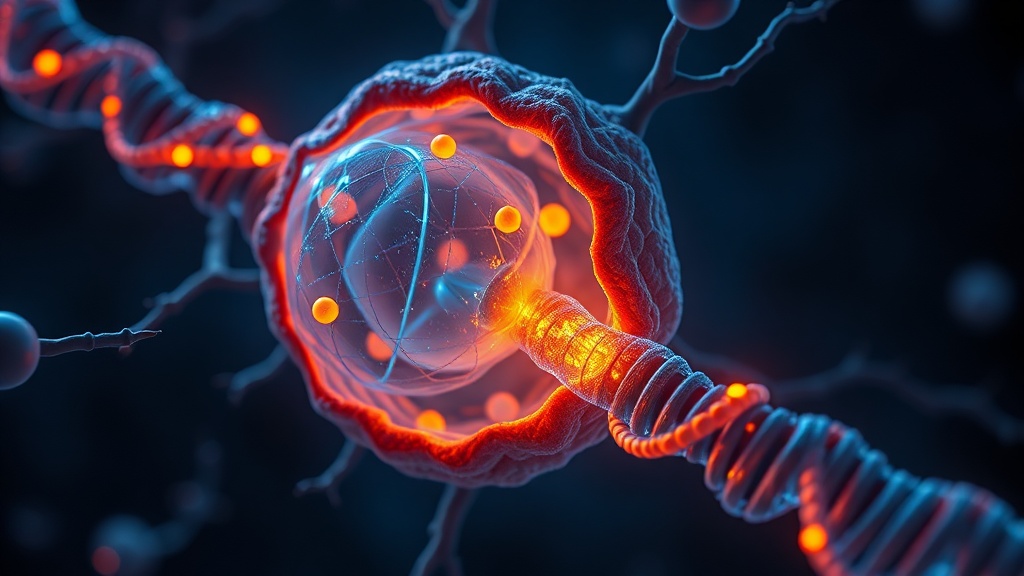
The fourth pillar is perhaps the most insidious. Transcription factors — particularly the AP-1 family — begin hijacking enhancer elements during aging, redirecting transcriptional programs away from tissue-specific functions toward inflammatory and stress-response pathways[1].
The Nature Reviews framework describes this as "AP-1-mediated enhancer hijacking." It's not that AP-1 suddenly appears — it's constitutively expressed. What changes is the chromatin accessibility landscape. As the first three pillars degrade nuclear architecture, erase PRC2 memory, and alter nucleosome composition, enhancers that were previously inaccessible become open. AP-1 occupies them opportunistically.
This is the feedback loop that makes aging progressive rather than linear. Structural decay enables transcriptional drift, which accelerates structural decay. The system doesn't fail gracefully — it collapses.
Multi-Omic Validation: Blood Aging Genes#
A January 2026 Nature Communications study developed an integrative approach combining epigenetic and transcriptomic data to identify aging genes in human blood[4]. The results showed that multi-omic aging genes are enriched for adaptive immune functions and replicate more robustly across diverse populations than genes identified by either epigenetic or transcriptomic data alone.
These multi-omic aging genes may serve as targets for epigenetic editing to facilitate cellular rejuvenation — a direct translational application of the systems-level framework[4]. The histone modifications review in GeroScience further confirms that acetylation, methylation, and phosphorylation alterations are closely associated with age-related diseases including cancer, neurological disorders, and cardiovascular conditions[5].
COMPARISON TABLE#
| Method | Mechanism | Evidence Level | Cost | Accessibility |
|---|---|---|---|---|
| Partial Reprogramming (OSKM) | Cyclic expression of Oct4/Sox2/Klf4/c-Myc restores PRC2 targets | Mouse models; preclinical | Very high (gene therapy) | Research only |
| Epigenetic Editing (CRISPR-based) | Targeted modification of age-associated CpG sites | Early preclinical | High | Research only |
| HDAC Inhibitors (e.g., vorinostat) | Restore histone acetylation balance | Phase I/II clinical trials for age-related diseases | Moderate ($200–500/month) | Prescription (oncology) |
| NAD+ Precursors (NMN/NR) | Indirect: support sirtuin-mediated histone deacetylation | Multiple small human trials | Low ($30–80/month) | Over-the-counter |
| Caloric Restriction / Fasting | Modulates HDAC/HAT balance, autophagy pathways | Epidemiological + animal RCTs | Free | Universal |
| Multi-Omic Biomarker Testing | Blood-based epigenetic + transcriptomic age measurement | Validated across populations | Moderate ($300–600/test) | Commercial (limited) |
Four Pillars of Epigenetic Aging: Evidence of Cross-Regulatory Feedback
THE PROTOCOL#
Translating a systems-level epigenetic framework into actionable steps requires honesty: most of the direct interventions (OSKM reprogramming, epigenetic editing) are years from clinical availability. What follows is what the current evidence base supports for maintaining epigenetic fidelity today.
Step 1: Measure Your Epigenetic Age Baseline. Obtain a multi-omic biological age test that integrates DNA methylation with transcriptomic data. Companies now offer blood-based panels that assess CpG methylation at age-associated sites. Retest every 6–12 months to track trajectory rather than a single snapshot. The Nature Communications data suggests multi-omic approaches are more reliable than methylation-only clocks[4].
Step 2: Prioritize NAD+ Pathway Support. NAD+ synthesis fuels sirtuin activity, which mediates histone deacetylation — one of the key mechanisms maintaining chromatin compaction. Based on current human trial data, NMN at 250–500 mg/day or NR at 300–1000 mg/day taken in the morning may support NAD+ levels. Optimal dosing in humans is not yet fully established, so start at the lower range and assess tolerance.
Step 3: Implement Time-Restricted Feeding (16:8 Minimum). Caloric restriction and fasting activate HDAC/HAT rebalancing and autophagy pathways that clear damaged cellular components — including misfolded histones and dysfunctional chromatin complexes. A consistent 16-hour fasting window, maintained daily, appears to be the minimum threshold for meaningful autophagy activation in human tissue.
Step 4: Cold and Heat Stress Cycling. Deliberate cold exposure (2–5 minutes at 10–15°C water) followed by sauna (15–20 minutes at 80°C+) activates heat shock proteins that assist in chromatin remodeling and maintain nuclear lamina integrity. Perform 3–4 sessions per week. The mechanism here is indirect but well-supported: HSP90 and HSP70 chaperone systems interact with chromatin-modifying complexes[3].

Step 5: Protect Heterochromatin with Sleep Architecture. Deep sleep (N3 stage) is when nuclear repair processes are most active, including maintenance of lamina-associated domains. Target 7.5–8.5 hours of total sleep, with emphasis on early sleep cycles where N3 dominates. HRV optimization through evening vagal nerve stimulation or breathing protocols (4-7-8 pattern) may enhance N3 duration.
Step 6: Monitor and Adapt — Watch for PRC2-Targeted Therapeutics. Clinical trials targeting histone-modifying enzymes are now underway for age-related disorders[5]. Small-molecule EZH2 modulators (PRC2's catalytic subunit) are in oncology trials and may eventually be repurposed for aging. Stay informed through clinical trial registries. This is where the field moves next.
Related Video
VERDICT#
8.5/10. This framework from Nature Reviews Molecular Cell Biology is the most coherent systems-level explanation of epigenetic aging I've encountered. The four-pillar model isn't just descriptive — it's mechanistically interconnected in ways that explain why single-target interventions produce inconsistent results. The convergence data on PRC2 from Molecular Systems Biology adds real weight: the same regions that break during aging are the ones restored during rejuvenation. That's not coincidence — that's a target.
Where I dock points: the therapeutic translation remains largely preclinical. The framework is elegant, but we're still years from applying it directly in humans. And the cancer risk of PRC2 modulation is not adequately addressed in any of these reviews. Still — for anyone tracking where longevity science is actually heading, this is the paper to read. It moved me.
Frequently Asked Questions5
References
- 1.Author(s) not listed. Systemic epigenetic dysregulation as a driver of ageing and a therapeutic target. Nature Reviews Molecular Cell Biology (2026). ↩
- 2.Author(s) not listed. Convergence of aging- and rejuvenation-related epigenetic alterations on PRC2 targets. Molecular Systems Biology (2026). ↩
- 3.Author(s) not listed. Integrated epigenetic networks in aging: from histone to RNA modifications. Journal of Translational Medicine (2026). ↩
- 4.Author(s) not listed. Integrative epigenetics and transcriptomics identify aging genes in human blood. Nature Communications (2026). ↩
- 5.Author(s) not listed. Histone modifications in biological age determination: mechanisms, biomarkers, and therapeutic perspectives. GeroScience (2026). ↩
Orren Falk
Orren writes with the seriousness of someone who thinks about their own mortality every day and has made peace with it. He takes the long view, which means he's less excited than others about marginal gains and more focused on whether something moves the needle on a decade-level timescale. He'll admit when a study impresses him: 'This one actually moved me.' He uses 'the data' as a character in his writing — it speaks, it tells him things, it sometimes disappoints him.
View all articles →